

As a new biopic of Franz Kafka hits cinema screens, we speak to the film's director about the surrealist author, Yiddish theatre and burgers
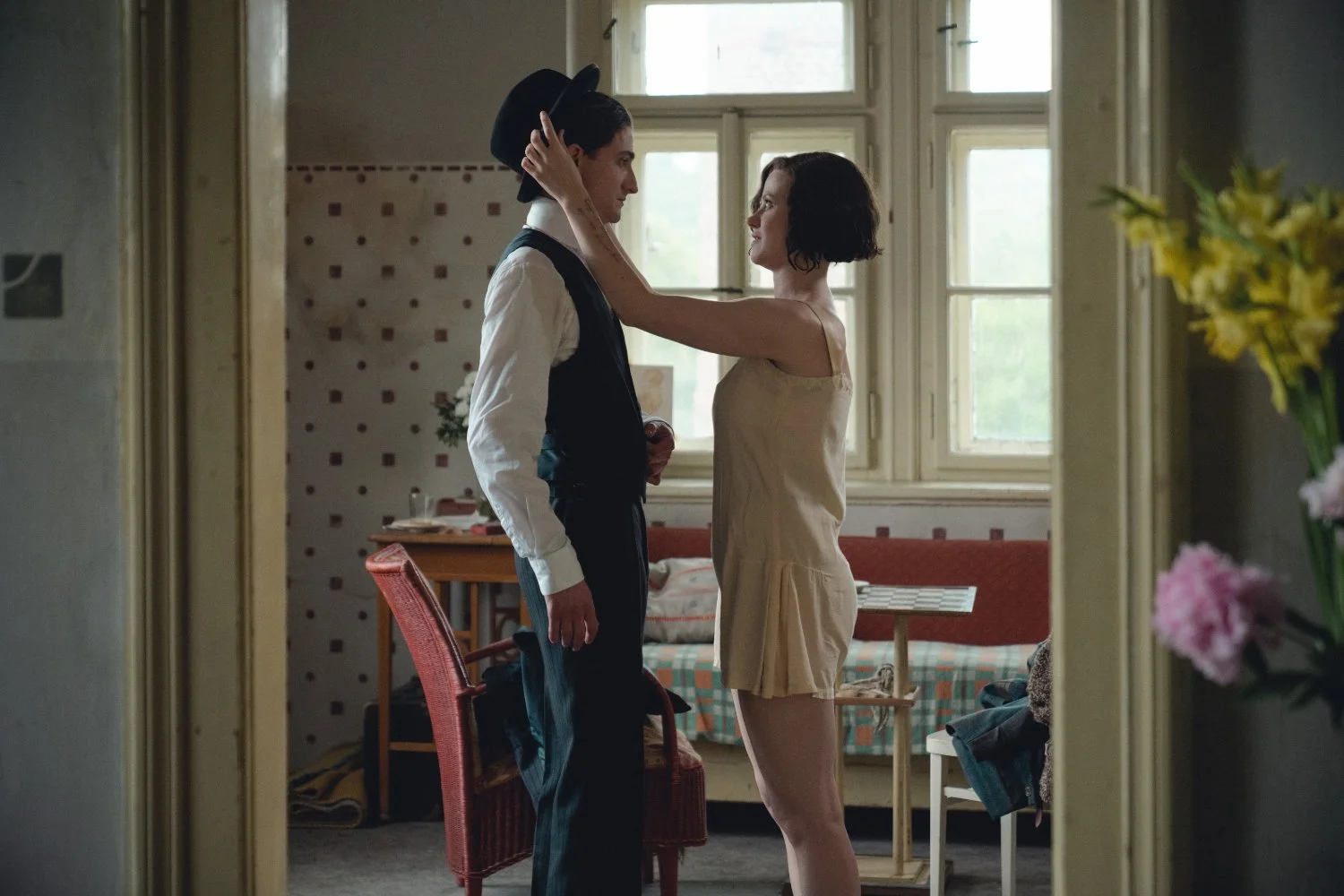
Polish director Agnieszka Holland’s latest film Franz is a biopic of the celebrated and oft over-analysed Jewish writer Franz Kafka. Like the author himself, the film eschews traditional narrative structure. Instead, it combines scenes from Kafka’s life with time-jumps into the present day, as visitors are guided around modern landmarks of the booming Kafka tourism industry. The film is currently showing in the UK as part of the Kinoteka Polish Film Festival, so we caught up with the director at the UK premiere to find out more about her love of the Czech surrealist writer and inspiration behind the feature.
When did you first discover Kafka?
I read his work for the first time when I was 14 and that was the great discovery for me. It was shocking to me that it was possible to describe the world in that way. Before, I was mostly reading realistic psychological literature of a different kind, yet here was something totally different and so engaging, so mind-opening. The first novel I read was The Trial which, for me, remains the most important. I also adapted it in 1980 for Polish television. When I read Kafka's letters and diaries, I started to fantasise that I knew him. That I understood him and that maybe I could help him and save him. I felt like he was my brother.
The film has features of a classic biopic, but also moments where we jump forward to the present. Why did you want to introduce that sort of structure to the film?
It was approaching the 100th anniversary of Kafka’s death [in 2024]. There were a lot of new publications, reprints, radio programmes and TV series. Between the endless analyses and biographies, I got the impression that [Kafka was] buried under a pile of words. I wanted to just look into his eyes. That’s why I started [making the film]. But at the same time, I knew that he was not suitable for a classical biography. I started to think about quantum physics, and space and time existing on the same level, in different times and different spaces; looking for the fragments of the puzzle. [I wanted to] put all that together and see what would come out.
There’s a scene where a tour guide takes a group to a restaurant called Kafka Burger, where they order the burger that the author supposedly once ate. Was this you making a point about the commercialisation of Kafka?
Yeah. In Czechoslovakia he was practically unknown before World War II. He was an obscure German Jew writing some obscure German-language literature. During the war, of course, it was the Holocaust, then after the war, when the Communists came to Czechoslovakia, he was considered a bourgeoise, degenerative writer, so he was rarely published. In 1989, when the Iron Curtain fell and freedom came to Prague, suddenly people saw him as a kind of a God. They started to commercialise him and Kafka became a worldwide celebrity. I followed some tours and some guides are very good, but some talk total bullshit. Kafka Burger existed for a little while, but they've changed it to Kafka Hummus Cafe.
Kafka's connection to his Jewish faith and heritage is quite complex. How did you see his Jewish identity influencing his character and the film?
It [Judaism] was different in different stages of his life, because he was not a good Jew [religiously]. And his family weren't either. Kafka was very interested in Jewish theatre, though. I read quite recently that he was inspired in his writing by some traditional Yiddish plays. When you read his short stories especially, [the writing] is quite Talmudic. When you analyse Kafka, you realise that it’s possible to analyse him endlessly and never find the real answer. It reminds me of Yeshiva students, who analyse the meaning of the words over and over through the centuries. I think that Kafka never entirely embraced any identity. Neither Czech nor German nor Jewish. He was somebody who was apart. That’s why he’s a universal writer. In any part of the world, you find people who are inspired by Kafka.
By Barney Pell Scholes
Header photo courtesy of Marlene Film Production
Franz had its UK premiere at BFI IMAX on Tuesday 3 March and is screening at select UK cinemas as part of the Kinoteka Polish Film Festival, which takes place until Sunday 29 March.
See Franz at The Ultimate Picture Palace, Oxford (Wednesday 4 March, also featuring a Q&A with Agnieszka Holland) and Ciné Lumière, London (Saturday 21 March). kinoteka.org.uk