

Peter Quilter’s play about a unique octogenarian is colourful, joyous and thought-provoking
Dame Maureen Lipman is a whirlwind of jubilation and exhilaration as a woman who simply cannot stop singing for joy. Literally. She lives alone in a spacious house in a small village. She’s no longer young and, for her neighbours, the word ‘eccentric’ no doubt comes easily to mind. For her brother Ronen (immediately convincing John Middleton), somewhat of a stick in the mud, his vivacious older sister is a nagging worry. When he arrives to check up on her, he finds the door unlocked and Allegra still in her pyjamas. Once he points out that it’s 3pm in the afternoon, she matter-of-factly informs him that she’s still happy to share breakfast with him – and luckily he's been to the bakery beforehand, for Allegra’s cupboards are bare.
It would be easy to assume Allegra has some form of dementia. After all, she’s not exactly on top of everyday tasks like dressing, cleaning or even feeding herself, but when it comes to melodies and words, she doesn't forget a single one. Unfortunately, this musical gift doesn’t sit well with those around her. Everyone in the village, including her brother, seems to be miserable and highly irritated by her incessant serenades. So concerned is Ronen about Allegra’s haphazard way of life that he's found her a carer.
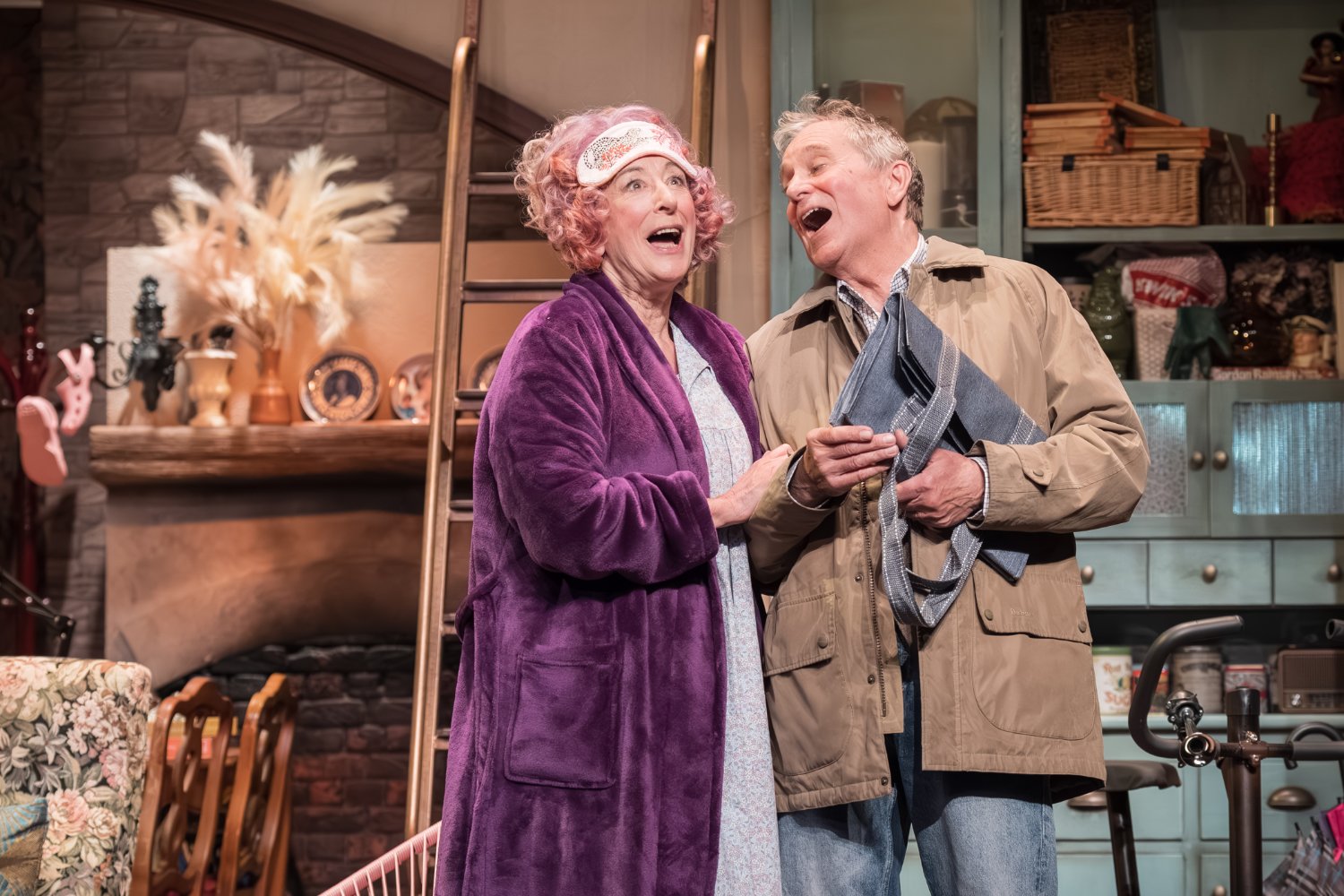
Enter Anna, a young Czech woman and prospective carer, who shares a love of show tunes. When she turns up at the door, Allegra answers in full evening dress, set off by a huge straw hat with red ribbons. Elizabeth Bower’s Anna is at once tactful and forthright, fun and practical. The two women hit it off and are soon sharing life experiences. Allegra is fascinated by Anna’s busy life, listening with rapt attention to stories about her two sons (Allegra has no children) and four dogs (amusingly named John, Paul, George and Ringo).
Anna appears to be the only person on Allegra’s side in a society that seems to want to extinguish her light, even if that means drugging her. Though Ronen is skeptical about the Ritalin and Lithium the doctor has prescribed. “Allegra doesn’t have lows,” he tells Anna, “she’s endlessly happy.” While this discussion is underway, the doorbell rings. Allegra has been out gathering pastries for her guests and, on her way home, has been followed by Officer Rogers (excellent Bailey Patrick), the local bobby. He’s come to warn of complaints about her loud and endless singing all over the village, from the local shop to the library. Clueless as ever, Allegra is delighted by this man in uniform in her front room. “I shall be keeping my eye on you,” Officer Rogers tells Allegra. “The feeling is mutual,” she flirts. “Especially in that uniform.”

Finally cajoled into submission, Allegra heeds the warnings and stays at home. So when Officer Rogers returns with another complaint, she’s shocked to discover that in fact the townsfolk are upset about her lack of singing and, outside, the care home’s choir has gathered to sing Bill Withers’ ‘Ain’t No Sunshine’.
Lipman’s Allegra is such a life force that the audience can’t help but root for her – and eagerly join in on familiar songs, such as Tiny Tim's ‘Tiptoe Through the Tulips’. The words are projected onto Justin Williams’ detailed set, aided artfully by lighting designer Sam Biondolillo and video designer Ben Bull.
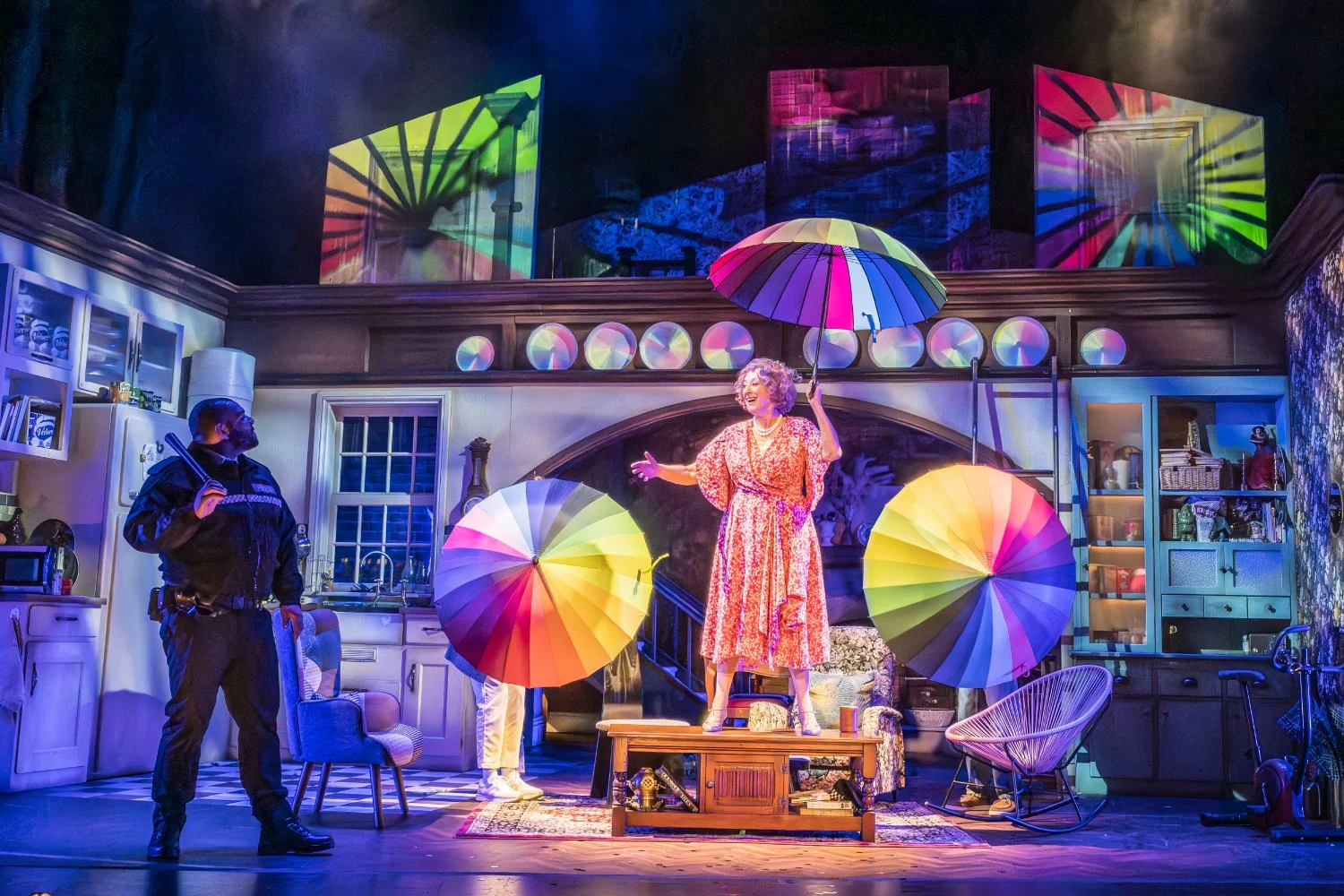
With Allegra, Stephen Mear’s direction and choreography provide all that is needed for a triumphant performance and Olivier-nominated playwright Peter Quilter’s script is unequalled. Not only does it celebrate the older woman – so rarely the focus of popular culture – but it speaks to the contentions surrounding othering within society and why we should allow a little more grace and embrace each others’ differences.
By Judi Herman
Photos by Marc Brenner
Allegra runs until Saturday 8 August. 7pm, matinee times vary. From £20.50. The Harold Pinter Theatre, London, SW1Y 4DN. allegraplay.com