
Amidst armed police and angry protestors, Aviva Dautch meets artist Belu-Simion Fainaru to hear about representing Israel at the Biennale
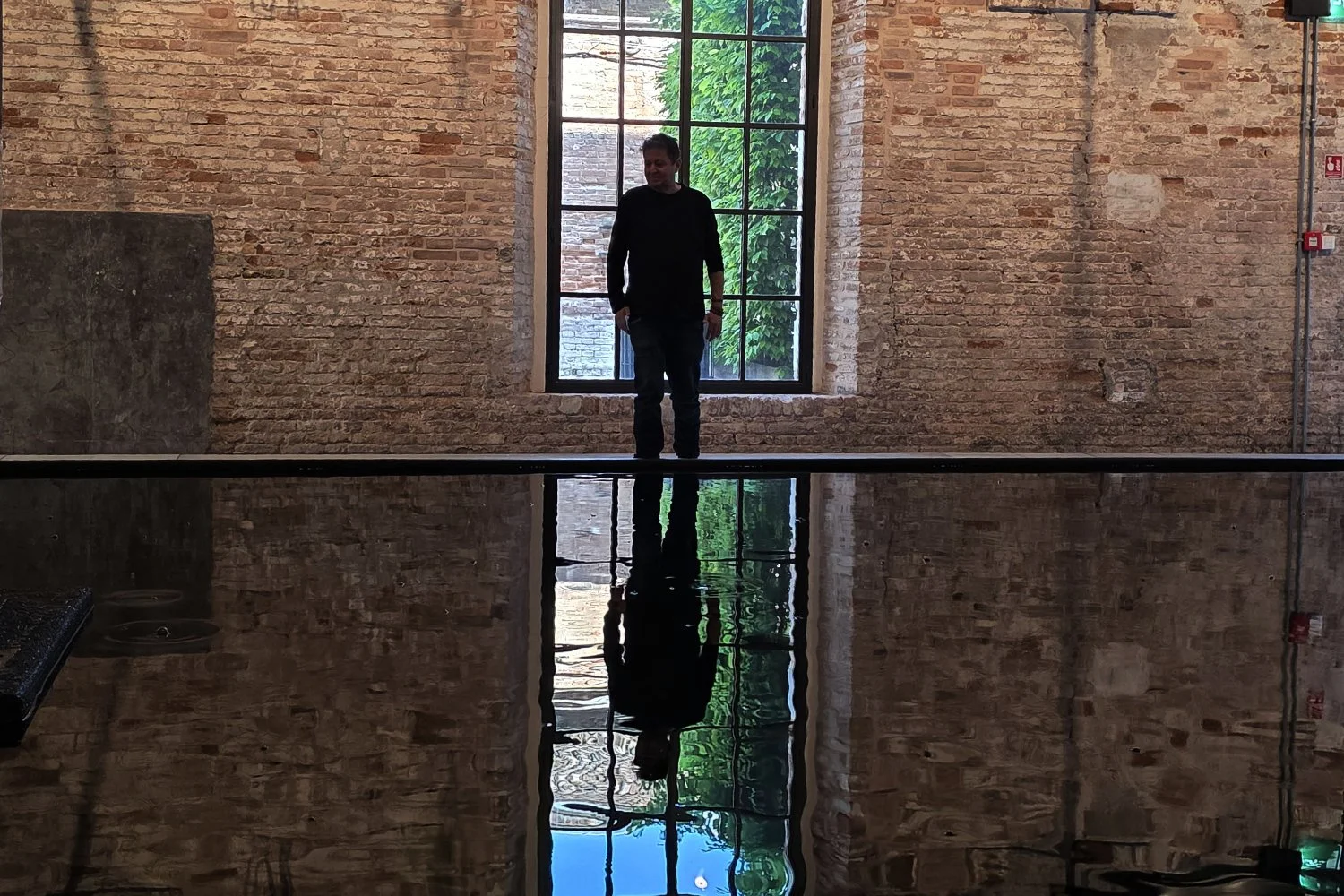
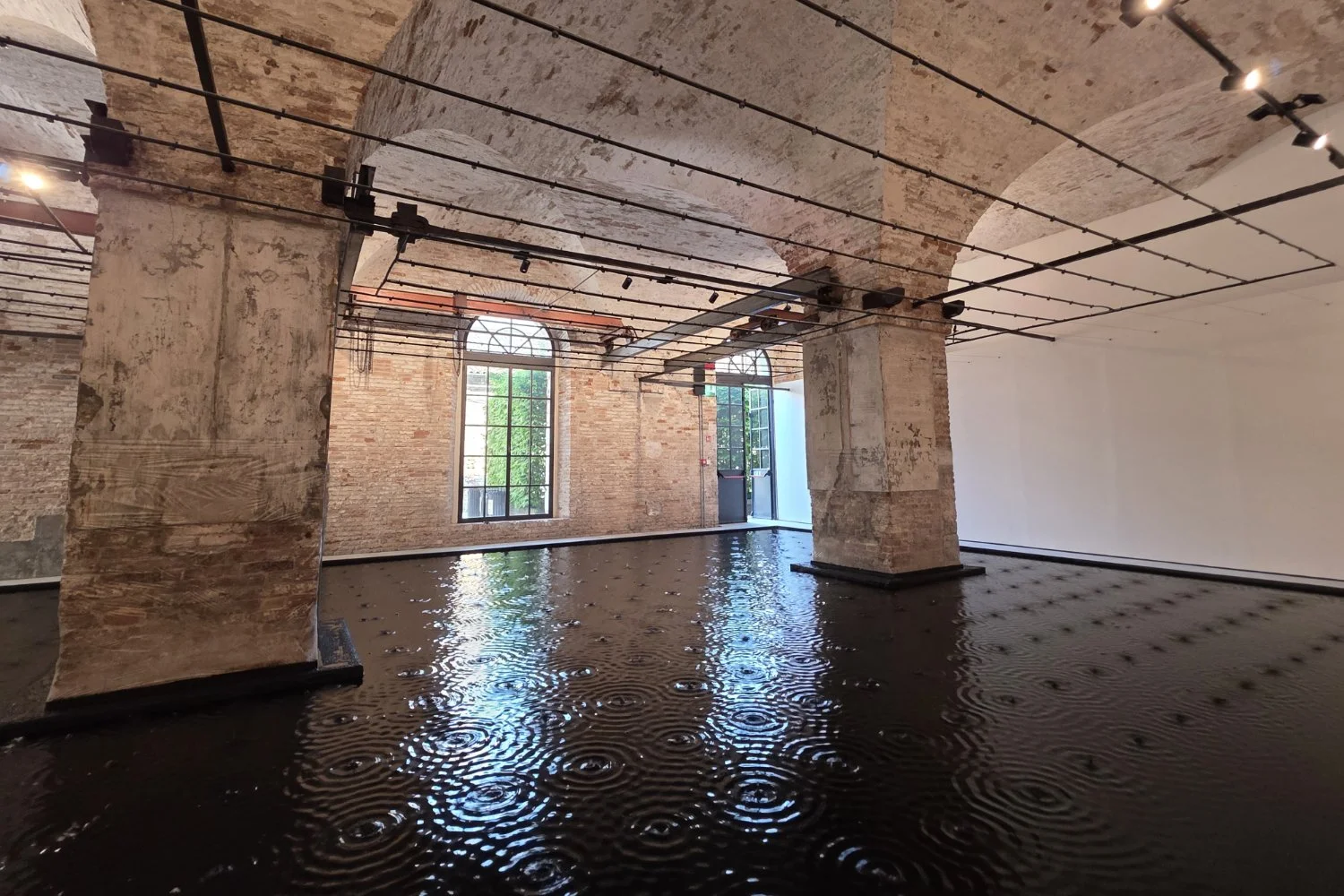
There is a peaceful stillness at Belu-Simion Fainaru's installation, Rose of Nothingness, at the Israel Pavilion in Arsenale, the old navy shipyard that is one of the venues for this year's Venice Art Biennale.
It's a calm that belies the chaos outside, where armed Italian policemen and Israeli security hold back screaming protesters. Surrounded by crenelated brick walls that absorb all sound, I find myself alone, staring at the ripples on a reflective pool of black water. The artwork is inspired by poet Paul Celan's "black milk"- - the words from his poem Todesfuge (Death Fugue in John Felstiner's translation), in which concentration camp inmates drink the "black milk of daybreak".
The poem ends with the name 'Shulamit', the heroine of the Song of Songs. As Felstiner suggests, she becomes a figure for the Jewish people boxed in, agonised, persecuted, but still calling for peace and hope. It is evident, when speaking to the artist, that Shulamit is Fainaru's muse and, in Celan, a Holocaust survivor and German-speaking Romanian poet, whose work brings together the secular world and the pain of Jewish experience, Fainaru has found a guiding spirit.
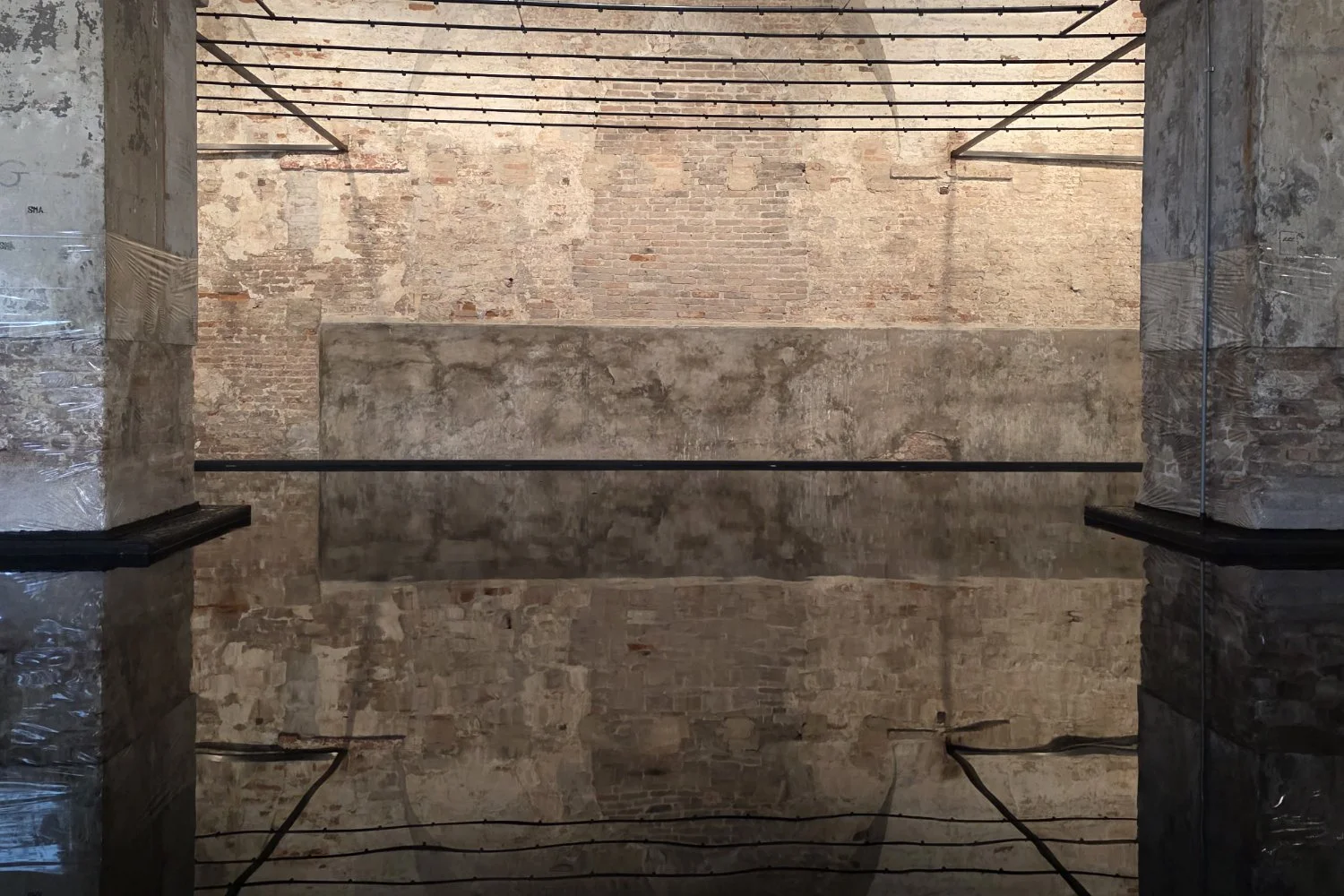
Fainaru was also born in Romania and his father survived three years in a Romanian forced-labour camp during the Holocaust. In Rose of Nothingness, the water falls onto "a still, pristine surface that frames a quiet void open to multiple interpretations: commemoration, absence, or a suspended moment of introspection," according Fainaru's notes. Questioning "absence" of good, of God - has long been the driving force behind Fainaru's work.
Above him, on the wall is a clock that looks like it is a piece of standard roomfurniture. It is, in fact, another exhibit. On close inspection it becomes apparent that its hands are spinning anticlockwise, set with the impossible task of trying to turn back time to 6 October 2023.
He sees the Israel he lived in before the 7 October attacks as a place of meeting and refuge. His family emigrated there from Bucharest in 1973 when Fainaru was 13. He was an undergraduate at Haifa University, where he won Haifa Art Foundation's Young artist award. His studies then took him to Chicago University for an MA in art, followed by stints at the Italian Domus Academy and the Royal Academy of the Arts in Brussels.
Together with Avital Bar-Shay, a fellow artist and curator who is his life-partner, he has spent his career developing community projects through art. In 2010 the pair created the Mediterranean Biennale to bring together the work of artists of all backgrounds from across the region. They went on to create The Arab Museum of Contemporary Art and Heritage (AMOCAH) in Sakhin, a town in the Galilee, which is predominately home to Israeli-Palestinians. AMOCAH received no funding from the Ministry of Culture and was conceived as an international peace and dialogue endeavour. "Opening this museum in this city is a political act," said Fainaru at the museum's inauguration in June 2015.
Despite being awarded the Israel Prize, the country's highest award for creative achievement, he is adamant that he is not a "state artist". So why is he exhibiting at the Venice Biennale, where showcasing art in national pavilions means the line between artist and country is constantly elided?
In an interview with Ynet a few days before the Biennale's opening in May, he spoke about the criticism he received: "The reactions […] in Israel were, 'Don't exhibit' or 'You represent an extremist government'. But I know that art and state do not go together. As someone born in Romania during the communist period, I understand that there were artists of the regime who were invited to create propaganda. But I do not represent the government."
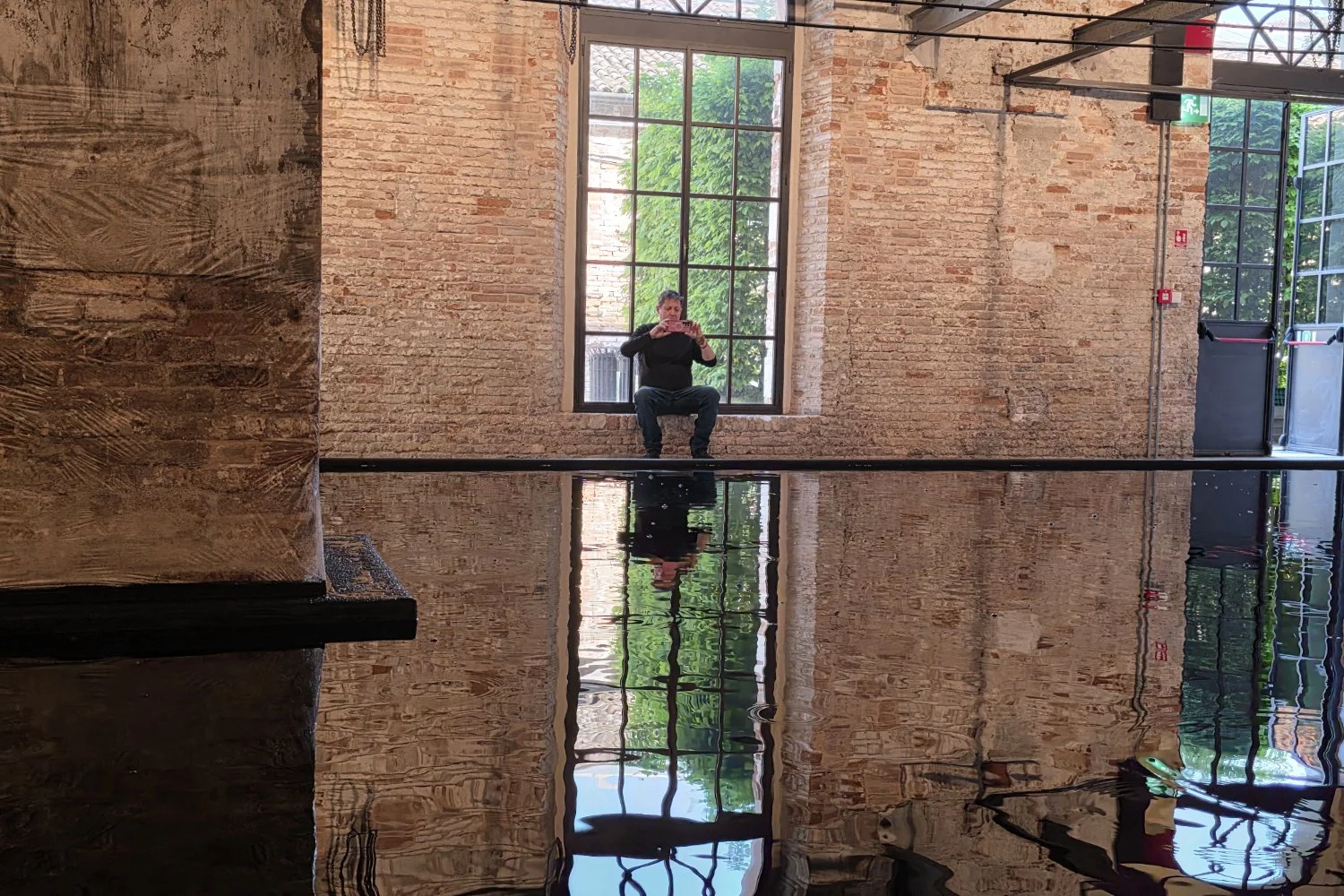
He knew there would be protests against the Israel-Gaza war, as there had been in 2024, leading to the Israel pavilion's closure. A couple of months before the Biennale opening, the growing anger from other artists and curators was so intense that his installation was moved from the Israel pavilion, in the public gardens of the Giardini, to an enclosure within the Arsenale. It is now more protected (although the armed guards would suggest otherwise). It is also on display adjacent to the work of artists from other Middle Eastern countries.
"As artists you shouldn't have fixed notions we have to live together with difference and accept the 'other'. That's the message of this exhibition," he says, adding, "We have to share space. If we can do this then 'yehiyeh tov'- everything is going to be alright."
By Aviva Dautch
Photos by Werhaftig Venezian
Rose of Nothingness runs until 22 November. labiennale.org
This article appears in the Summer 2026 issue of JR.