
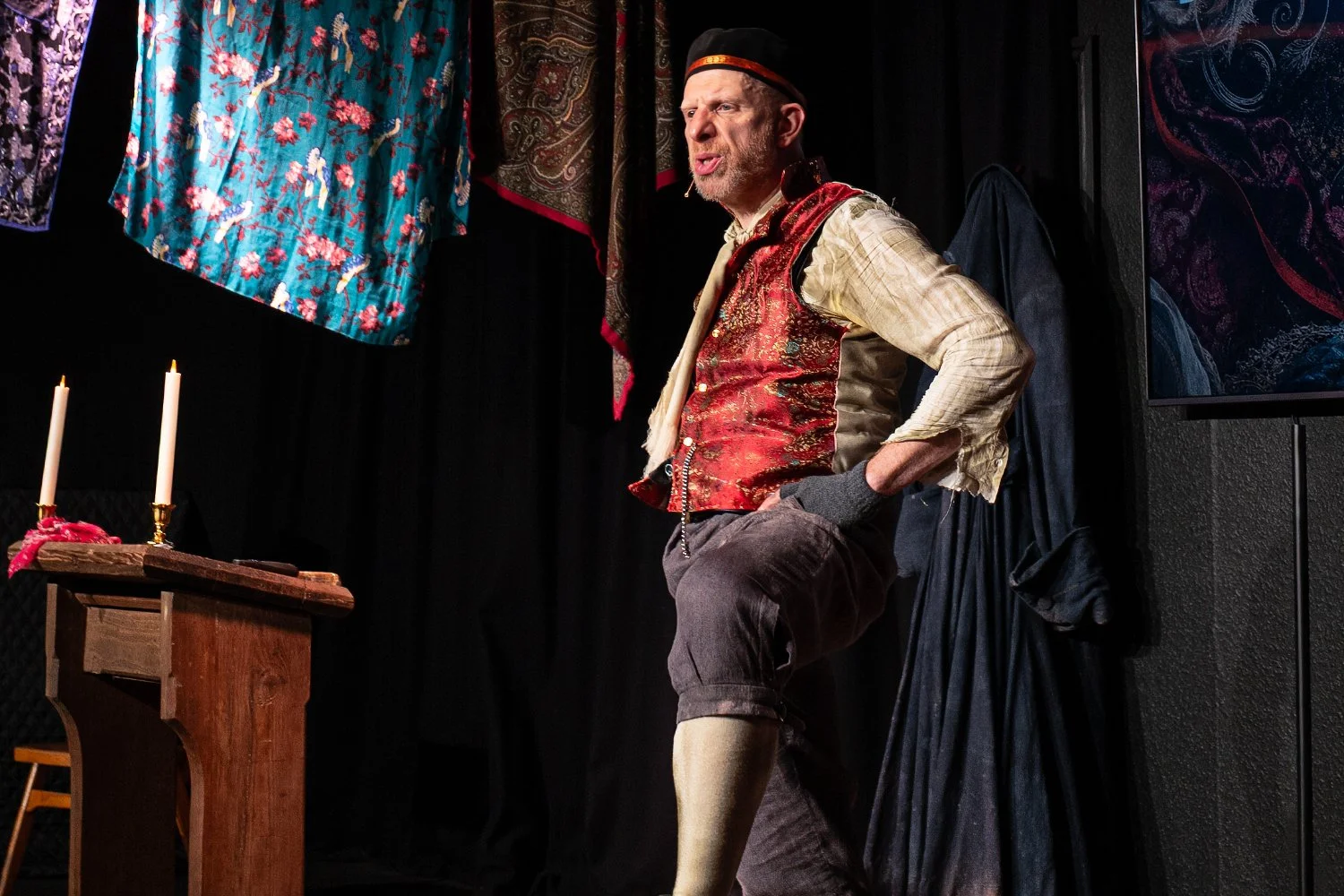
Steve Furst single-handedly takes on a variety of personas throughout the 200-year history of one of literature’s most controversial characters
Dubbed ‘The Jew’ 269 times in Charles Dickens’ original book of Oliver Twist, Fagin has since been perceived as a dangerous villain. In this two-hour analysis, which was written, directed and performed by Steve Furst, the audience embarks on a deep-dive of the character from page to stage, in a high-energy show that doesn’t once falter.
Bursting in with ‘You’ve Got to Pick a Pocket or Two’, the one-man-machine takes viewers back to Victorian Britain, when notorious Jewish 'fence' (a middleman who buys and sells stolen goods) Ikey Solomons helped create the assumption that all criminals are invariably Jews. We learn that, inspired by this preconception, Dickens built Fagin, the leader of a “gang of goys” – a group of orphaned boys who he trained to steal for him. The constant juxtaposition of times and characters emphasises the prevalence of antisemitism at the time. It was widely accepted that, because he was a rogue, Fagin was Jewish – but would this view be accepted today? And should it?
Furst morphs into various characters charting the development of the mastermind from 1867 to 2026, especially touching on illustrator George Cruikshank’s original depiction of Fagin as a ‘classic Jew’, with hunched over posture, hook nose and full beard. In the first half, we hear from journalists, authors and professors who analyse the Jew-hatred Dickens overtly expressed. In the second, when the line between Furst and Fagin begins to blur, the experiences of key players in the renowned 1960s musical Oliver! help to explore the crook’s contemporary redemption arc. These include actor Barry Humphries (who played Mr Sowerberry), director Peter Coe and, of course, playwright Lionel Bart, who defied Fagin’s death sentence by having him vow to change his unlawful ways.
Using mood lighting (courtesy of technical operator Ace Turner), the play blends spoken word with lecture and a sprinkling of song. We learn that, drawing on his upbringing in London’s East End, the songs written for Bart’s Fagin incorporated aspects of Yiddish music hall culture, featuring both conversational and cantorial qualities.
The pivotal point of the evening is the oral testimony we hear from Ron Moody (best known for his role as Fagin in Bart’s musical), to which Furst mimes a lengthy soliloquy by the actor. Timing his movements to perfection, Furst expresses his appreciation, understanding and respect for the character perfectly.
Rather than rewriting Dickens, Furst’s performance reminds us that history, like theatre, is always open to interpretation. By the end of the show, the line between Furst and Fagin has all but disappeared and, instead of delivering a verdict, the audience is left to pontificate if Fagin’s greatest crime may simply have been the way in which he was remembered.
By Dani Silver
Photo by Justin Bovington
Fagin: Hero or Villain? runs Friday 4 – Sunday 6 December. 7.30pm (Fri & Sat), 4.30pm (Sun). £25. Circle and Star Theatre, London NW3 6TE. circleandstar.com
This review was of the Circle & Star performance on Friday 17 July 2026.