
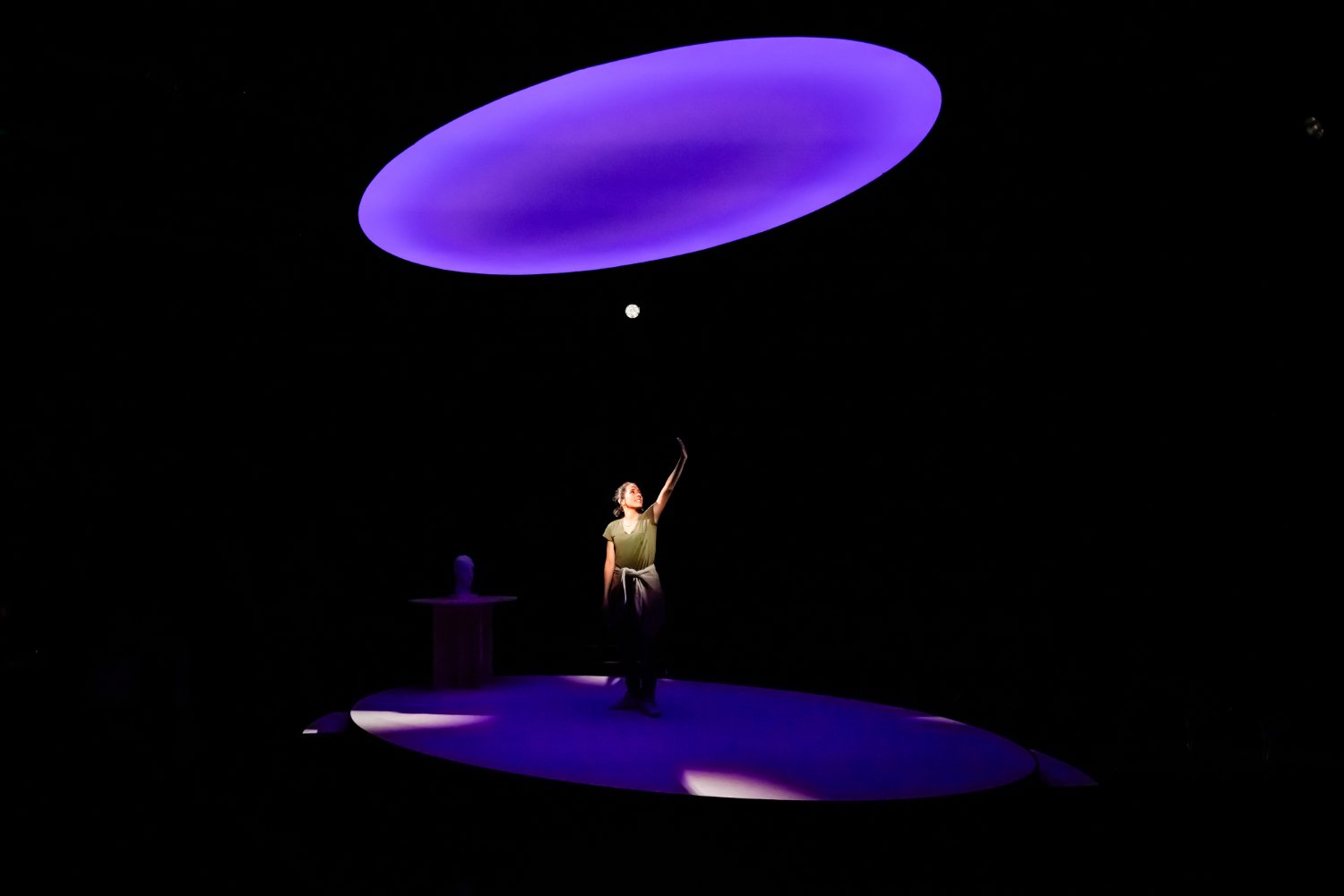
A bold examination of the future of remembrance
We are in the near future. A company called Memoriam has developed a technology allowing people to download their memories – of a romantic proposal, running a marathon or even a holiday in Ibiza – so that others can experience them viscerally through virtual reality. At the same time, the last-but-one Holocaust survivor has just died, meaning that Rivka (Beverley Klein) is the only person on earth who has first-hand experience of living through the atrocity. It so happens that her granddaughter Rachel (Rachel Barry) works at Memoriam, securing memories that are likely to attract customers.
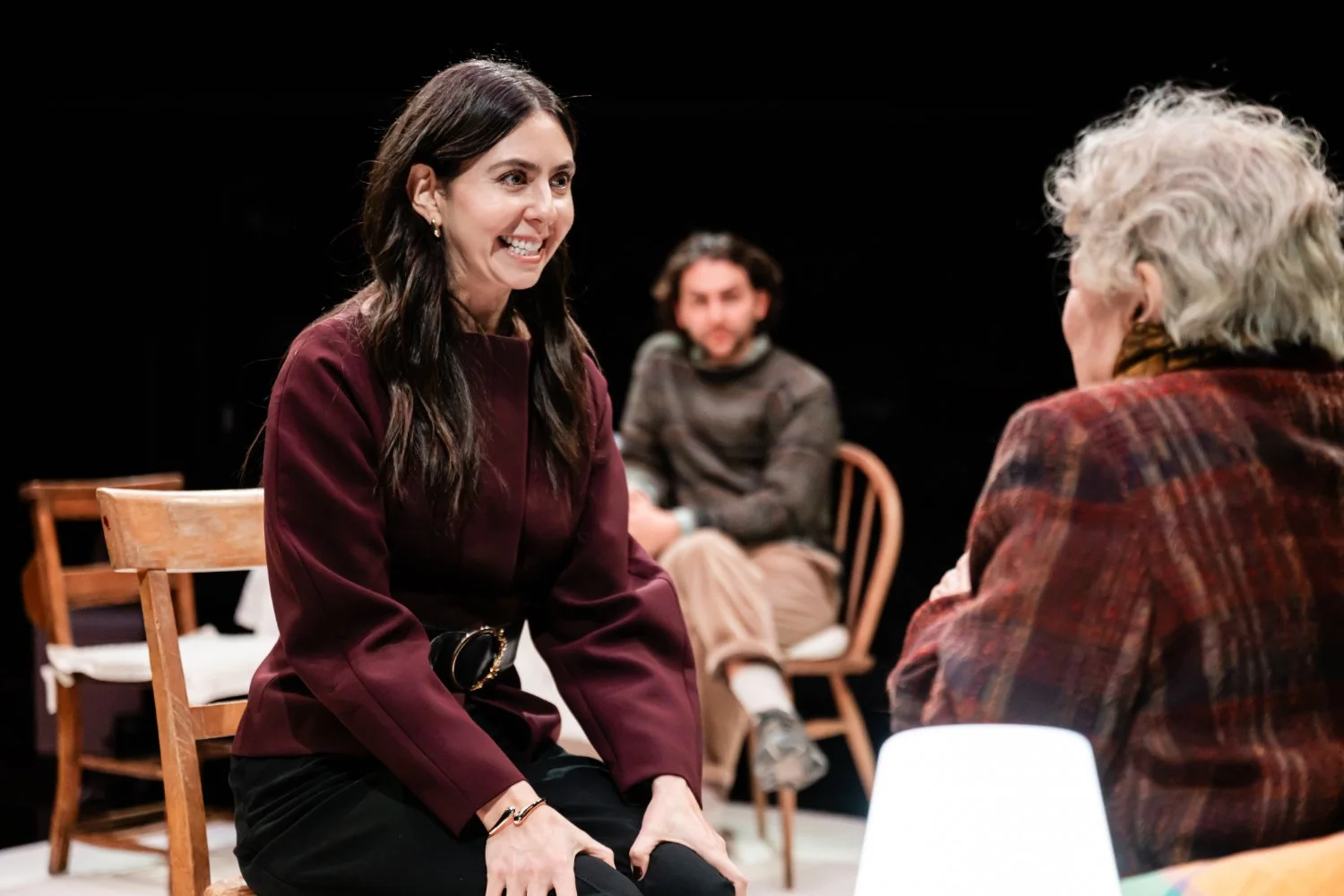
Unlike her late twin sister Sara, Rivka has always been reluctant to talk about her past, but she's opened up on one occasion to Rachel’s younger brother David (Ashley Margolis) – a fact that Rachel has always resented. At work, her boss Chris (Ben Wiggins) admits that the company is in financial difficulty and desperately needs "premium assets", ideally "of real cultural value", and that her grandmother's memories might fit the bill perfectly. So Rachel offers to broach the subject that evening at a Seder night with Rivka and David. What could possibly go wrong?
Anglo-Israeli writer Noga Flaishon’s play, ably directed by Daniel Goldman, boldly merges the story of a fractious Jewish family living in the shadow of the Holocaust with an examination of what memory-extraction techniques, which are perhaps now on the horizon, might mean for our sense of self or identity. Part of Memoriam's technology allows the company to ‘edit’ the downloaded memories, turn them into a smooth "accessible and digestible" narrative and eliminate elements that might cause the viewer "pain shock". There are already moral questions about what it means to clean up the memory of, say, a traumatic childbirth in this way, but the stakes are infinitely higher when talking about the memories of the last living Holocaust survivor.
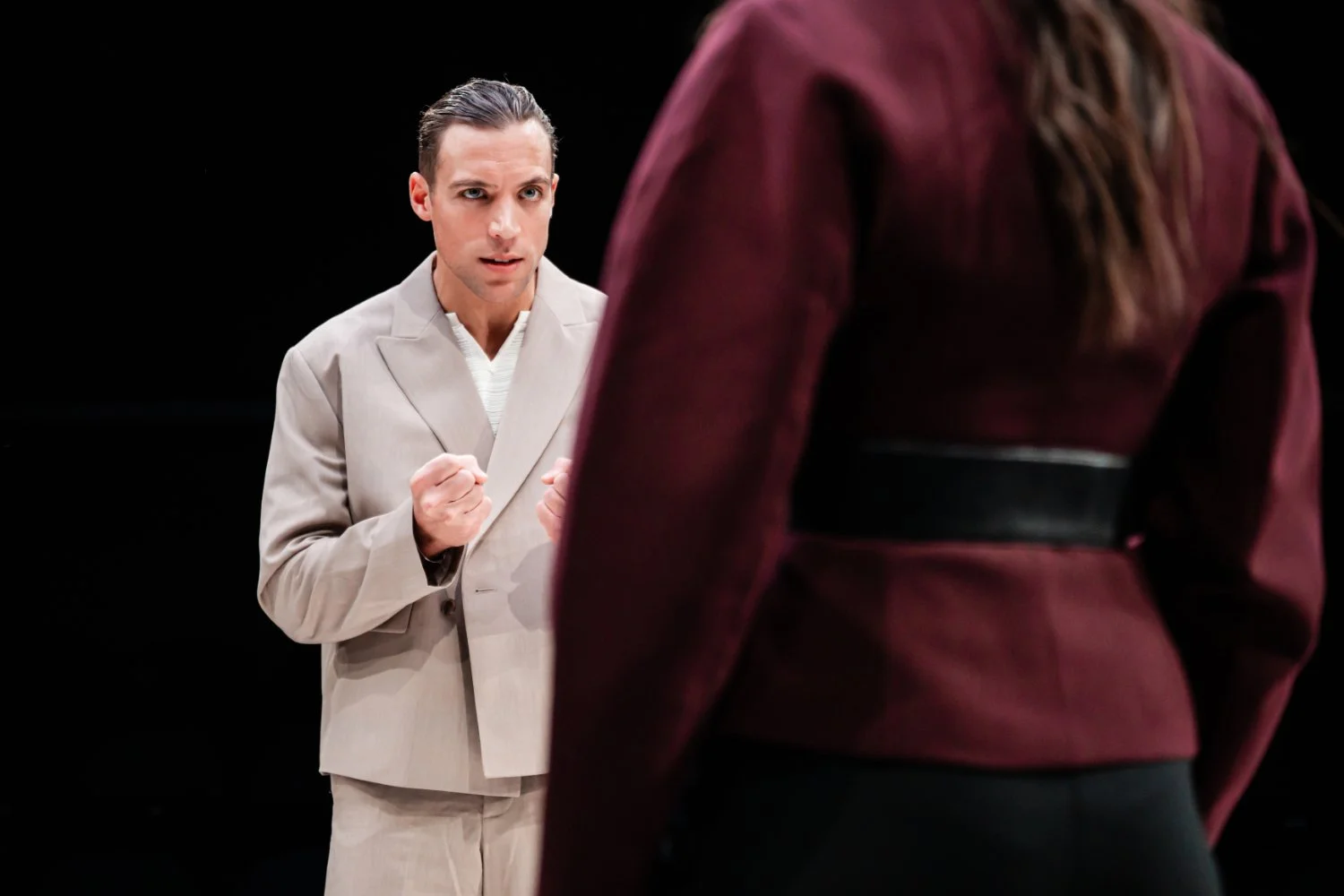
It is a sign of Flaishon’s skill that some of the best arguments come from boss Chris, even though he's obviously commercially motivated. When Rivka and Rachel resist the idea of downloading the former’s memories on the grounds that people can always find out about the Holocaust through "books, diaries and testimonies", he instantly snaps back: "Who reads? And you think people will go watch nine hours of Claude Lanzmann’s Shoah? If remembrance is not accessible, remembrance won’t be accessed." This offers an important challenge to anyone concerned about Holocaust memory in an age of decreasing attention spans.
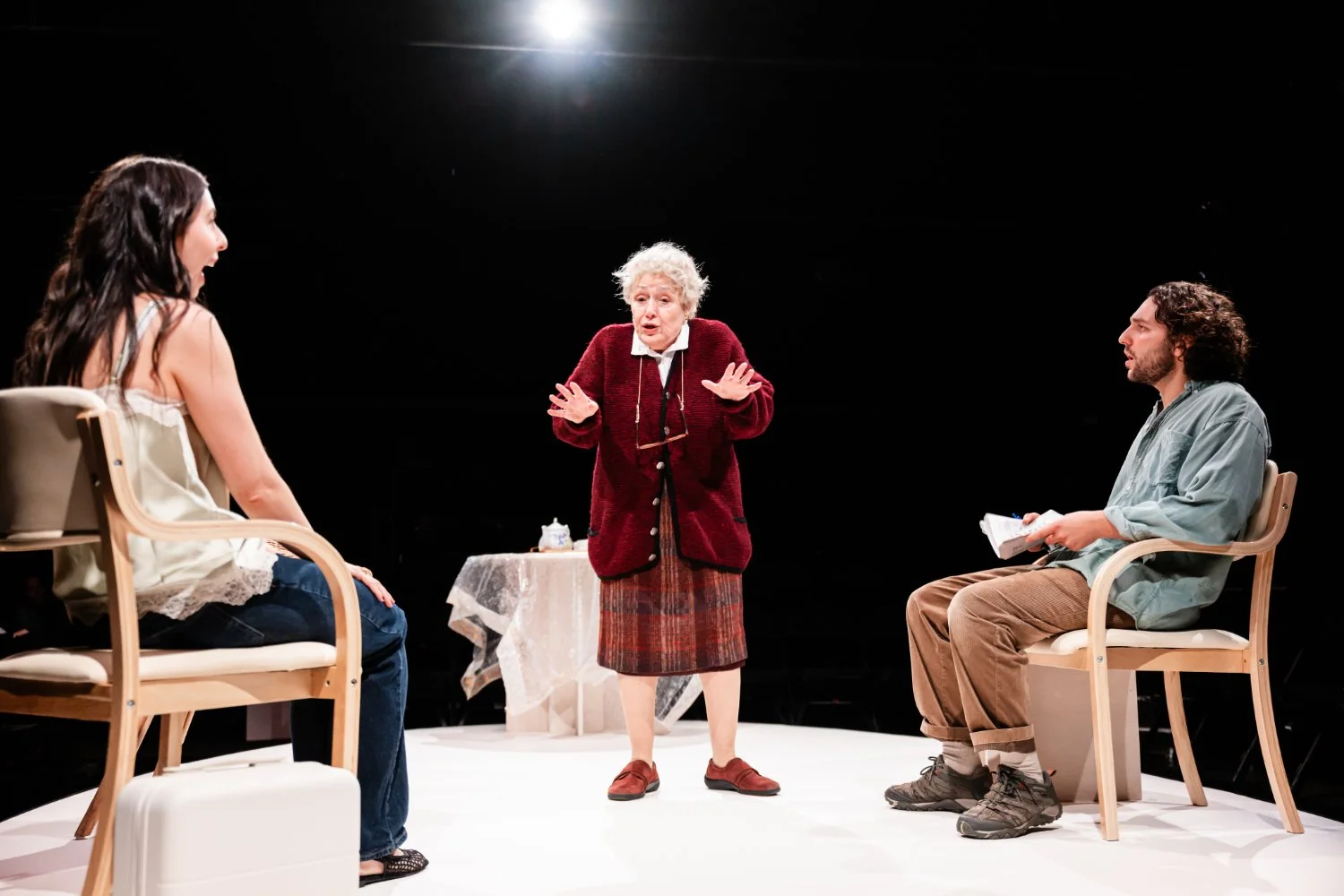
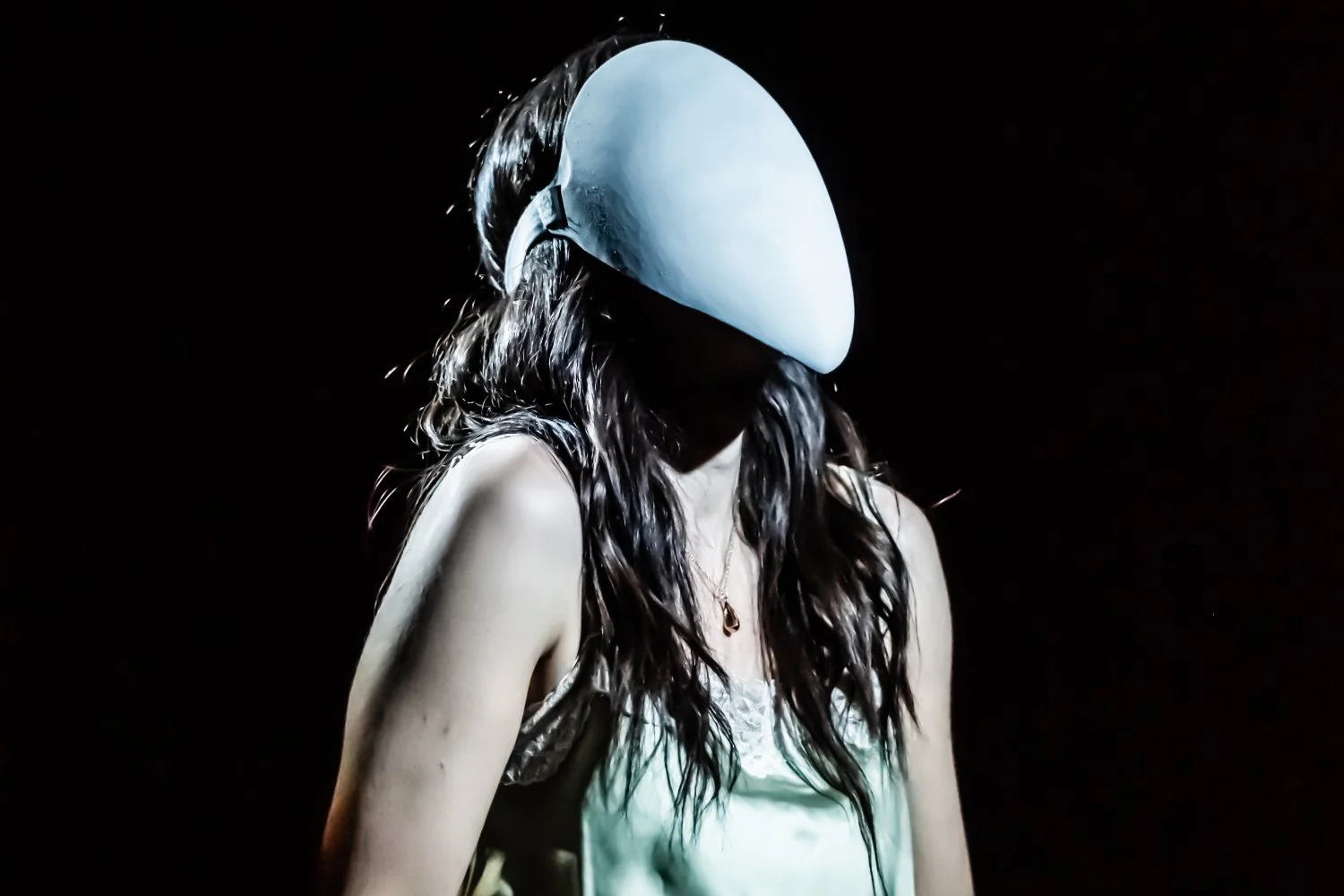
The production is spare and pacy, with brief blackouts between scenes and, beyond a stylised Seder table, strikingly minimal sets courtesy of Ellie Wintour. When characters put on their eerie VR visors, which consume the whole face, the Holocaust scenes they are engulfed in are not enacted, but powerfully evoked through chilling sounds (Sarah Spencer) and lighting (Jonathan Chen).
According to the director’s programme note, Memoriam is "just the first play" in a broader plan to "share with you an exciting new Jewish theatre – new Jewish voices, new Jewish stories, made by Jews and non-Jews, working together to make great art". For anyone interested in taut Jewish family dramas or how to memorialise the Holocaust, it makes for a very auspicious start.
By Matthew Reisz
Photos by Charlie Flint Photography
Memoriam runs until Saturday 21 November. 7pm, 2.30pm (Tue & Sat only). From £28, from £22.50 concs. Southwark Playhouse Borough, SE1 6BD. southwarkplayhouse.co.uk