

How do we best address the legacy of survivors and events of World War II? Irene Wise, Imperial War Museum fellow in Holocaust education, reports back from this year's AJR forum
At JW3 in London this November, the Association of Jewish Refugees (AJR) hosted a conference to discuss how we teach, learn about and remember the Holocaust. An impressive array of education providers gathered together for two days of Remembering & Rethinking. There were delegates from universities, institutions and organisations across the UK, Europe, Australia, America and Israel. Speakers included representatives from UNESCO, Anne Frank House, Scottish Jewish Heritage Centre, Solutions Not Sides, Imperial War Museums and more.

Quote about personal agency from Facing History and Ourselves
The breadth of participants testified to the research findings of Ben Barkow (former director of the Wiener Library) that "the field is large and diverse and able to support a wide range of approaches and levels of interest in the subject", despite the shrinking of humanities and history provision in schools and universities. Barkow and others wondered why we expect to draw out ‘lessons’ from the Holocaust, when we don’t demand them elsewhere. Indeed, within the school curriculum, teaching of the Holocaust is often presumed to foster the training of civic and moral responsibilities, like no other history (of the Romans, for example, or of the Tudors).
An imaginative approach to the subject has been initiated by Holocaust Centre North. Artists, writers and translators were invited to respond to their collection and the resulting partnerships have elicited inventive forms of engagement, where the experiences of survivors – Jewish, Roma and LGBTQ+ – also speak to that of the wider community. Artist Laura Nathan listened to survivor and multigenerational interviews from the museum archives, while unpicking a Gannex raincoat, made in the factory founded by Holocaust survivor Joseph Kagan. The threads became part of an installation for the Memorial Gestures exhibition.
(L-R) Alex Maws, Ben Barkow and Clementine Smith
Samantha Cass, in her role as Head of Campaigns for the Union of Jewish Students (UJS), represents more than 10,000 pupils across the UK and Ireland. The UJS leads the work on combating antisemitism on campus, which has become more vital since 7 October and the Israel-Gaza conflict. Despite strong rhetoric from both government and universities, there has been the marginalisation and harassment of Jewish individuals and toxic and false rhetoric expressed in lectures and seminars. Recently, the Damascus Affair, a notorious blood libel that originated in 1840, was presented by a guest speaker as historical truth. London University was swift to deal with complaints and has implemented training sessions for a variety of different staff members with the Antisemitism Policy Trust.
Cass spoke about the need to educate about antisemitism in a way that is "both principled and situational. Students don’t only want to be protected, they want to be empowered. They want the skills to speak up, to build coalitions and to resist the isolation that antisemitism is designed to create. So you must listen to Jewish students, you must value their voices… All too often students have said that they feel spoken about, not spoken with."
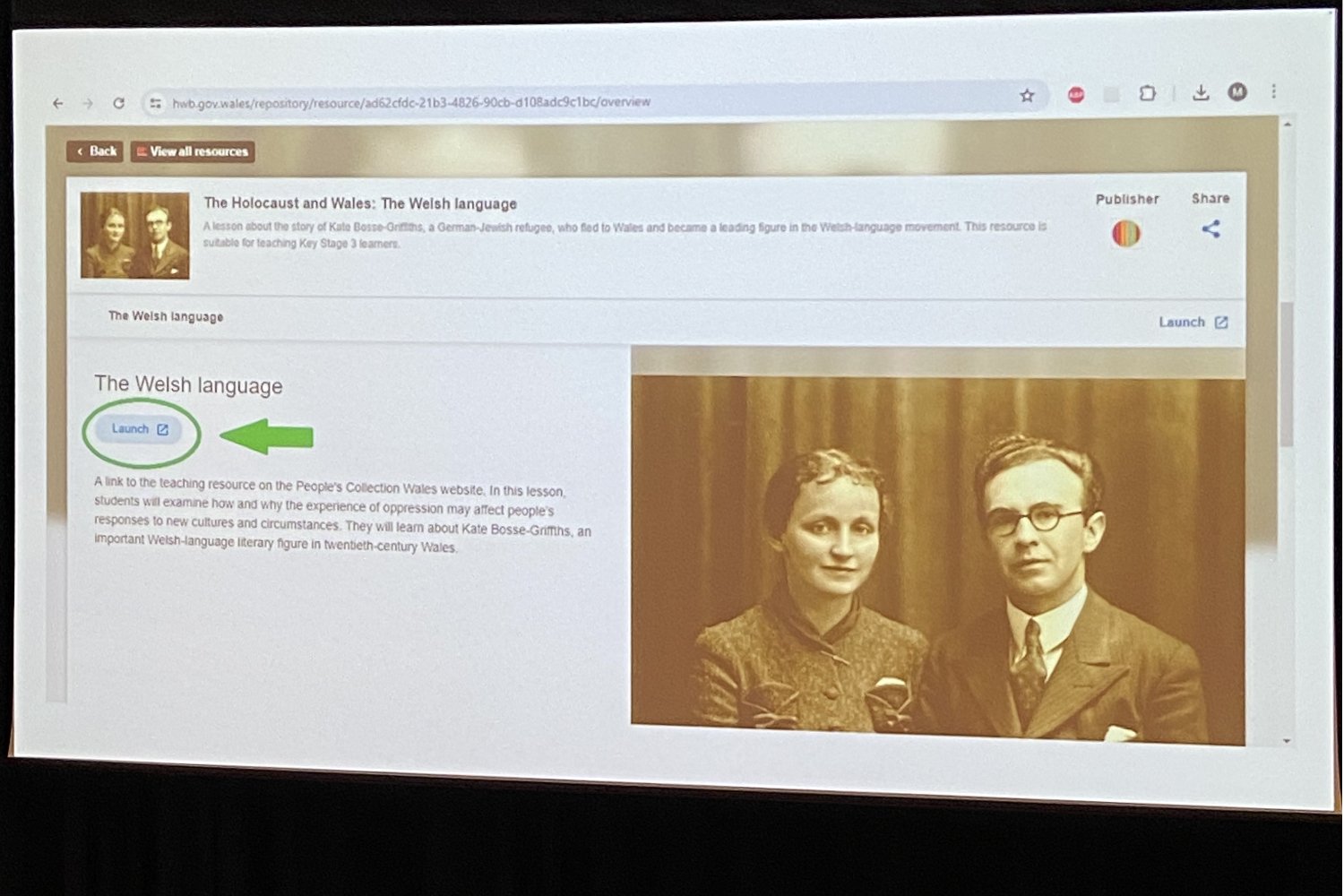
The Holocaust and Wales
There's no denying that the world is changing fast and we need inspiring, determined and articulate young people like Cass to take up the challenges that the future will bring. To quote Paul Salmons – founder of the international consultancy company of the same name that "empowers people to navigate difficult histories, through exhibitions and educational experiences that have a profound and lasting affect" – the success of Holocaust education needs to be "defined by participation, not just reception. If we want young people to inherit the legacy of memory, we need to invite them to shape that memory: guided, but not restrained by us."
By Irene Wise
AJR: Remembering & Rethinking took place Monday 17 – Tuesday 18 November. ajr.org.uk