
Ryan Craig’s family drama exploring ideological tensions amidst Jewish Londoners lacks subtlety and imagination
While clearly aspiring to bring a contemporary Jewish offering to the table around which Harold Pinter and Arthur Miller’s stage families have been rowing for decades, Ryan Craig’s The Holy Rosenbergs – currently being revived at the Menier Chocolate Factory after premiering at the National Theatre in 2009 – lacks the bite, stakes or even warmth needed to make a textured drama rise out of a dense slog.
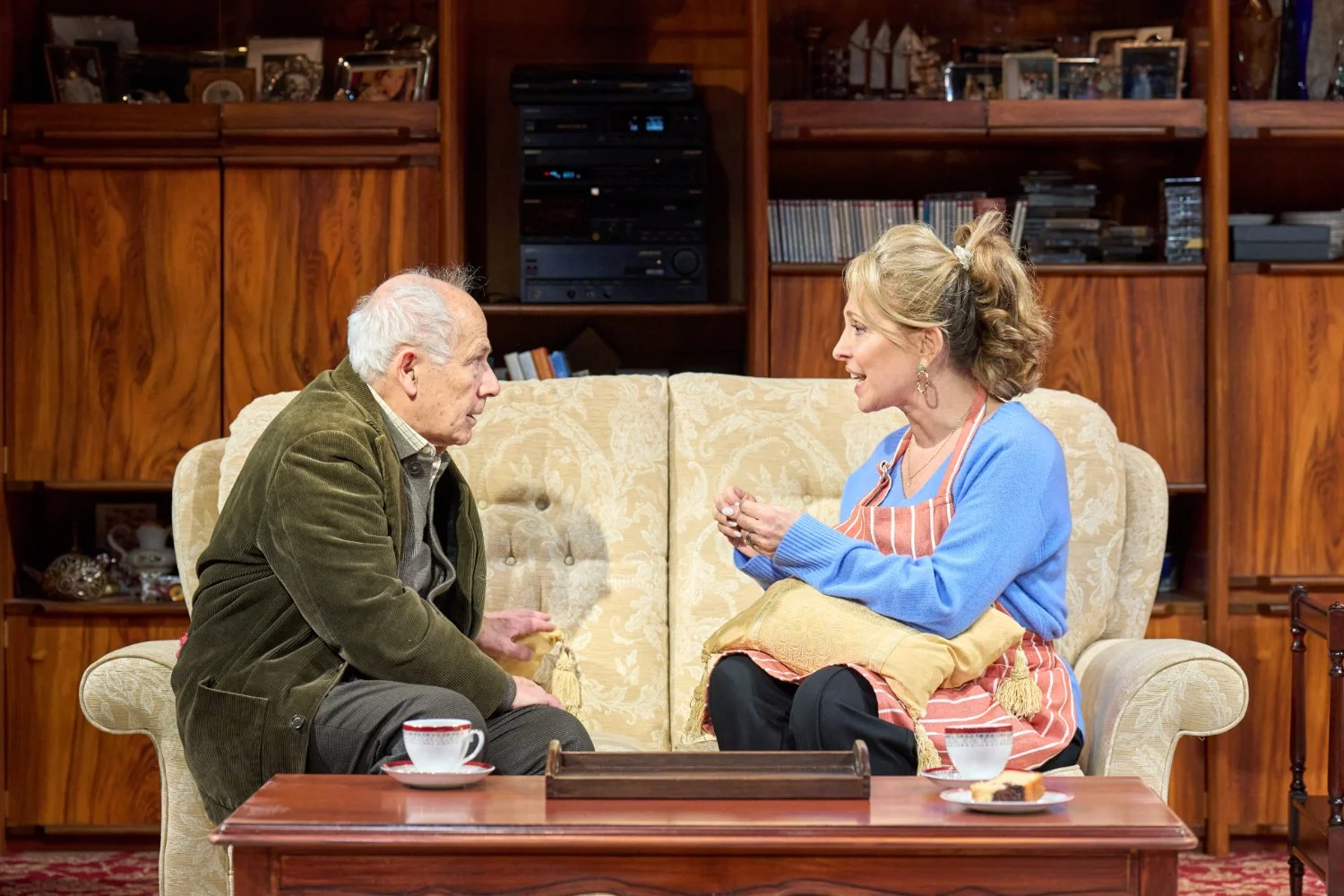
The Rosenbergs in question, a north London clan based in Edgware, are mourning the loss of son Danny, who was recently killed in service in the IDF (Israel Defense Forces). Parents Lesley (Tracy-Ann Oberman) and David (Nicholas Woodeson) are struggling to keep up the good name of their catering business following a scandal, and daughter Ruth (Dorothea Myer-Bennett) is receiving backlash from the community for helping investigate war crimes in Gaza for the UN. Inevitably, personal and political grievances clash.

The play begins with the local rabbi gently urging Ruth not to attend her brother’s memorial for fear of disruption by pro-Israel protesters. Alex Zur’s characterisation of Rabbi Simon is friendly yet trepidatious and you'd be forgiven for thinking the evening will follow suit in showing the myriad small dilemmas that colour life in the Jewish diaspora today. Alas, not so. After one scene, the rabbi leaves, never to return. This is a baffling choice that betrays a lack of dramaturgical threading and sets the scene for infuriatingly polarised characters to bicker without end for the subsequent two and a half hours.
While there’s a lot of talking in Craig’s play, there’s almost no action. Characters speak at each other while setting the table, pacing around the homey set by Tim Shortall, and other choreographed business, but the dialogue, and Lindsay Posner’s direction, feels stilted and aimless. The arguments are awkwardly interjected with theatrical tropes (a character stumbling in with an unexplained black eye; a character stumbling in with a household item brandished like a weapon; someone fainting; someone else storming out in tears… you get the gist) to try to convince us that something gripping is happening. There's also not enough humour, aside from a running gag about macaroons that tires quickly.

The play also has some concerningly outdated gender and familial dynamics. The two women are reduced to either an overly emotional wreck (Lesley) or cold outcast (Ruth) with little leeway in between, and they’re covertly nudged offstage before the trio of older male characters has the big philosophical debate. We haven’t even got to Jonny, the wayward younger brother of Ruth and Danny, because Nitai Levi is so underused as this troubled family member. It's easy to forget he exists in this piece, which seems uninterested in what the younger generation has to say about the age-old questions at hand, like whether opposing the war can truly coexist with Jewish pride.
Individual personas are underdeveloped and the posturings about Israel and Palestine are base-level and combative. A prolonged argument sees family friend Saul (Dan Fredenburgh) square up with Ruth’s boss Stephen (played by a preening Adrian Lukis), with Saul on the side of Israel’s right to defend itself and Stephen, the non-Jewish interloper, weaponising liberal intellectualism to emphasise the nation’s war crimes – it’s too black-and-white. Meaningful drama is found in grey areas and Craig’s writing, which seems to favour Saul’s opinion, flattens any real tension.

While it may be relevant to today’s headlines, The Holy Rosenbergs says little topically and skimps on innovation artistically. These shortcomings are glaring, especially when compared to a gem like Nick Cassenbaum’s Revenge: After the Levoyah, the powerful satire that inspired spirited debate about activism, hypocrisy and familial duty in Jewish Britain. Or Bad Jews by Joshua Harmon, an American dramedy that illustrated those same themes through richly layered characters and whip-smart dialogue. These pieces already feel timeless while The Holy Rosenbergs is dated.
There is merit to drawing connections between the Israel/Palestine conflict in 2009 and now. But if The Holy Rosenbergs is going to be a mainstream representation of Jewish people today – a portrayal that paints Jews as narrow-minded, neurotic infighters who find it impossible to come to solutions within the community – that is a real problem. The public needs something sweeter and more substantial than prop macaroons if we're aiming to unite and face the future together.
By Maia Kahn
Photos by Manuel Harlan
The Holy Rosenbergs runs until Saturday 2 May. 7.30pm, 3pm (Sat & Sun only). £35-£49.50, £35 concs. Menier Chocolate Factory, London, SE1 1TE. menierchocolatefactory.com