
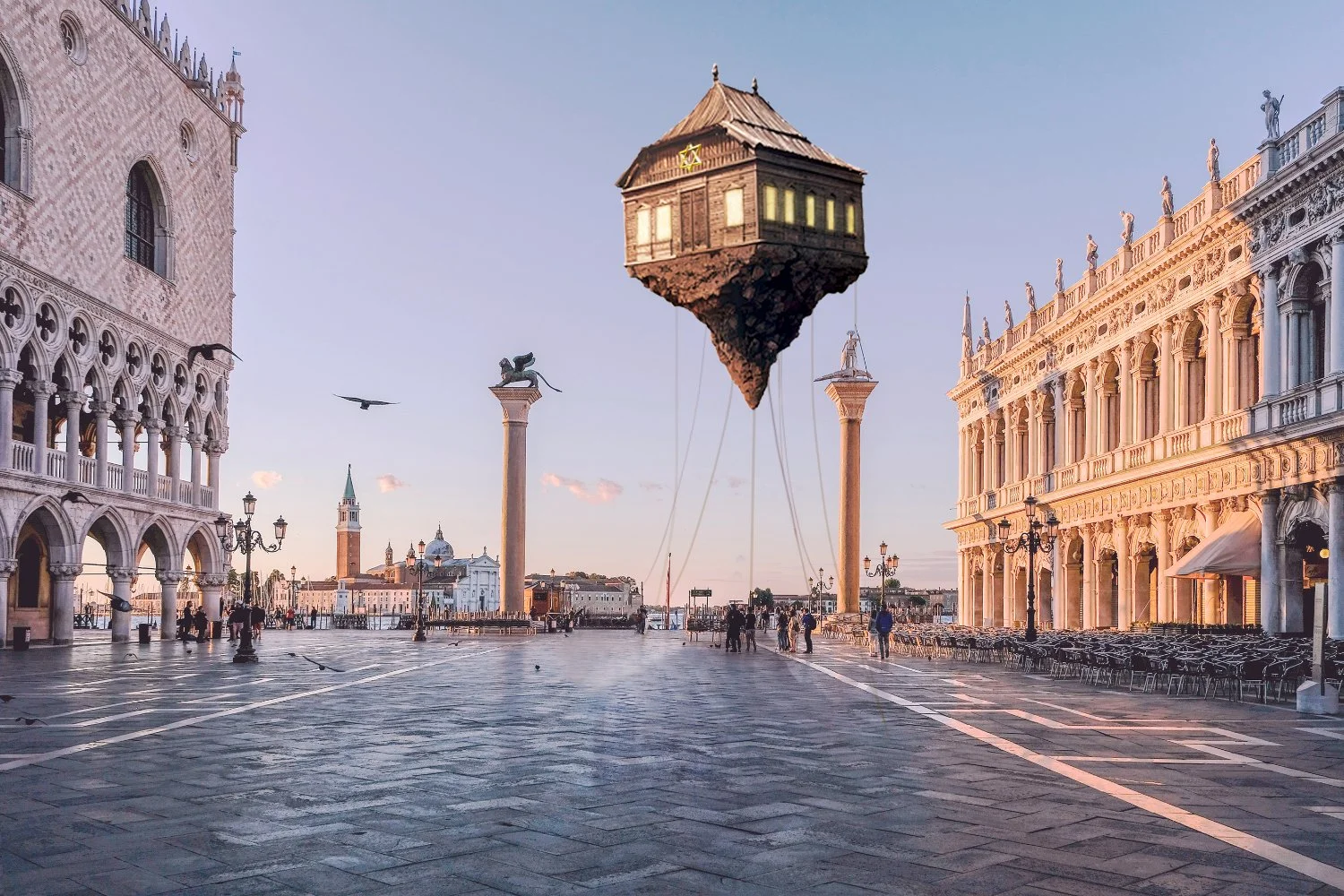
In the lead-up to the 61st Venice Art Biennale, the festival that represents countries from around the world, we speak to the curators behind Yiddishland Pavilion, a hub for artists with no fixed nationality
Dating back to 1895, the Venice Biennale is the oldest art festival in the world. Every other year, in May, it invites countries to showcase their artists in national pavilions. The first pavilion opened in 1907, hosted by Belgium; today 99 countries take part. But in an age of global migration, where do the artists go who have had to leave their homeland for reasons of safety or political defiance or to seek work? Yiddishland Pavilion is one answer.
Having exhibited in Venice alongside the 2022 Art Biennale and the 2025 Architecture Biennale, Yiddishland is returning to the city to shake up the art world. It's not an official part of the exhibition, but doesn't want to be, says its co-founder, Maria Veits. "None of the installations that we did were approved by the Biennale, and we never sought this approval. For us, it was important to be an alternative a way to open up the pavilion Biennale to voices that would never have been represented otherwise."
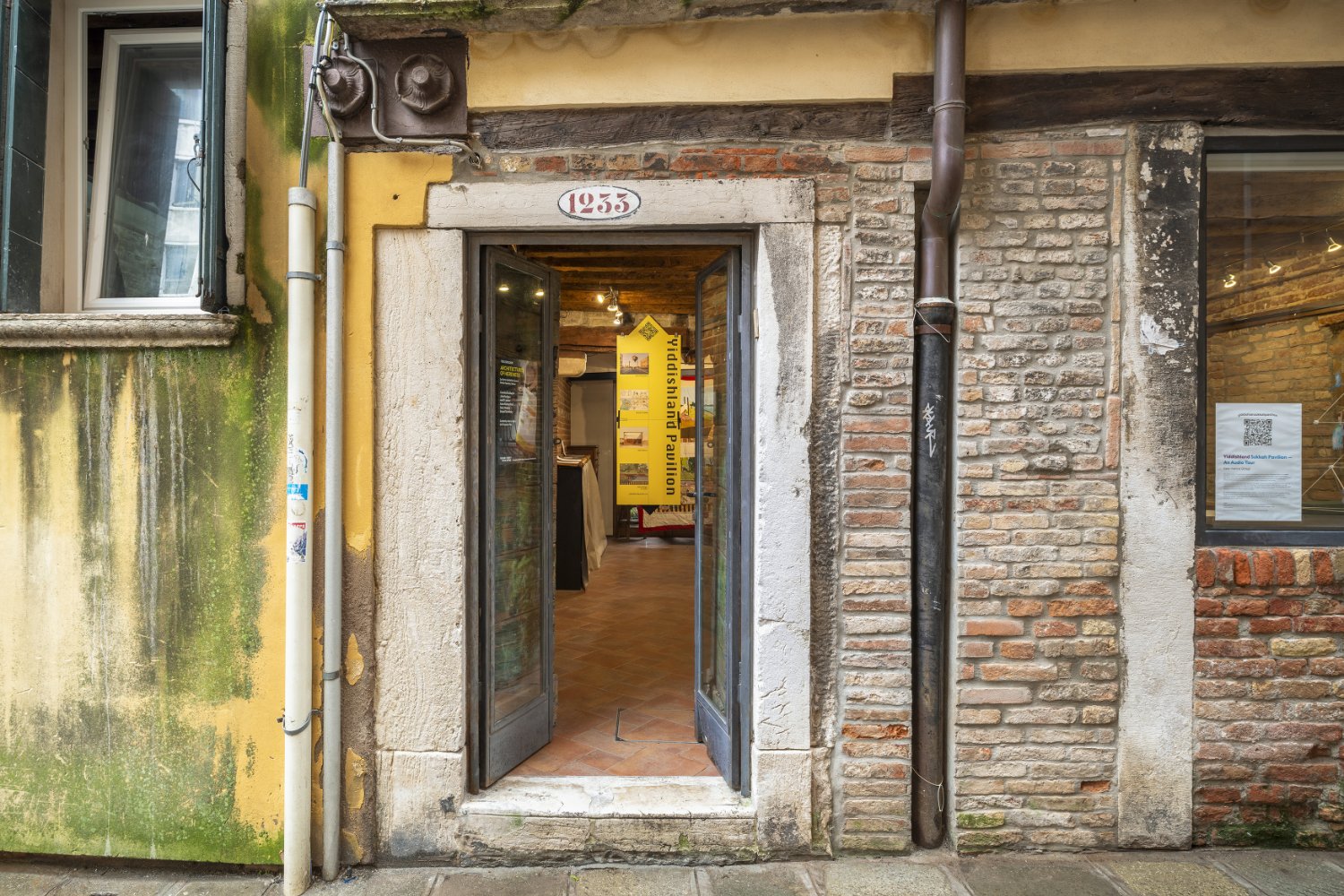
Yiddishland Pavilion exhibition space, 2025 © Filippo Molena
Veits, an independent curator from St Petersburg who has been based in London since 2020, started Yiddishland with Yevgeniy Fiks, a Moscow-born conceptual artist who's been living in New York since 1994. They met in 2016, when Veits invited Fiks to take part in an exhibition about media propaganda. After further collaborations they came up with the idea to "critique" the Venice Biennale. "The initial idea was to overlap the map of the Biennale, because 'Yiddishland' has traces in so many parts of the world. We wanted to challenge those national divisions."
Since its inauguration, Yiddishland Pavilion has presented artwork outdoors in the Giardini Arsenale, in other pavilions, including Latvia and Germany, and even as a walking exhibit, Yonia Fain's Map of Refugee Modernism. "Fain was a 20th-century artist and Yiddish poet," says Fiks. "He died in 2013, aged almost 100, in New York. He was born in what is now Ukraine, grew up in Lithuania and studied in Poland. At the outbreak of World War II he fled to the Soviet Union, then on to Japan and Shanghai. He then had a period in Mexico, before settling in New York. He was the quintessential Yiddishland artist. He lived in so many places, but didn't belong to any of the local art histories. Our pavilion is for those artists who do not belong."
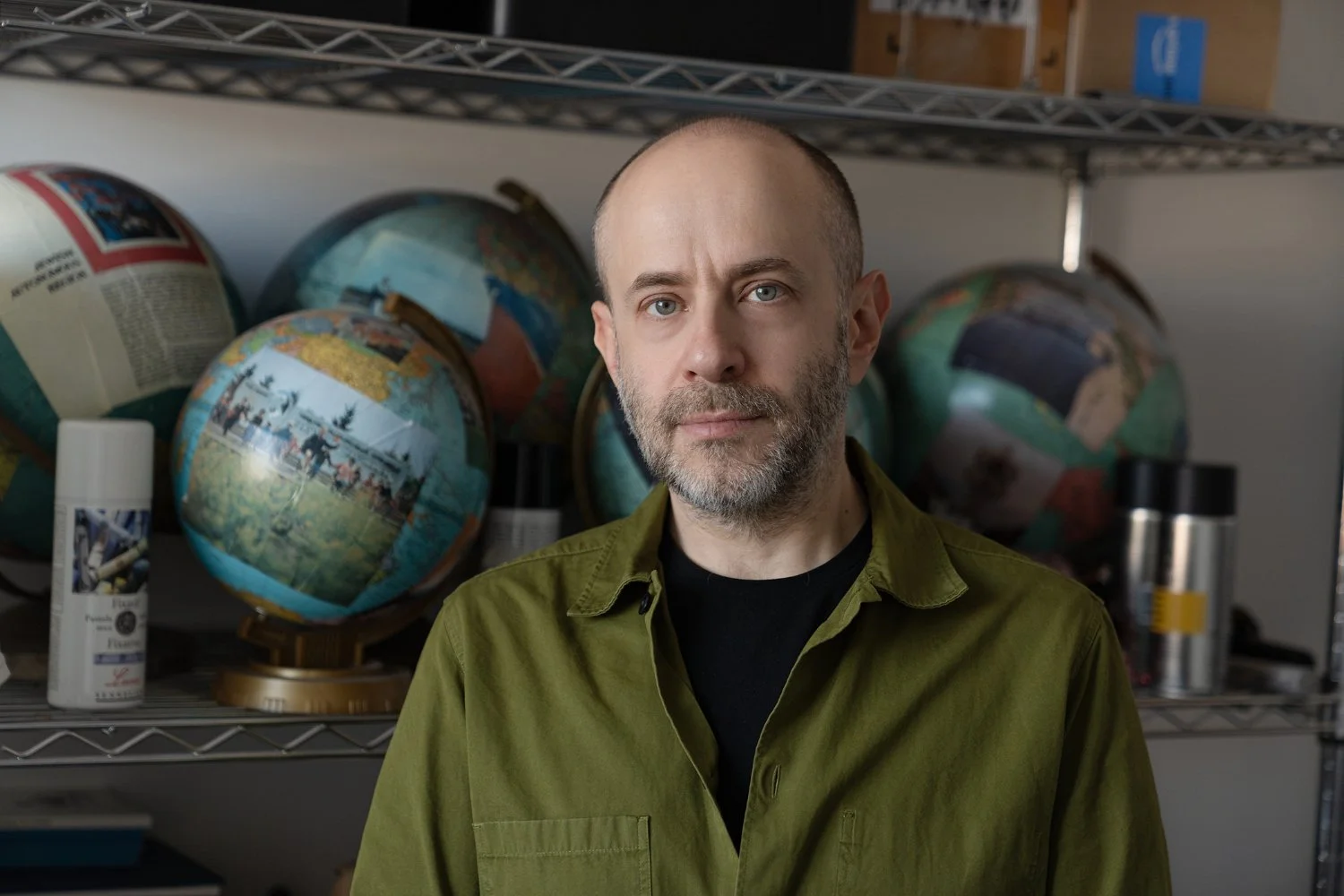
Yevgeniy Fiks
This year Yiddishland Pavilion will have its main base in the Venetian Ghetto, where it will host a group exhibition for the opening night party. The ghetto will also offer live/work space to two UK artists in an artists' residency scheme organised in collaboration with JR. The residency will provide accommodation, curatorial support and a small stipend. Dozens of artists applied for the scheme after a call for applicants in February. "We received so many applications," says Veits, "and they were so wonderful. People really want to find a especially now and place especially Jewish where they can artists exhibit work on a global level, but also be in a safe space." The winners will be announced in May and work produced during the residency will be shown at a future date in the UK.
Visitors to the May pavilion will find a wealth of creativity, including Berlinbased, American-Canadian Eliana Jacobs' spontaneous performances of Yiddish songs; Russian-born, Israel-based installation artist Masha Shprayzer's textiles inspired by her grandmother's Yiddish cookbooks; and Israeli-Palestinian visual artist Laila Abd Elrazaq's exploration of the relationship between Hebrew and Arabic and how language defines identity.
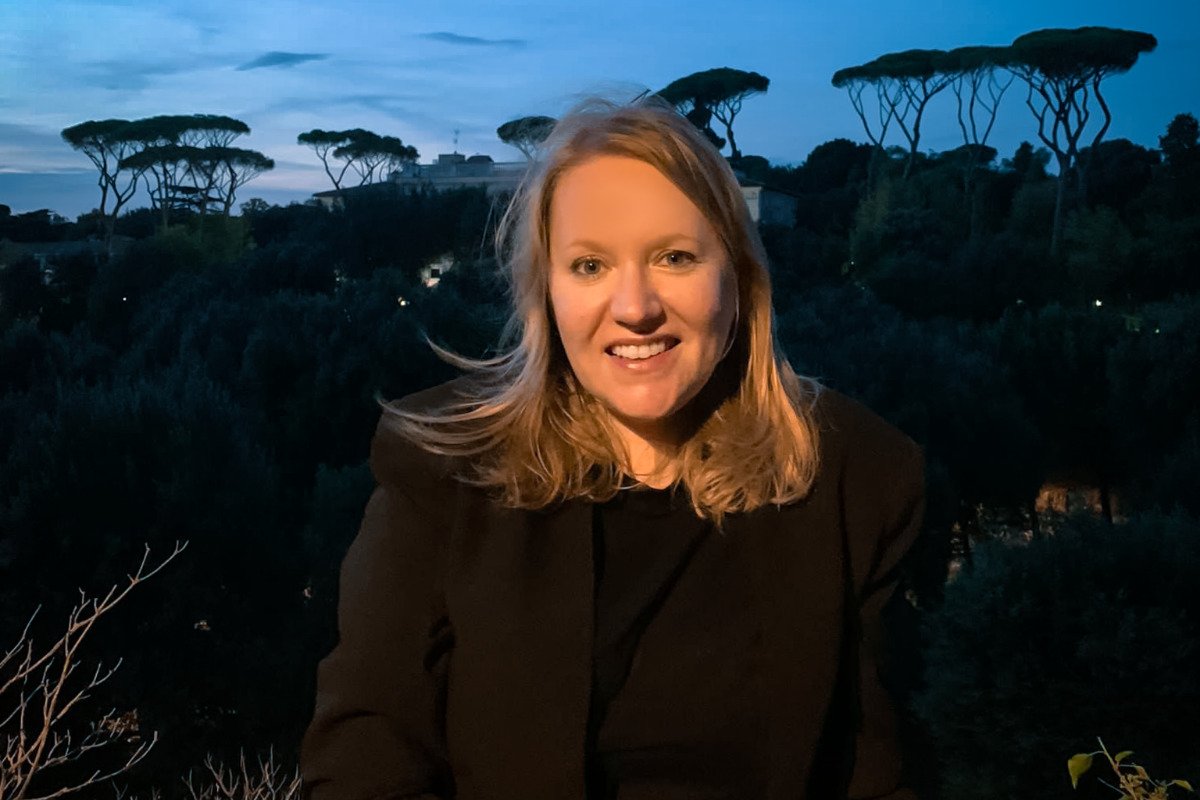
Maria Veits
This May also sees the return to Venice of Anna Kamyshan, a London-based Ukrainian architect, who last year presented The Castle of Yiddishland, an AI-generated video of traditional shtetl shuls floating above different cities around the world, inspired by Magritte's Castle of the Pyrenees. The video was part of last year's Yiddishland Pavilion, but this year Kamyshan has a separate venture. She aims to bring that video to life via a balloon-like installation entitled Nabatele, a name amalgamated from the Slavic nabat (call for attention when under threat) and the Yiddish suffix -ele (to convey affection). On her Instagram Kamyshan explains: "The work recalls how Jews in Venice were once forbidden to build synagogues on the ground floor thus raising them above the city. In perpetual flight, they evoke a homeland without land."
Yiddishland Pavilion was created as an answer to life without borders, with no single nation to claim as one's own. "Our goal was to provide a critique of the Biennale, but also to create spaces where diasporic artists, with complex identities, could find a home," says Fiks.
By Danielle Goldstein
Header image: Nabatele by Anna Kamyshan. A digital sketch with Al-generated elements. This proposal for the 61st Venice Art Biennal was first presented as a part of an Al-generated video at the Architecture of Hereness exhibition for the Yiddishland Pavilion at Ghetto Vecchio, Venice, 2025 © Anna Kamyshan
Yiddishland Pavilion runs Thursday 7-Saturday 30 May throughout Venice. yiddishlandpavilion.art
This article appears in the Spring 2026 issue of JR.