Interviews

JR OutLoud: Table tennis champ Jeff Ingber talks about travelling the world playing the beautiful game

blog-header.jpg

Jeff Ingber, table tennis champion for decades from the mid-20th century and one of Howard Jacobson's heroes, met up with JR's arts editor Judi Herman at the exhibition Chess in Shorts that accompanies the production of the Mighty Walzer at Manchester’s Royal Exchange Theatre. Ingber told Judi about playing the other beautiful game in Manchester and how it was his passport to travel the world, from Israel to China.

Chess in Shorts, an exhibition by Howard Jacobson and Manchester Jewish Museum, runs until Saturday 30 July, FREE, at the Royal Exchange Theatre, Manchester, M2 7DH. www.royalexchange.co.uk

The Mighty Walzer runs until Saturday 30 July, 7.30pm & 2.30pm, £8-£16, at Royal Exchange Theatre.

Read our review of The Mighty Walzer and our interview with the show's playwright and actor, Simon Bent and Elliot Levey.

JR OutLoud: Davina Moss talks to JR about her role in the production they're calling The Merchant in Venice at Venice Ghetto 500

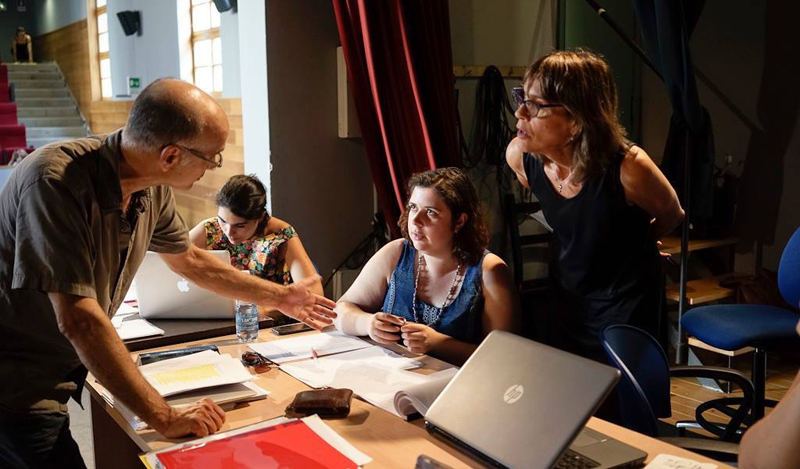
davina moss c Andrea Messana An update from Italy: Davina Moss writes:

"Rehearsals are going well! We’ve gone from table work to staging and it’s important to figure out the geometry of the space. Everyone is very excited with how the project is progressing and we’re making some very cool discoveries in the rehearsal room. In this photograph you see us debating over a line in the trial scene, which different versions of the play have different wordings for."

As the celebrations to mark the 500th anniversary of the Venice Ghetto continue, excitement mounts over the first ever performances of Shakespeare’s The Merchant of Venice in the Ghetto itself (26-31 July). In the next of a series of interviews with members of the cast and creative team, JR's arts editor Judi Herman talks to Londoner Davina Moss, currently studying dramaturgy at university in New York, to find out more about her role as assistant dramaturg on this unique production.

Visit www.themerchantinvenice.org for more info.

Interview: Playwright Simon Bent and actor Elliot Levey talk life in Manchester and bringing Howard Jacobson’s comic novel The Mighty Walzer to the stage

01RET Rehearsal The Might Walzer Elliot Levey (Oliver Walzer) photo Jonathan Keenan “It became a very exotic place for me.” Simon Bent is talking about the Manchester of the 1950s, the setting of Howard Jacobson’s mighty tale of table tennis, teenage angst and Jewish family life. “What attracted me to the book is that it’s about a particular culture at a particular time which is gone. Part of the book is about the loss of that Manchester. It was Howard’s attempt to ‘get down’ that world before it got lost.”

So how has the playwright approached the equally mighty task of bringing Jacobson’s erstwhile Manchester to the stage?

In the novel, the eponymous Oliver Walzer looks back on his teenage days growing up in houseful of aunties, run by his complicated mother and dominated noisily by his larger-than-life father, a salesman of ‘swag’, chachkas (Yiddish for cheap trinkets), and anything he can sell off the back of his van. Bright and bookish Oliver’s great escape is table tennis, a game where he can become first among equals: that is, other nerdy teenage Jewish boys equally obsessed with their indoor sport – and sexual yearnings.

“The clear through line is Ollie, sometime in the future, remembering his past – the pull between the grandiose ambitions of his father and the more reserved character of his mother. The grip of his family is something he struggles to escape from. The story is about his awakening through ping pong and adolescence through to leaving home.”

Leeds-born actor Elliot Levey says he found his alter ego in Ollie when he first read the novel in 1999. “I fell in love, someone had written my life! Rereading it now, significantly older, I realised what I once thought was a coming-of-age story is actually a mid-life crisis story dressed up as a coming-of-age story. It’s about a man who’s spent his life rejecting the world he came from. Then he goes back home and suddenly realises all his life he’s been sitting on a rich seam of joy and love and something he’s always been searching for.”

In the book, narrator Ollie takes readers into his confidence. “Jacobson is such a nimble writer,” says Bent. “He suddenly goes from being light comedic to quite serious. It’s been a challenge to capture that on stage.” So between the slices of action, Bent has Ollie talk to the audience. “He poses a question to his chums in the audience who are our psyche – “Why am I? Where I am?” And he conjures up his mum and dad and people from his past. The thing that cracks it open is the chance of going back, not reliving it as you were, but reliving it as you are.”

Bent and director Jonathan Humphreys are not Jewish. “It means I’m not caught in it. I can look at it from the outside,” says Bent. But Levey is terrified of being too Jewish and turning off an audience. “I don’t want to launder in public. I know Howard has felt that way. So it’s terrific to have two of the prime creative forces in the ring who sense what it’s like when they are being alienated – or more often than not, they are excited and curious by something which most Jews in the room think is commonplace, because we’ve grown up with those sorts of arguments, that sort of language.”

02RET Rehearsal The Might Walzer Tracy-Ann Oberman (Sadie Walzer) photo Jonathan Keenan

Part of that language is the Yiddish that peppers the novel. “We’ve kept some in and removed other bits. This was a note from Howard actually – he was keen for it not to become stereotypical,” says Bent. “I don’t mind words I don’t know coming up because I get the meaning from the context. But it’s a balancing act. The characters speak with Manchester accents, then constantly speak with Yiddishisms. They slip in and out of them. It’s like the two cultures coming together.”

The almost entirely Jewish cast includes Tracy-Ann Oberman as matriarch Sadie and Jonathan Tafler as dad Joel, and some actors actually from the North West, so those accents should be authentic. “There’s a surfeit of Jews in the cast,” laughs Levey. ”One of the things that makes that joyous, is that you are not the ‘Jew in the room’. Because it’s about a Jewish family, and most of the characters are Jews, it makes you free. It’s about growing up, about mid-life, not about Jews.”

Half the cast of ten play Oliver’s Maccabi teammates, table-tennis nerds to a man, as Levey says, “these utter nerds playing the nerdiest of nerdy sports. The upper echelons of table tennis were Mittel and Eastern European Jews, Hungarians, Czechs. Howard said that in the 1950s, there were not many Jewish sporting heroes and suddenly there were these guys with slicked back hair, baggy trousers, looking great and these nerdy Jewish kids could identify with them.”

So will we see the strokes, hear the sound of bat on ball? The cast is being coached by David Hulme, Stockport Federation’s Head Coach and Levey hints that there might be a game at the end. “We’ve got a table tennis table in the rehearsal room, we’re playing nonstop. We’ve set up a little tournament. There are going to be tables outside the theatre,” he says.

I ask the duo about the lusty adolescent desires depicted in the book: Oliver drools after gorgeous blonde table tennis player Lorna Peachley. Is the play suitable for today’s 13-year-olds?

Levey, who has three sons around that age, is confident it is. “My youngest is 10 and this is perfect for him, partly because it looks at what it was to be a kid at a time perceived to be more innocent. And [it shows] what happens to young boys when sex is repressed… it becomes something that fuels his ping pong.”

Finally what does Jacobson think of it? “When I began the adaptation, I deliberately didn’t meet Howard,” says Bent. I left it till after he’d read the first draft. He had a few suggestions which were good, and I incorporated them. He came to the first day of rehearsal and the read through. He was quite pleased, I think.”

By Judi Herman

The Mighty Walzer runs until Saturday 30 July, 7.30pm & 2.30pm, £8-£16, at Royal Exchange Theatre, Manchester, M2 7DH. www.royalexchange.co.uk 

The Mighty Walzer Walking Tour runs Sunday 17 - Thursday 28 July, 10.30am, £7, at Manchester Jewish Museum, M8 8LW; 084 3208 0500. www.manchesterjewishmuseum.com

Read our review of The Mighty Walzer and listen to our podcast with table tennis champion Jeff Ingber.

JR OutLoud: In light of Venice Ghetto 500, actor Michelle Uranowitz talks to JR about playing Shylock's daughter as part of the anniversary celebrations

As the celebrations to mark the 500th anniversary of the Venice Ghetto continue, excitement mounts over the first ever performances of Shakespeare's The Merchant of Venice in the Ghetto itself (26-31 July). JR's arts editor Judi Herman will be talking to various members of the cast and creative team in the coming weeks, but first spoke to American actor Michelle Uranowitz about playing Shylock's rebellious daughter Jessica in Venice.

Visit www.themerchantinvenice.org for more info.

JR OutLoud: A guided tour of the Jewish Museum's exhibition Moses, Mods and Mr Fish

An audio tour of the London Jewish Museum's new exhibition, Moses, Mods and Mr Fish: The Menswear Revolution, charting the emergence of the modern male wardrobe. Join Judi Herman on an exclusive journey guided by curator Elizabeth Selby from the tailoring workshops of the mid-19th century to the boutique revolution and mod culture of the Swinging ‘60s. The exhibition tells the story through the huge number of Jewish companies at the forefront of the major developments and changes in the design, manufacturing and retail of men’s clothing from the mid-19th to late-20th century. Among the highlights are the clothes themselves – including the brown suede jacket worn by John Lennon during the recording of The Beatles' 1963 album, With the Beatles. Judi rounds off her visit by sharing a rather special early ad for Moses and Son Menswear.

Moses, Mods and Mr Fish: The Menswear Revolution runs until 19 June at Jewish Museum, 129-131 Albert St, NW1 7NB; 020 7284 7384. www.jewishmuseum.org.uk

JR OutLoud: Dana Ivgy chats to JR's arts editor Judi Herman about her role in Next to Her

Israeli actress Dana Ivgy chats to JR's arts editor Judi Herman about her role in Asaf Korman's drama Next to Her. This powerful, challenging film – with a script by Korman's wife Liron Ben-Shlush – explores the symbiotic relationship between Chelli (played by Ben-Shlush) and her mentally-challenged sister Gabby (Ivgy), for whom she is the sole carer. One day she is forced to hand Gabby over to a daycare centre part-time, which is when a relationship of another kind develops with Zohar (Yaakov Zada Daniel) the new gym teacher at the school where she works. Ben-Shlush based this story on her own experience of having a mentally disabled sister and worked closely with friend and co-star Dana Ivgy on her role.

Next to Her can be watched on BFI Player for £6 or at the following screenings:

Friday 25 - Wednesday 30 March, times vary, £7.50, at MAC Birmingham, B12 9QH; 0121 446 3232. https://macbirmingham.co.uk

Sunday 20 March, 8pm, £8.50, at Glasgow Film Theatre, G3 6RB; 0141 332 6535. www.glasgowfilm.org/theatre

Read our ★★★★ review of Next to Her

JR OutLoud: Diane Samuels talks about her play Poppy + George and her new oratorio Song of Dina

Liverpudlian playwright Diane Samuels talks to Judi Herman about identity and change from London's East End 1919 to now. These themes feature in her play Poppy + George, about Northerner Poppy Wright, who is taken on at a tailoring workshop by the proprietor Smith, a Russian Jew with a Chinese past. It's here that Poppy also meets Tommy the music hall artist and George the chauffeur, both changed by serving in the trenches.

Diane also discusses her new project (at 21:49), Song of Dina, a multimedia oratorio with music by composer Maurice Chernick, based on the story of the Patriarch Jacob’s only daughter.

Poppy + George runs to Saturday 27 February, 7.30pm & 2.30pm, £12-£22.50, at Watford Palace Theatre, 20 Clarendon Rd, WD17 1JZ; 01923 225671. http://watfordpalacetheatre.co.uk

Song of Dina launch event on Wednesday 6 April, 7.45pm, FREE, at JW3, 341-351 Finchley Rd, NW3 6ET; 020 7433 8989. www.jw3.org.uk

Read JR's four-star review of Poppy + George

Interview: Josh Bradlow from Stonewall shares his story for LGBT History Month

Josh Bradlow, Stonewall LGBT charity Whilst we're in the midst of LGBT History Month, Josh Bradlow shares his experiences of coming of age as a gay Jewish man, from his 'mortifying' Bar Mitzvah, to his current work as a policy intern at LGBT equality charity Stonewall. 

"Of the many embarrassing moments I had throughout my teenage years, one in particular stands out for me. On a sweltering June afternoon in a crowded Lebanese restaurant, a relative addressed my Bar Mitzvah party. ‘Josh probably wouldn’t want you to know this’, he said, ‘but his favourite film is Miss Congeniality’. The audience erupted in gales of laughter, and I was mortified.

"It might strike some people as confusing as to why I found this so embarrassing. Anyone who knows me these days will know that I carry precisely no shame about my love for Miss Congeniality (and to a lesser extent, Miss Congeniality 2: Armed and Fabulous). But at that moment, hours after I had supposedly ‘become a man’ in the synagogue,  I felt that I’d been exposed as being ‘unmanly’, and back then that felt like a serious problem.

"By that point I’d been trying to ‘pray the gay away’ for two years, and to say that I was unhappy with my sexuality would be an understatement. At the same time, I was navigating the difficulties that come with being one of a handful of Jews in a school where anti-Semitism was almost as common as homophobia.

"Whilst I was spared the worst of the bullying, I still received my fair share of holocaust jokes, and I was left with the feeling that I didn’t belong.

"I coped by hiding my sexuality and pouring myself into my academic work. Although I was dogged by a lingering sense of shame and a constant fear of exposure, I managed to achieve a kind of balance between my external and internal lives, and I enjoyed a lot of my teenage years.

"And gradually, over time, things began to change. I started to see public figures – including gay Jews like Stephen Fry and Simon Amstell – whose experiences and identities I could relate to. I began to surround myself with more queer influences, from Queer as Folk to the Velvet Underground, which affirmed my sense of who I was. And as I left school and moved into the mixed, more liberal environment of university I began to reconcile myself with the fact that I wasn’t getting any straighter, and I came out in my second year of university.

"In the years since coming out I’ve been extremely well supported by my family and friends, many of whom are Jewish. Whilst it’s certainly not been easy to face up to the shame that I’ve carried about my identity, I feel increasingly proud to be part of two overlapping communities with rich histories of resilience, survival and creativity in the face of oppression. And I feel proud to be part of a religious community which is increasingly accepting and affirming its LGBT members.

"But not everyone in our community has been as fortunate as I’ve been. I think we need more visible LGBT role models and allies to demonstrate that it is possible to be both Jewish and LGBT, and to show all members of our community that LGBT people should be accepted for who they are. Judaism is a religion which sees discussion and debate as not simply a means to an end but an end in itself; we need to broaden the debate to ensure that all of our voices are heard in our community today."

Josh lives in London and is a policy intern to the CEO of lesbian, gay, bi and trans equality charity Stonewall.

You can support Stonewall’s work by donating, fundraising, attending their events, sharing their campaigns on social networks or by taking part in a Stonewall Challenge. Find out more information at www.stonewall.org.uk.

JR OutLoud: Judi Herman speaks to the brains behind the musical retelling of the real-life riches to rags story, Grey Gardens

Photo © Scott Rylander

In the mid-1970s Albert and David Maysles – first-generation sons of Jewish immigrants to the US from Eastern Europe – made Grey Gardens, one of their most famous films. The documentary told the story of a mother and daughter from the highest echelons of US Society, Edith and Edie Bouvier Beale, who were the aunt and cousin of Jacqueline Kennedy Onassis. The two Bouvier Beale women were discovered living as reclusive social outcasts in Grey Gardens, a dilapidated mansion overrun by cats that was so squalid the Health Department deemed it “unfit for human habitation”.

Now another creative Jewish pair, composer Scott Frankel and lyricist Michael Korie, together with book writer Doug Wright, have brought their multi-award-winning musical based on the film to London. JR’s arts editor Judi Herman, who saw Thom Southerland’s European premiere starring Sheila Hancock and Jenna Russell, was enchanted by this riches to rags story, as you’ll hear in her interview with the three writers.

Grey Gardens runs until Saturday 6 February, 7.30pm & 3pm, £25, £20 concs, at Southwark Playhouse, 77-85 Newington Causeway, SE1 6BD; 020 7407 0234. www.southwarkplayhouse.co.uk

Watch the cult documentary Grey Gardens in full below:

See Jenna Russell sing Another Winter in a Summer Town from the musical:

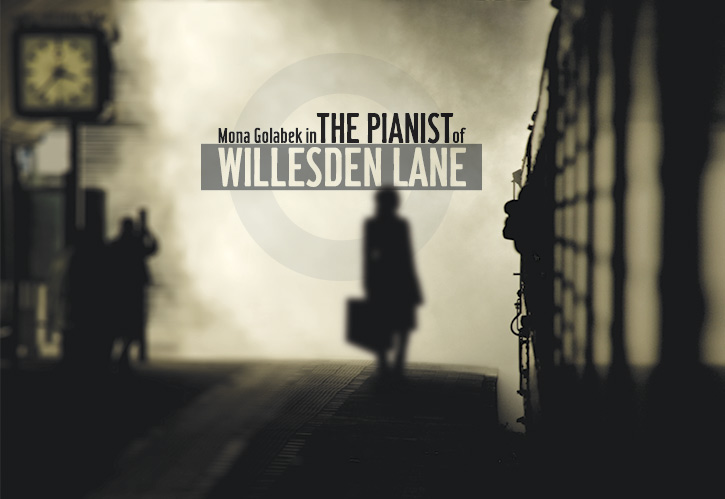
Mona Golabek talks about The Pianist of Willesden Lane, the moving memoir of her mother – concert pianist and Kindertransport child - that she brings to the stage for its UK premiere this January

The Pianist of Willesden play 2016 Adapted by Hershey Felder from the book The Pianist of Willesden Lane, by Los Angelean pianist Mona Golabek and Lee Cohen, this is the true story of Mona’s mother, Lisa Jura, a young Jewish pianist whose dreams about her Vienna concert debut are shattered by the Nazis in the 1938 Anschluss like the glass of Kristallnacht, as her family bravely places her on the Kindertransport to London. Golabek plays live on a concert grand in this moving one-woman show, the London run of which coincides with Holocaust Memorial Day on Wednesday 27 January. Judi Herman talks to Golabek about The Pianist of Willesden Lane to coincide with its UK premiere.

What made you decide to make the book into a one-woman play?

"My path crossed with Hershey Felder, quite a genius in his particular genre and he took me under his wing, believed in the story and adapted the book for the stage.  He helped me to find an inner voice, to inhabit the story and the characters and become my mother in a way – I do become her, imagining her in that story and taking the audience on that journey."

It’s extraordinary to play your own mother, particularly in this circumstance with this very emotional story – is that quite hard for you?

"It’s a very powerful statement to make and people ask me how I’m able to do this night after night. My answer is, this is a privilege and I think it’s become my destiny in a way. When I was a little girl my mother taught me piano and she always told me each piece of music tells a story and in those lessons she told me she told me the story of how she got out on that train and grew up in Willesden Green as a Jewish refugee and how the kindness of that community and the British people was the reason that I, as a little child, was alive.  They saved my life, these people! So I’m coming back to London to say thank you. I’m bringing the story home."

Was the Willesden Lane hostel Jewish, as the matron was a Mrs Cohen, and were all the children Jewish?

"Yes all the children in the hostel were Jewish.  There were all sorts of kids, 30 of them from different parts of Europe."

So is the play a dramatisation of the book?

"It’s an adaptation. The book follows many of the characters who landed up in Willesden Lane.  My mother of course was the primary character.  The play at 90 minutes is a condensation, with strong elements of music."

To me the idea of the music, which your mother handed on to you, sounds so powerful. You are also a very accomplished pianist, which you’ve inherited from her. How did you choose the pieces that you use in the show?

"The music was very much integral to what my mother learned along the way.  So for example the Grieg Piano concerto in A Minor that is so important in this show, this story, was the piece she dreamed of making her debut with when she was a little girl on the way to her piano lessons."

The Steinway that you’re playing in the show is spectacular – is it a special family Steinway?

"All Steinways are special to perform on, though it’s not a special instrument from that time period. It’s a great honour for me to be a Steinway artist. This is a kind of love letter to the piano and to Steinway. Because my mother was a poor refugee girl, she dreamed of playing, making her debut, on a Steinway. She went to hear Dame Myra Hess playing on a Steinway and, that was an extraordinary moment for her. She talked to me about going to hear (Dame) Myra Hess in the war years all the time.  She went to hear Clifford Curzon at the Wigmore Hall and Sir John Barbirolli."

As well the stage show, you have developed a documentary film from your book, is that right?

"Yes, that’s right. We have been shooting I am a Pianist all round America in many different cities where I bring this story to young students. They read the book and create projects around it and experience the show and we’ve been filming that and getting student and teacher reactions, bringing them the story of a Jewish teenager of 70 years ago, which we have found very relevant to young people today."

It’s wonderfully evocative for us here to have a story called The Pianist of Willesden Lane, for London Jews anyway. Willesden is a part of North West London many Jews know – it has been a rather Jewish area.  But of course that name would mean rather less to people round the world, particularly in America. As you say you are indeed bringing the story home.

"You’re absolutely right. I’ve been criss-crossing America bringing a story most people didn’t know about, the story of the Kindertransport. Holocaust education is not mandatory across America, only in certain States, New York, California, New Jersey, Illinois, for example.  So for a broad spectrum of American students in the 21st century, this was their first studying of the time period of this particular storyline. But the most important thing that I always say is that it’s a universal story. It’s being played out now again as we see the terrible movement of refugees and we’re being challenged now today, just as the British people were so extraordinary to take these children in, to give them homes and shelter."

From our point of view here in the UK it couldn’t be more timely, as your run takes in 27 January, Holocaust Memorial Day. As we lose the generation that lived through the Holocaust, the survivors themselves, you, as the second generation, sharing what’s been handed on to you is so vital. Are you an only child?

"I had the most wonderful sister in the world, Rene, but we lost her at an early age. I raised her children and they are all taking on this legacy and feel very deeply about it. One of them actually made a film in Poland about my father’s side of the family. It’s called Finding Lea Tickotsky and it’s been shown herein the USA on CBS."

Let’s go back to the play and the relationships you show in it. You never met your grandmother and yet you must feel you know her.

"Yes, I know her through my mother, and my grandmother figures in the show."

So you play her too, and your mother’s sisters, your aunts… Tell me about your father.

"That would be giving too much about the show. My mother was torn between two men…"

So there’s a lot more to it than just the story of the music. You narrate the story and play the men too?

"I do jump into some characters. The hardest thing for me is my accent. My mother had the most beautiful accent – British tinged with Viennese. I always said she was a cross between English tea and Viennese Sachertorte! I hope the British people will forgive me for my British accent – and my German accent. I hope they will understand that I’m just a daughter and a concert pianist coming back to say thank you for everything. That’s really what this is about."

By Judi Herman

The Pianist of Willesden Lane runs Wednesday 20 January – Saturday 27 February, 7.30pm & 2.30pm. £22.50-£40. St James Theatre, 12 Palace St, SW1E 5JA; 0844 264 2140. www.stjamestheatre.co.uk

To find out more about all the projects in which Mona Golabek and her family are involved, including the documentary films, I am a Pianist and Finding Lea Tickotsky, and the book The Children of Willesden Lane: Beyond the Kindertransport – A Memoir of Music, Love and Survival by Mona Golabek and Lee Cohen, visit holdontoyourmusic.org.