

This Friday sees the release of Hanukkah+, a brand new compilation of Chanukah music, created by some major names in the contemporary music world. And while they're not all Jewish, it's fair to say that the subject matter…

THE LATEST WORD FROM THE JR EDITORIAL TEAM
JR Blog
 This is not where you will read erudite analysis or an account of a life, or even of the work. I am simply asking myself and others like me why we have been so profoundly affected by Leonard Cohen's words, music and life.
For a time now, aware that the man who told us all "I'm your man" was an octogenarian, I have been confiding that I hoped he would live to a great age because the world would be a poorer place without him. It was a better place with him in it. I think I feel this way because of the arc of his life, with its many pathways, both sacred and profane, as shared through his music, confided to me and so many others through his gorgeous, elegant poetry and lyrics.
The devout Jew engaged in an honest "I-Thou", one-to-one relationship with the God with whom he wrestles and may, like me, doubt, is also the apparently cheerful, though silent Buddhist. He was also the sublime lover, the dirty lover and the unfaithful lover; but a lover who was always as honest with his earthly lovers as with his God. I never met him but I'm convinced that he would have been the best of companions – despite the fug of tobacco smoke.
Returning to his Judaism, famously self-evident in Hallelujah and If It Be Thy Will, look closer and you will see how often he quotes not just from the scriptures (Old and New Testament) but also from prayers and writings central to the faith into which he was born. Who by Fire picks up powerfully, almost playfully – even blasphemously some might say – on “U-n’ tanneh tokef”, “Let us proclaim the holiness of this day”, an ancient liturgical poem describing the Day of Judgement, an important part of the High Holy Days Liturgy recited at Yom Kippur, the Day of Atonement, when God decides “who shall live and who shall die … who shall perish by water and who by fire…”.
And quoting the opening words of the Kaddish (prayer of mourning) in the title track of You Want it Darker, the album released shortly before his death, “Magnified, sanctified, be thy holy name”, is as much a part of his message that he is ready for imminent death as the words he repeats as a refrain, “Hineini, hineini I’m ready, my lord”. These words, which echo through the Torah from Genesis to Isaiah, are picked up by the cantor at his Montreal synagogue to end the song with a heart-stopping echo. How like Cohen not to go without leaving one last great legacy.
I hope to go into this in more detail in the next issue of Jewish Renaissance, comparing Cohen's lyrics with Nobel Laureate Dylan. But for now, rest in peace Leonard Cohen; z”l (zichrono livrakha – may his memory be a blessing)". You may have reached the age of 82, but for me, as for so many more, your death was untimely, though I'm sure you met it with your usual great grace, ready for this last new experience that you have written about with such beauty.
 The millennium was a time of fireworks and celebrations, but it also marked a moment for Jewish music to benefit enormously. The Jewish Music Institute (JMI), in partnership with the music department at SOAS, was fortunate to win £240k from the Millennium Commission to give away in grants to enable individuals to achieve their dream projects in Jewish music. Fifteen years on, we can see how significantly awareness of Jewish music – and lives – were changed.
Exciting proposals flew in from across the country. The 63 successful candidates were paired with mentors and monitors to ensure fruitful outcomes. Each project needed an end product that would benefit a community. The money could be spent on travel, training, equipment, performances and publications to help attain their aims.
Awardees arranged choral festivals and conferences, produced CDs, wrote musicals, oratorios and even a novel. Concerts, cabarets and dance workshops were held in schools, concert halls and hospitals around the country and even in prisons. Subjects included Jewish jazz, medieval poetry, Torah chanting, Argentinean tango, Israeli piano music and even music originally suppressed by the Nazis.
Because of the experience, award winners went on to great success. Such as Meg Hamilton, a classically trained violinist who has become a key player in both Jewish classical and folk music; Michael Etherton now directs several Jewish Choirs; and Vivi Lachs went on to complete a PhD in London Yiddish songs and recently announced she is starting the London Yiddish Parade, which includes a marching band and Yiddish chorus.
Looking back over the many exciting programmes during my 28 years at the helm of JMI, I believe that this one has had the greatest impact. Not only did it introduce a wide range of Jewish music and culture to hundreds of people of all ages around the UK, but it allowed artists to flourish. Best of all it equipped and encouraged highly talented young men and women to take up a career in Jewish music, many of who are household names today as teachers and performers, holding prestigious positions in our institutions.
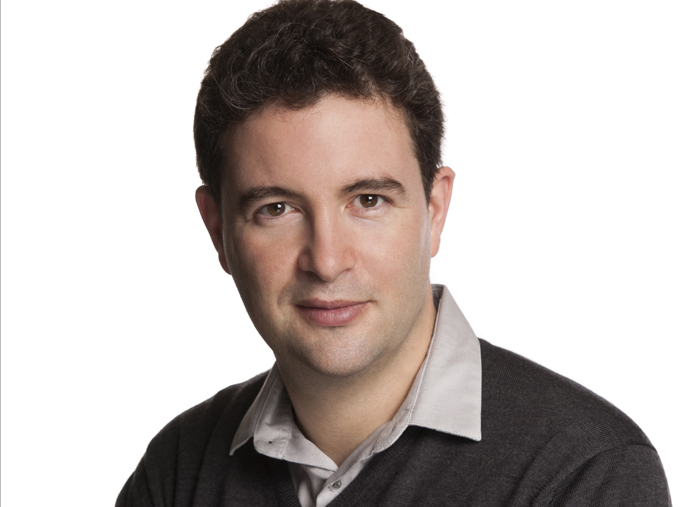
Conductor, pianist, singer and composer Benjamin Wolf acknowledges that it was the Millennium Award that steered him towards a career, not in the city or law, but in Jewish music. “The award to complete my piano concerto L’Chaim was a turning point for me”, he elaborates. “It was soon after I graduated from Oxford and without it I probably wouldn’t have pursued my interests in traditional Jewish melodies so thoroughly. There is no doubt that it helped me to obtain early jobs in Jewish music, and because of these, my interest in and knowledge of the subject has continued to develop.” Today Ben is the music director of London’s prestigious Zemel Choir and of Belsize Square Synagogue where he arranges music and connects for both the professional and community choirs. Ben has gone on to compose a cello concerto on Jewish themes and has orchestrated several pieces by Jewish composers. His orchestra, the Wallace Ensemble regularly performs concerts of Jewish music. He regularly runs Jewish choral workshops in London and arranges international choral festivals that bring together Jewish choirs from Berlin, Paris, Prague, Rome and Israel, amongst other places, to perform and work with his choirs in London. He has also set up his own Jewish a cappella quartet, bOYbershop.

Ilana Cravitz, like Ben Wolf, says the Millennium Award came at a very important stage in her musical journey. “It enabled me to study in America with some of the most prominent figures in the klezmer world, supported me in developing my research, teaching and networking skills, and provided a basis for me to implement ideas with willing participants.” Ilana, who set up and leads the outstanding London Klezmer Quartet, which has made several CDs and toured the UK, Europe and Australia, also runs Hopkeles (Yiddish dance parties) for organisations or individuals and arranges regular monthly klezmer workshops at a London pub. She adds: “Without the help of the award, I doubt that I would have been invited to write Klezmer Fiddle – A How-To Guide for Oxford University Press or become the professional klezmer performer and teacher that I am today.”

Louise Taylor hand-picked eight players to train weekly at JMI with legendary klezmer clarinettist Merlin Shepherd and the result was She'Koyokh. The klezmer ensemble are now one of Europe’s leading klezmer bands, playing concerts, festivals and Jewish ceremonies all over the world, and of course they have a special place to come back to and perform at JMI’s Klezmer in the Park every summer. The group’s clarinettist, Susi Evans (pictured), explains how fundamental the award was to her career: “At the time I was a student at the Royal Academy of Music training for a future in classical music, so my teachers were not at all keen. I’m sure I was the first student in the Academy’s history to perform with an eight-piece klezmer band in my final recital. Happily, the examiners loved it. I learned how to play by ear and improvise and have gone on to study other Eastern European styles, leading to theatre work, session work and performing with the Jocelyn Pook Ensemble and the London Klezmer Quartet. I’ve run klezmer workshops as far afield as Australia and taught on the faculty at JMI Klezfest 2015. Studying klezmer with the award has empowered me greatly as a musician.”
Sophie Solomon, who co-founded fusion group Oi-Va-Voi while studying at Oxford, won funding to make The HipHopKhasene – a CD of music that reimagines a Yiddish wedding in a hip-hop style, including Yiddish freestyle rapping. She told us that the Millennium Award was a "pivotal moment" in her career. "It enabled me to develop as an artist and a producer and to work with the some of the most celebrated names in the Yiddish music revival. It funded this hip-hop album, which afterwards won an award, and also sparked off a real-life hip-hop Jewish wedding where we all performed in a whisky distillery in Toronto complete with rapping Badkhn (comedian).” Sophie subsequently formed a solo band, which recorded for Decca Records, and she has composed music for the National Theatre. Sophie is now the esteemed artistic director of JMI where she is taking the organisation to exciting new heights. She has commissioned new works and initiated stimulating Jewish music education programmes in schools. She continues to expand the annual JMI Klezmer in the Park festival each September in Regent's Park and, while preserving and enhancing JMI’s summer schools in Yiddish language and song, she has revived the JMI KlezFest training programme in London. Both Sophie and Jennifer Jankel, the current JMI chairman, hope that the Jewish Music Institute’s current creative programming will continue to inspire future careers in Jewish music.
By Geraldine Auerbach


