Reviews

JR reviews two ★★★★ picks from Edinburgh's International Shalom Festival: rap opera The City and documentary Disturbing the Peace

The City ★★★★ – Israel's Incubator Theatre makes its Edinburgh debut at Shalom - just three years after protests prevented it from being part of the Festival Fringe

One highlight of the International Shalom Festival is the return to Edinburgh of Jerusalem's Incubator Theatre with their hip-hop opera The City, a clever homage to all those private dicks who walk the mean streets of the city trying to solve crime. The City is entirely written in rhyme, combining rap, hip-hop and spoken word to tell a tale of vanity, lust and murder. This is the company targeted by pro-Palestinian demonstrators in 2014, which meant they were unable to perform at the Fringe. So it's all the more exciting and gratifying that they are at last making their proper Edinburgh debut. When JR's Arts Editor Judi Herman saw The City at JW3, London, where it played three sold-out performances in the aftermath of the Edinburgh protests, she was inspired to write the following four-star review in rhyme.

I’m telling you, friends, get down to The City,

A fast-moving show that’s mighty witty.

Israelis rap in English rhyme,

A dark twisted story of a web of crime.

A private dick, just an ordinary Joe,

Meets a mystery blonde and goes with the flow.

If you can get a ticket, you will too,

It’s a sparky performance from a versatile crew.

A band and beatbox, shared imagination,

The City never gets lost in translation…

The City runs Tuesday 8 – Thursday 10 August. 11.30am, 4pm, 8pm (Tue & Wed only). £12.50, £9.50 concs, £8 NUS. Drummond Community High School, Edinburgh, EH7 4BS. www.edfringe.com

 

Disturbing the Peace ★★★★ – Searing testimony from fighters for co-existence in Israel/Palestine

Some fine thought-provoking feature and documentary films are part of the entertainment and dialogue at the Shalom Festival, with filmmakers and activists involved in that discussion between Israelis and Palestinians taking part in post-show discussions and Q&As.

One in particular is the documentary Disturbing the Peace, from directors Stephen Apkon and Andrew Young. The film follows an activist group called Combatants for Peace and tells the story of these former enemies – Israeli soldiers and Palestinian fighters, many of whom served years in prison – who have decided to join forces in order to work towards a peaceful resolution and to stand up for what they believe in. The two screenings of Disturbing the Peace will be followed by a panel discussion and Q&A session.

Disturbing the Peace runs Wednesday 9 & Thursday 10 August. 3.30pm (Wed), 1.30pm (Thu). Free. Drummond Community High School, Edinburgh, EH7 4BS. www.shalomfestival.org

Judi Herman saw Disturbing the Peace at the 2016 UK Jewish Film Festival and you can read her four-star review below:

http://www.jewishrenaissance.org.uk/blog/review-films-disturbing-the-peace/#more-1374

Click here to find out what else is going on at Edinburgh Festival Fringe.

Review: Fiddler on the Roof ★★★★ - Raising the roof at Chichester Festival Theatre

I am grateful to my Bubbe, who arrived in London from the Pale of Settlement in 1890, cradling the first of her 10 children, my beloved grandma. And equally to the paternal grandfather I sadly never met, who made his painful way to Britain from Bobruisk, Belarus, despite his gammy leg. Thanks to them my family thrived here rather than perishing in a pit in the Holocaust. But did they leave voluntarily, or were they pushed out like the Jews of Anatevka?

Daniel Evans’ beautifully thought-through production made me ponder this question more than any previous incarnation of this much-loved musical, based on Shalom Aleichem’s equally-loved tales. Gloriously funny though it may be when appropriate, it provokes thought as well as sentimental tears, starting with the eloquent opening, which actually has these Jews arriving to set up home in Anatevka from wherever else they have fled or been ejected.

Each carries some form of luggage – a metaphor for emotional baggage, somehow simultaneously obvious and subtle. For much of the evening designer Lez Brotherston offers little more set than these precious objects, both sentimental and practical, accompanying their owners to change each scene (the Sabbath table is extended to accommodate visiting student Perchik by adding a trunk covered with a tablecloth).

So as they dare to put down tentative roots in Anatevka, instead of the opening number Tradition bursting brashly onto the stage, its performers earn the right to share the significance of their traditions with their audience.

It makes the humour of Omid Djalili’s splendidly warm and rounded Tevye all the richer and more nuanced. Iranian-born Bahai Djalili is no stranger to playing Jews. On his CV are Fagin in Oliver! and a Muslim who discovers he was born Jewish in Infidel – you could now add he was born to play Tevye. He splendidly embodies the conflicted milkman torn between the security blanket of tradition and losing his daughters if he won’t face up to the changes their generation embraces. And he effortlessly laughs with his audience at himself and that dilemma, coining anew those catchphrases: “On the one hand… on the other hand…” and “As the Good Book says…” so you feel his God might laugh sympathetically too.

He’s well-matched by Tracy-Ann Oberman’s brisk, dry-humoured, long-suffering Golde, especially in their touching “Silver Wedding” duet Do You Love Me? (“after 25 years it’s nice to know!”).

The show’s elegant structure has each of his three oldest daughters push the boundaries a little further. Tzeitel gets her father onside so she can marry her poor Jewish tailor rather than wealthy widower, the butcher Lazar Wolf. Hodel and student revolutionary Perchik will marry without Tevye’s permission if necessary. And Chava must accept that she is dead to her father if she marries ‘out’ – her beloved Fyedka is a Gentile. All are strongly cast here. Simbi Akande’s Tzeitel is touchingly single-minded in her love for Jos Slovick’s doggedly determined Motel. Emma Kingston’s spiky Hodel vividly charts her awakening love and awareness of a world outside Anatevka, as she falls for Louis Maskell’s ardent, assertive Perchik. And Rose Shalloo’s vulnerable, bespectacled Chava is heartbreaking, pleading for acceptance of Luke Fetherston’s sensitive Fyedka.

Watching the “little unofficial demonstrations” that the local militia are ordered to carry out against their Jewish population, starting with the chilling disruption of the joy and emotion of Motel and Tzeitel’s wedding, you can understand Tevye’s tipping point.

Set pieces like the wedding and Tevye’s dream conjuring Grandma Tzeitel (Mia Soteriou) to speak for Motel and Lazar Wolf’s formidable late wife Fruma Sarah (Laura Tebbutt) to forbid her husband’s remarriage are imaginatively realised, the latter with stunning lighting (David Hersey) and fiery effects. And Alistair David’s choreography has Anatevka’s Jews hold themselves with an authentic upper-body erectness, proud and graceful, whether in a circle dance for both sexes or the famous men-only bottle dance.

So if you’ve ever sniffled your way through what you thought was a schmaltzy musical, this production earns real tears alongside the gales of laughter, above all as those battered bags come out again when Anatevka’s Jewish population receives its marching orders. Here are the parallels with today’s migrations.  May tomorrow’s loyal citizens look back with love and admiration at the brave forebears who made perilous journeys to uncertain futures in the West.

By Judi Herman

Photos by Johan Persson

Fiddler on the Roof runs until Saturday 2 September. 7.30pm, 2.30pm (various Wed, Thu & Sat; phone to confirm). From £10. Chichester Festival Theatre, PO19 6AP. 012 4378 1312. www.cft.org.uk

Click here to listen to Emma Kingston, who plays Hodel, talking to Judi Herman on JR OutLoud.

A report on the inaugural Jewish Arts Festival For All in Manchester

Hundreds  thronged to Manchester’s Jewish Museum on Sunday 2 July for the first Jewish Arts Festival For All (JAFFA).  Jews of all ages were joined by those of other faiths for a fun-filled day of food, music, art and entertainment.

The Lord Mayor of Manchester – who spent almost two hours at the festival with his wife – chose as his theme for a year that has seen the city’s emergence from the horrendous terrorist attack, "to promote community cohesion and mutual respect amongst and between the city’s diverse communities and individuals" and t was certainly in evidence on Sunday.

The mayor and mayoress of Trafford joined the museum’s regular Heritage Trail of Jewish Manchester, led by Merton Paul. And it was mainly Manchester – Jewish  Manchester – that featured in the exhibition launched by psychiatrist and artist Tony Raynes, arriving from Boston for the occasion with most of his family as entourage.

Children played happily outside on a rare sunny Mancunian day in the care of Laura Nathan and volunteers from Bnei Akivah. Inside the museum (the original sanctuary of the Sephardi shul) klezmer music from L’chaim Kapelye and the engaging music of Carol Jason’s trio interspersed entertaining talks from nutritionist Carmel Berke, Tracy Allweis and Raynes.

The audience listened enraptured to Raynes' tales of the Manchester of his youth depicted in his paintings. His grandfather, Joseph Hyman, famously survived the Titanic disaster and recuperated from his experience in Tony’s family home. Sharing a room with his grandfather, Raynes recalled how he would daven (pray) three times a day, rocking backwards and forwards to the rhythm of the prayers.

Raynes realised that this was a therapy for PTSD. Asked  his priority, psychiatry or painting, he replied: “Both. They are intertwined.”

Throughout the day a marquee was packed with stalls, tastings and demonstrations, all co-ordinated by Marilyn Blank. Sula Leon created delicious dishes, Tomi Komoly served sweetmeats from his Hungarian grandma’s recipes, Ros Livshin enchanted with fruit carving skills and Tova Ellituv, wife of Rabbi Amir, encouraged the children to decorate cupcakes in  vibrant colours.

Despite the presence of dignitaries, including the civic heads, MP Ivan Lewis, Jewish Representative Council President Sharon Bannister, Umer Khan the community policeman chief inspector and Deputy Lord Lieutenant Martin Newman, the day was notable for the absence of formal speeches. It was to be, promised JAFFA Chair Herzl Hamburger, a day of fun and celebration, followed the next evening by a comedy night and the following Sunday (July 9) by a spectacular gala concert at the new Stoller Hall.

By Gita Conn

Find out more about JAFFA on the website: http://jewishmanchester.org/JAFFA

Review: The Mentor ★★★ - Daniel Kehlmann’s waspish wit makes intellectual sparks fly

Narcissism is trending, so Germany's wunderkind Daniel Kehlmann (bigger there than JK Rowling) is in tune with the Zeitgeist in this tale of an ageing literary lion seeing off the threat of a cub writer by rubbishing the work he's supposed to be nurturing. Literary legend Benjamin Rubin (F Murray Abraham) still dines out on the hit play he wrote in his youth – a lucrative meal ticket as he's mentoring budding playwright Martin Wegner for just one week under a prize scheme that earns both writers €10,000.

There's no denying the elegance of Kehlmann's set up. First dibs goes to Rubin, who gets to establish his character with insecurities about being a one-hit wonder – his querulous nature flagged up by a list of demands, including his Scotch of choice. It's enough to try the patience of ineffectual arts administrator Erwin Rudiceck, presiding uneasily over this battle of egos. The names suggest the European location of Kehlmann's play (Rudiceck is Czech, Wegner German, Rubin alone could be a Jew from either side of the Atlantic), though Polly Sullivan's lush villa setting (it's Rudiceck's incidentally), with its wonderfully pretentious chairs that ape huge sculptured hands, sits as well in New England as, say, in the old country of Mittel Europa. Aspiring artist Rudiceck is looking for approval for his own artistic oeuvre, monochrome mood pictures handily displayed on his phone.

So we have the measure of these two by the time Wegner and his ice-cool art historian wife Gina arrive. Kehlmann drops some heavy hints that Wegner's play, with its 35 extras plus cement mixer, might be a tad pretentious and costly to stage. But he's had a ringing endorsement from a top critic and Kehlmann leaves us guessing whether Rubin is simply doing a demolition job out of envy of the younger man or whether he has a point. We also suspect that they see in each other the mirror of the past and the spectre of the future respectively.

More to the point, elegant though this 90-minute comedy is, pithily translated by Christopher Hampton, with nifty direction by Laurence Boswell and fine character work and interaction between Abrahams' spot-on solipsistic Rubin, Daniel Weyman's equally self-centred Wegner, Naomi Frederick's coolly intelligent Gina and Jonathan Cullen's rueful Rudiceck; yet it does not quite make the transition from the intimate studio of its UK debut at Bath's Theatre Royal. But it does give its audiences plenty to discuss over the post-show dinner for which Kehlmann has thoughtfully given them ample time

By Judi Herman

Photos by Simon Annand

The Mentor runs until Saturday 2 September. 7.45pm (Mon-Sat), 3pm (Thu & Sat only). £19.50-£75. Vaudeville Theatre, WC2R 0NH. www.nimaxtheatres.com/vaudeville-theatre

Click here to read more theatre reviews.

Review: Charlotte - A Tri-Coloured Play with Music ★★★★ - Charlotte Salomon's autobiographical work explodes onto the stage in glorious tri-colour

Charlotte Salomon produced an extraordinary series of autobiographical gouaches with texts. She overlaid them on transparent paper or wrote straight onto her paintings to provide dialogue, comments and even suggestions of musical accompaniments. Salomon provides a unique account of Jewish family life in Germany, and later France, spanning the troubled years from before World War I until the height of World War II, when she created work in the South of France, before her deportation to Auschwitz in 1943, aged just 26.

With its provocative title it has long fascinated so many who come across it. Playmakers are especially drawn to the work, which seems to invite staging. Yet with few exceptions, success has proved elusive. Now this new play with music gives Salomon a wonderfully authentic and persuasive voice onstage – a vivid life in the theatre.

I wrote in Jewish Renaissance’s April 2017 issue of the ‘tri-coloured’ collaboration of three original creatives. Czech composer Aleš Březina, who has written a glorious new score – witty, haunting and moving by turns, subtly echoing styles of the period in places, to complement the found music Salomon indicates. He writes for just four versatile musicians (who also have cameos and help with scene-shifting alongside the actors/singers) playing a striking and unusual mix of piano, clarinets, cello and trumpet. This is not an opera, but indeed a play with music, for playwright/performer Alon Nashman has written a script that works wonderfully to tell the story and make her characters spring to life in a voice true to Salomon’s, turning on a sixpence from passionate to ironic. He’s a nimble lyricist too, marrying clever apposite words with Březina’s music. Nashman is not afraid to pare down Salomon’s bustling expansive narrative to a lean and pacy account that works just fine to take the audience through her story.

The third ‘colour’ is designer/director Pamela Howard, who does indeed work in a palette trilogy. Red, blue and yellow mix artfully, just as a young Salomon did in wartime France, when the play’s conjecture is that she had access only to these three colours. Howard’s triumph is to realise Salomon’s images in vivid 3D – the ornate baroque furniture of her family‘s Berlin apartment, a series of doors, her bed and a wondrous red ladder. On this Nashman performs acrobatically to match the verbal pyrotechnics of his character Amadeus Daberlohn, the voice teacher as visionary as he is needy and Salomon’s inspiration and lover – though she pricks the pomposity of this self-styled ‘Prophet of Song’ with her knowing humour.  Behind are swishing translucent curtains, echoing Salomon’s scrims and her conjuring of the ghosts of her past, as performers are glimpsed through them in eerie silhouette.

Designer/directors are rare and Howard’s magic is a potent reason for the play’s effectiveness. She has a marvellous knack for making every configuration, every shift of the action and the furniture into dynamic tableaux vivants entirely true to Salomon’s vision.

I’m confident that Salomon would have joyfully recognised herself in Adanya Dunn’s candid, open, funny Charlotte (her youthful soprano deliciously clear); would have ardently embraced Nashman’s sexy, solipsistic Daberlohn; embraced with wonder Ariana Chris’s warm expansive golden-voiced diva Paulinka (her beloved opera-singer stepmother) and Derek Kwan’s upright clever Dr Kann, her father. She would have clung compassionately to Xin Wang’s mournful suicidal duo of her mother Franziska and her Grandmother. But she would have held at arm’s length Thom Allison’s unsympathetic, transgressive Grandfather (a tour de force that also includes other unsavoury characters, including Himmler), even as she enfolded with 'sisterly' feeling Kelly McCormack's ‘beautiful Barbara’, the ideal Aryan artist’s model and her fellow art student. McCormack is also excellent in other telling cameos, including the sullen housemaid in Villefranche who grudgingly thrusts the parcel containing their late daughter’s artwork into her grieving parents’ arms to tell her story to the world.

The Theaturtle Company have indeed heeded the plea written on the parcel, “Take care of this. This is my whole life”, breathing into it real, multi-dimensional life. Salomon’s shade surely joined in the standing ovation for this glorious incarnation of her tri-coloured play with music.

By Judi Herman (who saw the production at Toronto's Luminato Festival)

Photos by Adnaya Dunn and Cylla von Tiedemann, respectively

Charlotte - A Tri-Coloured Play with Music runs Friday 30 June - Sunday 2 July. World Stage Design Festival, Taipei, Taiwan. Visit www.theaturtle.com to view future performances.

Charlotte Salomon's artwork, Life? Or Theatre?, will be exhibited for the first time in full from Wednesday 25 October 2017 - Sunday 25 March 2018. Jewish Historical Museum, Amsterdam. www.jck.nl

Click here to read more theatre reviews.

Review: Working ★★★★ – America’s workers find their voice in a musical that really works

“All gone to look for America” sang Simon and Garfunkel in 1968. In 1974 oral historian and broadcaster Studs Terkel found America by conducting a series of free-form interviews with so-called ‘ordinary’ people – from labourers to teachers – about their working lives. Uninterrupted by their interviewer, they spoke freely about the meaning they found in their work – and its part in the meaning of their lives. The resulting book is a bestseller still.

In 1975, composer/lyricist Stephen Schwartz (Godspell, Wicked) – collaborating with Nina Faso and other composers, including Mary Rodgers, daughter of Richard – began work on a verbatim musical (A Chorus Line opened that year) that gave a new voice to these inhabitants of the world of work. Working has continued to develop, taking in hi-tech, low-input changes in the working world. The latest version, with new songs from Lin-Manuel Miranda and contributions from writer/director Gordon Greenberg, gets its European premiere in this glowing, compassionate production.

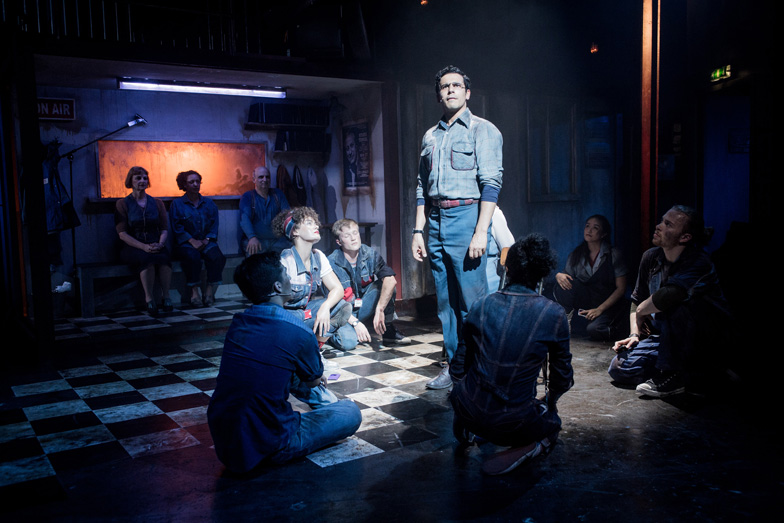
Director Luke Sheppard’s brilliant idea is to recruit, alongside his six seasoned workers (three men, three women), four hugely promising newbies out of drama school (Patrick Coulter, Nicola Espallardo, Izuka Houle and Luke Latchman) to sit at their feet, listening and learning from the stories of the different employees they play – when they’re not joining in chorus numbers and high-energy routines, as choreographed by Fabian Aloise. So designer Jean Chan’s grungy workplace set teems with figures she dresses in 50 shades of iconic denim.

There is so much light and shade in this beautifully calibrated show. The upbeat numbers are balanced by more contemplative vignettes. The six leads cover a useful age range. The most senior, Peter Polycarpou, brings his gravitas to Schwartz’s poignant Fathers and Sons, taking us into the emotional hinterland of this working man, his relationship with his son mirroring his own with his father. Schwartz drew on his own experience and it shows.

Equally telling is Miranda’s A Very Good Day: two immigrant workers, a carer and a nanny, sing in tender counterpoint about their charges, one at each end of life, perfectly conjured by Liam Tamne and Siubhan Harrison. Gillian Bevan charts stoical Rose Hoffman’s 40 years of teaching explaining Nobody Tells Me How (Mary Rodgers and Susan Birkenhead): “When my parents came over I didn’t learn Jewish as a first language.” Dean Chisnall touches as gun-using policeman turned life-saving fireman and Krysten Cummings complete this perfect line up. A stunning finale, Carnelia’s Something to Point To, should give everyone pause to look up at a building or around their own workplace and give respect to the workforce who built it. These are the men and women whom Trump claims to represent. Working works perfectly to give them a proud and genuine voice.

By Judi Herman

Photos by Robert Workman

Working runs until Saturday 8 July. 7.30pm (Mon-Fri), 3pm (Sat only). £25, £20 concs. Southwark Playhouse, SE1 6BD. www.southwarkplayhouse.co.uk

Click here to read more theatre reviews.

Review: La Strada ★★★★ - Fellini’s bleak and beautiful road movie makes for a haunting musical journey on stage

Kenny Wax is an eclectic producer, responsible for the spectacular award-winning Top Hat, Hollywood musical turned West End show; enchanting children’s shows, including Olivier- nominated Room on the Broom; and now Fellini’s 1954 film La Strada. All are musical adaptations, reimagined with originality and sensitivity, each by the right team for the job.

Director Sally Cookson’s vision for La Strada is as collective as the circus in its story travelling the bleak roads of post-war Italy. As well as composer/lyricist Benji Bowers and ‘Writer in the Room’ Mike Akers, she has gathered a 13-strong team of actor/musicians to tell the story of simple little Gelsomina, the waif sold by her mother to the sinister strongman Zampano to be his gofer, replacing her sister who has mysteriously died. Canadian Audrey Brisson, the enchanting Bella Chagall in The Flying Lovers of Vitebsk last year and a singer/musician and circus performer brought up in Cirque du Soleil, holds the centre as this obstinate innocent, around whom life swirls bewilderingly out of her control. Diminutive, graceful, acrobatic and supremely expressive, with huge eyes that dominate even this steep auditorium and haunting voice singing the wordless refrain that is her theme, hers is a compelling presence.

True there is first one and then a second (male) constant in her life in the abusive Zampano (Stuart Goodwin, a magnificently convincing strongman with a heart as hard and unyielding as its enclosing chest muscles that break an iron chain in his act) and kind and gentle Il Matto, the fool and tightrope walker whose mission is to liberate Gelsomina (Canadian Bart Soroczynski, proving he is equally at home in the circus and at the RSC with a performance as tender as it is spectacularly physical).

But it’s the ensemble work from the multi-talented ensemble representing many nations that creates the road, the run-down cities, seedy bars and circus gigs out of thin air with just a few props, sharing the narrative and the atmospheric music. Italy, Finland, Corsica, Vietnam, Canada and Israel are all represented, the last by the wonderfully versatile Niv Petel, so effective in his own solo show Knock, Knock about bereavement in Israel’s conscript army. To him go the honours of opening the show – and providing that most evocative of musical accompaniments, the harmonica. He is extraordinarily watchable, but of course he never pulls focus.

See it for the eerie beauty of Katie Sykes’s set, dominated by a single telegraph pole and brought to colourful life by this extraordinary company. Watch as they conjure a motorbike with a few tyres and find out whether Gelsomina can make her escape and take control of her life. An evening of sad and wondrous collective storytelling.

By Judi Herman

Photos by Robert Day

La Strada runs until Saturday 8 July. 7.30pm (Mon-Sat only), 2.30pm (Thu & Sat only). £20-£39.50. The Other Palace, SW1 E 5JA. 08442 642 121. www.theotherpalace.co.uk

Knock, Knock, Niv Petel’s solo show, runs Wednesday 2 – Monday 28 August. 7.30pm (daily; except 14 Aug). £6.50-£10.50. Edinburgh Fringe, Venue 41, C Primo, EH2 3JP. https://tickets.edfringe.com

Read our review of Knock, Knock or listen to Niv Petel on JR OutLoud.

Review: Rose ★★★★ - We expected a tour de force and were not disappointed

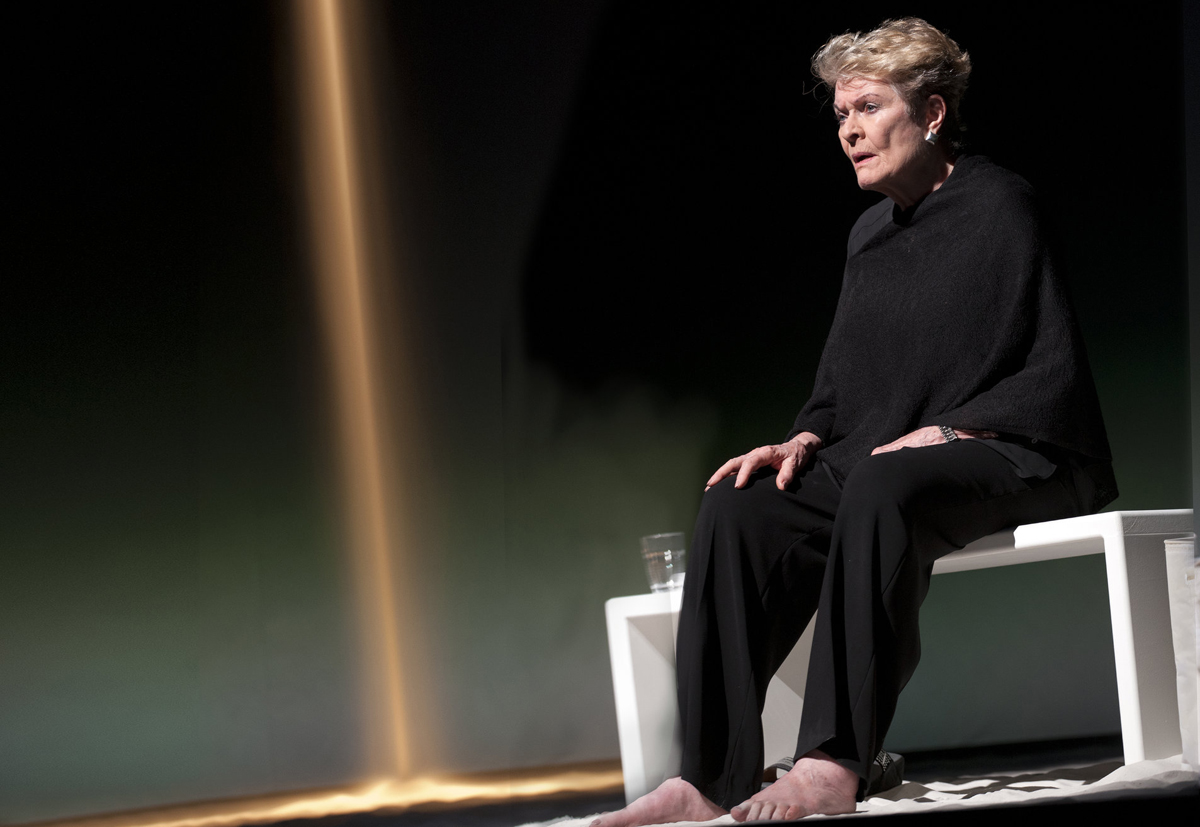
From the moment Janet Suzman, as Rose, appeared dressed all in black, sitting on a single white bench on an empty stage, the audience was gripped.

Rose was sitting shiva, and as her story unfolded over the next two hours, recounting her journey from a Ukrainian shtetl through all the vicissitudes of a Jewish 20th Century, she sat shiva repeatedly. Each time – for a parent, a child, a husband, victims of the repeated manifestations of antisemitism – a slender shower of sand descending from a hole in the roof of the stage was the only visual accompaniment to Rose’s narrative.

This relatively simple device and the subtle changes of lighting bear witness to the imaginative direction of Richard Beecham.

This powerful one-woman play by Martin Sherman debuted in 1999, at the close of that turbulent and violent century for the Jewish people.  Yet, with the increase in antisemitism, the rise to power of untrustworthy leaders and the overwhelming refugee crisis, the story has, if anything, increasing resonance for this century.

What a bitter irony that this revival was being performed at HOME, Manchester’s proud arts and cultural centre in the city suffering the aftermath of one of this century’s cruellest terrorist outrages.

Tragic though Rose’s journey was, Sherman injected frequent witty asides into his script, aimed with perfect timing at the audience in Suzman’s stellar performance.

One woman in black, the brief whiteness in her extraordinarily expressive face and hands, held the audience transfixed, moved and entertained.

Every shiva house has its occasional lighter moments, so it was to be expected that in sitting shiva for an entire century, Janet Suzman succeeded in bringing wit, humanity and even a little hope to this tragic story.

By Gita Conn

Photos by Simon Annand

Rose runs until Saturday 10 June. 7.30pm, 2pm (1, 3, 7 & 10 Jun only). £10-£26.50. Home, Manchester, M15 4FN. 01612 001 500. https://homemcr.org

Click here to read more theatre features.

Review: The Addams Family: The Musical Comedy ★★★★ - America’s favourite dysfunctional family is right on song in a darkly delicious musical treat

The real-life drama of Jersey Boys – the legendary hit from this terrific all-Jewish creative team – is a world away from this deliciously knowing crowd pleaser. Think a cross between the high-school teenage angst of Grease and the outrageous camp of cult smash hit The Rocky Horror Show. Marshall Brickman and Rick Elice go back to Charles Addams’ much-loved cartoon strip for their characters, rather than previous live incarnations, the TV series and the film. Andrew Lippa’s well-placed musical numbers are a vital part of the show’s weird and wonderful atmosphere, his richly varied music and witty lyrics working nimbly to reveal the kooky characters and move the plot along.

It's not the most labyrinthine of plots (Meet the Parents with a Gothic twist), but it's the fun on the way to a foregone happy conclusion that makes for such a joyful night out to share with packed houses of aficionados happily clapping along to the iconic theme tune even before the show starts proper. Director Matthew White, choreographer Alistair David and orchestrator Richard Beadle work seamlessly to provide fun that somehow manages to be broad and sophisticated at the same time.

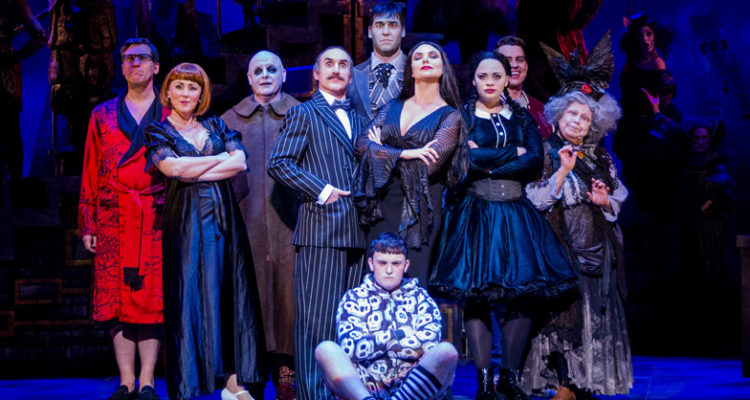
What fans want is all-singing, all-dancing incarnations of their favourite dysfunctional family members and that's exactly what they get in Samantha Womack's curvaceous gently-assertive matriarch Morticia and Cameron Blakely's gallant, ardent Gomez: husband, lover and caring dad. Thrillingly-voiced Carrie Hope Fletcher makes for a real flesh-and-blood (honestly no joke intended!) Wednesday, as much a teenager in love as any high-school heroine. Grant McIntyre's loveable masochistic little bro Pugsley, Valda Aviks' scary Grandma and Les Dennis's terrific Uncle Fester, showman and master of ceremonies, complete the living family.

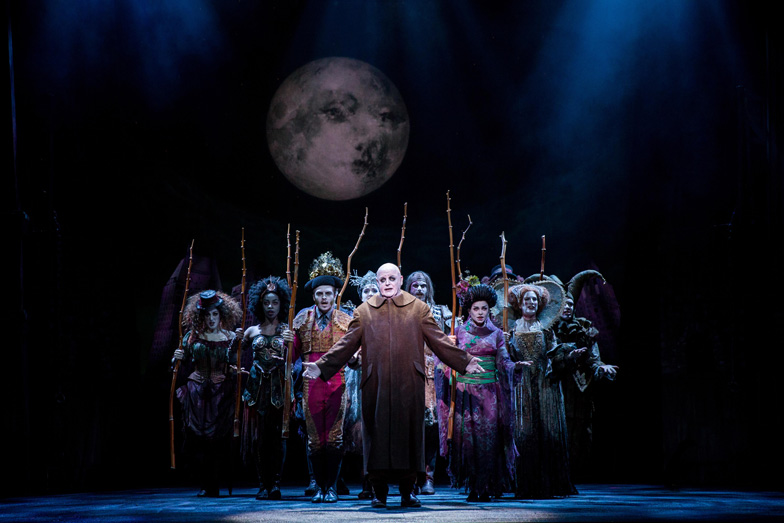
The spectacular coup de theatre here is that at Addams family conferences, the dead outnumber the living. A glamorous motley crew of 10 assorted ancestors, summoned from the family vault to help solve a problem like Wednesday falling for Oliver Ormso's clean-cut, all-American Lucas, range from matador to geisha, female warrior to jester. They make a daft, colourful chorus, singing, dancing or just eavesdropping from the high windows of designer Diego Pitarch's crazy Gothic realisation of the Addams' ancestral pile. And presiding over it all is Dickon Gough's monumental manservant Lurch, a benevolent golem.

Into this singular set-up stumble Wednesday's dinner guests: Lucas with his parents Mal and Alice, perfectly channelling Rocky's Brad and Janet in middle age, he obstinately square-jawed, she spouting delectably trite rhymes (“When I’m depressed, or feeling blessed, a poem will get it off my chest”) – and of course ripe for unbuttoning. The Addams Family – dead or alive – constitute a life-affirming treat.

By Judi Herman

Photos by Matt Martin 

The Addams Family tours until Saturday 4 November, stopping at Canterbury (23-27 May), Southend (30 May-3 Jun), Birmingham (6-10 Jun), Bath (13-17 Jun), Cornwall (20-24 Jun), Nottingham (27 Jun-1 Jul), Bradford (4-8 Jul), Southampton (18-29 Jul), Cardiff (1-12 Aug), Dublin (15-26 Aug), Salford (29 Aug-9 Sep), Sheffield (12-16 Sep), Bristol (19-23 Sep), Woking (26-30 Sep), Belfast (3-7 Oct), Glasgow (10-14 Oct), Wolverhampton (17-21 Oct), Milton Keynes (24-28 Oct) and Dartford (31 Oct-4 Nov).

Visit www.theaddamsfamily.co.uk/tour for further details.

Click here to read more theatre reviews.


Review: No Place for a Woman ★★★★ - The imagined story of two women caught in the Holocaust has real power

Extraordinary stories continue to come out of the Holocaust. And writers continue to explore how human nature is pushed to its limits through the extraordinary circumstances of the Shoah.

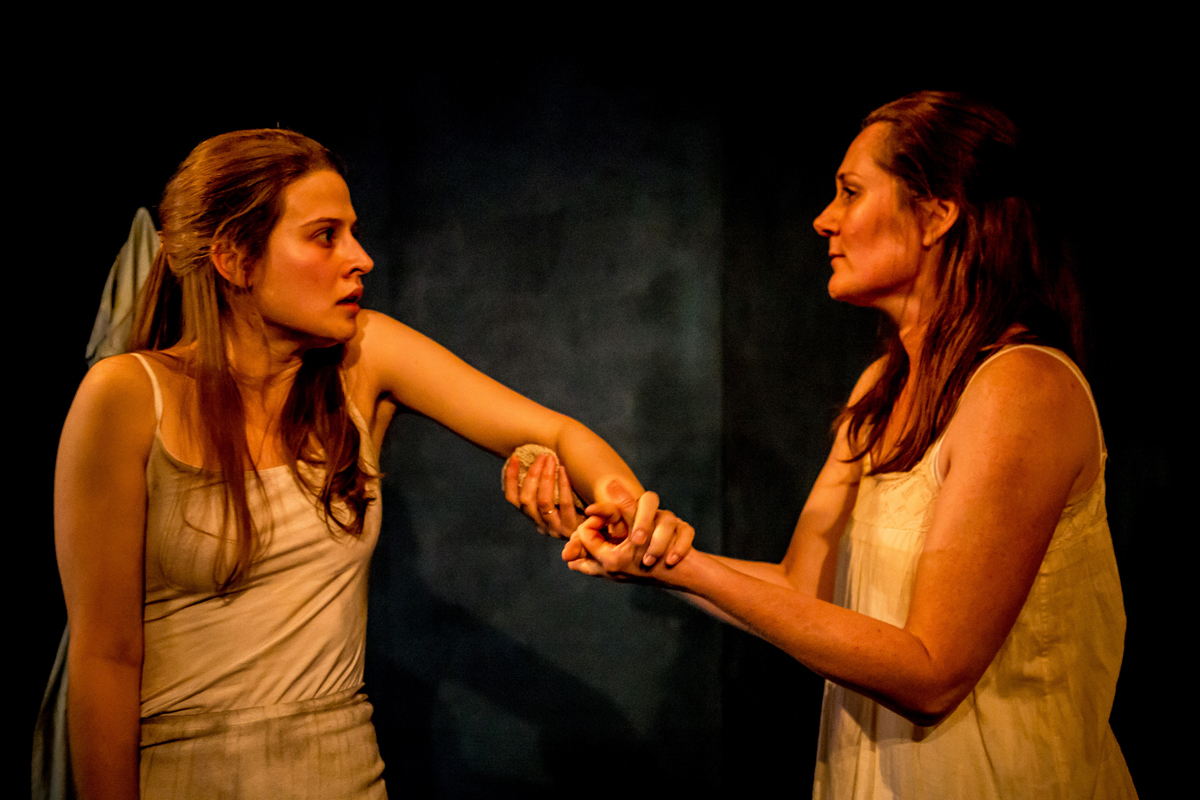
Writer Cordelia O’Neill sets her play in 1945. Her protagonists, Jew and Nazi, appear to the audience as interviewees of the Allied forces. Isabella is a Jewish ballerina, interned in a concentration camp; like the well-documented real-life examples where musicians were corralled into playing for camp officials, she is ordered to dance at a party thrown by Annie, wife of the camp commandant, Fredrick.  Their lives become not only intertwined, but actually interchanged (almost like Mark Twain’s The Prince and the Pauper, in which the future Edward VI, Henry VIII’s little son, swaps lives with a street urchin), so that they actually change places, as Annie sees Fredrick attracted to Isabella, who begins to see Fredrick – himself disillusioned with the war – as a man she could love.

O'Neill has imagined a nightmarishly Kafkaesque situation, which she handles with an extraordinary subtlety and delicacy, making it all the more unsettling. For the two women speak not just for themselves but for Fredrick and interchange their personalities on a seesaw of power and influence over each other and over Fredrick, as they try to understand, influence and change their own plight – their own reality and indeed their own pasts. There are vivid memories of Isabella’s childhood, family and life as a dancer; of Annie’s meeting with Fredrick, how dependent she is on his love, her increasing isolation, even from her children, in the role imposed on her as an officer’s wife.

I guess you could call this a 'woman's story' and director Kate Budgen gets beautifully nuanced performances from Emma Paetz as Isabella and Ruth Gemmell as Annie. Paetz shows all the contrasting delicacy and steely resolve and discipline, even ruthlessness, necessary to become a leading ballerina – and to survive, even flourish in a concentration camp. Gemmell makes the repressed, damaged Annie sympathetic. Extraordinarily hers is the cup that is half empty, Isabella’s half full, as they recall intimate moments with Fredrick, the mistress remembering tenderness, affection; the wife anger and impatience.

Composer/musician Elliott Rennie’s plangent live cello music underscores the whole and helps the constantly shifting balance on Camilla Clarke’s eerie set – truly a black box intersected with a jagged light (courtesy of Sarah Radman). He and his cello make an extra physical presence, at once dividing and uniting the women. And Movement Director Lucy Cullingford works equally subtly with the pair, somehow making their movements seamless and complementary, just as their words are, without them actually connecting physically. O’Neill consulted survivors and it shows, for her imagined story has real authenticity and dramatic power.

By Judi Herman

Photos by Jack Sain

Click here to listen to Judi Herman's interview with Cordelia O'Neill on JR OutLoud.

No Place for a Woman runs until Saturday 27 May. 7.45pm (Tue-Sat), 3pm (Wed & Sat only). £15, £12 concs. Theatre 503, SW11 3BW. 020 7978 7040. www.theatre503.com

Click here to read more theatre reviews.

Review: All Our Children ★★★★ - Director turned writer Stephen Unwin vividly brings a lesser-known Nazi atrocity to our attention

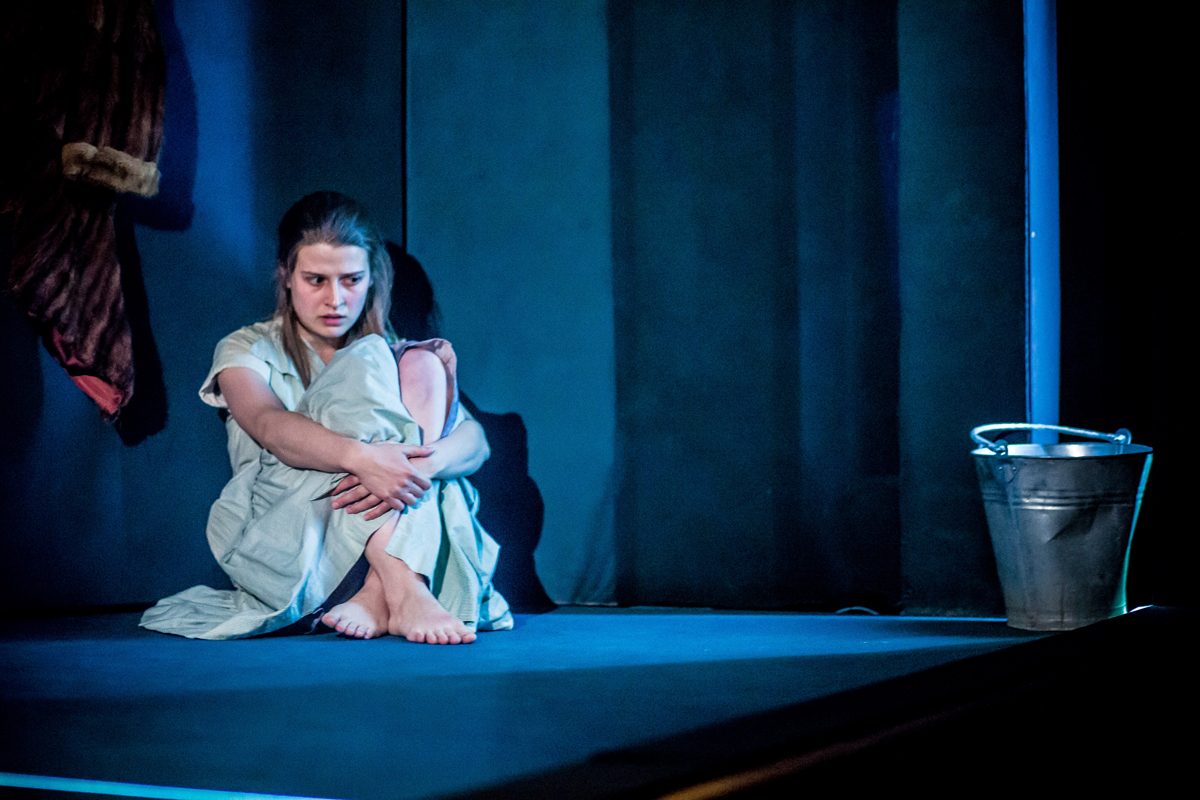
The horrors of the mass killing of disabled children perpetrated by the Nazis are less well-known than the Holocaust, though they were arguably a rehearsal for the final solution. All Our Children, a moving drama from director turned writer Stephen Unwin, tells their story by focusing on one so-called clinic and the awakening conscience of Victor, the ageing doctor who runs it. Unwin dedicates his drama to his son Joey, who has profound learning difficulties, so this first play from the acclaimed theatre director is an intensely personal story.

Colin Tierney captures every nuance of Victor's struggle in a finely-calibrated performance, neatly contrasted with the cool certainty of his co-administrator Eric, a ruthless young Nazi ideologue, played with terrifying authenticity by Edward Franklin. Eric has no problem with the argument that these 'imbeciles' are a waste of money and precious resources.

The only woman in Victor's life is his gentle solicitous housekeeper Martha (luminous Rebecca Johnson). Indeed there is a suggestion that the bachelor might be gay, which we know could mean he'll share the fate of his charges. Meanwhile Martha has a hinterland that brings the outside world into the clinic, a husband at the front, a bright five-year-old son and a nubile 17-year-old daughter attracting unwelcome attention from Eric.

The doctor receives two visitors, catalysts for a change of heart, Frau Pabst, devoted mother of one of his 'patients' and Bishop Von Galen, a real-life champion of the helpless victims of Hitler's Euthanasia Decree.

Lucy Speed plays Frau Pabst, with heartbreaking and increasingly strident desperation, convinced Victor is hiding the fate of her son, but his evasive answers are more an indication of his inability to explain why he cannot help her and his fears for his own predicament than of callousness.

So it is left to Bishop Galen to make a difference, to add his righteous anger to her furious distress, and so fully awaken Victor's conscience. David Yelland plays Galen with blazing authority – the words righteous indignation are overused, but this is surely what they mean.

Mindful of the fate of so many committed Christians under Hitler and in the light of Eric's contemptuous denouncement of the Bishop, you fear for him. Unwin does not reveal his fate – suffice to say he was beatified by Pope Benedict XIV.

One of the most moving moments, a beautiful heartfelt declaration of real love and affection for her charges from Martha which serves to finally determine Victor's way forward, has all the authenticity of the playwright's experience of the love and joy of living with these children. That he can also write witty, albeit dark lines, evoking audience laughter, only makes the situation more real and immediate. A fine writing debut for this seasoned director.

By Judi Herman

Photos by Camilla Greenwell

All Our Children runs until Saturday 3 June. 7.30pm (Mon-Sat), 3.30pm (Sat only; plus 18 & 25 May). £22-£30. Jermyn Street Theatre, SW1Y 6ST. 020 7287 2875. www.jermynstreettheatre.co.uk

Click here to read more theatre reviews.

Review: How to Succeed in Business Without Really Trying ★★★ - Guys and Dolls meets Mad Men in musical satire on big business

New Yorkers Abe Burrows (Borowitz), Willie Gilbert (Gomberg) and Jack Weinstock did not invent the title of their 1961 musical satire on big business. It’s actually based on this best-selling lampoon of contemporary office life in 1950s USA, disguised as a self-improvement handbook. Clutching the book he consults on every step of the corporate ladder he climbs from window cleaner to chairman of the board, their anti-hero J Pierrepont Finch really lives up to the book’s subtitle, "The dastard's guide to fame and fortune". Burrows had worked with Frank Loesser on Guys and Dolls and the marriage of witty, amoral book with jaunty music and slick lyrics ensured the show’s award-winning success.

So what’s not to like? Amoral corporate greed and ruthlessness is a hardy perennial and even company boss, JB Biggley’s name sounds like a topical joke trumping the adverb coined by the businessman who won America ‘bigly’ himself.  Well, time is a cruel master and the sensibilities of the 1960s don’t easily translate. Just as with Promises Promises, revived earlier this year, the sexism may be satirised, but it’s still hard to swallow. These gals with cinched-in waists emphasising their curves are reduced to wives-in-waiting, whiling away time as secretaries (and occasionally mistresses).

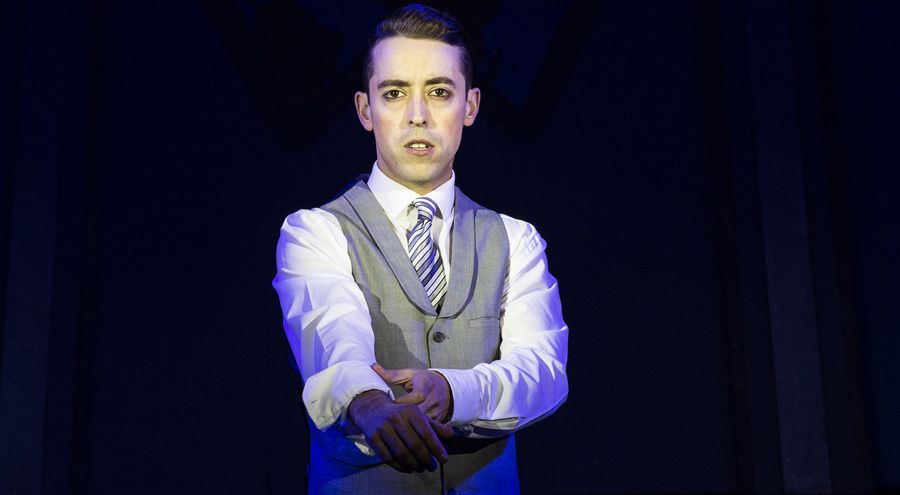
Pneumatic blonde, Hedy La Rue, a career ‘bit on the side’ played to the hilt by Lizzii Hills, does not share the ambition of Mad Men’s aspiring copywriters: it’s an LA perfume counter or marriage for her. And while Andrew C Wadsworth perfectly captures the cynical charm of Biggley himself, a fun creation who secretly knits for relaxation in his top-floor executive suite, Marc Pickering’s gleefully ruthless Finch is a real Richard III. Still, anti-heroes can be compelling and indeed Hannah Grover’s sunny Rosemary, the perfect secretary, manages to swallow her reservations and put her resourcefulness at his disposal, even as he puts his naked ambition before his love for her.

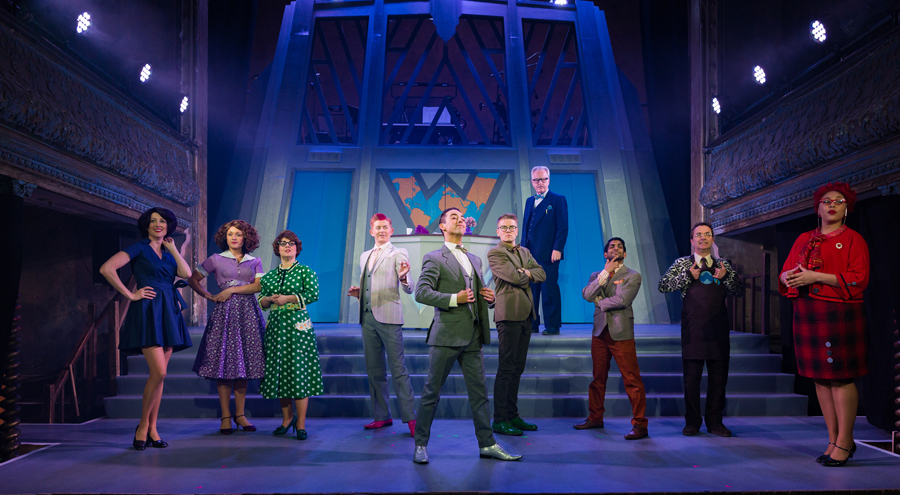
Director Benji Sperring’s almost cartoonish performing style works with the material, matched by Lucie Pankhurst’s choreography and Mike Lees’ pastiches of 60s corporate clothing, complete with wonderful fluorescent coloured shoes. Lee’s art deco design – steps leading to matching lift doors – provides an appropriate backdrop for the frenetic comings and goings of these stock characters. MD Ben Ferguson’s excellent small band ignites Loesser’s music, instantly appealing but not particularly memorable, with the exception of the now standard number 'I Believe in You'.

This is as fine a version of this collectors’ item as you are likely to see, a great showcase for its 10-strong cast and all involved, but maybe the catch is that a modern audience does not want to see the Finches of this world actually succeed in business without really trying.

By Judi Herman

Photos by Darren Bell

How to Succeed in Business Without Really Trying runs until Saturday 22 April. 7.30pm, 2.30pm (Wed & Sat only). Wilton's Music Hall, E1 8JB. 020 7702 2789. www.wiltons.org.uk

Click here to read more theatre reviews.

Review: Filthy Business ★★★★ - Sara Kestelman keeps it in the family in Ryan Craig’s new Jewish comedy

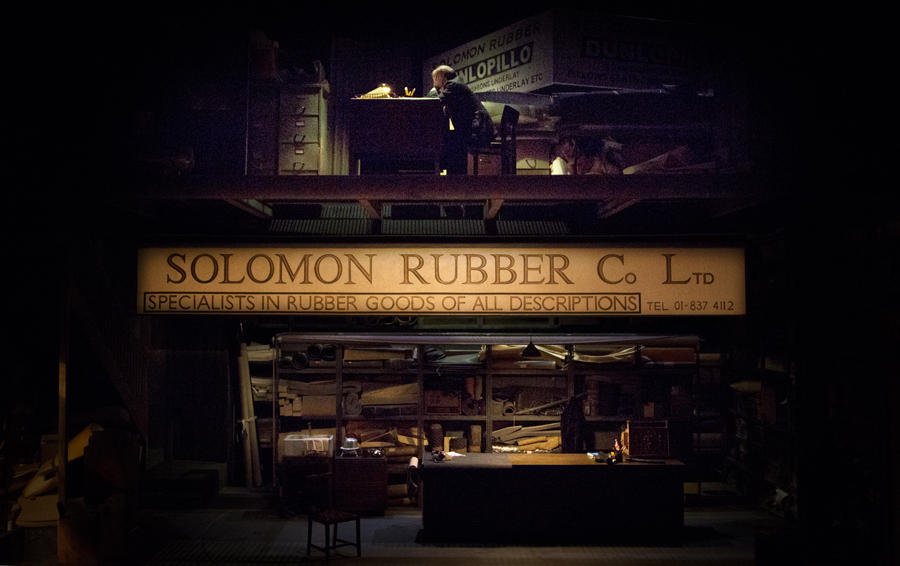
Families – can’t live with 'em, can’t live without 'em. Matriarch Yetta Solomon has no intention of allowing a single member of her family to escape from Solomon Rubber. Craig's title is clever - rubber is self-evidently a filthy business. You can almost smell the huge bales and coils of the stuff looming from every shelf downstairs and off every table upstairs on Ashley Martin-Davis’s towering two-tier shop set. Yetta is not afraid of playing dirty either, from reeling in a reluctant phone customer with the promise of "a special one-time-only deal" (actually almost double the asking price) to micro-managing a Machiavellian insurance scam, with violence thrown in that almost makes this feel like Yiddishe (as against Scandi) noir.

Craig’s drama is rooted in the reality of his own upbringing. It turns out that "lolloping about" in the mattress, bed and foam-rubber shop his Dad painstakingly built up from off-cuts collected working as a tyre fitter, was time well spent. The action spans a quarter century, from 1968 to 1982. There’s a marvellous sense of place and time in Edward Hall's sprightly production, especially when the 60s are swinging and the grandchildren yearn to be part of the action. Callum Woodhouse’s appealing grandson Mickey aspires to be a trendsetting Teasie Weasie hairdresser and Callie Cook’s sunny-natured granddaughter Bernice has already got a bouncy  bouffant.

Like my own, Craig’s antecedents made it to London from Russia long before the Holocaust. Sara Kestelman’s magnificently malevolent Yetta is self-avowedly moulded by the cruelty of Jew-hating Cossacks and the hardships of escape and life in London. She repeats her well-rehearsed saga in English peppered with Yiddish: the boychiks (sonny-boys) and ganovim (thieves) deployed by my great-grandmother.

So however loudly and violently her warring sons  Nat and Leo (nicely-sustained virulence from Louis Hilyer and Dorian Lough) feud with her and each other and scheme to strike out alone, it’s clear she’ll stop at nothing to keep the family together - in the business and under her thumb. It’s a large family, too, eight of the 13-strong cast gather round the family dinner table.

The warring family of nations toiling at Solomons extends to Nigerian immigrants represented by hard-working machinist Rosa (feisty Babirye Bukilwa). Yetta effortlessly sees off the man who claims the money Rosa owes for the citizenship he’s provided with a sham marriage. The xenophobia suffered by "blackies" and "Yids" alike has telling contemporary resonance.

Her fellow machinist, put-upon young Monty Minsky (Edmund Derrington, terrific) , blinking as he ascends from the basement machine room into the comparative light of the showroom, reminded me of Willie Mossop, the worm who turns in Hobson’s Choice – that early 20th-century classic comedy about a Northern family warring over their shoemaking business. It’s a good omen that Craig’s comedy could become a Jewish classic for our time.

By Judi Herman

Photos by Dominic Clemence

Filthy Business runs until Saturday 22 April. 7.30pm, 2.30pm (Wed only), 3pm (Sat only). £10-£35. Hampstead Theatre, NW3 3EU. 020 7722 9301. www.hampsteadtheatre.com

Click here to read more theatre reviews.

Review: Incident at Vichy ★★★★ – Rarely-performed Arthur Miller is 90 minutes of mounting tension in wartime France

Set in the detention room of a Vichy police station in 1942, Miller’s drama explores the ways paranoia among those detained by the Nazis could descend so easily into guilt and fear, making it all too easy for the perpetrators of the Holocaust. Ten men wait to be called. At first, the strained and nervous discussion is about why they might be there (a random pick up, routine check on their papers), but it soon emerges that some (or most) are Jews who have fled German-occupied northern France for the southern, ‘unoccupied’ Free Zone.

The play examines the various characters (some not even given a name: Gipsy, Waiter, Boy, Old Jew) and how they react to the increasingly frightening circumstances in which they find themselves. Some hope against hope that it will all turn out alright, even after communist railway worker Bayard (powerful Brendan O’Rourke) warns of cattle trucks full of people going to Poland to rumoured death camps. Others urge direct action, by the able-bodied at least. Are there ‘bad’ Germans and ‘passive’ Jews? In this classic morality play laying out the choices of good and evil between man and man and particularly within man himself, there are serial confrontations that reveal just how many points there can be on the so-called moral compass.

Previous, rare, productions of this Arthur Miller play suffered from trying to crank in dramatic action to beef up the morality statement, risking pre-empting the play’s climax, which does offer the promise of redemptive action (the ‘incident’). Here, director Phil Willmott makes the wise decision to let the words speak for themselves by focusing on designer Georgia de Grey’s white banquette within a white box that works brilliantly (literally) in the Finborough’s limited space. His superb line up of detainees are arranged on or around it in shifting poses as eloquent as Da Vinci’s Last Supper. Above them looms their eerie shadows, sharply-defined by Robbie Butler’s lighting.

From Lawrence Boothman’s painter, eyes eloquent with terror, to PK Taylor’s wonderfully infuriating actor, apparently in denial about his predicament; from Edward Killingback’s conscience-ridden Austrian nobleman (authentically tall and blonde) to Gethin Alderman’s French (Jewish) army doctor presenting Miller’s moral dilemma; this is a faultless and generous ensemble, perfectly cast to flesh out Miller’s selection of ‘types’ and to invest his rhetoric with humanity and pathos. And among the German captors, Timothy Harker, chillingly embodying the Nazi professor who revels in flushing out Jews, and Henry Wyrley-Birch’s conflicted Major, his war wound rendering him terrifyingly unpredictable, contribute to 90 minutes of almost unbearable tension.

The questions Miller poses are relevant today and this is an exceptional opportunity to see a rarely performed play in a production that Miller would surely have adored.

By Judi Herman

Photos by Scott Rylander

Incident at Vichy runs from Wednesday 7 – Sunday 25 June. 7pm (Tue-Sat only), 2.15pm (Sat & Sun only). £19.50-£25, £16 concs. King's Head Theatre, N1 1QN. 020 7226 8561. www.kingsheadtheatre.com

Click here to read more theatre reviews.

Review: An American in Paris ★★★★★ – A glorious evocation of the City of Light illuminates the stage

A lone figure limps into the light on a bare stage. Wounded in action, GI Adam Hochberg, confides his life, loves, hopes and fears and takes the audience back to newly-liberated Paris, 1945. David Seadon Young’s sardonic, worldly-wise American Jew in Paris is the first surprise in a show that adds depth to the light-as-air story of the much-loved film – without losing any of its charm and vitality.

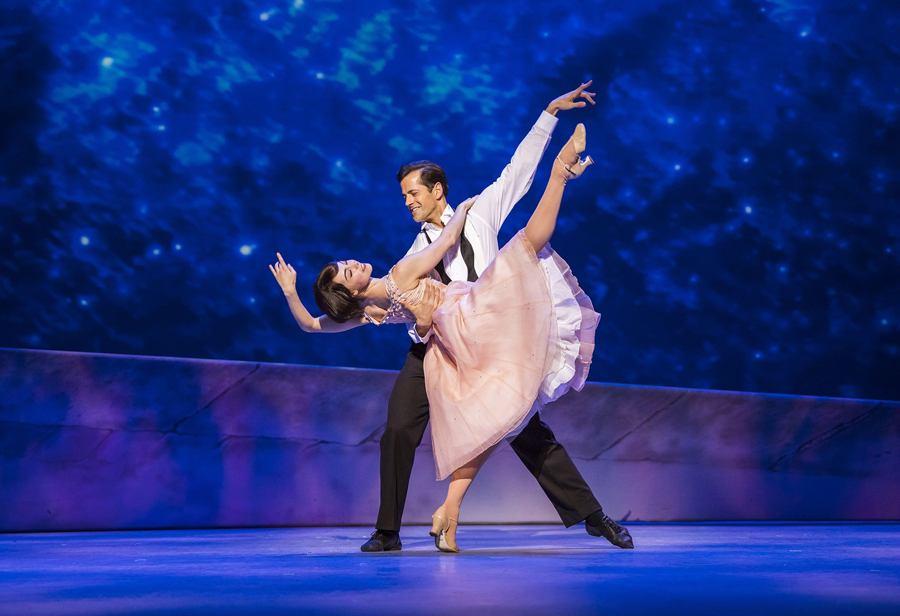
Director and choreographer Christopher Wheeldon and book writer Craig Lucas collaborated to develop the story – Hochberg is one of three young men who become comrades – the ’Three Musketeers’ – all sharing one beloved object, gifted ballerina Lise Dassin (equally gifted ballerina, Royal Ballet principal Leanne Cope, proving she can sing and act, with all the delicate vulnerability of the film’s Leslie Caron). She too is Jewish, surviving the war hidden by the cultured family of her second admirer Henri Baurel (Haydn Oakley, all Parisian charm), though she hides her personal tragedy: her parents are missing after the Holocaust. Aficionados of the film will guess the third admirer is the American of the title, ebullient demob-happy GI Jerry Mulligan – breath-taking triple threat Robert Fairchild doing rather more than making the Gene Kelly role his own.

The creative team build on the film’s glorious ballet and lush Gershwin brothers’ score, with daring extended dance sequences performed by this multi-talented 18-strong ensemble, peopling a hopeful Paris striving for normality after the traumas of occupation. Alongside the joyful expression of freedom, there’s a telling moment, the shaming of a woman accused of sleeping with the enemy, all without a word of dialogue. Lucas’s book is wonderfully witty, though, and his rounded characters are a gift to actors such as Jane Asher, who is superb as bossy matriarch Madam Baurel, and Zoë Rainey, a revelation as the irresistible force that is Milo Davenport, socialite arts patroness extraordinaire (based on real-life inspirational Jewish art collector Peggy Guggenheim).

The numbers are subtly staged to reveal plot and character. Take the complementary numbers, one in each act, featuring that trio of musketeers yearning after Lise. They get to sing first '‘S Wonderful' and then 'They Can’t Take That Away from Me' and for each the lyrics mean something different and personal. Just 15 versatile musicians realise Bill Elliott’s expansive orchestrations.

The performers inhabit the extraordinary evocation of Paris conjured by designer Bob Crowley’s 3D streets, buildings and landmarks (realised by 59 Productions Projection Design), the City of Light living up to its name thanks to lighting designer Natasha Katz’s palate of complementary glowing colour. Crowley dresses everyone with lovely period detail, especially the ensemble – gorgeous glamour for those essential Parisian showgirls and sophistication for Asher and Rainey. A ravishing, life-affirming joy.

By Judi Herman

Photos by Johan Persson

An American in Paris is currently booking until Monday 30 October. 7.30pm (Mon- Sat), 2pm (Sat, Wed). £17.50-£125. Dominion Theatre, W1T 7AQ. 0845 200 7982. www.anamericaninparisthemusical.co.uk

Click here to read more theatre reviews.