Theatre

If This is a Man 70 years on: AL Kennedy discusses an anniversary reading of the Primo Levi novel

At 3.15 pm on Sunday 30 April a cast of actors, writers and academics amongst others will read from the first page of Primo Levi’s seminal novel If This is a Man. Taking on chunks of the text each to read aloud, they will only stop when they reach the novel’s final page – an estimated six-hour feat. This unique reading is taking place at London’s Southbank Centre to mark 70 years since the publication of Levi’s harrowing account of the year he spent in Auschwitz concentration camp when he was 23 years old.

We spoke to one of the curators of the event, novelist AL Kennedy, about why the book remains so significant today.

When did you first read If This Is A Man? I read If This Is A Man and the Truce (the accompanying volume that describes Levi’s experiences immediately after the liberation of Auschwitz) for the first time when I was a teenager. In the 1970s and 80s you were beginning to see mass representation of the Holocaust on TV so it was a subject that was beginning to make an impact on me.

I was brought up in a nominally Christian family, but my mother who was at teacher’s training college told me stories of a woman she trained with who had escaped from Europe under a train with her husband. It was the first time I had heard of anyone having to do something like that.

I was filled with the inescapable question: how could this have happened? As a teenager the book was one of my principle educational experiences.

Why is it important to read today? The seeds of the event were sewn last year. We had just had the Brexit vote and there was the discussion about EU citizens and their rights. There was a demonisation of foreigners here, and of Muslims in the States, and antisemitism alongside the rise of Donald Trump. The book seemed very prescient.  Levi seemed to be saying that if you ignore the rise of these things the end result could be a prisoner death camp.

How can literature combat these trends? Books are a way to understand people who aren’t you.

Are you worried people might be put off the event because it is so long? It’s a long reading but we wanted to dispel the fear that terrible things will happen if we sit and listen to literature all night!

The further east you go in Europe, the longer the literary events go on, especially in the former Soviet Union countries. There is an understanding that it is a privilege to read literature, there is a hunger for it.  In the past people risked their lives to hear literature. In Britain we take the freedom to read what we want for granted.

Literature balances oppression. We need to be wary as it is rolled back and becomes increasingly commercial. The importance of literature has drifted and we need to ensure that we don’t take it for granted.

By Rebecca Taylor

Photo by Donna-Lisa Healy

Primo Levi's If This is a Man takes place on Sunday 30 April. 3.15pm. £15-£25. Royal Festival Hall, Southbank Centre, SE1 8XX. 0844 875 0073. www.southbankcentre.co.uk

Click here to discover more interviews.

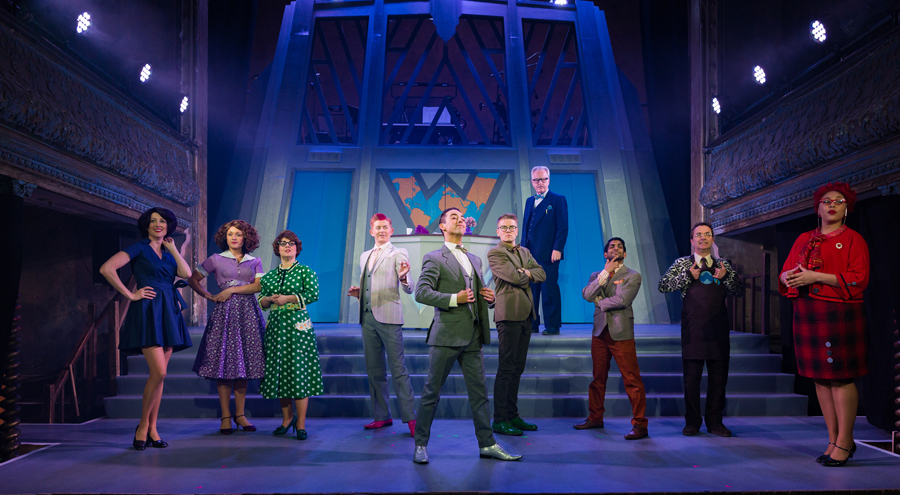
Review: How to Succeed in Business Without Really Trying ★★★ - Guys and Dolls meets Mad Men in musical satire on big business

New Yorkers Abe Burrows (Borowitz), Willie Gilbert (Gomberg) and Jack Weinstock did not invent the title of their 1961 musical satire on big business. It’s actually based on this best-selling lampoon of contemporary office life in 1950s USA, disguised as a self-improvement handbook. Clutching the book he consults on every step of the corporate ladder he climbs from window cleaner to chairman of the board, their anti-hero J Pierrepont Finch really lives up to the book’s subtitle, "The dastard's guide to fame and fortune". Burrows had worked with Frank Loesser on Guys and Dolls and the marriage of witty, amoral book with jaunty music and slick lyrics ensured the show’s award-winning success.

So what’s not to like? Amoral corporate greed and ruthlessness is a hardy perennial and even company boss, JB Biggley’s name sounds like a topical joke trumping the adverb coined by the businessman who won America ‘bigly’ himself.  Well, time is a cruel master and the sensibilities of the 1960s don’t easily translate. Just as with Promises Promises, revived earlier this year, the sexism may be satirised, but it’s still hard to swallow. These gals with cinched-in waists emphasising their curves are reduced to wives-in-waiting, whiling away time as secretaries (and occasionally mistresses).

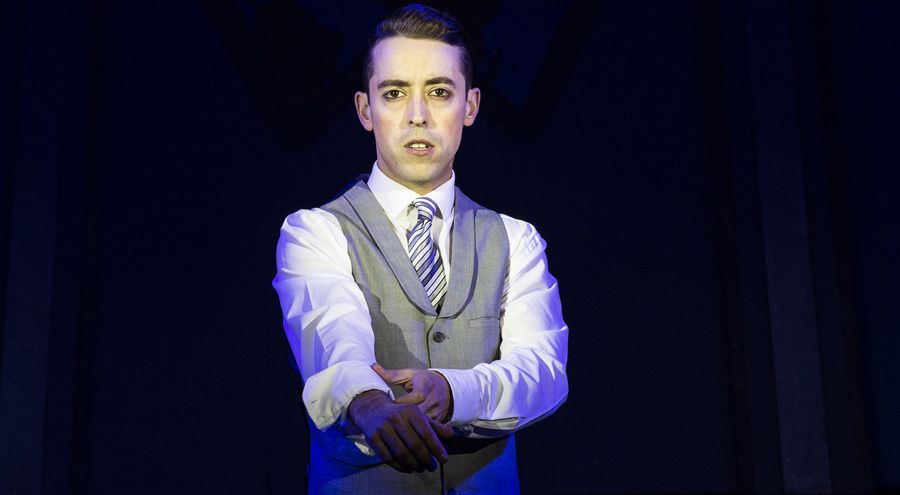
Pneumatic blonde, Hedy La Rue, a career ‘bit on the side’ played to the hilt by Lizzii Hills, does not share the ambition of Mad Men’s aspiring copywriters: it’s an LA perfume counter or marriage for her. And while Andrew C Wadsworth perfectly captures the cynical charm of Biggley himself, a fun creation who secretly knits for relaxation in his top-floor executive suite, Marc Pickering’s gleefully ruthless Finch is a real Richard III. Still, anti-heroes can be compelling and indeed Hannah Grover’s sunny Rosemary, the perfect secretary, manages to swallow her reservations and put her resourcefulness at his disposal, even as he puts his naked ambition before his love for her.

Director Benji Sperring’s almost cartoonish performing style works with the material, matched by Lucie Pankhurst’s choreography and Mike Lees’ pastiches of 60s corporate clothing, complete with wonderful fluorescent coloured shoes. Lee’s art deco design – steps leading to matching lift doors – provides an appropriate backdrop for the frenetic comings and goings of these stock characters. MD Ben Ferguson’s excellent small band ignites Loesser’s music, instantly appealing but not particularly memorable, with the exception of the now standard number 'I Believe in You'.

This is as fine a version of this collectors’ item as you are likely to see, a great showcase for its 10-strong cast and all involved, but maybe the catch is that a modern audience does not want to see the Finches of this world actually succeed in business without really trying.

By Judi Herman

Photos by Darren Bell

How to Succeed in Business Without Really Trying runs until Saturday 22 April. 7.30pm, 2.30pm (Wed & Sat only). Wilton's Music Hall, E1 8JB. 020 7702 2789. www.wiltons.org.uk

Click here to read more theatre reviews.

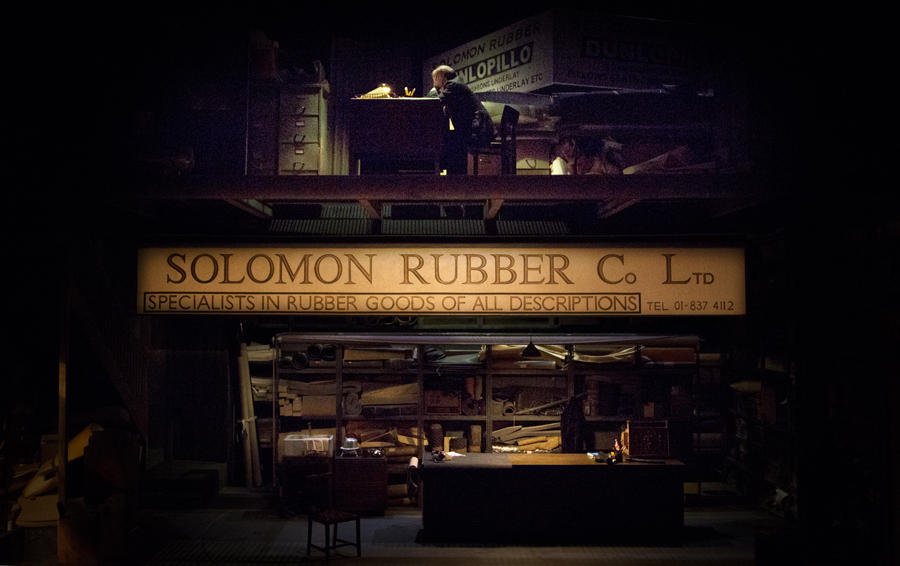
Review: Filthy Business ★★★★ - Sara Kestelman keeps it in the family in Ryan Craig’s new Jewish comedy

Families – can’t live with 'em, can’t live without 'em. Matriarch Yetta Solomon has no intention of allowing a single member of her family to escape from Solomon Rubber. Craig's title is clever - rubber is self-evidently a filthy business. You can almost smell the huge bales and coils of the stuff looming from every shelf downstairs and off every table upstairs on Ashley Martin-Davis’s towering two-tier shop set. Yetta is not afraid of playing dirty either, from reeling in a reluctant phone customer with the promise of "a special one-time-only deal" (actually almost double the asking price) to micro-managing a Machiavellian insurance scam, with violence thrown in that almost makes this feel like Yiddishe (as against Scandi) noir.

Craig’s drama is rooted in the reality of his own upbringing. It turns out that "lolloping about" in the mattress, bed and foam-rubber shop his Dad painstakingly built up from off-cuts collected working as a tyre fitter, was time well spent. The action spans a quarter century, from 1968 to 1982. There’s a marvellous sense of place and time in Edward Hall's sprightly production, especially when the 60s are swinging and the grandchildren yearn to be part of the action. Callum Woodhouse’s appealing grandson Mickey aspires to be a trendsetting Teasie Weasie hairdresser and Callie Cook’s sunny-natured granddaughter Bernice has already got a bouncy  bouffant.

Like my own, Craig’s antecedents made it to London from Russia long before the Holocaust. Sara Kestelman’s magnificently malevolent Yetta is self-avowedly moulded by the cruelty of Jew-hating Cossacks and the hardships of escape and life in London. She repeats her well-rehearsed saga in English peppered with Yiddish: the boychiks (sonny-boys) and ganovim (thieves) deployed by my great-grandmother.

So however loudly and violently her warring sons  Nat and Leo (nicely-sustained virulence from Louis Hilyer and Dorian Lough) feud with her and each other and scheme to strike out alone, it’s clear she’ll stop at nothing to keep the family together - in the business and under her thumb. It’s a large family, too, eight of the 13-strong cast gather round the family dinner table.

The warring family of nations toiling at Solomons extends to Nigerian immigrants represented by hard-working machinist Rosa (feisty Babirye Bukilwa). Yetta effortlessly sees off the man who claims the money Rosa owes for the citizenship he’s provided with a sham marriage. The xenophobia suffered by "blackies" and "Yids" alike has telling contemporary resonance.

Her fellow machinist, put-upon young Monty Minsky (Edmund Derrington, terrific) , blinking as he ascends from the basement machine room into the comparative light of the showroom, reminded me of Willie Mossop, the worm who turns in Hobson’s Choice – that early 20th-century classic comedy about a Northern family warring over their shoemaking business. It’s a good omen that Craig’s comedy could become a Jewish classic for our time.

By Judi Herman

Photos by Dominic Clemence

Filthy Business runs until Saturday 22 April. 7.30pm, 2.30pm (Wed only), 3pm (Sat only). £10-£35. Hampstead Theatre, NW3 3EU. 020 7722 9301. www.hampsteadtheatre.com

Click here to read more theatre reviews.

Allons enfants de la Patrie! France during and after WWII provides fertile soil for rich drama, music and art this year

What links London’s latest hit musical An American in Paris, a revival of Incident in Vichy – an Arthur Miller drama not seen in this country for 50 years – and the centenary of the young German artist Charlotte Salomon, who continues to enchant more than 70 years after she perished in the Holocaust?

The clue is in the titles of the theatre pieces. Arthur Miller's Incident in Vichy concerns the fate of 10 men detained in Vichy, France, at the height of World War II in 1942, when Vichy became notoriously synonymous with the French government of Marshal Pétain that collaborated with the Nazis. An American in Paris, freshly adapted from the much-loved Gershwin movie musical, is reimagined with a story set in the City of Light in 1945, in the immediate aftermath of the war. The heroine is a young Jewish ballerina safely hidden by Parisians, while her parents have disappeared in wartime Provence. And the young German artist Charlotte Salomon, escaping Nazi Germany to take refuge in the South of France, was herself arrested in Villefranche in September 1943 aged just 26 – within a month she had been murdered on arrival in Auschwitz.

Salomon was born 100 years ago this April and in the April edition of Jewish Renaissance, which will reach subscribers just before Passover, I explore the continuing allure of her life and work as expressed in the 765 autobiographical series of gouaches that make up her Life? Or Theatre?, in the company of the co-creators of a new play with music telling her story "in three dimensions".

I have just had the good fortune to marvel at the glorious evocation of the newly-liberated City of Light in American in Paris – a show that adds depth to the light-as-air story of the much-loved film musical without losing any of its charm and vitality, thanks to a fresh plot with Jewish protagonists at its heart. Find out more in my American in Paris review.

My most recent review is of an extraordinarily well-cast and tightly-directed revival of Arthur Miller's Incident at Vichy. The production successfully ratchets up the tension of Miller’s 90-minute morality play examining the different responses and fates of those 10 men picked off the streets of Vichy by a Nazi regime intent on rounding up Jews for deportation. It continues at London's Finborough Theatre until Saturday 22 April.

By Judi Herman

Click here to read all of our theatre reviews.

Review: Incident at Vichy ★★★★ – Rarely-performed Arthur Miller is 90 minutes of mounting tension in wartime France

Set in the detention room of a Vichy police station in 1942, Miller’s drama explores the ways paranoia among those detained by the Nazis could descend so easily into guilt and fear, making it all too easy for the perpetrators of the Holocaust. Ten men wait to be called. At first, the strained and nervous discussion is about why they might be there (a random pick up, routine check on their papers), but it soon emerges that some (or most) are Jews who have fled German-occupied northern France for the southern, ‘unoccupied’ Free Zone.

The play examines the various characters (some not even given a name: Gipsy, Waiter, Boy, Old Jew) and how they react to the increasingly frightening circumstances in which they find themselves. Some hope against hope that it will all turn out alright, even after communist railway worker Bayard (powerful Brendan O’Rourke) warns of cattle trucks full of people going to Poland to rumoured death camps. Others urge direct action, by the able-bodied at least. Are there ‘bad’ Germans and ‘passive’ Jews? In this classic morality play laying out the choices of good and evil between man and man and particularly within man himself, there are serial confrontations that reveal just how many points there can be on the so-called moral compass.

Previous, rare, productions of this Arthur Miller play suffered from trying to crank in dramatic action to beef up the morality statement, risking pre-empting the play’s climax, which does offer the promise of redemptive action (the ‘incident’). Here, director Phil Willmott makes the wise decision to let the words speak for themselves by focusing on designer Georgia de Grey’s white banquette within a white box that works brilliantly (literally) in the Finborough’s limited space. His superb line up of detainees are arranged on or around it in shifting poses as eloquent as Da Vinci’s Last Supper. Above them looms their eerie shadows, sharply-defined by Robbie Butler’s lighting.

From Lawrence Boothman’s painter, eyes eloquent with terror, to PK Taylor’s wonderfully infuriating actor, apparently in denial about his predicament; from Edward Killingback’s conscience-ridden Austrian nobleman (authentically tall and blonde) to Gethin Alderman’s French (Jewish) army doctor presenting Miller’s moral dilemma; this is a faultless and generous ensemble, perfectly cast to flesh out Miller’s selection of ‘types’ and to invest his rhetoric with humanity and pathos. And among the German captors, Timothy Harker, chillingly embodying the Nazi professor who revels in flushing out Jews, and Henry Wyrley-Birch’s conflicted Major, his war wound rendering him terrifyingly unpredictable, contribute to 90 minutes of almost unbearable tension.

The questions Miller poses are relevant today and this is an exceptional opportunity to see a rarely performed play in a production that Miller would surely have adored.

By Judi Herman

Photos by Scott Rylander

Incident at Vichy runs from Wednesday 7 – Sunday 25 June. 7pm (Tue-Sat only), 2.15pm (Sat & Sun only). £19.50-£25, £16 concs. King's Head Theatre, N1 1QN. 020 7226 8561. www.kingsheadtheatre.com

Click here to read more theatre reviews.

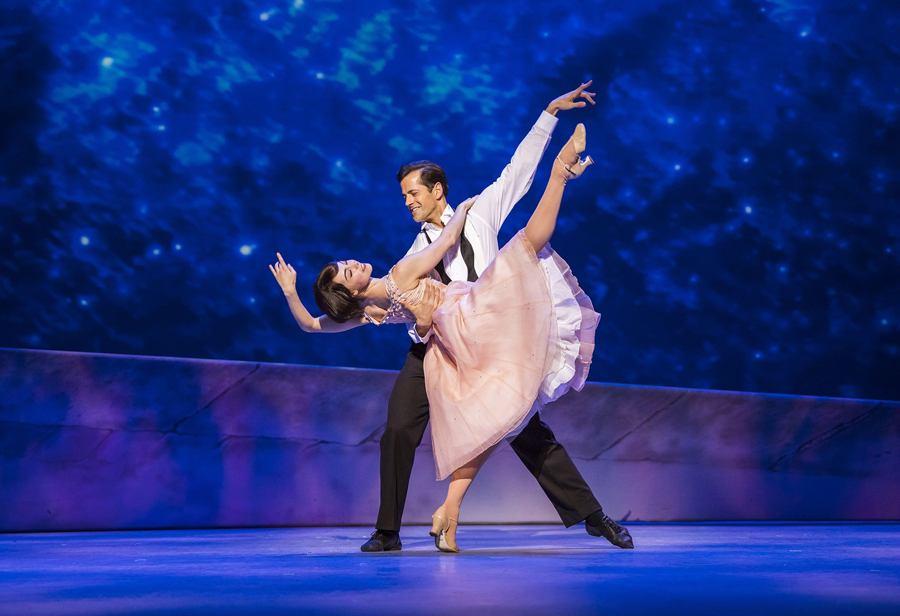
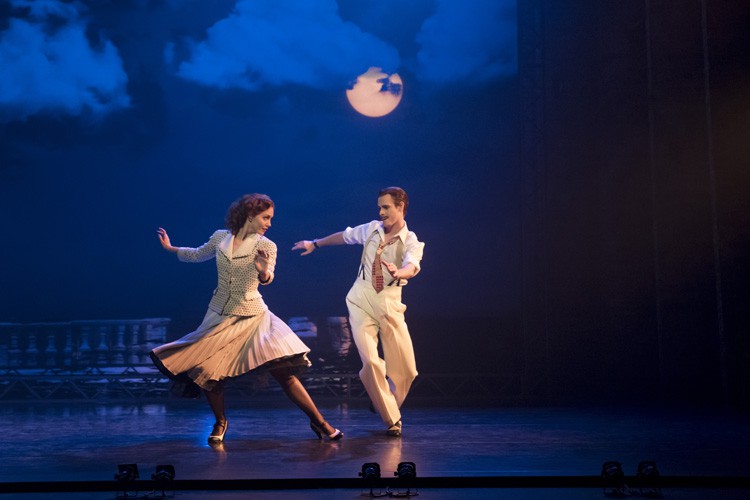
Review: An American in Paris ★★★★★ – A glorious evocation of the City of Light illuminates the stage

A lone figure limps into the light on a bare stage. Wounded in action, GI Adam Hochberg, confides his life, loves, hopes and fears and takes the audience back to newly-liberated Paris, 1945. David Seadon Young’s sardonic, worldly-wise American Jew in Paris is the first surprise in a show that adds depth to the light-as-air story of the much-loved film – without losing any of its charm and vitality.

Director and choreographer Christopher Wheeldon and book writer Craig Lucas collaborated to develop the story – Hochberg is one of three young men who become comrades – the ’Three Musketeers’ – all sharing one beloved object, gifted ballerina Lise Dassin (equally gifted ballerina, Royal Ballet principal Leanne Cope, proving she can sing and act, with all the delicate vulnerability of the film’s Leslie Caron). She too is Jewish, surviving the war hidden by the cultured family of her second admirer Henri Baurel (Haydn Oakley, all Parisian charm), though she hides her personal tragedy: her parents are missing after the Holocaust. Aficionados of the film will guess the third admirer is the American of the title, ebullient demob-happy GI Jerry Mulligan – breath-taking triple threat Robert Fairchild doing rather more than making the Gene Kelly role his own.

The creative team build on the film’s glorious ballet and lush Gershwin brothers’ score, with daring extended dance sequences performed by this multi-talented 18-strong ensemble, peopling a hopeful Paris striving for normality after the traumas of occupation. Alongside the joyful expression of freedom, there’s a telling moment, the shaming of a woman accused of sleeping with the enemy, all without a word of dialogue. Lucas’s book is wonderfully witty, though, and his rounded characters are a gift to actors such as Jane Asher, who is superb as bossy matriarch Madam Baurel, and Zoë Rainey, a revelation as the irresistible force that is Milo Davenport, socialite arts patroness extraordinaire (based on real-life inspirational Jewish art collector Peggy Guggenheim).

The numbers are subtly staged to reveal plot and character. Take the complementary numbers, one in each act, featuring that trio of musketeers yearning after Lise. They get to sing first '‘S Wonderful' and then 'They Can’t Take That Away from Me' and for each the lyrics mean something different and personal. Just 15 versatile musicians realise Bill Elliott’s expansive orchestrations.

The performers inhabit the extraordinary evocation of Paris conjured by designer Bob Crowley’s 3D streets, buildings and landmarks (realised by 59 Productions Projection Design), the City of Light living up to its name thanks to lighting designer Natasha Katz’s palate of complementary glowing colour. Crowley dresses everyone with lovely period detail, especially the ensemble – gorgeous glamour for those essential Parisian showgirls and sophistication for Asher and Rainey. A ravishing, life-affirming joy.

By Judi Herman

Photos by Johan Persson

An American in Paris is currently booking until Monday 30 October. 7.30pm (Mon- Sat), 2pm (Sat, Wed). £17.50-£125. Dominion Theatre, W1T 7AQ. 0845 200 7982. www.anamericaninparisthemusical.co.uk

Click here to read more theatre reviews.

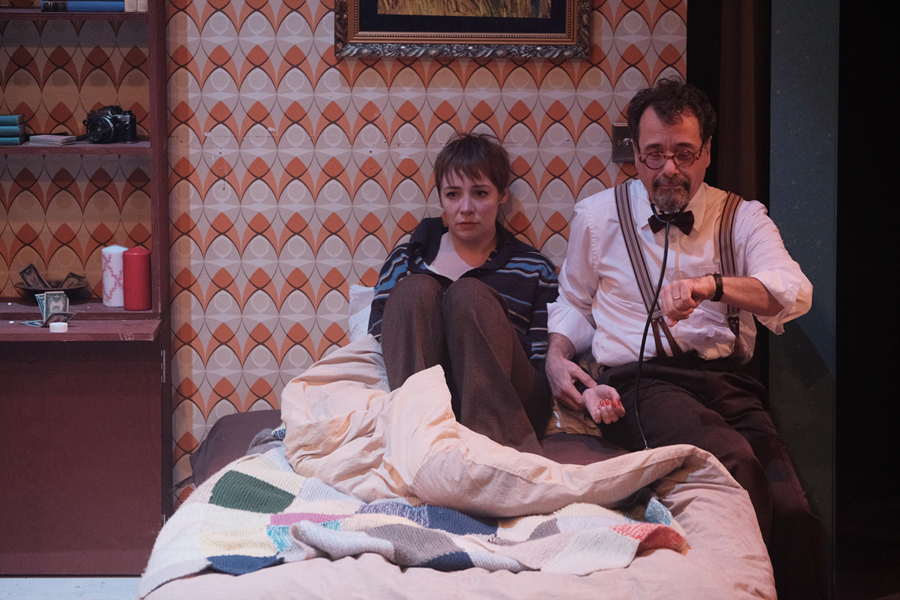
Review: A Dark Night in Dalston ★★★ - A night of discovery at Park Theatre that will keep you guessing

Some years back, I interviewed Rabbi Jonathan Black for radio, making a cameo appearance in EastEnders conducting a Jewish wedding. Not already a viewer, I duly researched by watching an omnibus edition and learned how you ‘gotta talk’. Jewish (non-Orthodox) playwright Stewart Permutt did his research by consulting a Charedi friend. So there’s a real authenticity about his protagonist Gideon – what brands of bread and crisps he can eat (Kingsmill and Walkers) and what he cannot drink from (glass).

Permutt has form when writing strong female characters, often for well-known TV stars, including Lesley Joseph, Celia Imrie and the much-missed Miriam Karlin.

His latest play was specially commissioned by EastEnders and Coronation Street star Michelle Collins, who was born in Hackney. Collins' maternal grandfather was a Belgian Jew who moved to Wales to escape the Holocaust. Having played the confused mother Evelyn in Diane Samuels' Kindertransport, Collins sought another dramatic stage role and proactively commissioned a play with a juicy part for herself.

The resulting two-hander is a present-day drama set in the East End flat of Collins’ character Gina, a feisty, friendly ex-nurse living on a Dalston council estate, whose days are filled caring for her partner, who's been bed-bound after a stroke. When young Orthodox Jew Gideon (Joe Coen) is beaten up one Friday night on her doorstep, Gina takes him in. But Shabbat has begun and this strictly observant Jew can’t travel home to Stanmore, so is forced to spend the night with her, a night during which they find themselves drawn to each other as regrets about their lives emerge.

Tim Stark directs this dark comedy exploring the “madness of the human condition”, as he says, with a sensitive ear for dialogue so that the evolving emotional conflict is genuinely involving. Simon Shaw’s set beautifully evokes (now ex) council flats, with their signature external landings. However, it’s a challenge to sustain dramatic tension over a scenario that doesn’t evolve sufficiently during its playing time, so it might benefit from losing a few of its 105 minutes.

Collins and Coen admirably inhabit their characters despite gaps in their development over the drama’s duration. Collins convincingly captures the conflicted Gina, and her small-screen acting is well suited to the intimate Park90 space. Coen, fresh from The Mighty Walzer and Bad Jews, invests Gideon with that curious mix of self-righteousness and self-knowing often seen in the ultra-orthodox of any religion. Their final scenes together are touching, bringing out the common bonds shared by the characters and the chemistry between the actors.

A Dark Night in Dalston is a good night out, given enough good will and patience to discover Gina and Gideon’s deep-seated hopes and needs.

By Judi Herman

Photos by Helen Murray

A Dark Night in Dalston runs until Saturday 1 April. 7.45pm (Mon-Sat), 3.15pm (Thu & Sat only). £18, £16.50 concs. Park Theatre, N4 3JP. 020 7870 6876. www.parktheatre.co.uk

Click here to read more theatre reviews.

JR OutLoud: Debbie Chazen, the only Jewish Calendar Girl, talks about her new musical The Girls

First it was a play, then a film and now Calendar Girls has been made into a musical – already nominated for several Olivier Awards – with book and lyrics  by Tim Firth, who wrote the play and co-wrote the film script (with Juliette Towhidi), and music by Gary Barlow.

The Girls tells the true story of members of a Yorkshire branch of the Women’s Institute who had the idea of posing for a nude calendar to raise money for Leukaemia Research, when the husband of one of the girls became ill and died from the disease.

As all the girls of the title are nominated jointly for an Olivier Award, Judi Herman spoke to Debbie Chazen, who has the distinction of being the only Jewish 'girl', as well as the only one who appeared in the original stage play.

Photo by Matt Crockett, Dewynters

The Girls runs until Saturday 15 July. 7.30pm (Tue-Sat), 2.30pm (Thu & Sat, plus Tue from 25 Apr). £29.50-£69.50. Phoenix Theatre, WC2H 0JP. 0844 871 7627.        www.phoenixtheatrelondon.co.uk

Click here to listen to more interviews on JR OutLoud.

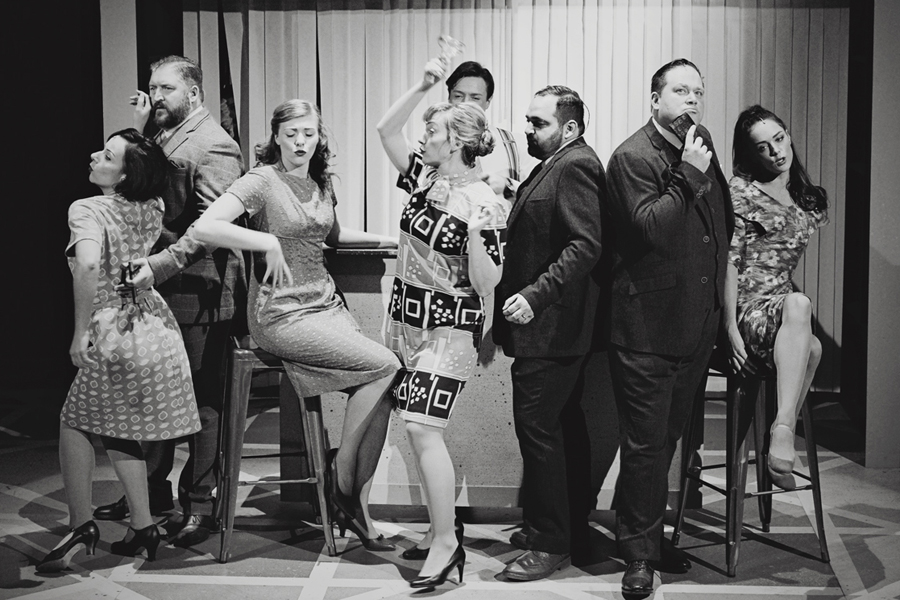
Review: The Wild Party ★★★★ - Loud, lively and lovely, The Wild Party lives up to its name

What better way to open The Other Palace (formerly St James Theatre) than with a wild party? Michael John LaChiusa’s musical takes on Joseph Moncure March’s 1920s poem and paints an unglamorous picture of the dissolute decade with a cast of unsympathetic and pitiless characters. Guys and Dolls it ain’t!

The story follows vaudeville dancer Queenie (aka Frances Ruffelle, the magnificent Jewish musical theatre star, the original Eponine in Les Mis) and her tempestuous relationship with vaudeville clown Burrs (mighty-voiced John Owen-Jones, who has played Jean Valjean more than anyone else in Les Mis’s history). One Sunday, after a fight, Burrs suggests they throw a party and invite "all the old gang". Eagerly they prepare for a wild party fortified by bathtub gin, cocaine and sex.

Director/choreographer Drew McOnie’s winning formula is his powerful casting of a parade of wild guests, led by Chorus Line legend Donna McKechnie as fading star Dolores and Victoria Hamilton-Barritt’s scary alpha female Kate, Queenie's best friend and rival, with Simon Thomas, striking as her arm candy, Black, who is eyeing up Queenie – you get the picture.

There are two eye-catching double acts. Oscar and Phil D'Armano, a gay couple/brother act are actually played by two terrific women, Genesis Lynea and Gloria Obianyo, playing hookie with their sexuality. The Jewish interest lies in a matching pair of wannabe Broadway-bound theatre producers, Gold and Goldberg. That’s also the title of their number, which has Sebastian Torkia’s jaunty Gold working on Goldberg (an assertive Steven Serlin, the Rabbi from The Infidel) to change his name to Golden, hoping that playing down their Jewishness will help them strike, well, gold. They’re no match for predatory Dolores who plays the pair like a snake when she realises they could be her ticket to Moving Uptown (a deliciously witty, sexy number).

Moncure March’s poem has a driving repetitive rhythm, great for narrative but impossible to sustain in lyric and libretto. LaChiusa translates that into the show’s equally relentless freneticism, especially in the longer, louder first half, with most of the show’s almost 40 numbers following in quick succession.

Happily McOnie moves his nattily–dressed (designer Soutra Gilmour) party animals to create sophisticated stage pictures on Gilmour’s glitzy levels, dominated by MD Theo Jamieson’s fine eight-strong orchestra, on show on high, doing justice to LaChiusa’s challenging mix of 20s pastiche, vaudeville, jazz and more contemporary musical style.

The shorter second half comes as a relief, slowing the pace to allow for plot, pathos and some more intense numbers as melodrama takes over.

It makes a promising start to this new venture from Andrew Lloyd Webber and artistic director Paul Taylor-Mills offering a central London home and breeding ground for musicals in development.

By Judi Herman

Photos by Scott Rylander

The Wild Party runs until Saturday 1 April. 7.30pm (Mon-Sat), 2.30pm (Sat only). £10-£65. The Other Palace, SW1E 5JA. 084 4264 2121. ww.theotherpalace.co.uk

Click here to read more theatre reviews

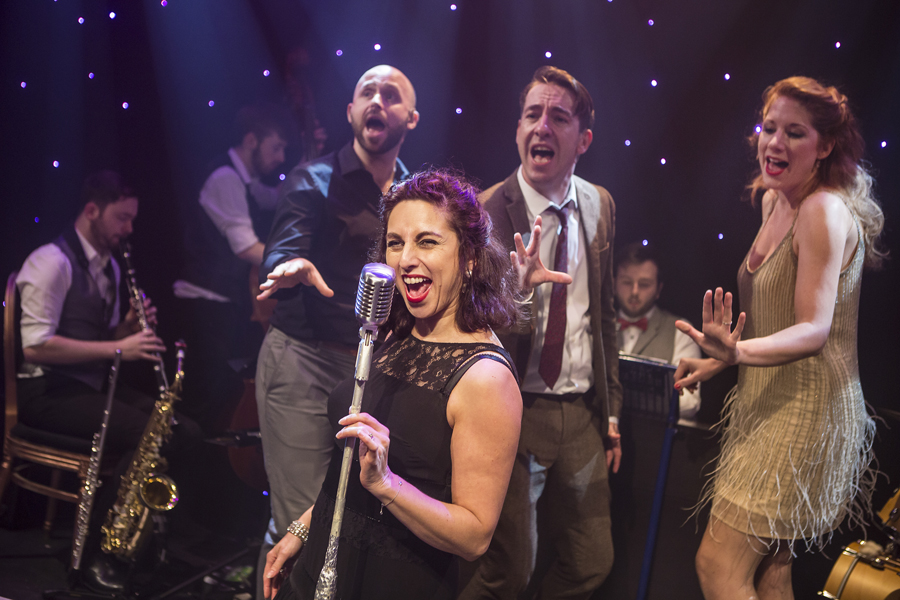
Review: That’s Jewish Entertainment ★★★ - Much to discover and enjoy in a canter from cantor to cabaret

There was a terrific compilation movie that took the title of much-loved song That’s Entertainment (written by Jewish duo Arthur Schwartz and Howard Dietz for the MGM film The Band Wagon) to celebrate the Metro-Goldwyn-Mayer studio’s prodigious output; celebrating songs by Jewish composers and lyricists written for films produced by a studio founded and run by the eponymous Jewish entertainment moguls. Producer Katy Lipson proves her love and knowledge of "the magic of the musical" by touring her show The MGM Story this February. So in a way That’s Jewish Entertainment is a given, but there’s still so much to discover and enjoy as four talented performers and a four-strong band give their all to entertaining Yiddish style and tracing the trajectory of Jewish entertainment from shtetl to showbiz.

Kate Golledge directs, starring gals Joanna Lee (the petite brunette one) and Emma Odell (the tall blonde one) and guys Matthew Barrow (the bearded one) and David McKechnie (the smooth one). They dress as individuals (there's no designer credit, but lighting designer Ben M Rogers and programmer Toby Darvill provide a glitzy backdrop of twinkling lights), but their powerful voices blend beautifully (musical director Charlie Ingles, arranger Andy Collyer) and they move as one (choreography Adam Scown). And just when you think McKechnie has nailed Groucho Marx, Barrow takes over with the next quip. Similarly both Odell and Lee get to give their Sophie Tucker at different stages of the red hot mamma's long career.

Opening with a perky new title number of his own, writer Chris Burgess traces the rise and rise of Jewish entertainers on stage and screen and behind the scenes pulling the strings – both creative and financial – from those first valiant 19th-century arrivals from the shtetl to the second migration to Hollywood and through two world wars. He's mindful of the emotional baggage and the legacy of the music of the old country; and the outside events and forces buffeting the Jewish community. The Holocaust looms largest, of course. Burgess includes the powerful song of the defiant Jewish partisans The Final Road in his own excellent translation, and explores the endemic antisemitism in the USA that means so many Jews keep a low profile, even in showbiz, often deploring the overtly Jewish shtick of Jackie Mason and even Mel Brooks.

The best nuggets are the gallop through the schmaltzy plot of The Jazz Singer (his was just one of the mamas behind all those papas) and the heart and soul in all those Yiddish gems contrasting with the glitz. Whether you are Jewish or not, it would be hard not find something to entertain you here.

By Judi Herman

Photos by Pamela Raith

That’s Jewish Entertainment runs until Saturday 11 March in London and on Sunday 12 March in Hertfordshire. Details below:

London: 7.30pm (Tue-Sat), 4pm (Sun only), 3pm (25 Feb, 4 & 11 Mar only). £18-£22, £16-£20 concs. Upstairs at the Gatehouse, N6 4BD. 020 8340 3488. www.upstairsatthegatehouse.com

Hertfordshire: 7.30pm & 3.30pm. £20. Radlett Centre, WD7 8HL. 01923 859291. www.radlettcentre.co.uk

Click here to read more theatre reviews.

Review: Death Takes a Holiday ★★★ - Magic realism in 1920s Italy makes for a haunting musical

Lush romantic stories are bread and butter to composer/lyricist Maury Yeston, and he writes scores to match. His elegiac music conjures time and place and whether the place is the doomed Titanic ocean liner or Grand Hotel Berlin 1928, the first half of the 20th century seems to be his preferred time.

Yeston and Peter Stone, who wrote the book for Titanic, next turned to Italian playwright Alberto Casella’s 1924 romance, Death Takes a Holiday, with its glamorous setting – an aristocrat’s villa on Lake Garda. This fanciful story has Death falling for Grazia, a beautiful newly-engaged young aristocrat so that he allows her to escape unscathed from a catastrophic car crash; and taking the guise of a handsome young Russian Prince to gatecrash her father’s weekend house party, courts her himself. In a programme note Yeston points to what’s behind Casella’s story – a preoccupation with death in the survivors of the Great War and the ensuing deadly influenza pandemic which between them claimed 60 million lives. So there’s a thematic link with Yeston’s earlier work. It’s a sad irony that Stone’s death in 2003 meant that Thomas Meehan had to take over.

The strange dreamlike chamber musical gets its dream production, thanks to director Thom Southerland’s fine cast and creative team and MD Dean Austin’s 10-piece band. Set designer Morgan Large belies his name, creating on a pocket-sized stage terraces and colonnades of an Italian lakeside villa as convincing as any in an Ivory/Merchant film. And Jonathan Lipman’s stunning take on period costumes complements perfectly, for Southerland cleverly makes his 14-strong cast part of the set, for example standing on chairs to suggest the doomed car.

There are uniformly elegant performances too. Chris Peluso’s Death and Zoë Doano’s Grazia look perfect in each other’s arms and have soaring voices to match the music Yeston gives them. Peluso is both appealingly ardent and as sinister as his real identity demands and Doano is so alive and fresh that you fear for her as she falls for him, even as she recognizes him.  Mark Inscoe commands as the Count, her worried father, and among his guests, Samuel Thomas stands out as Major Eric Fenton, closest friend of his son, Roberto, killed in the Great War, with one of the show’s best numbers, Roberto’s Eyes. Scarlett Courtney as Eric’s sister and Helen Turner as Roberto’s widow Alice are touching representatives of girls without husbands post-war. Gay Soper and Anthony Cable are touching and funny as the vintage couple rediscovering youthful vigour while Death has taken time out. There are though perhaps too many musical numbers and it’s just a shame that Yeston’s pot pourri of styles doesn’t quite make for a killer musical.

By Judi Herman

Photos by Scott Rylander

Death Takes a Holiday runs until Saturday 4 March, 7.30pm (Mon-Sat), 2.30pm (Wed only), 3pm (Sat only), £17.50-£39.50, at Charing Cross Theatre, WC2N 6NL. www.charingcrosstheatre.co.uk

Read more theatre reviews

Review: Promises, Promises ★★★ - The swinging 60s live up to their name in a musical with pedigree  

With its stellar writing team – music and lyrics Burt Bacharach and Hal David, book Neil Simon (based on Billy Wilder’s screenplay for hit comedy The Apartment) – this musical set in early 60s New York is as lovable and eager to be loved as any pedigree pup. It boasts a hero of self-deprecating charm in Chuck Baxter, insurance company junior and wannabe executive dining room key holder. Happily for Chuck, he already holds the keys to a Manhattan studio apartment, discreet walking distance from the office. Jaded middle-aged senior executives aspire to these keys to happiness in their turn for the odd hour’s dalliance with their very personal assistants before they go home to their wives. Chuck seems to hold the keys to his own advancement – the promises are the promotion his superiors offer in return.

Chuck’s problem is Fran, the girl of his dreams (dreams shared with the audience in ‘confidential’ asides) who waits in that dining room. She turns out to be the long-term squeeze of the all-important personnel director Sheldrake, who wants exclusive use of Chuck's apartment in return for promotion.

In Gabriel Vick, director Bronagh Lagan has found the perfect Chuck, as appealing as he is talented. But there’s a potential problem with this period piece. The show is self-knowing, necessarily considering its central premise to be droll, whereas to dissenters (post-feminist perhaps) it is, frankly, seedy. Given that back in the aptly-named swinging 60s everyone was apparently at it – think Mad Men – why the problem? I think it’s because the girls have so little voice here. Definitely not on top (except possibly in bed), they are secretaries teetering smartly on their heels in the wake of their bosses, taking letters, keeping diaries, exchanging favours (presumably also for advancement) – and backing songs. At first most numbers are sung by the guys – often by Chuck himself. Happily, you do eventually get to hear from Daisy Maywood’s Fran, who manages to combine fragility and vulnerability with a voice of glorious power and subtlety. It almost justifies the interpolated hit, A House is not a Home, which doesn't quite fit into the action, but who cares when you get to hear Maywood’s rendition.

Elsewhere Alex Young suggests she is destined for stardom with a delicious turn as Marge – up for Christmas cheer with Chuck, whom she picks up in a bar. Plus all those sassy secretaries turn in great performances with archly exaggerated body language in Cressida Carré’s spot-on choreography and designer Simon Wells’s matching period frocks. Given the unusual chorus of middle-aged lotharios and Paul Robinson’s excellently unappealing and unfeeling Sheldrake, Lagan at any rate is aware of the story’s ambiguity, as indeed is that writing team.

By Judi Herman

Photos by Claire Bilyard

Promises, Promises runs until Saturday 18 February, 7.30pm (Mon-Sat), 3pm (Sat & some weekdays), £25, £20 concs, at Southwark Playhouse, SE1 6BD. 020 7407 0234. www.southwarkplayhouse.co.uk

Click here to read more theatre reviews

Review: Veteran’s Day ★★★★ - Donald Freed’s 1987 cautionary tale is timely and provocative in the month of Trump’s inauguration

The theatre is a storage room in an LA veterans administration hospital. The date is 11 November 1989 – Remembrance Day. Three veterans of three different conflicts, emblematic of a 20th-century world torn apart by war, represent the soldiers scarred by their experiences in the theatre of war. Sporting poppies, they prepare in this makeshift waiting room to be decorated for valour. Private Leslie R Holloway, who saw service (and unnamed horrors) during World War I, is slumped in a wheelchair when Sergeant John MacCormick Butts breezes into the room in his brash suit. His voice is even louder as he whiles away the time by cheerily proving that his prowess at the piano is equal to his prowess in World War II, accompanying himself reprising rousing ditties from different conflicts, from Keep the Home Fires Burning to Over Here. His best endeavours are not enough to rouse Holloway, however, so it’s a relief when the immaculate, dapper figure of Colonel Walter Kercelik marches smartly into the room, so highly decorated during the Viet Nam War that he’s appeared on the cover of Time Magazine.

What follows is an unravelling that is as unpredictable as it is terrifying, until it becomes apparent what deep psychological traumas all three men have endured. The sort of damage evident in Holloway’s slouched form is disguised by Butts, with his over-cheerful bonhomie, and Kercelik with his extraordinary outward self-control, encyclopaedic retention of facts and glowing efficiency.

Freed’s play is an eloquent exposé of the failure of doctors and the forces’ authorities to recognise and treat the psychological damage of war, from shell shock to post-traumatic stress damage. His writing is vividly authentic and, set as an unnamed newly successful presidential candidate is about to take advantage of a PR opportunity to meet these heroes, his chillingly clever story assumes a telling topicality this month.

Hannah Boland Moore directs her perfectly-cast production with finely-calibrated sensitivity on a set cleverly converted by designer Liam Bunster from that of the Finborough’s current main stage production with the simple addition of a huge stained cloth. It acts as backdrop to revelations by Charlie De Broomhead’s superbly and terrifyingly authoritative and precise Kercelik, which reduces Craig Pinder’s expansive and wonderfully irritating Butts to a jelly, while Roger Braban fulfils the difficult role of the apparently inert Holloway to touching and disturbing perfection.

Sound designer Matt Downing’s noises include Sousa marches played by a military band to counterpoint Butts’ more informal ditties, as well as a patchwork of confused tannoy announcements and more alarming sounds as the story reaches its extreme, but plausible climax. It’s just a shame it gets only three outings a week. It deserves a main-house run.

By Judi Herman

Photos by Scott Rylander

Veterans Day runs until Tuesday 24 January, 7.30pm (Sun, Mon only) & 2pm (Tue only), £18, £16 concs, at Finborough Theatre, SW10 9ED. 0844 847 1652. www.finboroughtheatre.co.uk

Read more theatre reviews

JR OutLoud: Charles Dorfman talks about acting in hit comedy Luv - seasonal fun to light up winter

When Harry is talked down from throwing himself off a Bridge by old school friend Milt, who luckily happens to be passing, his life takes a different direction as he finds love in this 1963 comedy from Murray Schisgal. He's the prominent New York Jewish writer responsible for Tootsie, Dustin Hoffman’s cross-dressing film comedy hit. Here Charles Dorfman talks to Judi Herman about finding LUV and playing Harry; his co-stars Nick Barber and Elsie Bennett; his collaboration with director Gary Condes; and Dorfman’s Buckland Theatre Company, resident company at Park Theatre’s studio space, Park 90.

LUV runs until Saturday 7 January. 7.45pm (Tue-Sat), 7pm (13 Dec only), 3.15pm (Thu & Sat). £14.50-£18. Park Theatre, Clifton Terrace, N4 3JP. 020 7870 6876. www.parktheatre.co.uk

Read our review of LUV

Review: The Red Shoes ★★★★★ - Bourne’s transcendent storytelling ravishes the senses

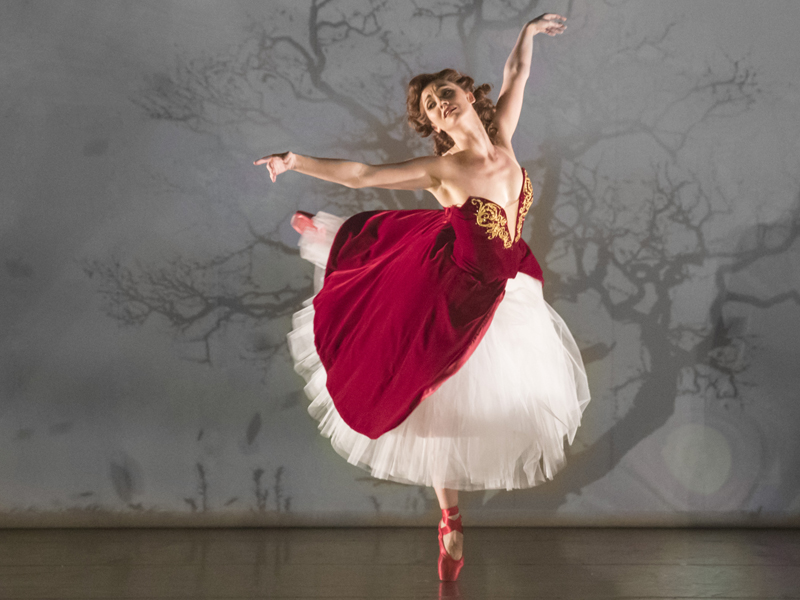
theatre-the-red-shoes-ashley-shaw-victoria-page-and-sam-archer-boris-lermontov-photo-by-johan-persson To Powell and Pressburger go the plaudits for moulding Hans Andersen's fairy tale with its hard magic into an allegory of art versus life. To Bernard Herrman the plaudits for writing film music that brilliantly conjures mood and emotion, atmosphere and character. And to Matthew Bourne with his creative team, led by designer Lez Brotherston and composer/orchestrator Terry Davies and with his close-knit family of dancers, goes the glory for taking all this magic and distilling it into two hours of transcendent storytelling that ravishes the senses.

Filmmakers Michael Powell and Hungarian-Jewish refugee Emeric Pressburger met in 1939, at the London studios of Jewish movie mogul Alexander Korda. They formed a partnership that would produce lushly visual films with wonderfully-crafted stories, The Red Shoes, the magic realist A Matter of Life and Death, starring a dashing David Niven, the religious drama Black Narcissus, a vehicle for Deborah Kerr; and the time-travelling heroics of The Life and Death of Colonel Blimp (also starring Kerr, alongside Roger Livesey).

Bernard Herrmann was a giant among film composers, the go-to music man for Alfred Hitchcock, for whom he wrote scores including North by North West, Vertigo and Psycho. For Orson Wells he composed the music for Citizen Kane and for Truffaut for the dystopic sci-fi movie Fahrenheit 451. Now Herrmann is the go-to man for Bourne and Davies, who use music from Fahrenheit 451 and Citizen Kane and Herrmann's Oscar-winning The Ghost and Mrs Muir, as well as lesser-known, equally vivid Herrmann compositions. Davies' genius is in scoring the music for a small orchestra dominated by strings and keyboards, complemented by percussion, a glorious plangent sound that enhances mood and emotion, a gorgeous take on this period music that takes you into the world of men and women who live for their art.

A love triangle stands for the struggle between art and life. Aspiring ballerina Victoria Page succeeds in attracting the attention of ballet impresario supreme Boris Lermontov and becomes his protégée and his star – and the object of his affections. But she falls in love with his other protégé, gifted young composer Julian Craster – hence the pianos onstage as well as in the orchestra. Lermontov creates The Red Shoes ballet for Page, but its dark story of the shoes that force their wearer to dance to their tune proves dangerously prophetic as Craster and Lermontov face each other and Page struggles to balance her life in art with her desire for a real life.

The precarious balance between art and life is brilliantly realised by Brotherston's set – a grand pair of lush red velvet curtains, a proscenium arch framing the dancers in Lermontov's ballets, instantly conjuring period and cunningly conceived to swivel 90 degrees to reveal life backstage (complete with an audience mirroring us in our auditorium). Bourne and Brotherston brilliantly evoke mid 20th century dance companies, the tulle-clad prima ballerinas with their exotic 'Russian' names, the strutting male stars in tiny tunics atop tight white tights. Michele Meazza's Irina  Boronskaja is a terrific star turn supported (literally) by Liam Mower channelling the likes of Michael Somes, Margot Fonteyn's partner before Nureyev leapt into her life. It's a clever, affectionate pastiche.
theatre-red-shoes-20feda4c-b639-d37e-7495a8c550bd50fd

Into this effete world pirouettes Ashley Shaw's Victoria Page, a youthful whirlwind of ambition and talent.  No wonder Dominic North's ardent Craster and Sam Archer's lordly Lermontov, so used to getting his own way, clash over her and what she comes to represent. This is such total theatre, that you almost think you have heard every word that passes between them, so vivid is the storytelling, so clear the allegory.

Bourne's recreation of the Red Shoes ballet is scarily exciting, graphically sucking in its heroine - and Page dancing the role. Brotherston's set is monochrome, a stunning homage to the avant garde of the period. The unsettling music from Fahrenheit 451 enhances the mood. We first see the red shoes framed by those proscenium curtains as the evening begins, lit so that Shaw wearing them is obscured. Now they seem to take on a terrifying life of their own, so that a tragic outcome to Page's story to mirror the ballet seems inevitable.

But meanwhile there are delicious delights to be had. Page's triumphant progress in the Ballet Lermontov takes her to continental France and the fun of dancers in bathing costumes playing beach ball. Her turn in a run-down East End music hall is preceded by a perfect - and perfectly hilarious - recreation of the Egyptian sand dance, complete with the eccentrics who created it, Wilson and Kepple (though not Betty, the girl who used to dance between them). And for us aficionados of music hall, the orchestra jauntily plays music hall standard Wot Cher!

Every member of the company clearly relishes creating multiple roles. And Brotherston's genius of course also extends to fabulous costumes that perfectly enhance the dance and play their part in the drama - the whole lit with a deep feel for every dramatic mood and moment by long-term collaborator Paule Constable. No wonder Bourne records his love and thanks to "the entire New Adventures family" in the programme. Their closeness and shared creativity achieve a total triumph.

By Judi Herman

Photos by Johan Persson

The Red Shoes runs until Sunday 29 January. 7.30pm (Tue-Sat), 7pm (15 & 26 Dec only), 2.30pm (Sat), 2pm & 7pm (Sun, except 25 Dec & 1 Jan). Sold Out (phone for returns). Sadler’s Wells, Rosebery Av, EC1R 4TN. 020 7863 8000. www.sadlerswells.com

Then touring: New Victoria Theatre, Woking, 31 Jan-4 Feb; Birmingham Hippodrome 7 - 11 Feb; Milton Keynes Theatre, 14-18 Feb; Theatre Royal, Norwich, 21-25 Feb; Theatre Royal Nottingham, 7-11 Mar; Wales Millennium Centre, Cardiff, 14-18 Mar; The Mayflower, Southampton, 21-25 Mar; The Alhambra, Bradford, 28 Mar-1 Apr; Bristol Hippodrome, 4-9 Apr; New Wimbledon Theatre, 11-15 Apr; The Marlowe Theatre, Canterbury, 25-29 Apr; Theatre Royal Newcastle, 2-6 May; Festival Theatre, Edinburgh, 9-14 May; Curve Leicester, 16-20 May; Wycombe Swan, 13-17 Jun.

For further details and to book visit http://new-adventures.net/the-red-shoes/tour-dates