JR's Rebecca Taylor talks Tehran, Shmita and the fall of the Berlin Wall with Jon Kaye on Sunday Jewish Radio

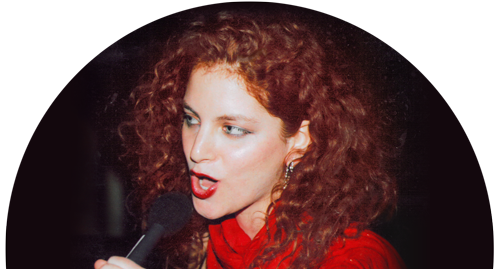
This week Jewish Renaissance editor Rebecca Taylor spoke to Jon Kaye at Sunday Jewish Radio. The station, which is based at Jewish Care in Golders Green, London, broadcasts interviews and conversations on a range of topics and airs – you guessed it – on Sundays! Rebecca told Jon about why she left mainstream journalism for a Jewish magazine and talked about her own Jewish identity, as well as some of the stories in the current issue of JR. Such as Jewish Tehran, why Shmita is becoming a hip commandment, and what has happened to the German Jewish community since the fall of the Berlin wall. You can listen to the interview above.

To find out more about Sunday Jewish Radio, visit their website.

Review: Judi Herman discovers drama and comedy on a women’s cancer ward in Anat Gov’s Happy Ending

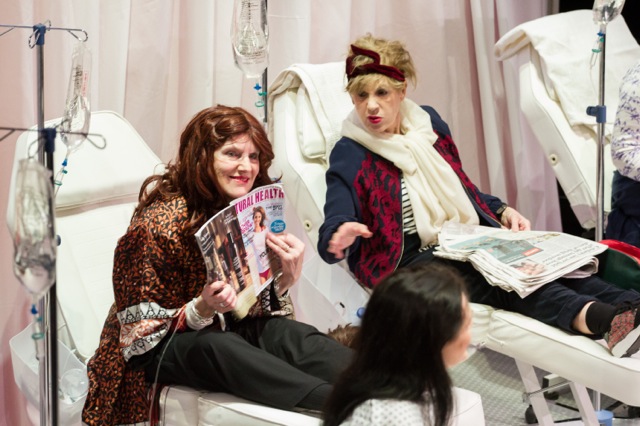
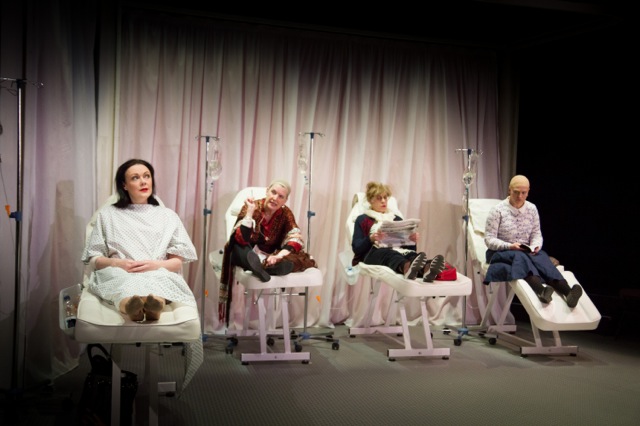
Happy Ending (3) - c Piers Foley_press2015 Entering a space equipped with hospital beds and drip-stands, you'd be forgiven for thinking you were in an operating theatre, rather than the kind with lights, action and music. But then Happy Ending is a play about women facing up to life with The Big C; cancer.

Managing it as best you can usually means coping with invasive, uncomfortable and time-consuming therapy, time spent on a hospital bed hooked up to a drip stand. Not the stuff of which musicals are made. Well, there’s a lot less blood than that shed by Sweeney Todd: The Demon Barber of Fleet Street and fewer lives lost than on the barricades manned by students in the Paris revolution of 1870 central to Les Misérables.

This is a meditation on and exploration of how we face up to cancer. There’s a lot of fighting talk at the moment in ads for cancer charities urging us to take on the disease and beat it at its own game. But the conclusion of Happy Ending is that there are different coping strategies and different outcomes – no right or wrong way to face and fight cancer – and sometimes we have to make our own choices. We may share those choices with those who care for us or we may choose not to. I say "we", as it is easy to identify with the four brave women on stage, who each embody different ways of coping and many of us have faced (or will face) their choices.

But Happy Ending is of course is a musical show and although Anat Gov’s story explores the issues from the inside (she died from cancer in 2012), she manages to be funny and uplifting en route for the "happy ending" she writes for her central character actress and minor celebrity Carrie Evans, newly diagnosed with the disease (a delicate and detailed performance from Gillian Kirkpatrick).

There are some original and unexpected dance routines – drip stands make elegant partners – there’s a Gospel chorus and even cancer itself is embodied by an attractive young man (Joe McCourt) in a steamy tango. There are killer lines too (yes, the gallows humour is catching): “There’s nothing like the smell of fresh cancer in the morning," says one patient, old hand Silvia (played by the excellent and feisty Andrea Miller). She has been fighting cancer with every treatment possible for so long that she is almost like the top dog in a prison drama (or the block elder in a camp). This lady is a survivor of Auschwitz, so how can she let cancer get the better of her?

Carrie (Gillian Kirkpatrick), Miki (Karen Archer), Silvia (Andrea Miller) and Sarah (Thea Beyleveld) gossip in the ward following Carrie’s arrival

Silvia is one of the other three women who embody different ways of coping with their cancer. Miki (the bouncy and attractive Karen Archer) is an ex-hippy who has found so many positives in her diagnosis that she almost has a new lease of life. For a start it has led to a reconciliation with the estranged daughter she neglected during her days of tuning in, turning on and dropping out. Then there’s the devout young Orthodox mother of many, Sarah (Thea Beyleveld, both touching and convincing in her fervour) who trusts in her faith in God to get her through – though she does not trust her yeshiva student husband to look after the children and the plumbing at home.

Yes they are types, but they turn in great performances, as do the supporting (literally) cast of nurses and doctors, led by cheery dedicated nurse Fiona Jodie Jacobs (perfectly channelling a type I recognise from my own recent spell in hospital) and hunky Dr Lynch (Oliver Stoney), the alpha male medic who might have stepped out of any TV hospital drama – cold and caring at the same time.

Director Guy Retallack and Hilla Bar, who adapted the story from Hebrew, have relocated the drama from Israel to North London with the odd mention of, for example, Parliament Hill. Shlomi Shaban and Michal Solomon provide songs that are more stand-out moments of exploring Gov’s theme than the score of a musical moving along the plot or illuminating the characters.

By Judi Herman

Happy Ending runs until Saturday 7 March.  7.30pm (also 3pm Wed/Sat). £12-£19. Arcola Theatre, 24 Ashwin St, E8 3DL; 020 7503 1646. www.arcolatheatre.com

Review: Bad Jews – Joshua Harmon's new play about faith, family and funnies

© Robert Workman – Bad Jews Daphna is angry. She’s back from her Ivy League college and is storming petulantly around a claustrophobically small studio apartment like a disgruntled toddler. Her cousin Jonah (Joe Coen) tries relentlessly to ignore the young tyrant as she moans about the fact that Jonah’s brother Liam (Ilan Goodman) has missed their Poppy’s (grandpa) funeral because he was skiing in Aspen with his girlfriend, who isn’t even Jewish. This opening scene sets the audience up perfectly for what’s to come – an hour and a half of increasingly un-passive aggression that’s full of belly laughs.

This new show from 31-year-old Joshua Harmon made its debut in New York in 2012 and was such a hit that in the past year it has become the third-most-produced play in America. The New York-born playwright conceived the idea for Bad Jews just over a decade ago after he attended a “depressingly unmoving” Yom Hashoah (Holocaust Memorial). The service involved grandchildren of Holocaust survivors offering up dispassionate dialogues about their relatives’ traumatising experiences. This got the budding writer considering what it means to be a young Jew in the modern world and whether we should strive to keep alive our religious beliefs and cultures in our children or work towards a religionless and nationless world. Because at the end of the day, should who we are matter?

© Robert Workman – Bad Jews

This issue, while never tackled head-on, throws up various viewpoints throughout as the characters defend their religious and familial loyalties. Daphna – a pushy, furiously sincere “super-Jew” portrayed skilfully by Jenna Augen – and Liam – incredibly bright, but atheist part-time and Jewish when it suits him – bicker and manipulate their way through scenes, ultimately fighting for Poppy’s Chai (symbol for life) necklace, which comes with a heart-breaking backstory.

Kudos must also be given to set designer Richard Kent, whose level of detail plays as huge a part in drawing you in as the actors do. The studio apartment and entrance hallway where Bad Jews takes place is solidly constructed, with minutiae, such as plug sockets, bins and even a leaflet under the neighbour’s door, that make it satisfyingly easy to forget you’re watching from a theatre seat and become fully absorbed in the fast-paced dialogue.

© Robert Workman – Bad Jews

There’s a great comic moment in Bad Jews when Gina Bramhill’s Melody, Liam’s girly gentile girlfriend coyly professes to a fiery Daphna: “It doesn’t matter to me that you’re Jewish,” in a bid to explain we’re all human after all. But it backfires and a leer of sheer disgust remoulds Daphna’s brow as she spits, “It matters to me!” This is just a snippet of Harmon’s deft penmanship – the way he can hint at importance of identity while maintaining a sense of humour. And he does well not to force his personal opinions on the audience, merely planting the seeds of ideas and leaving people to go away thinking about their own. It’s a play full of depth, quick-wit and poignancy. Bad Jews has it all.

By Danielle Goldstein

Bad Jews runs until Saturday 28 February. 2.30pm & 7.30pm. £10-£30. St James Theatre, 12 Palace St, SW1E 5JA; 084 4264 2140. www.stjamestheatre.co.uk

© Robert Workman – Bad Jews

© Robert Workman – Bad Jews

Interview: Ela Weissberger - One of the stars of the original Terezin production of Brundibár

-268d85038c4b79b9 As a brand new Mahogany Opera Group production of Hans Krása's Brundibár, the 1938 short children's opera famously performed in World War II concentration camp Terezin (German Theresienstadt), comes to the Southbank Centre's Imagine Children's Festival this February,  Ela Weissberger (pictured), who created the role of the Cat spoke to Judi Herman before she left her New York home to address the Scottish Parliament for Holocaust Memorial Day.

When did you arrive in Terezin? "I came 12 February 1942. I was one of the first children in Terezin and I stayed there three and a half years, till the end."

Did you come to Terezin with your parents? "I came with my mother because when it was Kristallnacht my father offered money to whoever would kill Hitler and they put him on a black list and the next day they came to pick him up – we never saw him again. My mother was 31 years old."

How did you get cast in Brundibár? "I was singing in a children's chorus in a synagogue in Prague, so singing for me was very wonderful. And friends of my uncle always said that I should sing, as my child's voice was beautiful for them. I didn't think so, but for them it was! When I came to Terezin, and to the children's home there [as men, women and children were quartered in different barracks], the youngest composer in Terezin was Gideon Klein. He also played the piano and played for 55 performances when I was in Brundibár. He played the piano and was also the one that was writing for us Hebrew songs. So we started singing in the children's room and the Nazis let us. We were allowed to sing and play and because of that there were some poems that were written in Terezin. Brundibár and the poems and our children's paintings with Friedl Dicker-Brandeis [the Austrian artist and educator who was killed in Auschwitz, 9 October 1944], is the only legacy of the Terezin children.

"I was chosen when Rudi Freudenfeld smuggled in the piano score of Brundibár. He was the son of the director of the Jewish orphanage in Prague. So Hans Krasa was able to redo the music for us and one day they said that if somebody knows about talented children in music we should try out for parts in Brundibár. So when it came my turn, Rafael Schaechter, who took the music in Terezin and was famous for playing Verdi's Requiem there – he knew me when I was eight years old – so when I came to try out for Brundibár, he said, 'You will be the cat'.

"My mother was a real music lover, and my father, and they went to the opera and all that before the war so she was so happy that I got the part of the cat. I came to my mother and said, 'You know, ma, I will be the cat in the opera', And my mother was wondering, 'what cat in the opera? I don't think there's an opera with a cat', so she didn't believe me! But I loved it. You know I think I was born a little show-off!"

A Terezin production of Hans Krasa's Brundibár

What costume did you wear? "I had my sister's ski pants, my mother's black sweater, and I wasn't allowed to wear shoes because the cat had to be very quiet. Also Frantisek Zelenka [the production designer] was from the National Theatre of Prague and his fantasy was something unbelievable. Somehow they didn't cut the back of my hair, but split it and made it almost like ears for me. And then he had a little box left over of black shoe polish and with that he made me my whiskers and he covered my feet a little because they were so white. He didn't understand when I told him I was having such a hard time wiping it off because we didn't have soap. Only once a month we were able to take a hot shower and this was for just five minutes with two people under the shower at once."

Everybody in the camp loved to come and watch Brundibár and understood the message – that the evil organ grinder Brundibár was a thinly disguised Hitler. Did you play to rapt audiences and give people some feeling of fighting back, of defiance? "In Terezin the people in the audience were singing with us. They used to clap and stamp their feet and we used to repeat it a couple of times with them, the Victory Song [the number in which the children and animals celebrate their victory over Brundibár]. In the Czech Republic audiences still do that. Here in America, only when I am in Los Angeles with the opera, first we are two people and when we start to clap, then others start to clap with us!"

Ela Weissberger wrote a book about her time in Terezin called The Cat with the Yellow Star, which was first published ini March 2006, but has been re-published in a new edition this month. "You know I still have my original Jewish star," she says.

By Judi Herman

The Mahogany Opera Group's production of Brundibár runs Saturday 18 - Sunday 19 April. 7pm (Sat), 3pm (Sun). £10, £8 children. Watford Palace Theatre, 20 Clarendon Rd, WD17 1JZ; 019 2323 5455. www.watfordpalacetheatre.co.uk

Watch a trailer of the show here:

https://www.youtube.com/watch?v=B2TJbNdvrt0

Review: Mark Hayhurst's debut Taken at Midnight plays a timely reminder

Taken at Midnight © Alastair Muir, Jan  2015

Jews have long lived with the idea that the Holocaust is incomprehensible in large numbers and that examination of individual stories provides greater understanding of the whole. Now there's a trend for understanding what happened in Germany through stories of individuals who supported or opposed the events at the time; think of Zone of Influence by Martin Amis, for example, a love story set in the German officers' quarters at an extermination camp. Taken at Midnight is the story of lawyer Hans Litten, one of many political prisoners bundled into "protective custody" as the Nazis consolidated their power after the Reichstag fire. Litten’s "crime" was to have called Hitler as a witness in the trial of four stormtroopers accused of murder and to have exposed the denied link between the Nazi party and SA (Sturmabteilung/Brownshirts) violence.

The dramatic device in Mark Hayhurst’s play is to see all the events through the five-year campaign of Litten’s mother Irmgard (Penelope Wilton) to get him released. Played out on an austere grey set by Robert Jones that echoes brutalist Nazi architecture, with stark lightning by Tim Mitchell and nerve-scraping music by Matthew Scott to match, we see how a mother's love and persistence attempts to save her son.

The play intercuts between Litten’s various prison camps and Irmgard’s increasingly frustrated attempts to find out what’s happening to her son. Exposition in the early scenes means the drama is slow to get going but it soon hits its stride, especially in the set pieces between Irmgard and the cool and oily Gestapo officer Conrad (John Light), where Wilton’s ability to deliver the reasonable voice of the silent majority in the face of implacable bureaucracy strikes hardest.

There's also a moving scene in Dachau between Irmgard and Hans (a redoubtable Martin Hutson) leading up to the climax of the play.Leaving the devasting court room critique of Hitler almost to the very end brings home the bravery of all those who opposed his will in any way, having seen what befell just one man and his two cell-mates, Carl von Ossietzsky and Erich Muehsam (Mike Grady and Pip Donaghy adding gallows humour).

Jonathan Church directs a fine cast with poised restraint. Everyone is chillingly reticent and this serves to highlight the contrast between words and actions, notably those of Conrad who fobs off all enquiries and the ineffectual British Lord Allen (David Yelland) visiting to enquire after the treatment of political prisoners.

We do lose track of Hans's father (Allan Corduner), a baptised Jew and holder of the Iron Cross First Class who supported Irmgard admirably but seems subsequently to have left his Christian wife, perhaps for her own sake, though that is not explicit. But it’s not the fate of the Jews that matters here, even though Litten is counted as Jewish by the Nazis.

While we learn little more about the banality of evil from this play, it's a timely reminder of the honest intentions of the many Germans who opposed Hitler in 1930 and who subsequently deserve to be named as victims of the Holocaust. And it’s a timely warning to us to heed those sounding today’s warning sirens.

By Judi Herman

Taken at Midnight runs until Saturday 14 March. 7.30pm (also 3pm Wed/Sat). £15-£59.50. Theatre Royal Haymarket, SW1Y 4HT; 020 7930 8800. www.trh.co.uk

How the world is marking Holocaust Memorial Day and 70 years since the liberation of Auschwitz-Birkenau

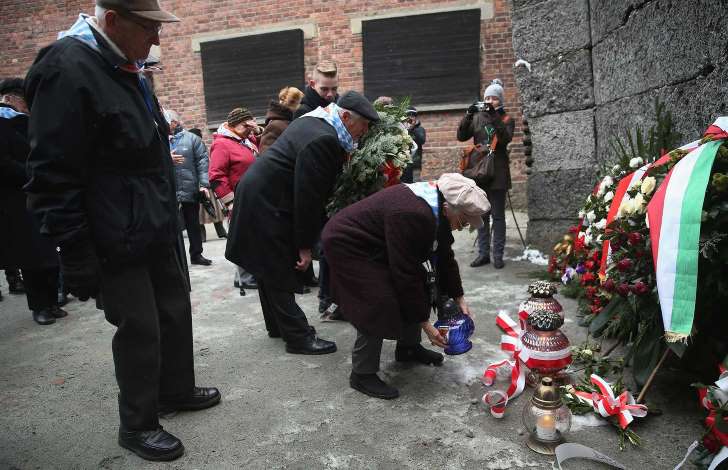
Auschwitz survivors paying their respects in Poland © Getty

Auschwitz survivors paying their respects in Poland © Getty

Today is Holocaust Memorial Day, which this year also marks the 70th anniversary of the liberation of the Nazi concentration camp Auschwitz-Birkenau. We commemorate with a look at how the world is memorialising the Holocaust.

Austrian Embassy London

Austrian Embassy London

brighton and sussex jsoc

brighton and sussex jsoc

hmd ed miliband

hmd ed miliband

HMD Anish Kapoor candle © Jillian Edelstein

HMD Anish Kapoor candle © Jillian Edelstein

HMD Simon Shaw_Bournemouth

HMD Simon Shaw_Bournemouth

HMD foreign commonwealth office

HMD foreign commonwealth office

redbridge jcc

redbridge jcc

How are you spending HMD? Let us know via Twitter (@JewishRen) or Facebook.com/JewishRenaissance.

Salon success! Find out how Howard Jacobson and more dazzled at the first ever JR reception

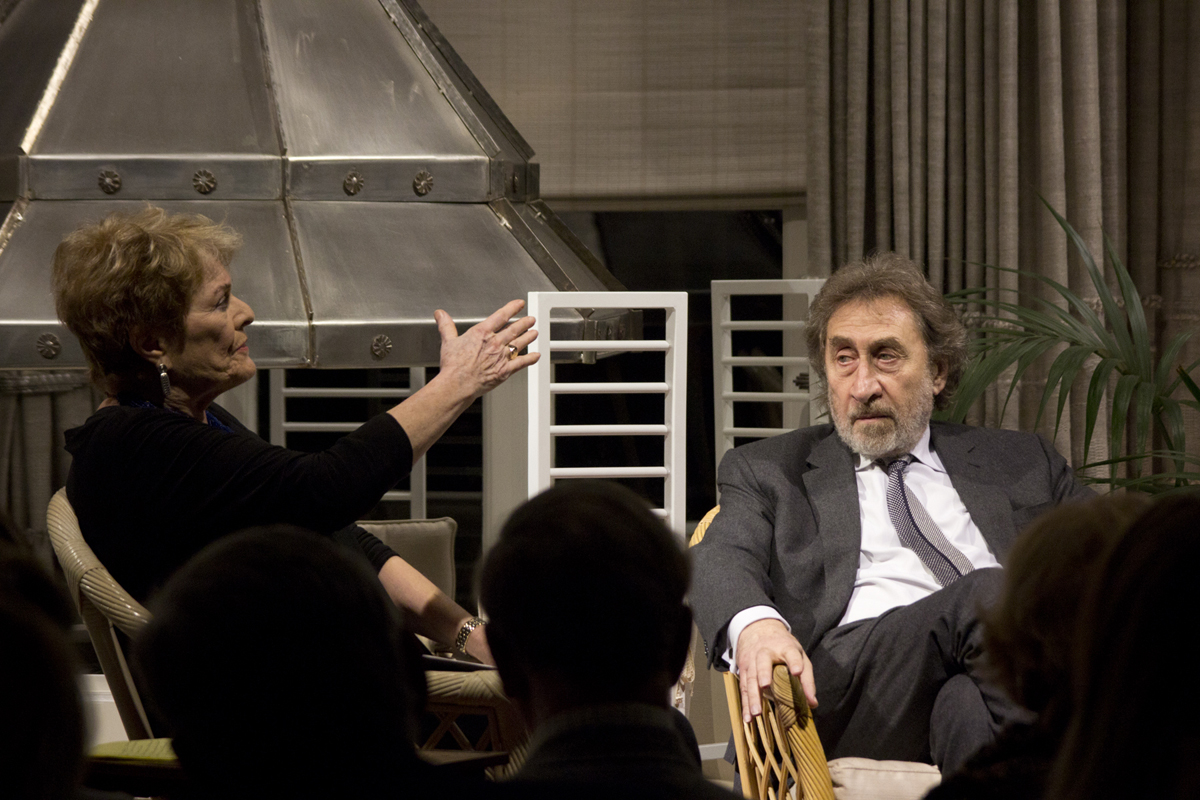
Howard Johnson and Janet Suzman at JR Salon, Jan 2015 © Charlotte Mayhew

Howard Johnson and Janet Suzman at JR Salon, Jan 2015 © Charlotte Mayhew

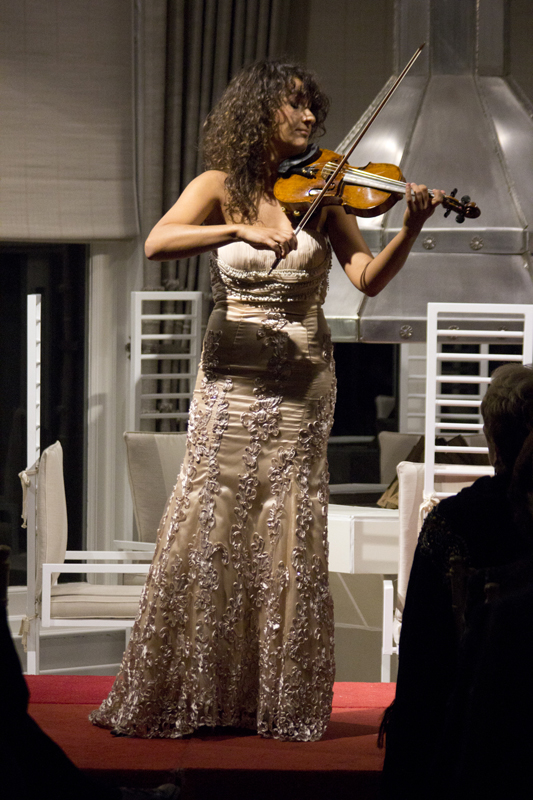
We enjoyed our first Jewish Renaissance salon on Sunday 18 January as much as we hope all of you did. This exclusive event for our subscribers was held at Lord and Lady Lipworth's house in St John's Wood and featured Howard Jacobson in conversation with Janet Suzman (pictured above), with a performance by virtuoso violinist Irmina Trynkos.

The music was fabulous, the conversation, which veered from why there is no British Sienfeld, to Howard's typically eccentric interpretation of the Ten Commandments, was pithy and frequently hilarious, and the canapés were addictive. It was a fantastically positive start to our newly energised magazine and our fundraising drive.

We want to say a big thank you to everyone who took part and helped, and to all of you who came and supported us. See our pictures below for a hint at how it went (more can be found on the JR Facebook page).

Our next salon features a full concert with the wonderful Irmina Trynkos, who'll be playing from a repertoire including Brahms, Waghalter, Gershwin and Bloch. This will be on Tuesday 10 March, 7pm at Lauderdale House, Waterlow Park, N6 5HG. Tickets cost £35 (£25 for subscribers) and can be purchased by clicking here.

By Rebecca Taylor

Photos © Charlotte Mayhew

JR Salon, Jan 2015 © Charlotte Mayhew

JR Salon, Jan 2015 © Charlotte Mayhew

JR Salon, Jan 2015 © Charlotte Mayhew

JR Salon, Jan 2015 © Charlotte Mayhew

JR Salon, Jan 2015 © Charlotte Mayhew

JR Salon, Jan 2015 © Charlotte Mayhew

JR Salon, Jan 2015 © Charlotte Mayhew

JR Salon, Jan 2015 © Charlotte Mayhew

JR Salon, Jan 2015 © Charlotte Mayhew

JR Salon, Jan 2015 © Charlotte Mayhew

JR Salon, Jan 2015 © Charlotte Mayhew

JR Salon, Jan 2015 © Charlotte Mayhew

JR Salon, Jan 2015 © Charlotte Mayhew

JR Salon, Jan 2015 © Charlotte Mayhew

JR Salon, Jan 2015 © Charlotte Mayhew

JR Salon, Jan 2015 © Charlotte Mayhew

Review: Jerry Herman's Grand Tour is a breathless, though tuneful chase across war-torn Europe

The Grand Tour – Zoë Doano (Marianne), Alastair Brookshaw (Jacobowsky), Nic Kyle (The Colonel) - Jan 2015 © Annabel Vere There’s usually a good reason why largely forgotten material from the oeuvre of a master such as Jerry Herman remains forgotten. The Grand Tour had the shortest run of all Herman’s shows and has not even achieved some form of cult status among the cognoscenti, despite US actor Joel Grey starring as the original Jackobowsky.

Thom Southerland’s imaginative staging of The Grand Tour in the tiny space of Finborough Theatre is a minor creative miracle and makes you wonder what made it less than a success in the first place (in the same season as hits such as Sweeney Todd, The Best Little Whorehouse in Texas and They’re Playing our Song). Perhaps the New York audience wasn’t ready for a chamber musical with production values that didn’t overwhelm the simplicity of the story.

And that’s just what we have here, in the tale of Jacobowsky, a Polish Jew and eternal optimist who's been keeping one step ahead of the Nazis all the way to Paris, and Polish nobleman Colonel Stjerbinsky, who's almost comical in his knee-jerk anti-semitism, and who has papers he must get to London as they play a vital part in the fight against the Nazis. Jacobowsky has a car but can’t drive and the Colonel knows how to drive but has no car. They reluctantly agree to join forces, along with Colonel’s girlfriend, Marianne. The Colonel's initial dislike for Jacobowsky is reinforced as Jacobowsky befriends and then falls in love with Marianne. But is it possible that through their joint experiences in evading the Nazis and learning to survive, the two men might get over their differences and even come to admire each other?

The Grand Tour – Alastair Brookshaw (Jacobowsky) – Jan 2015 © Annabel Vere

Herman's source material was Jacobowsky and the Colonel, an original, semi-autobiographical play by Czech writer Franz Werfel, who collaborated with screenwriter S N Behrman to bring it to the stage in 1944. Like the main character in his play, Werfel, a prominent Jewish intellectual and playwright, was chased all over Europe by the Nazis before successfully escaping to America. Later Danny Kaye played the mercurial Jacobowsky in a film of the same name.

Phil Lindley’s fold out backdrop and fold up floor make maximum use of the limited space to create hotels, countryside, rivers, railway carriages, a café, circus, a Jewish wedding and a Nunnery! And Cressida Carre marshals the 11-strong cast with intricacy and panache to people all these spaces.

What also works this time round is the use of just two pianos, under the musical direction of Joanna Cichonska, to provide the right tone for this small-space chamber musical, allowing the words to dominate. Jerry Herman can’t write an un-tuneful song, even if they are not always memorable, and all 11 numbers here do at least move the plot along rather than hold it up.

The show gets off to a spellbinding start as Alastair Brookshaw’s beautifully understated and thoughtful Jacobowsky opens not with a song but with a whisper. And then he takes his audience into the spine-tingling opening number, 'I'll Be Here Tomorrow', detailing his family's painful path across Europe, settling in one city after another, not just escaping persecution, but making a new life every time. Here Brookshaw has this heartbreaking quality in his voice, but he also displays delicious comic flair, for example in 'Mrs S L Jacobowsky', dreaming of marriage to Catholic Marianne: "I'll go to mass and I'll respect her wishes / And she'll start using separate dishes".

Nic Kyle’s Colonel thaws appropriately in an almost caricature part and gets to sing (beautifully) the best ballad in the piece, the haunting 'Marianne'. Zoe Doano makes a charming Marianne and the rest of the ensemble splendidly fill the many other parts, especially in the requiste first act finale, 'One Extraordinary Thing'.

Southerland’s direction brings out the tension between the European acting style and the US musical style to great effect. It does not always paper over some clunky plotlines and the music just occasionally underwhelms, but this Grand Tour is worth seeing in its own right and not just by collectors of musical ephemera.

By Judi Herman.

The Grand Tour runs until Saturday 21 February. 7.30pm (also 3pm Sat-Sun). £16-£28. Finborough Theatre, 118 Finborough Rd, SW10 9ED; 020 7244 7439. www.finboroughtheatre.co.uk

A heartening wonder of the modern world – JR readers enjoy another year at Limmud

limmud 2014 session

limmud 2014 session

It was as an amazing experience as ever. I have been going to Limmud for 13 years and can never get over how a team of young volunteers, changing yearly, can put on such a huge event with its problems of feeding and housing 2,500, let alone running hundreds of stimulating sessions each day. It is a heartening wonder of the modern world. And this year even the food was great (congratulations Manchester-based Celia Clyne Banqueting).

There were of course many JR readers there and I asked a few about their best Limmud experience.

Mentioned most frequently was the sight of Chief Rabbi Ephraim Mirvis and Senior Rabbi of the Reform Movement Laura Janner-Klausner, deep in conversation at the bar – at an event that a couple of years ago was boycotted by United Synagogue Rabbis and that Jonathan Sacks never attended while he was Chief Rabbi.

Several seconded my selection of the JDOV talk with Patrick Moriarty, head of JCOSS and, amazingly, a trainee Anglican priest. His very funny and affectionate take on his own experience of the Jewish world, not neglecting the firmness of his own faith, was an encouragement for the future of interfaith relations. These filmed talks (Jewish Dreams, Observations, Visions) with their very personal and original perspectives can be viewed on the JHUB website. The 12 from this year's Limmud ("the highlight of my Limmud afternoons," says Anne Clark) should be up there shortly.

Anne Clark gave these additional highlights: "By far the best teacher for me this year was the wonderful Gila Fine from Jerusalem, whose packed-to the-gills series on A History of The Talmud in Four Objects was a masterclass in scholarship and presentation. My favourite musical performance was a concert by Craig Taubman. Craig was skilled and generous enough, not only to engage the entire audience, but also to share the stage with a crowd of young British musicians; Zara Tobias singing a solo in Craig’s 'Yad b’ Yad' ('Hand in Hand', watch it below) accompanied by EJ Cohen’s sensitive signing, was a spine-tingling revelation."

https://www.youtube.com/watch?v=vHnReS0ICeE

Artist Ruth Jacobson also had a musical experience that delighted her: "''Shtel Dem Samovar', with Rachel Weston and Jason Rosenblatt, first a workshop of Yiddish song, then a concert. Rachel's beautiful voice conveys the sweetness and poignancy of her repertoire."

Ruth was also fascinated by the work of Edward Serotta: "His beautiful exhibition of old family snapshots, combined with interviews with some of Central Europe's oldest Jews, created a vivid and moving 'Library of Rescued Memories'.  These are used in many educational projects, and captivate the enthusiasm and interest of new generations."

Rachel Weston

Rachel Weston

Ari Shavit was the presenter mentioned most often. From Brighton's Doris Levinson: "The highlight of my week was the interesting and enlightening, and even shocking, talk given by Ari Shavit about his book My Promised Land – the triumph and tragedy of Israel.  He is such an accomplished speaker with such depth and clarity.  Everyone who gives lectures could learn a lot from his delivery, his timing and his sincerity."

JR Chairman Ian Lancaster was impressed by "Dr Joel Hoffman giving a very animated, erudite and energetic talk about the challenge of translating the Bible, given it’s written in a language that is no longer in use." And our Northern supremo Gill Komoly was enthused by "the passion and energy" Gershon Baskin put into his talks, telling of how he goes backwards and forwards on his motorbike to the West Bank. He was a skilled negotiator on the Gilad Shalit return as well as on many other issues.

Limmud features not only sessions. Delegates don't need any prompting to start talking to the people next to them at mealtime. One such conversation was a highlight for JR sub-editor Diane Lukeman: "It happened that sitting down with me at breakfast one morning was a Rabbi from Hamburg and Rabbi Soetendorp, whose account of growing up in the traumatised community of Amsterdam had resonated with me at my first Limmud experience and had influenced my professional work with children and families. We all became so engrossed in the conversation that we missed the start of our first session – with no regrets."

So passion, energy, sincerity, animation, generosity, humour and erudition, not to say enlightenment and revelation; not a bad series of epithets for a silly season experience.

By Janet Levin

For further information on Limmud, visit their website: www.limmud.org

Interview: Kerry Shale talks about taking classic romcom When Harry Met Sally to the live stage

kerry_new_2 On Tuesday 2 December, JW3 brings Rob Reiner's effortless romcom When Harry Met Sally to the live on stage as part of the Jewish Comedy Festival. Canadian-born actor Kerry Shale plays Harry and tells Judi Herman all about playing the famous role.

"I guess I've seen it four or five times! But I'm watching the DVD in case there's anything in the script that needs clarification." Kerry Shale is giving me the low down on his preparation for playing the eponymous Harry in the staged reading of the iconic film script. "We're not updating it. The original was pretty much written for Billy Crystal and he came up with some of his own lines because he's such a genius comedian, such as: 'I'll have what she's having'. Nora Ephron gives him credit for it in the introduction to the printed script."

I venture that it must be like taking a jump at the Grand National running up to that line – everyone is waiting for it. "Yeah exactly! There's a lot of really famous lines in the film. But I'm going to treat it a bit like I did when I played the Woody Allen part in Play It Again Sam years ago on stage. Allen wrote that for himself, so I basically used the Woody Allen accent and played the character like Woody Allen, but filtered through me. So I think I"ll be playing Harry like Billy Crystal filtered through Kerry Shale, certainly not a slavish recreation but there's certain ways to time some of these lines, and there's only one way to deliver them."

Is it a particularly Jewish sort of story? "It wouldn't have been such a huge breakaway hit if it had only spoken to Jews and Jewish sensibilities. And I think they very cleverly disguise Harry's Jewishness, so you and I and most Jewish people would recognise that he was Jewish but I don't think your average filmgoer recognised that." Shale tells me how he said to the production team that "it's the story of a Jewish boy who meets a non Jewish girl. They said 'What do you mean?' They were completely flummoxed by that, it had never occurred to them. Harry doesn't mention being Jewish, the Jewish holidays – they eat at Katz's, but then so does everyone in New York! Sally on the other hand is very clearly not Jewish. In the introduction Nora Ephron, who is obviously Jewish, says that Sally was based on her. She takes all her stuff on the side, she always has her mayo on the side. I think it may have been the casting of Meg Ryan that set the seal on that, probably they wrote her Jewish too but by casting Meg Ryan she became non-Jewish."

I venture that I think her casting makes it stronger, which brings us on to the casting of the script reading. His Sally is the hugely versatile, funny woman Morwenna Banks, also currently high-profile on TV as the voice of Peppa Pig's mother. Shale explains that the line up of six also includes Debbie Chazen – recently seen with Shale at JW3 in the revival of the highly successful Listen, We're Family – and Michael Mears, a good friend of Shale's in real life, who both play Sally and Harry's best friends, respectively. "And we've got a wonderful pianist called Duncan Wisbey who's going to be narrating, reading all the stage directions and also be playing numbers like 'It had to be you' sitting at the grand piano so you'll get a little bit of Harry Konick Junior."

The delightful and imaginative addition of video clips of various real-life couples talking about how they met will make the evening truly original, among them the parents of Jewish Renaissance Editor Rebecca Taylor. Shale says: "It'll make it very much at home at JW3 and will make it a very special evening for the people involved. And the audience will recognise even more how universal the story is that deals with these themes of finding a good life partner."

We agree that it seems to be creating a sort of JW3 tradition, building on the way Listen, We're Family celebrated real life stories on stage, transmuting real life into something very special. "It's what they intended to do originally in the film," reveals Shale, "but they could not quite find the right people to give the right feel and so they ended up getting actors who gave very naturalistic performances, but delivered lines written by Nora Ephron. This evening is different because it is a celebration of When Harry Met Sally, so a lot of people will know a lot of the lines, but they won't know the lines of the couples who will be delivering their own stories!"

The icing on the (wedding) cake is that the whole evening is directed by Bill Dare, whose credits include TV's legendary Spitting Image. It really does sound unmissable!

By Judi Herman

When Harry Met Sally – The Live Read Through will be on Tuesday 2 December. 8pm. £12. JW3, 341-351 Finchley Rd, NW3 6ET; 020 7433 8989. www.jw3.org.uk