Review: Oppenheimer – A detailed bio-drama about the father of the atomic bomb chills and exhilarates in equal measure

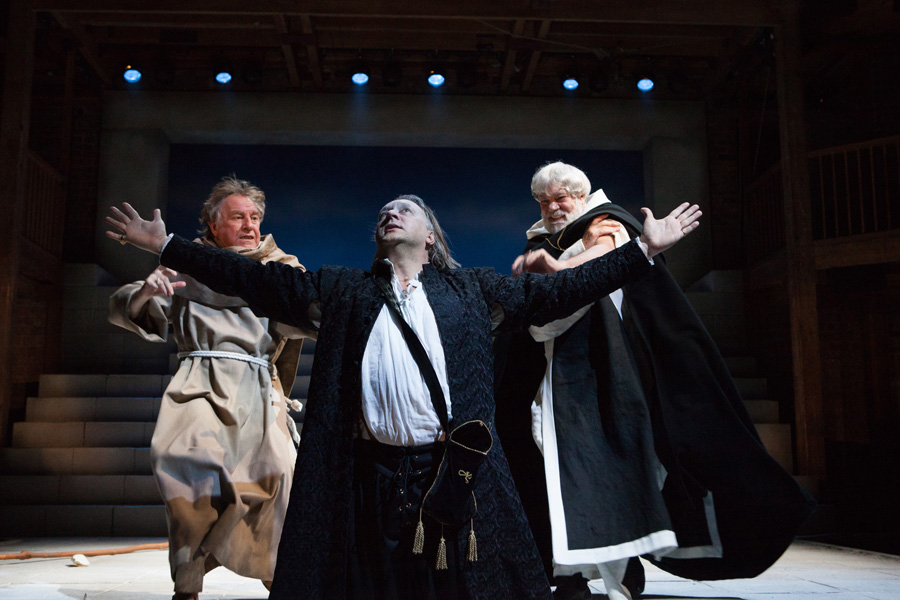
Oppenheimer, press 2014 © Keith Pattison To make a nuclear bomb, you assemble enriched uranium into a supercritical mass that starts an exponentially growing chain reaction. Tom Morton-Smith’s play assembles the team building the first nuclear bomb and shows the chain reaction that ensues amongst them. And just as a bomb needs a trigger, the “Manhattan Project” needed J Robert Oppenheimer.

The play questions whether the physicists were mad scientists who should have known better than to participate in such a project and how far they felt justified at the time, even if subsequently doubting the genie they had unleashed that cannot be put back in the bottle.

Morton-Smith sees the events through the lens of Oppenheimer, intertwining his intellectual struggle with the physics and his emotional struggle with the need to abandon his early and fervent embrace of communism, which Oppenheimer saw as the only remedy to Fascism, in order to appease the US authorities. He had after all been schooled at New York’s Ethical Culture School, where many of his fellow pupils were also secular Jews and where he discovered the ethical teachings of Judaism. And later he was engaged by other ethical texts and scriptures including the Bhagavad Gita (a 700-verse Hindu scripture in Sanskrit), which stayed with him all his life and Morton-Smith has him quote it at the end of the play.

J Robert Oppenheimer (the J stands for Julius) may have been born in Manhattan, but as the son of German-Jewish immigrants, he was acutely aware of the fate overtaking Europe’s Jews, especially as the US scientific community welcomed an influx of eminent Jewish physicists seeking refuge from the Nazis. The list of characters in the play is in part a roll call of these brilliant fugitives, most of whom would go on to win Nobel Prizes. In addition, the young prodigy had studied under (Jewish-born) Max Born in Göttingen in Germany in the 1920s, gaining his PhD at age 22. So he was much exercised by the rise of fascism in Europe.

Oppenheimer, press 2014 © Keith Pattison

After a brief lecture from Oppenheimer, with the audience cast as students, Morton-Smith starts the action with an upbeat party scene on the Berkeley Campus at a Communist fundraiser for International Brigade members off to fight fascism in Spain. It’s the sort of party at which anyone who’s anyone in the intellectual and academic community must be seen. Morton-Smith’s brilliance is to cut between the party and the students and academics in full creative flight as they learn and teach in the lab – using the stage floor as a chalkboard on which they feverishly scribble theorems and theories. Even the chronically unscientific members of the audience (among whose number I count myself) immediately get the feel of how engrossing and exhilarating the pursuit of scientific knowledge and discovery must be for members of the scientific community. This works especially well as a counterpoint to the party segments – all choreographed with huge panache by Scott Ambler.

Everyone in this community is aware of the work of German scientist Werner Heisenberg and his Danish-Jewish mentor Niels Bohr in Europe (as brilliantly imagined in Michael Frayn’s play Copenhagen). Is Bohr making a stand against letting Hitler get anywhere near the bomb? Does Heisenberg dread the ‘fall-out’ from The USA getting there first? Well, clearly in the USA they see it as a necessity to get there first and scientists are under intense pressure to do so. But Morton-Smith imagines, with the feel of chilling authenticity, not only the pressure but also the febrile excitement of these extraordinarily focused (often one-track) minds as they realise they are nearing a breakthrough, albeit one that will prove deadly to millions.  The detachment with which the boffins discuss the bombs they call Little Boy and Fat Man and what they are capable of, with a matter-of-factness about the numbers of Japanese likely to be sacrificed, is frighteningly convincing.

John Heffernan brilliantly inhabits the persona of Oppenheimer, mesmerisingly charismatic from the moment he engages with the audience at curtain up. He embodies the struggles and contradictions in the man – a womaniser with “a core of cold iron” – with a wife and mistress; scared that he has the scientific ability “to murder every last soul on the planet, yet at the same time a leader who expects to be followed. And indeed he is the magnet that attracts a huge number of scientists to join him at Los Alamos to work on the Manhattan Project.

Oppenheimer, press 2014 © Keith Pattison

Morton-Smith creates wonderfully authentic communities and he plays up the friction between the unruly scientists and the military with their, ahem, 'military' precision at Los Alamos to terrific and rather comedic effect.

Morton-Smith’s portraits of Oppenheimer’s women are especially complex. There’s Catherine Steadman’s mercurial manic depressive Jean Tatlock, the mistress who checks in and out of his life, in her element rallying the intellectuals for the communist cause. And Thomasin Rand’s wonderfully vivid Kitty, another bright and frustrated female intellect, who leaves her previous husband to marry Oppenheimer, only to find herself reluctantly kicking her heels though not her alcohol habit through pregnancies before and during her stay at Los Alamos.

Angus Jackson directs with panache a large cast in a production that sweeps effortlessly from those cocktail parties in Berkeley to the then empty plain of Los Alamos, thanks to designer Robert Innes Hopkins, whose costumes – especially for the women – are both authentic and stunning, and the action is heightened by Grant Oldman’s exhilarating score played live by a superb six-piece band directed by Jonathan Williams, and that organic choreography by Scott Ambler.

By Judi Herman

Oppenheimer runs until Saturday 23 May. 7.30pm, 2pm (Wed/Sun only). £25-£49.50. Vaudeville Theatre, 404 Strand, WC2R 0NH. www.vaudeville-theatre.co.uk
Review: The Jew of Malta – Bracingly amoral violence on the island of Malta (circa 1565)

The Jew Of Malta, Swan, Stratford-On-Avon, Press 2015 © RSC The different faiths are rubbing along together until politics and money get in the way and then all sides justify their actions as religious duty and malicious antisemitism provides a rationale for action. Not the Middle East today but Malta circa 1565 in Marlowe’s play, The Jew of Malta.

Here Malta is ruled by the Knights of St John (Knights Hospitaller) under Governor Ferneze, ostensibly as an outpost against the Ottoman Turks, although Ferneze is happy to pay the Turks protection money not to be invaded by them. Barabas is the richest merchant in the region but Ferneze plunders his fortune to pay off the threatening Ottomans. The Christian Knights justify taking his money – as a Jew, Barabas is cursed and sinful. He is understandably indignant: “What, bring you Scripture to confirm your wrongs? Preach me not out of my possessions.”

This is evidently a revenge tragedy – the dominant motive is revenge, here for a series of very real injuries. But Marlowe’s play goes beyond revenge, satirising religious hypocrisy, statesmanship and the human condition. We know where Marlowe stands when the Prologue, in the person of Machievel(li) says, “I, Machievel, count religion but a childish toy. 
And hold there is no sin but ignorance.” No one individual or community’s stupidity or vices are spared Marlowe’s ridicule and criticism in what might be the earliest film noir script.

Because this injustice is the trigger for Barabas to embark on a road to hell paved with anything but good intentions. Nobody – Christian, Turk, or even Jew – is safe from his increasingly bloody revenge, especially once he finds a kindred spirit in a newly-purchased slave Ithamore, and together they revel in ever more ingenious methods of murder and even mass slaughter.

At first sight, Marlowe’s play, with its eponymous anti-hero Barabas (whose namesake is the criminal released by Pilate instead of Jesus, at the behest of a Jewish mob according to the Christian Gospels), looks even more uncomfortable viewing for a Jewish audience than The Merchant of Venice. And it seems like a worryingly timely revival in the light of recent antisemitism. But 16th-century Malta is a bear pit where Turks and Christians fight indiscriminately and Marlowe allows Barabas to have the stage to himself to confide in his audience before they get to meet any of the island’s other amoral schemers (including a brace of villainous friars) who are, after all, after his money – or his fair daughter Abigail. And even before Barabas appears, his gleeful Machiavellian plotting comes with the endorsement of Machiavelli himself in that prologue.

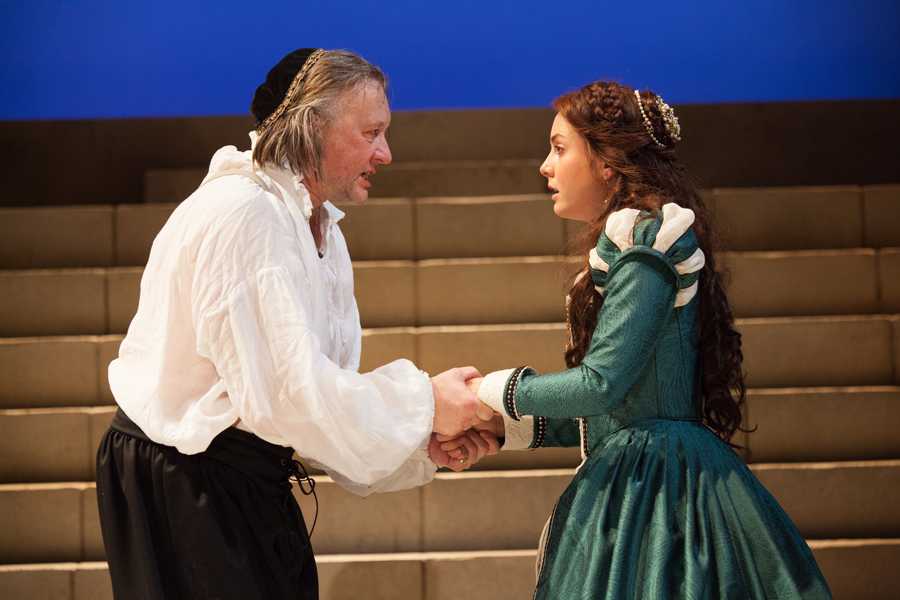
The Jew Of Malta, Swan, Stratford-On-Avon, Press 2015 © RSC

Director Justin Audibert’s exhilarating revival points up Marlowe’s vicious humour and intelligence with Jasper Britton’s ruthless Jew as its poster boy. It has all the colour and sweep of a Renaissance painting, thanks to designer Lily Arnold’s glorious vision. Her staging is simple – marble-like steps sweep down from an upper level to the lower thrust stage which has as its focus a trough of water that proves wonderfully useful. And she fills the space with an entrancing palette of colour on costumes that swirl around the place, enhancing Lucy Cullingford’s choreography and in their turn enhanced by Oliver Fenwick’s lighting.

Audibert’s cast clearly enjoy creating equally colourful characters, led by Britton’s frighteningly practical and fearsomely intelligent Barabas, and Lanre Malaolu’s gleeful Ithamore, revelling in his promotion to partner in crime. Geoffrey Freshwater and Matthew Kelly, as those two wicked friars, make as gleeful a pair of plotters as any on the Renaissance stage. There’s attractively seductive work from Beth Cordingley’s avaricious courtesan, and Catrin Stewart makes a feisty Abigail, hand in glove with her father until… Well, that would telling, you’ll have to go and see it to find out!

The terrifc ad hoc klezmer band has added value for those in the know. The pre-show music is traditional wedding fare, ‘Chosen Kallah Mazel Tov’ ('Good Luck to Groom and Bride') and the show opens with another Jewish wedding staple – Barabas leads the cast singing ‘Erev Shel Shoshanim’ ('Evening of Roses') from the Song of Songs, in the popular setting by Yosef Harar and Moshe Dor (timed well for the production’s early April opening as it is part of the Passover Service too). And throughout the show Gareth Ellis’s musicians bring their own colour to the action, thanks also to Jonathan Girling’s original music.

Does it all leave a bad taste in the mouth though, as the action reaches its apocalyptic climax? By that time, everyone has behaved badly and Barabas is not the only one to face retribution. So however Marlowe’s contemporaries reacted, modern audiences are no more likely to burst into gleeful laughter than they would at the climax of Stephen Sondheim’s Sweeney Todd.

By Judi Herman

The Jew of Malta runs until Tuesday 8 September. 7.30pm & 1.30pm. £5-£45. Swan Theatre, Straford-On-Avon CV37 7LS; 084 4800 1110. www.rsc.org.uk

 Man of the Moment: JR reader Paul B Cohen writes about receiving the prestigious Moment Magazine short story award

Paul B Cohen, Moment Mag short story award winner It is Erev Rosh Hashana, and within an hour we will have 15 people at dinner. My wife, Deborah, is assured and organised, so there’s no frenzy in our household. Until, that is, just before logging off for the evening I received an email any writer would love.

It had been nine months of gestation for the results of Moment Magazine’s Jewish short story competition to emerge, and I’d been impatient to hear how I’d done. I didn't think my tale, Lecha Dodi, was going to win the competition. Though my great friend Rabbi Lewis Warshauer, who lives in New York, said that my story was “perfect” for Moment, which is a long-established journal of Jewish culture, politics and lifestyle.

Lewis had been right: my story had fitted and I was the first place winner of the 2014 Short Story Contest.

One of the books I cherish is James A Michener’s The Source, with a favourite chapter being 'The Saintly Men of Safed'. Michener brilliantly evokes the Kabbalists in that northern, hilltop city who went out in the fields to greet the Sabbath Queen. One of their number was Alkabetz, who penned the transcendent Lecha Dodi Friday night song. I had always wanted to do something with the notion of worshippers walking into the fields, and began writing my contest entry in the middle of December 2013 with this in mind. The deadline was the last day of the year.

I had been to Safed as a teenager. I remember its ancient streets; I can still picture the duck egg blue of synagogue walls – that colour being one to ward off evil.

As I wrote, I also researched the city online, looking at mikvahs (ritual baths), and came up with a central character, Rabbi Mordechai David, who used one particular mikvah before Shabbat, as some pious men do.

Unbidden, the image of a young woman, running across the male worshippers’ line of vision, inserted itself into my creative consciousness. My story coalesced: it would be about the vision of Miriam Levi, running heedlessly, ecstatically, in the fields. The men would wonder: "is that truly Miriam, and if so, why is she disturbing men at prayer?" Rabbi Davide tries to find out.

I arrived to a snowy New York and headed out with Lewis. New York’s 5th Avenue was ablaze with festive lights, throngs of shoppers, and ice skaters at the Rockefeller Center.

I was invigorated by the prospect of meeting the novelists scheduled for the awards ceremony the following evening. Sadly, Alice Hoffman, author of Practical Magic and The Museum of Extraordinary Things, who had been the contest judge and had written thrilling words of praise for my story, was forced to cancel her appearance. Anita Diamant, of The Red Tent fame, would be appearing alongside novelist and academic Dara Horn.

At a dinner before the ceremony I was pleased to meet Danielle Leshaw, a rabbi and writer who had been placed second in the contest, and Courtney Sender, the third place winner. The conversation was all books and being Jewish.

At the ceremony, held at the Jewish Museum on the Upper East Side I read an extract from Lecha Dodi. The stage was then given over to a conversation between Anita and Dara. Their discourse was engaging and humorous.

I left New York on Saturday night, following a Shabbat morning at Habonim, a welcoming Conservative synagogue on the Upper West Side. During my final New York hours, we enjoyed a bracing stroll in Central Park.

Back in England, my life has resumed, but I continue to write and submit short stories. I hope that in a future issue of Jewish Renaissance, you’ll be able to read about Tales of Freedom, my novel of storytelling and resistance, set in Prague and Poland in World War II, and ending up in the land of Israel.

By Paul B Cohen

Paul’s story Lecha Dodi can be read online at Moment Magazine


Magical Jewish Morocco: A report from Eveleen Habib, one of JR’s Purim tour members

JR Tour - Morocco - Cemetery - Joan 2

JR Tour - Morocco - Cemetery - Joan 2

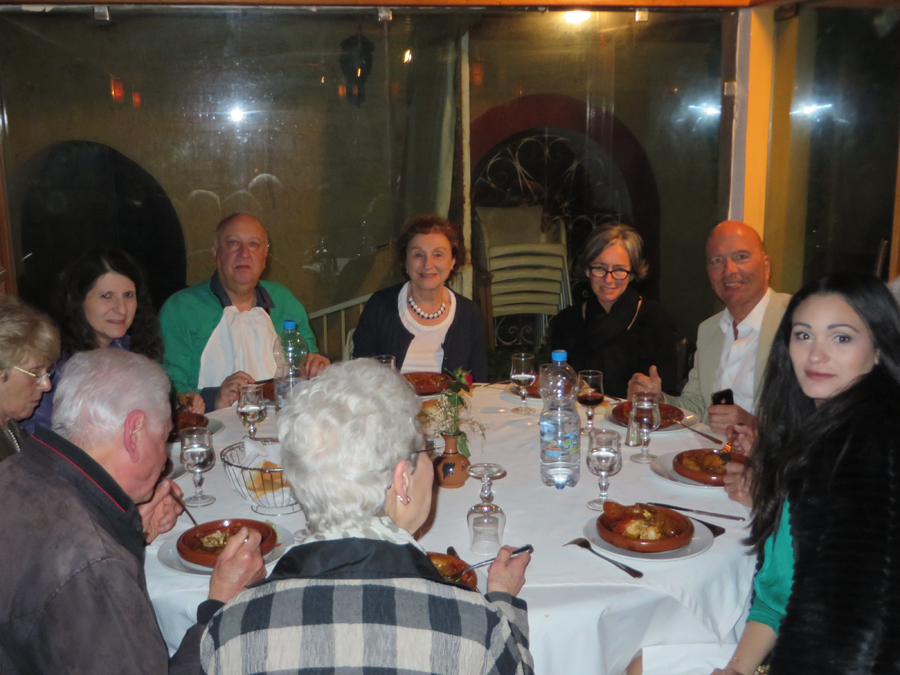
Twenty-six tired yet exhilarated travellers sat down together for supper in a Riad in Marrakech – it was the last night of a wonderful trip and they all wanted to spend that evening together, despite the opportunity to sample the night life in this north African town. How well our group, mainly strangers, had grown to like one another and enjoy the times we spent discussing the day’s activities.

The trip focussed on the Jewish Morocco that still remains – the majority of the community having left in 1948 and 1967. Our guide, Rafi El Maleh, was an important part of this well-organised trip. We learned so much about the history, politics and current situation of both the Jewish and Arab population. There seemed to be nothing he did not know. We laughed at the number of palaces owned by the king (whom Rafi had met more than once in the course of his work on Jewish heritage) and we were moved by so many of his stories about individuals he knew and helped. We admired the research, hard work and passion he had devoted to collecting and conserving Jewish artefacts and whole synagogues, throughout the country of his birth.

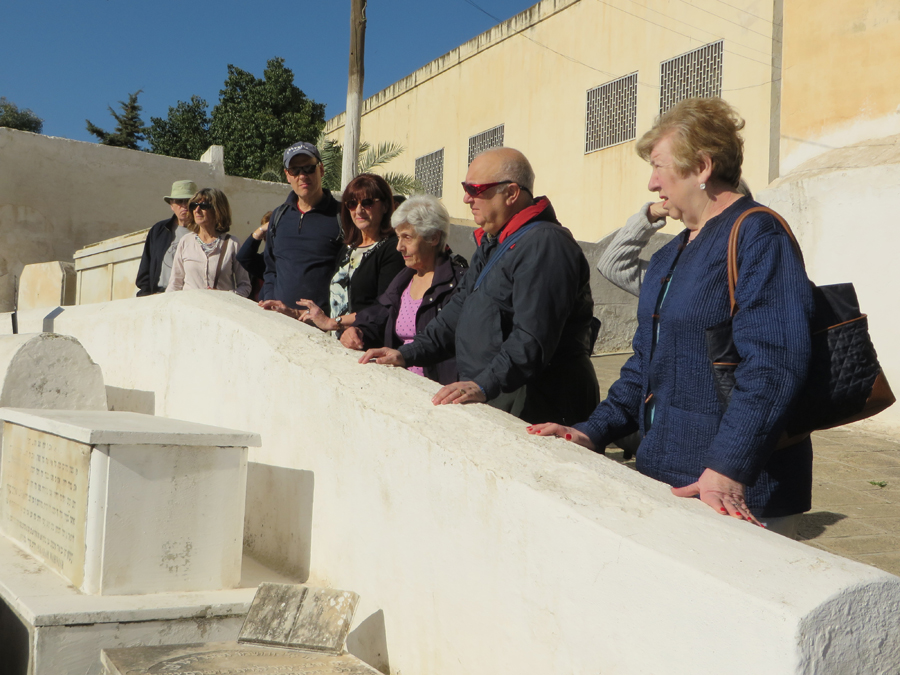
There was never a dull moment and we drank in every bit of information that he gave us, it might have been about the extraordinary cemetery we visited in the Fes Mellah (pictured above), or one of the many synagogues that we visited. There were once 11 in the Mellah of Meknes and we met one of the last Jews who still prays in this Imperial City. We visited the royal stables and granary, once home to 15,000 Arabian horses, built by Moulay Ismail, who lived in magnificence but subjected his city to terror. We walked, climbed, and sometimes struggled with, the cobbled narrow streets and the traffic, especially in Marrakech where Rafi literally stopped the traffic for us to cross the roads. In Volubilis the hardier individuals climbed in the sun up a steep road to see the remarkably well-preserved Roman city whilst the others enjoyed mint tea in the small café below.

JR Tour - Morocco - Volubilis arch JL

JR Tour - Morocco - Volubilis arch JL

Volubilis arch

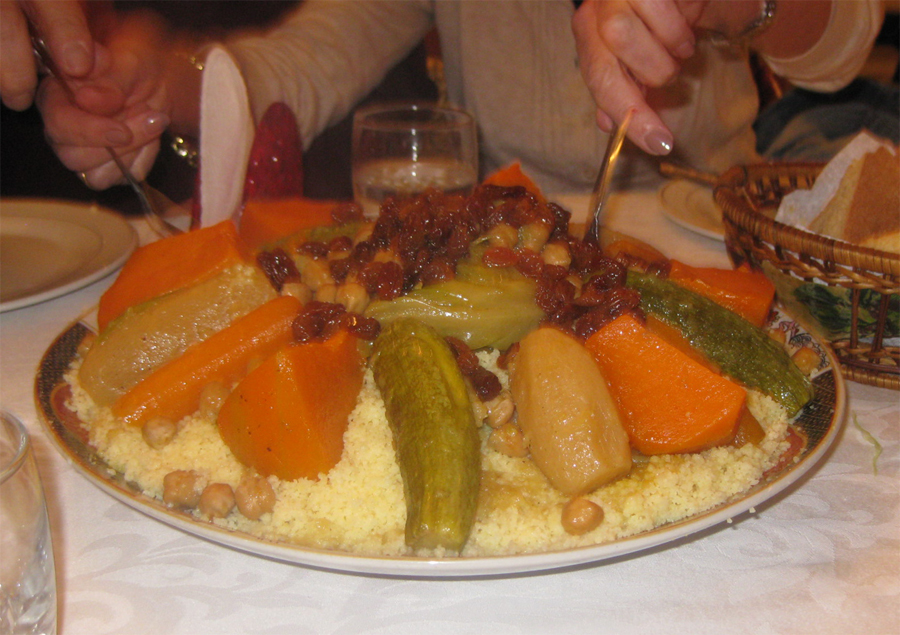
The first two evenings we ate in the attractive Jewish Maimonide club in Fes and enjoyed couscous with meat, vegetables, chicken and an array of the popular and delicious cooked salads in small dishes set out in front of us.  The food in general was lavish and good; when not eating kosher food, we were always able to eat fish and vegetarian food so everyone’s needs were met.

JR Tour - Morocco - KT.Dinner Fez, March 1st

JR Tour - Morocco - KT.Dinner Fez, March 1st

One special experience was meeting four young Moroccan Muslims, founders  of the Mimouna Association, set up to tell their contemporaries about the Jewish heritage of their country that few knew anything about. We ate together at a restaurant on the coast in Rabat and had the opportunity of conversing with them individually. They spoke about their initiatives; organising Hebrew lessons and days of Jewish culture; running the first Holocaust Conference in the Arab world and paying a group visit to Israel. We were impressed by their enthusiasm and eloquence. It seemed as if they are set to be among their country’s elite. It will be a great boost to interfaith relations if they achieve this.

JR Tour - Morocco - Laziza table

JR Tour - Morocco - Laziza table

With Laziza Dalil of The Mimouna Society

We visited so many places, each one a treat – the lavish mausoleum built to honour King Mohammed V in Rabat; its Kasbah where we had Moroccan tea and almond cookies;  Casablanca’s Jewish Museum with its rich display of Moroccan Jewish artefacts, and its Jewish quarter with kosher bakers, the street of seven shuls and the beautiful Beth el Synagogue.

JR Tour - Morocco - Rafi and Haman's eye - Malcolm

JR Tour - Morocco - Rafi and Haman's eye - Malcolm

 Rafi with Haman's eye bread

And Purim: celebrated differently but enjoyably. Not as noisy in synagogue as I am used to, but the same notes and words read out to remind us of the near-destruction of the Jewish people – appropriate in an Arab country, albeit one currently well-disposed to its small Jewish population. The group joined the local community in unending dinner and entertainment. We threw ourselves into the atmosphere of the occasion – fascinated by the bread with hard boiled eggs, representing Haman’s eyes, baked inside (pictured above).

JR Tour - Morocco - Purim table - Joan

JR Tour - Morocco - Purim table - Joan

Purim party

And then the final days in Marrakech where we stayed in the Ksar Anika Riad in the aptly named Rue des Juifs, an oasis of quiet and beauty with a pool in the courtyard and hanging plants. We walked to see the Bahai Palace and in the medina visited a herbalist with his potions, spices and cures for everything. Then to prepare for Shabbat and a wonderful long table set out as if for a wedding with delicious food cooked by Madame Ohayon, wife of Isaac Ohayon who had restored, and was cantor for, the Mellah synagogue some of us visited the next morning.  After a Moroccan cholent lunch we visited the Majorelle Gardens, once owned by Yves St Laurent and then gifted to the town for the benefit of those who love quiet, gardens and water – truly lovely.

JR Tour - Morocco - Last lunch at Ksar Anika - JL

JR Tour - Morocco - Last lunch at Ksar Anika - JL

Last lunch at Ksar Anika

And there was much else in this wonderful trip, well-planned, delightful company, all our needs considered. I cannot wait to book another tour with Jewish Renaissance.

By Eveleen Habib

Visit the JR website to see the Magical Jewish Morocco 2016 tour itinerary.

Violinist Irmina Trynkos dazzles at the second JR salon

JR Salon, 10/03/14 © Charlotte Mayhew

JR Salon, 10/03/14 © Charlotte Mayhew

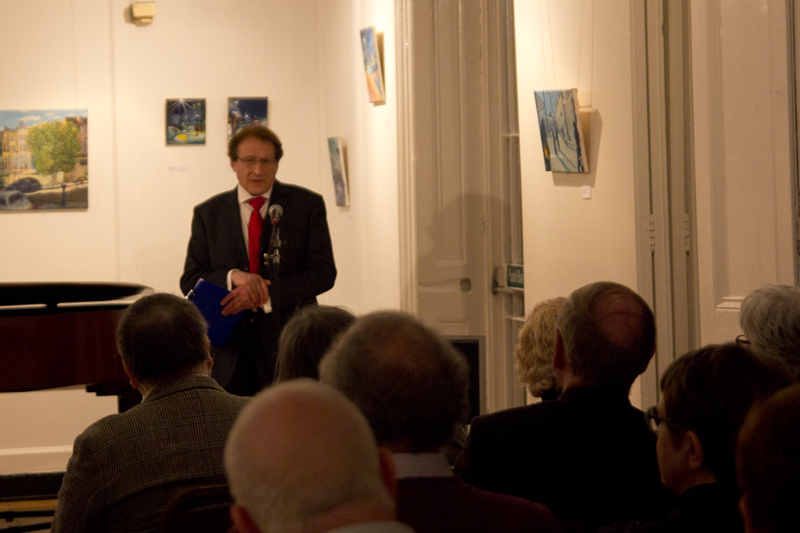
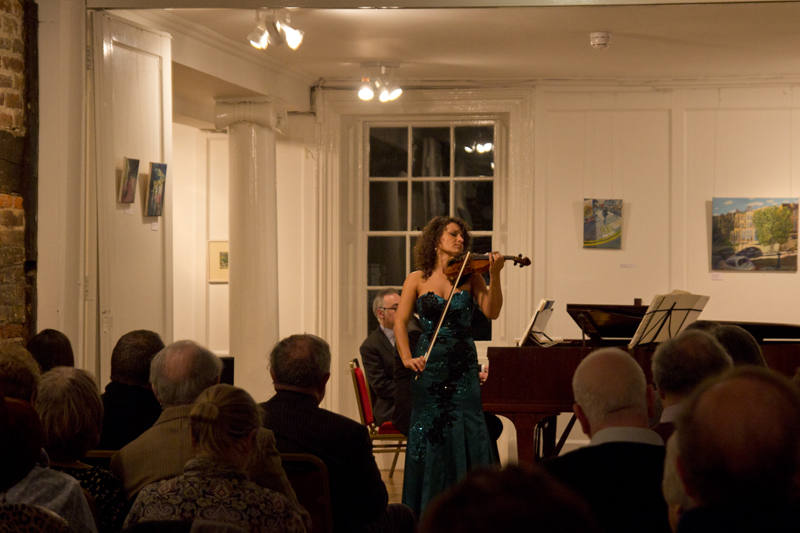
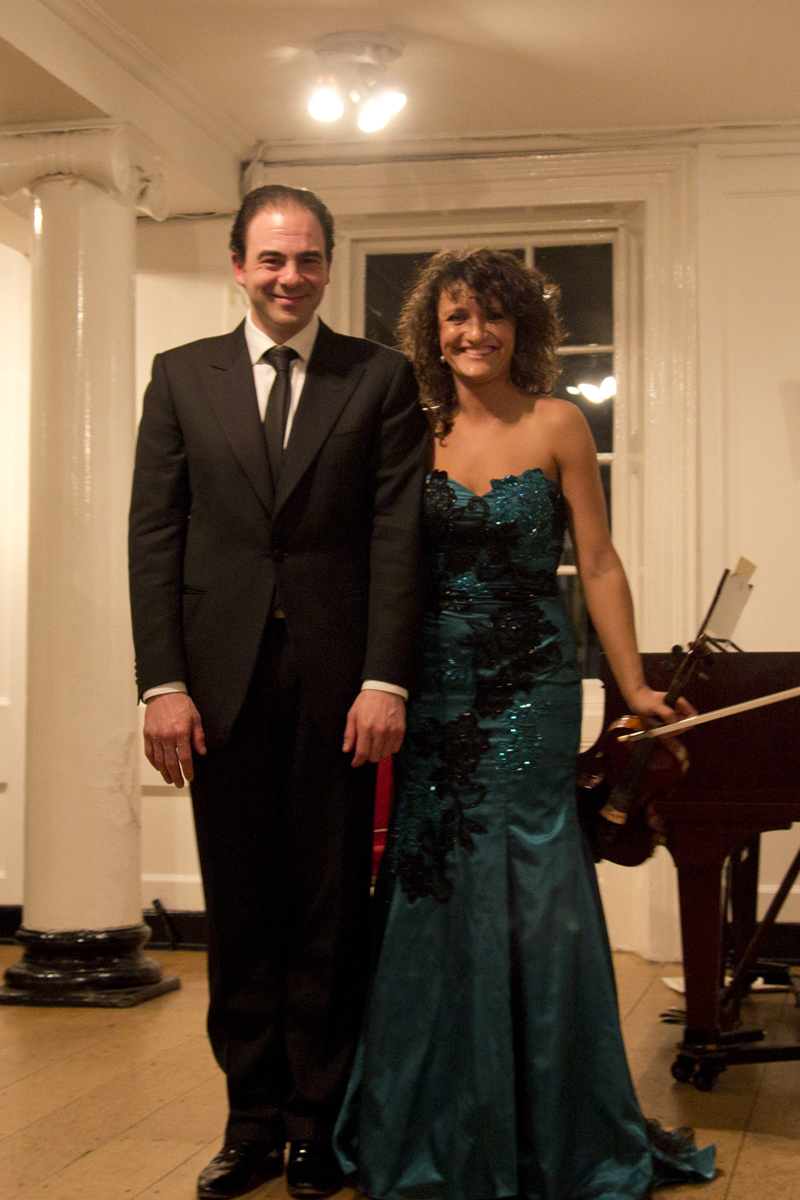
A packed crowd of around 60 people attended the second JR salon event this week at Lauderdale House in Highgate. They were there to hear the virtuoso talents of violinist Irmina Trynkos, as well as the sparkling sounds of pianist Marco Fatichenti. And they weren’t disappointed.

Dressed in a jewelled, emerald green evening gown, Irmina treated the audience to a programme full of energy and passion. Irmina opened proceedings with the sweeping Sonata for Violin and Piano in D Minor No.3 Op.108, by Johannes Brahms, followed by a piece by the relatively unknown Polish-German Jewish composer Ignatz Waghalter – his Sonata for Violin and Piano in F Minor Op.5.

Ernest Bloch’s Baal Shem Nigun and George Gershwin’s sprightly Prelude No.1 followed, as well as the theme by John Williams from Shindler’s List, which Irmina played in melancholy and moving style. The concert ended with the quirky gypsy sounds of Maurice Ravel’s Tzigane, played with terrific speed and verve by both violinist and pianist.

The music was interspersed with some background to the composers provided by the warm and engaging broadcaster Rodney Greenberg, who was the presenter for the evening. He and Irmina took time to discuss Waghalter's farewell – and return – to Germany, his fall from the public consciousness and how he made the wrong move of staying in New York rather than LA, as he might have better developed his career in Hollywood. She has taken on the task of reviving his little known works, along with other ‘forgotten’ composers.

The music was followed by drinks and canapés. The elegant, yet intimate, surrounds of Lauderdale House provided the perfect backdrop for the event and we hope to continue our salon series soon.

To find out more about Irmina Trynkos, read our article about her.

By Rebecca Taylor

Photos © Charlotte Mayhew

JR Salon, 10/03/14 © Charlotte Mayhew

JR Salon, 10/03/14 © Charlotte Mayhew

JR Salon, 10/03/14 © Charlotte Mayhew

JR Salon, 10/03/14 © Charlotte Mayhew

JR Salon, 10/03/14 © Charlotte Mayhew

JR Salon, 10/03/14 © Charlotte Mayhew

JR Salon, 10/03/14 © Charlotte Mayhew

JR Salon, 10/03/14 © Charlotte Mayhew

JR Salon, 10/03/14 © Charlotte Mayhew

JR Salon, 10/03/14 © Charlotte Mayhew

JR Salon, 10/03/14 © Charlotte Mayhew

JR Salon, 10/03/14 © Charlotte Mayhew

JR Salon, 10/03/14 © Charlotte Mayhew

JR Salon, 10/03/14 © Charlotte Mayhew

JR Salon, 10/03/14 © Charlotte Mayhew

JR Salon, 10/03/14 © Charlotte Mayhew

JR Salon, 10/03/14 © Charlotte Mayhew

JR Salon, 10/03/14 © Charlotte Mayhew

JR Salon, 10/03/14 © Charlotte Mayhew

JR Salon, 10/03/14 © Charlotte Mayhew

JR Salon, 10/03/14 © Charlotte Mayhew

JR Salon, 10/03/14 © Charlotte Mayhew

Visit facebook.com/JewishRenaissance for more photos.

JR OutLoud: Judi Herman speaks to the cast of The 2000 Year Old Man and offers listeners a sneak preview of the show

The hotly anticipated rebirth of the legendary comedy shtick is nigh! Mel Brook’s comedy tour de force as the oldest man in the world (Jewish, Yiddish accent), in improvised interviews with ‘TV reporter’ Carl Reiner, subsequently made into a collection of best-seller albums is about to take to the stage. This month, Canadian-born actor, writer and voice-over artist Kerry Shale, together with the British comedian, producer and writer Chris Neill are bringing The 2000 Year Old Man to JW3 in a verbatim performance where the actors wear earbuds and copy the edited recordings word-for-word, intonation-for-intonation.

Judi Herman has been following the continuing story and was ‘thrilled and delighted’* to get a sneak preview for Jewish Renaissance and to talk to the brand new double act of Shale and Neill. Hear the podcast above or download it for later listening.

*see the show to find out where this quote fits in!

The 2000 Year Old Man runs from Monday 9 - Sunday 22 March. 8pm. £6.50-£12.50. JW3, 341-351 Finchley Rd, NW3 6ET; 020 7433 8988. www.jw3.org.uk

Review: The Angry Boater – Joel Sanders nitpicks his way through a new nautical solo show

Joel Sanders – Angry Boater  

Joel Sanders is angry. This could be down to the fact his parents went against their Jewish-ness and sent him to a Christian school. Perhaps it’s due to his high blood pressure, which he makes a point of taking on stage. Or maybe it’s because living the life of Riley on London’s canalways isn’t as relaxing as the comedian thought it would be.

Born and raised Jew-ish – the laidback kind that eat “circumcised pigs” – in Ruislip, Sanders has remained loyal to our busy capital. Apart from the few years he spent in America, which he’ll be sure to vent to you about in the show. The 40-something comic once taught English at northwest London’s Haydon School, before devoting all his time to the Comedy Bunker club, also in Ruislip. Then one day the stress of city life became too much and, against his father’s advice – “Jews don’t live on boats” – Sanders bought a boat.

Split into two 40-minute halves, The Angry Boater is loaded with absurd anecdotes. Have you ever been shouted at for putting rubbish in a bin? Sanders has. How about being ignored by a coal-toting Frenchman? Because Sanders has checked that one off too. In fact some of his stories are so laughable that they seem unreal, until you notice fellow boaters in the audience grinning and nodding in agreement.

Like many pro funnymen, Sanders is affable and unassuming, dressed simply in a plain black t-shirt and jeans. He looks a bit like a dad and has a habit of waffling on like one too, but the wait for his punchlines is always worth it. And they’re not all nautical either. Sanders weaves in enough general gripes to keep us land-dwellers happy. After all, you need only be human to understand just how frustrating a trip to Homebase can get. And while these stressful encounters may be pushing Sanders’ blood pressure to new heights, his accounts of them are raising laughs.

By Danielle Goldstein

The Angry Boater runs every Tuesday until 17 March. 7.30pm. £10, £7 adv. The Bargehouse, 46a De Beauvoir Crescent, N1 5RY. www.angryboater.com

Review: A View from the Bridge – Ivo van Hove's moving and powerful production of Arthur Miller's shattering drama

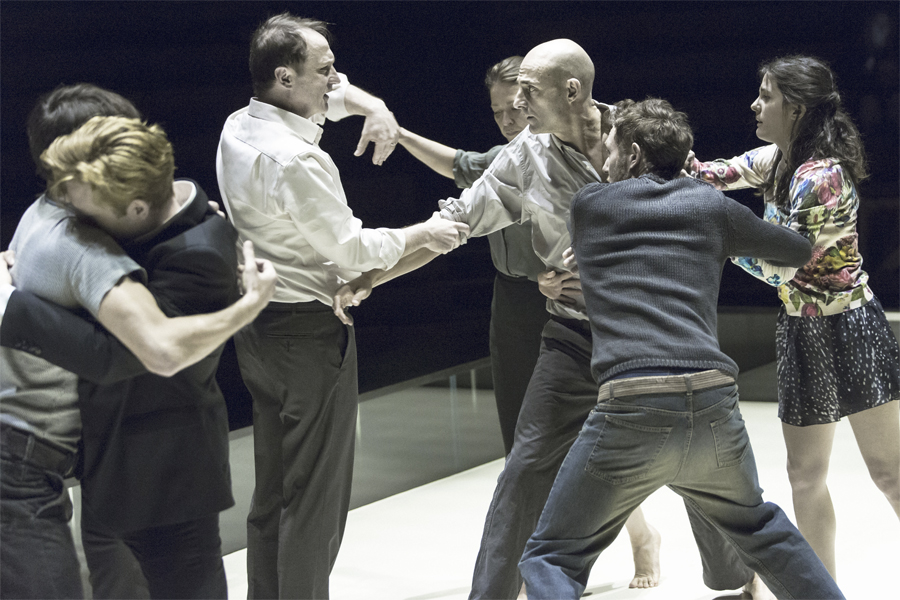
the view from the bridge 2015 © Jan Versweyveld It’s hard to imagine a more powerful – or more iconoclastic – production of Arthur Miller’s shattering meditation on family relationships gone bad and immigrants trying to make good in 1950s New York. But director Ivo van Hove comes close.

I use the word iconoclastic because more conventional productions evoke that specific 1950s setting, although they are using the specific to also evoke the general. In van Hove’s stripped down production – on designer Jan Versweyveld’s rectangular arena – the events of the play are as if under a microscope, focused by Michael Gould’s fine portrayal of lawyer/Greek Chorus Alfieri so that we the audience may observe them with growing incredulity and horror. There is an eerie timeless quality to this setting, which throws into relief the contemporary resonances of the illegal immigrants’ plight and desperation all too clearly.

Italian-American made good protagonist, Eddie Carbone (Mark Strong), reluctantly takes in his wife Beatrice’s (Nicola Walker) relatives from Sicily. Working men have been driven to leave their wives and families for years at a time because of a lack of work in the depression on their island. These illegal immigrants live with the fear of being discovered, though "shopping" your countrymen to the police is likely to bring down a worse fate on the whistle-blower. The search for a better life, the willingness to work all hours, to face up to separation from loved ones and to the pain of longing for them, applies to the Jews who made their painful way from the pogroms and persecution of Europe and to successive generations of economic migrants from Africa and Asia to Europe and the Americas as much as to these Italians.

view from the bridge 2015, scrum, © Jan Versweyveld

As it becomes apparent that the close affectionate relationship between Eddie and Catherine (Phoebe Fox), the niece he has raised as his daughter after his wife’s sister’s death is much too close for comfort on his part, and his affection becomes aggressively possessive and even abusive. Again the play becomes chillingly timely – and timeless. His not so latent homophobia, accusing the newly-arrived Rodolpho (Luke Norris) of being a pretty-boy homosexual is certainly of its time, yet still contemporary.

view from the bridge 2015, fight, © Jan Versweyveld

Timeless though the play and production may be, the actors manage to vividly evoke the 1950s, even in the plainest of costumes (by An d’Huys) and barefoot too. You can visualise Strong’s powerful Eddie working on the docks as a longshoreman, then at home as a terrifyingly insistent and intense character. He does not care who sympathises with him; yet the audience watches his self-destruction with horrified incredulity, channelled by Alfieri’s own impotence to reason with this man so out of control.

Catherine is performed vibrantly by Fox, who sets the stage aglow; first leaping into her uncle’s arms, shining with excitement about her first job, and then glowering with determination and anger as he places obstacles in her path to marriage with her young immigrant lover. Equally Walker as Beatrice conveys vividly and heartbreakingly her disappointment and discomfiture in the face of her now sexless marriage and the reason for her husband’s neglect, but also the magnificent warmth of a Sicilian matriarch, with so much to offer her husband and niece – and indeed her needy newly-arrived relatives.

view from the bridge 2015, close-up, © Jan Versweyveld

Norris is perfectly cast as the pretty blonde Rodolpho, his different and delicate good looks and sensitivity making it plausible not only that he is the object of Catherine’s affections but also Eddie’s hatred. Emun Elliott’s dark, more conventionally Mediterranean Marco is touching in his longing for home and family and determination to make good so far away from them and equally plausible in his own fiery reaction to Eddie’s actions.

My only cavil with the power and intensity of this two-hour (no interval) play is in the insistent soundtrack throughout and a visceral coup de theatre at the end. Neither increase the power or intensity as both are fuelled by the extraordinary ensemble acting acting out Miller’s shattering story. I’d like to think the audience, who rose to their feet almost as one at the end, would have given them a standing ovation even without this final stage effect.

By Judi Herman, who saw the production at the Young Vic before it transferred to the West End.

The View from the Bridge runs until 11 April. 7.45pm, 2.45pm (Wed/Sat only). £19.50-£62.50. Wyndhams Theatre, Charing Cross Rd, WC2H 0DA; 084 4482 5120. www.delfontmackintosh.co.uk

Artist Julian Hanford seeks crowdfunding to commemorate the Holocaust with six million domino tiles

FALL by Julian Hanford, art, coffin image London-based artist Julian Hanford is planning to create an art installation composed of six million domino tiles to commemorate World War II and the 70 years that have passed since its end. The project, FALL, is estimated to cost £1.58m and Hanford is looking to you, the public, for help.

A Phundee.com page will be set up for people to make donations directly. The more you give, the bigger your gifts, which range from FALL t-shirts to owning one of the custom dominoes.

FALL, which will be stacked by domino champion Robin Weijers and co, is said to be bigger than the halls at Alexandra Palace once completed. The scale of the installation is meant to communicate the number of lives lost during Hitler's reign, including Gypsies, Poles, Communists, homosexuals, Russians, the mentally ill and, of course, Jews.

The art piece will be on display in Berlin at the end of 2015 and stand for six days to mark the six years of WWII. At noon on the sixth day, while streamed live online, a Holocaust survivor will knock over the first domino and set off a chain reaction that won't stop until the last tile falls 12 hours later.

For more information, visit www.fall15.com or follow them at @fallevent15.

By Danielle Goldstein

JR at Jewish Book Week: Robin Renwick discusses the subject of his latest book, anti-apartheid campaigner Helen Suzman

Helen Suzman, from JR issue V14-2

Helen Suzman, from JR issue V14-2

This coming Tuesday 24 February Jewish Renaissance's editor Rebecca Taylor will be hosting a special event as part of Jewish Book Week. Taking place at London Jewish Museum, the afternoon will centre around the South African anti-apartheid campaigner Helen Suzman (pictured above visiting Meadowlands high school, Soweto in 1977).

In the darkest days of apartheid Helen stood alone in parliament, confronted by a legion of (mostly) chauvinist male politicians. Despite constant antagonism and threats of violence, she forced into the global spotlight the injustices of the country's minority rule.

Rebecca will be speaking to Robin Renwick, a former ambassador to South Africa, and author of Bright Star in a Dark Chamber, which tells the story of Helen Suzman (you can also read Rebecca's interview with Robin Renwick in the current issue of JR magazine).

Helen's daughter, Frances Jowell, and niece, the actor Janet Suzman will also be speaking. But you need to be quick – there's not long left to get tickets and they're selling fast!

The event, also titled Bright Star in a Dark Chamber, is on Tuesday 24 February. 1-2pm. £6.50. Jewish Museum, 129-131 Albert St, NW1 7NB; 020 7284 7384. www.jewishbookweek.com

To book tickets, email info@jewishbookweek.com or phone 020 7446 8771. Alternatively you can pick up tickets at the venue on the day.

A sneak peak at London Jewish Museum’s wedding retrospective For Richer For Poorer

For Richer For Poorer exhib, Jewish Museum, Press 2015

For Richer For Poorer exhib, Jewish Museum, Press 2015

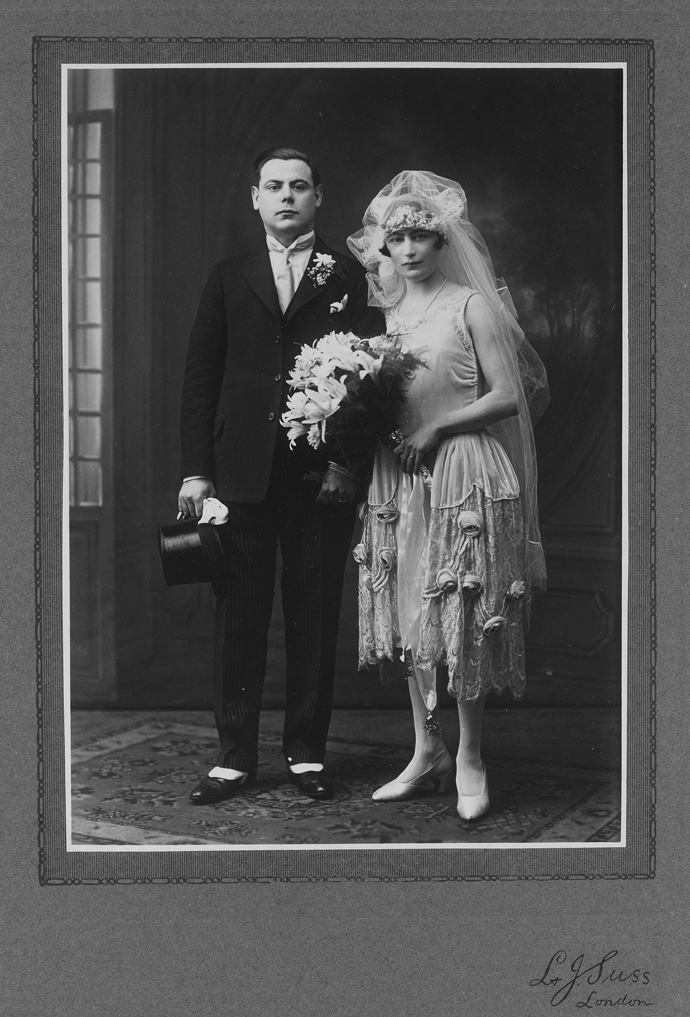
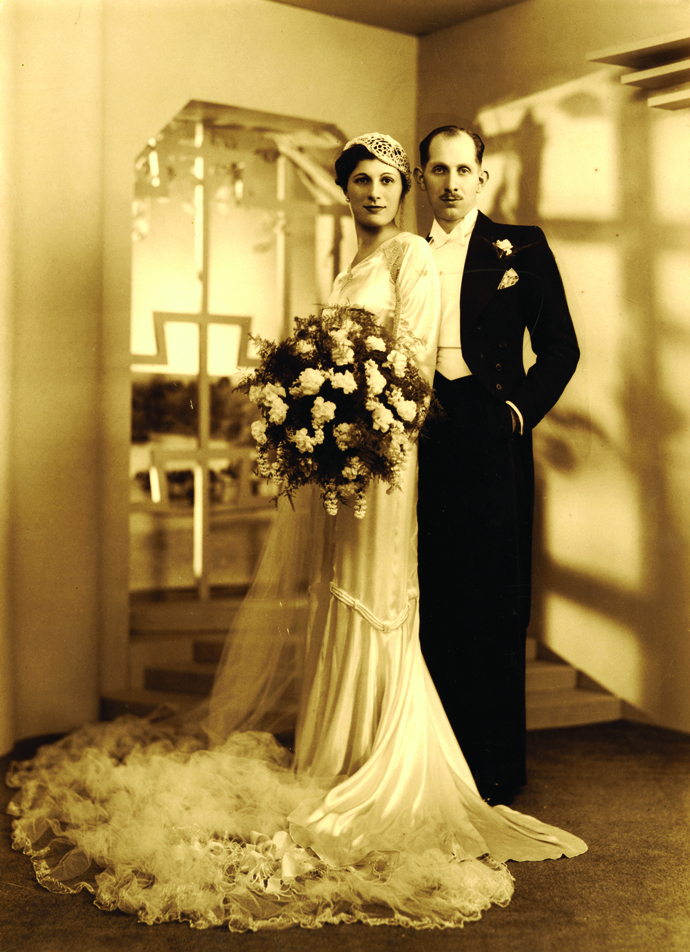
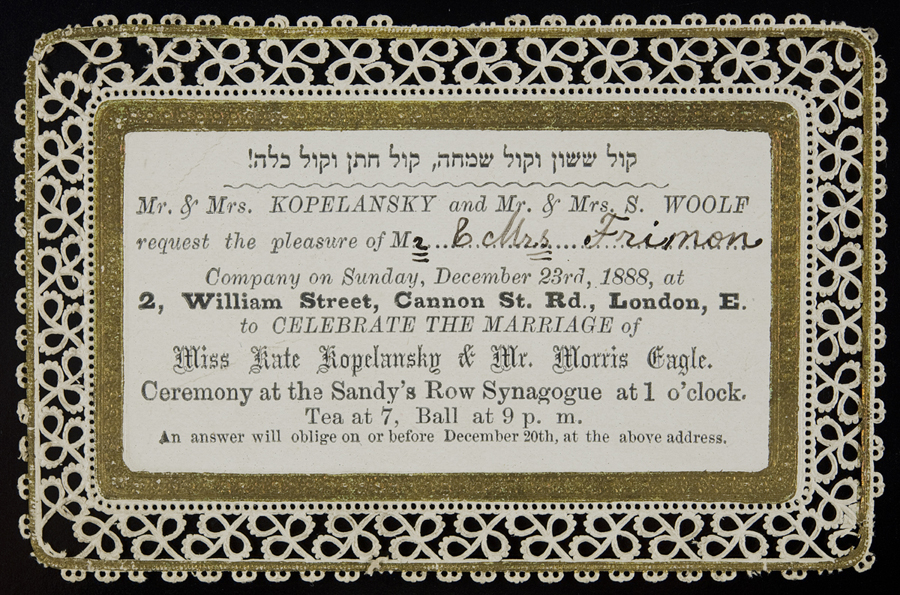
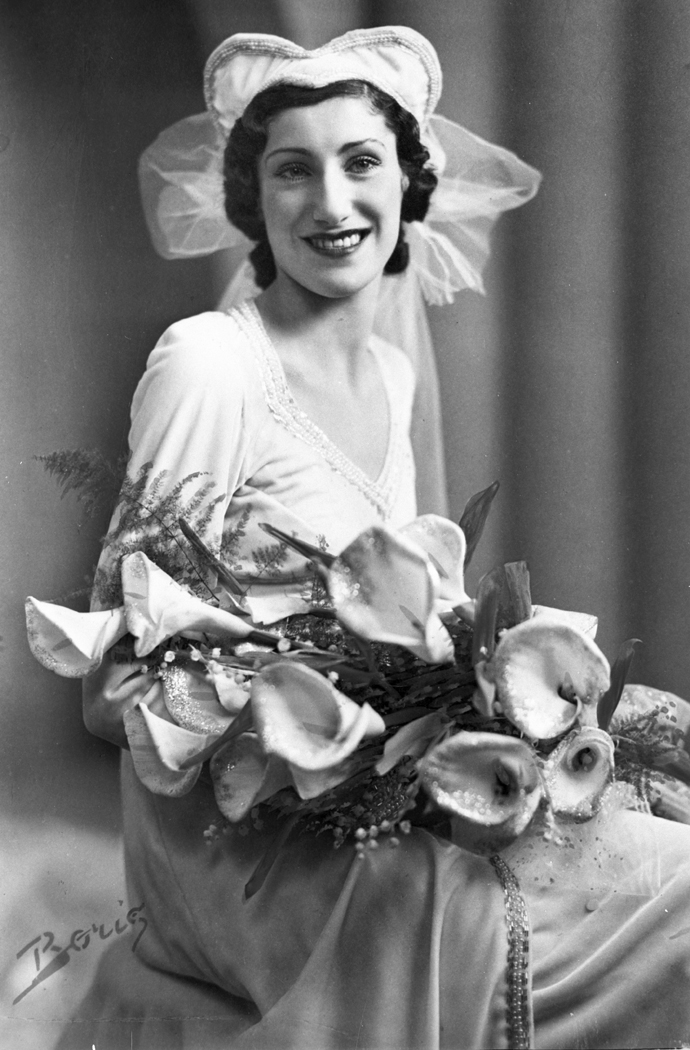
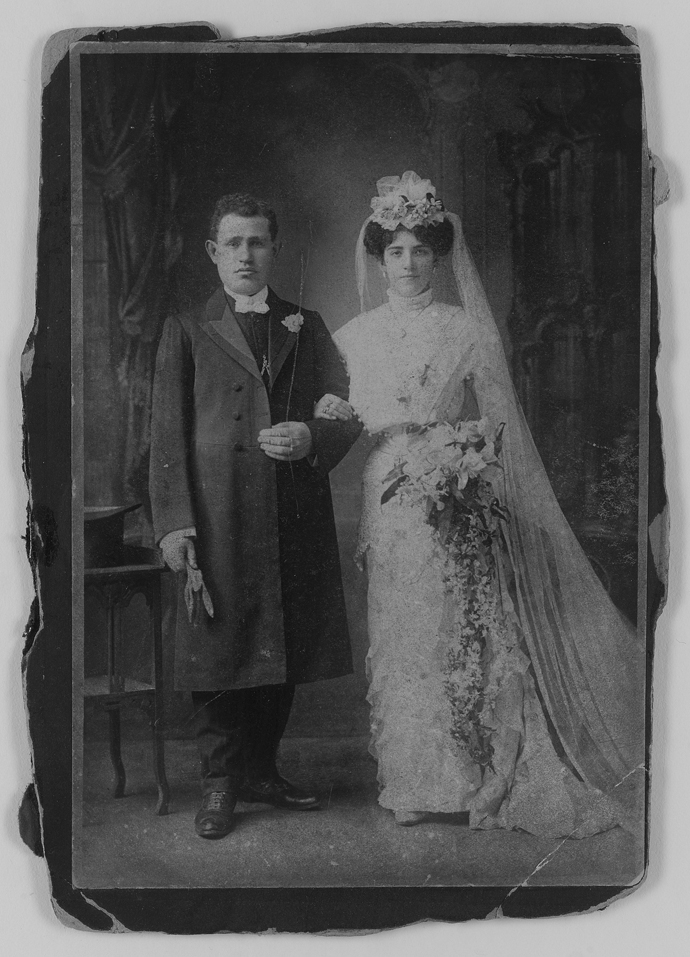
The London Jewish Museum's new exhibition is glorious and beautifully put together. For Richer For Poorer delicately weaves artefacts and archives from the museum's collections with delightful personal material donated or lent by members of the public to tell the story of Jewish marriage throughout the years. Including Jewish immigration and life, with its aspirations and tribulations, its joys and challenges over the years and even centuries. The dresses are gorgeous, the menus mouth-watering – and challenging in the huge number of courses on offer – and the photographs and personally written experiences extraordinarily moving. Anyone who's partial to shedding a tear at weddings should take a packet of tissues!

Also don't miss the free crowd-sourced exhibition Love. The range of everyday objects, historic artefacts and artworks on display are by turns beautiful, surprising and touching – and by no means all Jewish. They include a hand-me-down child's puzzle, a glass shattered under the chuppa (wedding canopy) preserved in blue perspex, and a pin combining the Indian and Scottish flags that symbolises a multicultural union.

By Judi Herman

For Richer For Poorer: Weddings Unveiled runs until 31 May and Your Jewish Museum: Love runs until 19 April. Jewish Museum, 129-131 Albert Street, NW1 7NB; 020 7284 7384. www.jewishmuseum.org.uk

If you can't make it down to the museum, take an audio tour of the exhibition with Judi and Jewish Museum curator Elizabeth Selby.

For Richer For Poorer exhib, Jewish Museum, Press 2015

For Richer For Poorer exhib, Jewish Museum, Press 2015

For Richer For Poorer exhib, Jewish Museum, Press 2015

For Richer For Poorer exhib, Jewish Museum, Press 2015

For Richer For Poorer exhib, Jewish Museum, Press 2015

For Richer For Poorer exhib, Jewish Museum, Press 2015

For Richer For Poorer exhib, Jewish Museum, Press 2015

For Richer For Poorer exhib, Jewish Museum, Press 2015

For Richer For Poorer exhib, Jewish Museum, Press 2015

For Richer For Poorer exhib, Jewish Museum, Press 2015

For Richer For Poorer exhib, Jewish Museum, Press 2015

For Richer For Poorer exhib, Jewish Museum, Press 2015

For Richer For Poorer exhib, Jewish Museum, Press 2015

For Richer For Poorer exhib, Jewish Museum, Press 2015

JR's Rebecca Taylor talks Tehran, Shmita and the fall of the Berlin Wall with Jon Kaye on Sunday Jewish Radio

This week Jewish Renaissance editor Rebecca Taylor spoke to Jon Kaye at Sunday Jewish Radio. The station, which is based at Jewish Care in Golders Green, London, broadcasts interviews and conversations on a range of topics and airs – you guessed it – on Sundays! Rebecca told Jon about why she left mainstream journalism for a Jewish magazine and talked about her own Jewish identity, as well as some of the stories in the current issue of JR. Such as Jewish Tehran, why Shmita is becoming a hip commandment, and what has happened to the German Jewish community since the fall of the Berlin wall. You can listen to the interview above.

To find out more about Sunday Jewish Radio, visit their website.

Review: Judi Herman discovers drama and comedy on a women’s cancer ward in Anat Gov’s Happy Ending

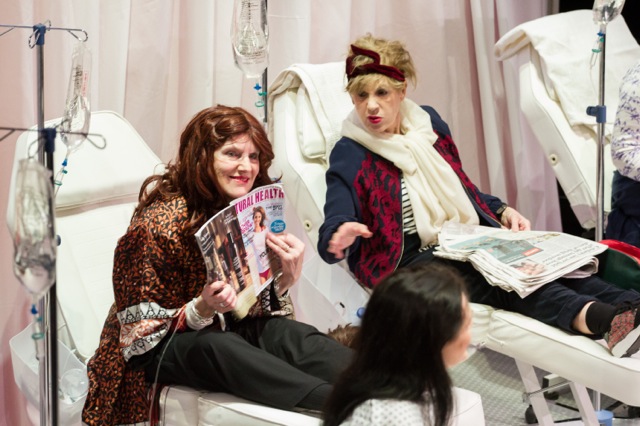
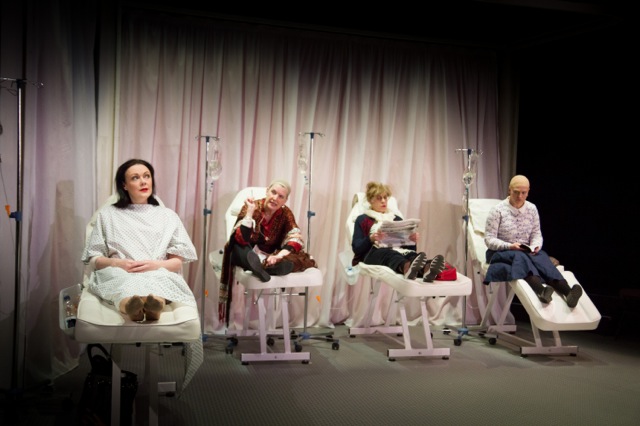
Happy Ending (3) - c Piers Foley_press2015 Entering a space equipped with hospital beds and drip-stands, you'd be forgiven for thinking you were in an operating theatre, rather than the kind with lights, action and music. But then Happy Ending is a play about women facing up to life with The Big C; cancer.

Managing it as best you can usually means coping with invasive, uncomfortable and time-consuming therapy, time spent on a hospital bed hooked up to a drip stand. Not the stuff of which musicals are made. Well, there’s a lot less blood than that shed by Sweeney Todd: The Demon Barber of Fleet Street and fewer lives lost than on the barricades manned by students in the Paris revolution of 1870 central to Les Misérables.

This is a meditation on and exploration of how we face up to cancer. There’s a lot of fighting talk at the moment in ads for cancer charities urging us to take on the disease and beat it at its own game. But the conclusion of Happy Ending is that there are different coping strategies and different outcomes – no right or wrong way to face and fight cancer – and sometimes we have to make our own choices. We may share those choices with those who care for us or we may choose not to. I say "we", as it is easy to identify with the four brave women on stage, who each embody different ways of coping and many of us have faced (or will face) their choices.

But Happy Ending is of course is a musical show and although Anat Gov’s story explores the issues from the inside (she died from cancer in 2012), she manages to be funny and uplifting en route for the "happy ending" she writes for her central character actress and minor celebrity Carrie Evans, newly diagnosed with the disease (a delicate and detailed performance from Gillian Kirkpatrick).

There are some original and unexpected dance routines – drip stands make elegant partners – there’s a Gospel chorus and even cancer itself is embodied by an attractive young man (Joe McCourt) in a steamy tango. There are killer lines too (yes, the gallows humour is catching): “There’s nothing like the smell of fresh cancer in the morning," says one patient, old hand Silvia (played by the excellent and feisty Andrea Miller). She has been fighting cancer with every treatment possible for so long that she is almost like the top dog in a prison drama (or the block elder in a camp). This lady is a survivor of Auschwitz, so how can she let cancer get the better of her?

Carrie (Gillian Kirkpatrick), Miki (Karen Archer), Silvia (Andrea Miller) and Sarah (Thea Beyleveld) gossip in the ward following Carrie’s arrival

Silvia is one of the other three women who embody different ways of coping with their cancer. Miki (the bouncy and attractive Karen Archer) is an ex-hippy who has found so many positives in her diagnosis that she almost has a new lease of life. For a start it has led to a reconciliation with the estranged daughter she neglected during her days of tuning in, turning on and dropping out. Then there’s the devout young Orthodox mother of many, Sarah (Thea Beyleveld, both touching and convincing in her fervour) who trusts in her faith in God to get her through – though she does not trust her yeshiva student husband to look after the children and the plumbing at home.

Yes they are types, but they turn in great performances, as do the supporting (literally) cast of nurses and doctors, led by cheery dedicated nurse Fiona Jodie Jacobs (perfectly channelling a type I recognise from my own recent spell in hospital) and hunky Dr Lynch (Oliver Stoney), the alpha male medic who might have stepped out of any TV hospital drama – cold and caring at the same time.

Director Guy Retallack and Hilla Bar, who adapted the story from Hebrew, have relocated the drama from Israel to North London with the odd mention of, for example, Parliament Hill. Shlomi Shaban and Michal Solomon provide songs that are more stand-out moments of exploring Gov’s theme than the score of a musical moving along the plot or illuminating the characters.

By Judi Herman

Happy Ending runs until Saturday 7 March.  7.30pm (also 3pm Wed/Sat). £12-£19. Arcola Theatre, 24 Ashwin St, E8 3DL; 020 7503 1646. www.arcolatheatre.com

Review: Bad Jews – Joshua Harmon's new play about faith, family and funnies

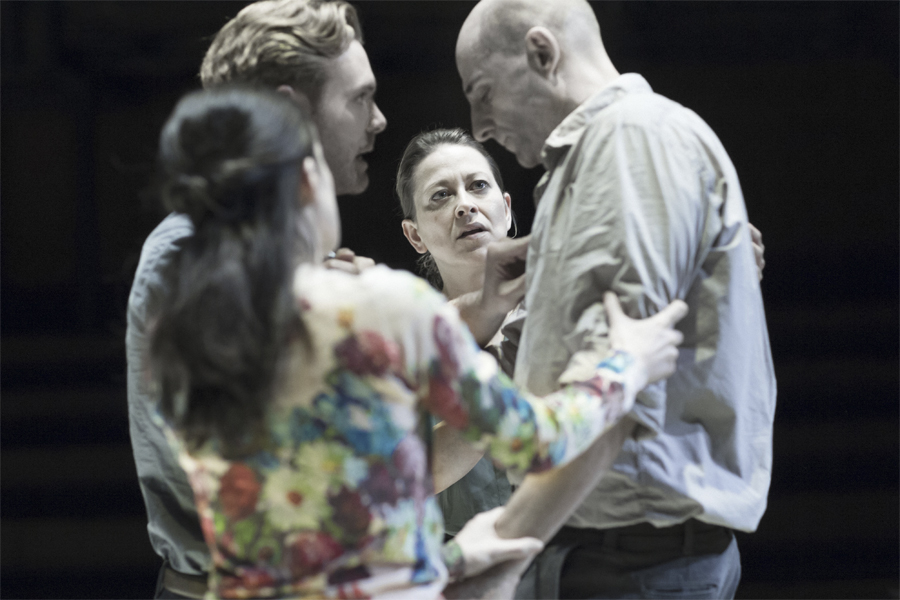
© Robert Workman – Bad Jews Daphna is angry. She’s back from her Ivy League college and is storming petulantly around a claustrophobically small studio apartment like a disgruntled toddler. Her cousin Jonah (Joe Coen) tries relentlessly to ignore the young tyrant as she moans about the fact that Jonah’s brother Liam (Ilan Goodman) has missed their Poppy’s (grandpa) funeral because he was skiing in Aspen with his girlfriend, who isn’t even Jewish. This opening scene sets the audience up perfectly for what’s to come – an hour and a half of increasingly un-passive aggression that’s full of belly laughs.

This new show from 31-year-old Joshua Harmon made its debut in New York in 2012 and was such a hit that in the past year it has become the third-most-produced play in America. The New York-born playwright conceived the idea for Bad Jews just over a decade ago after he attended a “depressingly unmoving” Yom Hashoah (Holocaust Memorial). The service involved grandchildren of Holocaust survivors offering up dispassionate dialogues about their relatives’ traumatising experiences. This got the budding writer considering what it means to be a young Jew in the modern world and whether we should strive to keep alive our religious beliefs and cultures in our children or work towards a religionless and nationless world. Because at the end of the day, should who we are matter?

© Robert Workman – Bad Jews

This issue, while never tackled head-on, throws up various viewpoints throughout as the characters defend their religious and familial loyalties. Daphna – a pushy, furiously sincere “super-Jew” portrayed skilfully by Jenna Augen – and Liam – incredibly bright, but atheist part-time and Jewish when it suits him – bicker and manipulate their way through scenes, ultimately fighting for Poppy’s Chai (symbol for life) necklace, which comes with a heart-breaking backstory.

Kudos must also be given to set designer Richard Kent, whose level of detail plays as huge a part in drawing you in as the actors do. The studio apartment and entrance hallway where Bad Jews takes place is solidly constructed, with minutiae, such as plug sockets, bins and even a leaflet under the neighbour’s door, that make it satisfyingly easy to forget you’re watching from a theatre seat and become fully absorbed in the fast-paced dialogue.

© Robert Workman – Bad Jews

There’s a great comic moment in Bad Jews when Gina Bramhill’s Melody, Liam’s girly gentile girlfriend coyly professes to a fiery Daphna: “It doesn’t matter to me that you’re Jewish,” in a bid to explain we’re all human after all. But it backfires and a leer of sheer disgust remoulds Daphna’s brow as she spits, “It matters to me!” This is just a snippet of Harmon’s deft penmanship – the way he can hint at importance of identity while maintaining a sense of humour. And he does well not to force his personal opinions on the audience, merely planting the seeds of ideas and leaving people to go away thinking about their own. It’s a play full of depth, quick-wit and poignancy. Bad Jews has it all.

By Danielle Goldstein

Bad Jews runs until Saturday 28 February. 2.30pm & 7.30pm. £10-£30. St James Theatre, 12 Palace St, SW1E 5JA; 084 4264 2140. www.stjamestheatre.co.uk
© Robert Workman – Bad Jews

© Robert Workman – Bad Jews

Interview: Ela Weissberger - One of the stars of the original Terezin production of Brundibár

-268d85038c4b79b9 As a brand new Mahogany Opera Group production of Hans Krása's Brundibár, the 1938 short children's opera famously performed in World War II concentration camp Terezin (German Theresienstadt), comes to the Southbank Centre's Imagine Children's Festival this February,  Ela Weissberger (pictured), who created the role of the Cat spoke to Judi Herman before she left her New York home to address the Scottish Parliament for Holocaust Memorial Day.

When did you arrive in Terezin? "I came 12 February 1942. I was one of the first children in Terezin and I stayed there three and a half years, till the end."

Did you come to Terezin with your parents? "I came with my mother because when it was Kristallnacht my father offered money to whoever would kill Hitler and they put him on a black list and the next day they came to pick him up – we never saw him again. My mother was 31 years old."

How did you get cast in Brundibár? "I was singing in a children's chorus in a synagogue in Prague, so singing for me was very wonderful. And friends of my uncle always said that I should sing, as my child's voice was beautiful for them. I didn't think so, but for them it was! When I came to Terezin, and to the children's home there [as men, women and children were quartered in different barracks], the youngest composer in Terezin was Gideon Klein. He also played the piano and played for 55 performances when I was in Brundibár. He played the piano and was also the one that was writing for us Hebrew songs. So we started singing in the children's room and the Nazis let us. We were allowed to sing and play and because of that there were some poems that were written in Terezin. Brundibár and the poems and our children's paintings with Friedl Dicker-Brandeis [the Austrian artist and educator who was killed in Auschwitz, 9 October 1944], is the only legacy of the Terezin children.

"I was chosen when Rudi Freudenfeld smuggled in the piano score of Brundibár. He was the son of the director of the Jewish orphanage in Prague. So Hans Krasa was able to redo the music for us and one day they said that if somebody knows about talented children in music we should try out for parts in Brundibár. So when it came my turn, Rafael Schaechter, who took the music in Terezin and was famous for playing Verdi's Requiem there – he knew me when I was eight years old – so when I came to try out for Brundibár, he said, 'You will be the cat'.

"My mother was a real music lover, and my father, and they went to the opera and all that before the war so she was so happy that I got the part of the cat. I came to my mother and said, 'You know, ma, I will be the cat in the opera', And my mother was wondering, 'what cat in the opera? I don't think there's an opera with a cat', so she didn't believe me! But I loved it. You know I think I was born a little show-off!"

A Terezin production of Hans Krasa's Brundibár

What costume did you wear? "I had my sister's ski pants, my mother's black sweater, and I wasn't allowed to wear shoes because the cat had to be very quiet. Also Frantisek Zelenka [the production designer] was from the National Theatre of Prague and his fantasy was something unbelievable. Somehow they didn't cut the back of my hair, but split it and made it almost like ears for me. And then he had a little box left over of black shoe polish and with that he made me my whiskers and he covered my feet a little because they were so white. He didn't understand when I told him I was having such a hard time wiping it off because we didn't have soap. Only once a month we were able to take a hot shower and this was for just five minutes with two people under the shower at once."

Everybody in the camp loved to come and watch Brundibár and understood the message – that the evil organ grinder Brundibár was a thinly disguised Hitler. Did you play to rapt audiences and give people some feeling of fighting back, of defiance? "In Terezin the people in the audience were singing with us. They used to clap and stamp their feet and we used to repeat it a couple of times with them, the Victory Song [the number in which the children and animals celebrate their victory over Brundibár]. In the Czech Republic audiences still do that. Here in America, only when I am in Los Angeles with the opera, first we are two people and when we start to clap, then others start to clap with us!"

Ela Weissberger wrote a book about her time in Terezin called The Cat with the Yellow Star, which was first published ini March 2006, but has been re-published in a new edition this month. "You know I still have my original Jewish star," she says.

By Judi Herman

The Mahogany Opera Group's production of Brundibár runs Saturday 18 - Sunday 19 April. 7pm (Sat), 3pm (Sun). £10, £8 children. Watford Palace Theatre, 20 Clarendon Rd, WD17 1JZ; 019 2323 5455. www.watfordpalacetheatre.co.uk

Watch a trailer of the show here:

https://www.youtube.com/watch?v=B2TJbNdvrt0