Review: The Writer ★★★★ - A guide for the perplexed from the writer of hit Israeli TV series Arab Labour

film-the-writer More reviews from the 20th UK International Jewish Film Festival. This time looking at two films from Israel giving insights into Arab/Israeli relations, featuring this mockumentary written by Sayed Kashua and directed by Shay Capon.

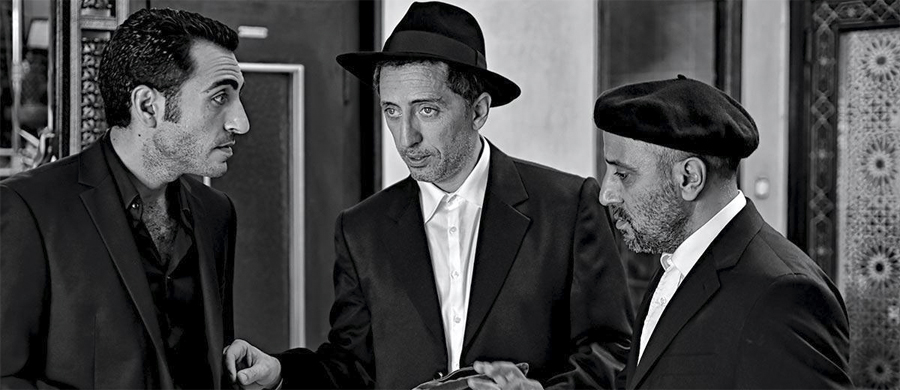
If you loved Arab-Israeli writer Sayed Kashua’s Arab Labour and you’re into Larry Davidson, this meta-reality TV series, which has its first three episodes screened at the Festival, is for you. But don’t expect to get the belly laughs or even the cynical giggles you got from Larry and Arab Labour’s genial, narcissistic anti-hero Amjad (who finds celebrity when he wins a TV reality show). Kashua’s writer Kateb (wonderfully perplexed Yousef Sweid) is his fictional alter ego, an Arab-Israeli TV writer who has achieved celebrity status with his hit TV series called – yes you’ve guessed it – Arab Labour.

But Kaleb is uneasy about his celebrity – is he merely the acceptable face of Arab-Israeli culture – the creative who makes Israelis feel liberal when they laugh with him at his clever take on life on the other side of the cultural divide? And despite – or perhaps partly because of his success, he’s having a mid-life crisis. Is he really living the dream or is he increasingly alienated from his admittedly demanding wife and teenage daughter as he ineffectually juggles the life/work balance with increasingly chaotic results? And then there’s his insecure pre-teen son, terrified by his father’s altercation with a black-garbed, Orthodox Jew complete with sidecurls as the pair go head to head over a parking space. Will their overreaction lead to violent repercussions or will an apology go some way towards rapprochement between these members of two communities living uneasily side by side?

His attempt to answer these questions leads him to announce a sabbatical from making a new series of Arab Labour – instead he proposes a series based on a character much like himself, going through just the sort of life experiences he is experiencing. See what I mean about meta-reality? This one really does have as many layers as an onion. So the laughs are subtle and the questions posed about Israeli society promise to continue to be telling in the rest of the series of ten episodes. With Fauda – the hit action series about an Israeli undercover unit operating in Palestinian territory that has proved a runaway success with both Palestinians and Israelis – about to come to Netflix, I’m optimistic that I’ll find out – I just hope I don’t have to wait too long!

By Judi Herman

The Writer screens on Sunday 20 November,  4pm, at JW3, NW3 6ET.
http://ukjewishfilm.org


Review: Disturbing the Peace ★★★★ - Searing testimony from fighters for co-existence in Israel/Palestine

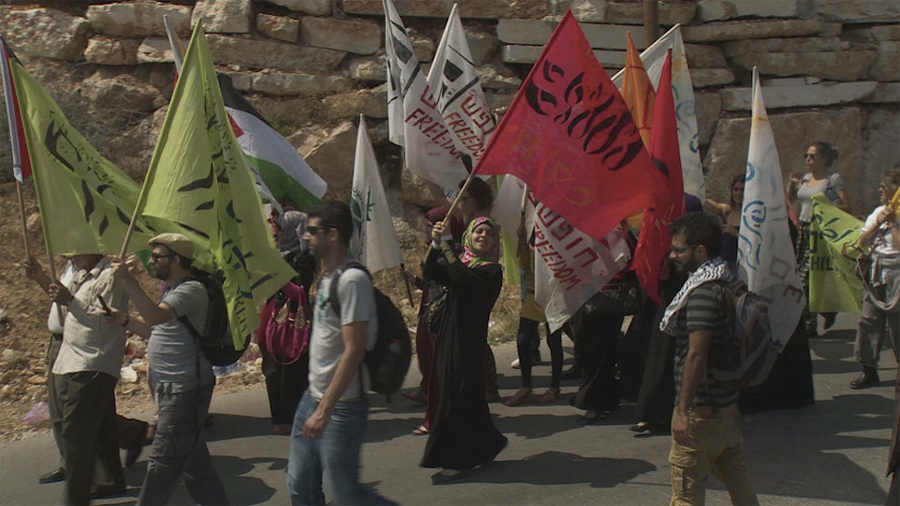
film_disturbing-the-peace More reviews from the 20th UK International Jewish Film Festival. This time looking at two films from Israel giving insights into Arab/Israeli relations, starting with Stephen Apkon and Andrew Young's documentary, Disturbing the Peace.

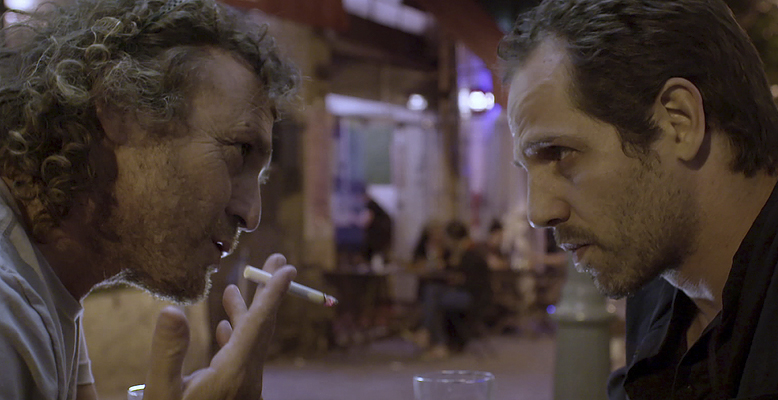
For a searing insight into the wounds inflicted on both sides by the situation and into a group that has earned the right to work towards trying to heal them, I urge you to see this hard-hitting documentary. Even-handed filmmakers Stephen Apkon and Andrew Young take no prisoners and no sides. They give equal screen-time to the bravely candid members of Combatants for Peace from both the Israeli and Palestinian communities who speak directly to camera to tell their stories, backed up by documentary footage and reconstructions, as well as tense actuality of unfolding events.

These men and women really have earned the right to fight for peace and co-existence over the ten years since they were established. There’s the Palestinian woman who kissed her little daughter goodbye, explaining that she would not see her again as she intended to blow herself up. Apprehended and in an Israeli prison, it’s the humanity of her female jailers that helps her to listen to the narrative of the other. Another Palestinian activist, a man this time, learns to understand the other literally as well, as he learns Hebrew in prison. And equally, it’s impossible not to hear the narrative of both ‘sides’ as the film reveals the sort of punitive action that makes men and women come to the conclusion that taking such desperate action is the only way – houses demolished leaving weeping families on the street, a younger pre-teen brother gunned down for trying to go 50 yards down the street to a cousin’s house during a punishingly early curfew. I am reminded of the coming together of bereaved family members from both communities in the Bereaved Families Forum, who also speak of listening to the narrative of the other.

For every bit of footage showing desperate Jews trying to get to Palestine or emaciated bodies in the camps, there’s equally shocking footage of the bodies left behind after the massacres in Sabra and Shatila. As one of the combatants (and tellingly I cannot remember from which community) says “Blood is blood – it doesn’t have two colours” – and another “Every act of violence causes pain”. The plangent beauty of oud music on the soundtrack makes these scenes and statements all the more poignant.

It’s heartening and moving to see Israeli members of Combatants for Peace, who present at first as 'hardened' soldiers from elite units, taking blankets to Palestinian families whose houses have been demolished. Equally though, it is worrying to see the military presence (and the tension that engenders) that accompanies their peaceful rallies, almost reminiscent of 1960s hippies or the Greenham Common women, though these Combatants for Peace have experienced pain and violence at first hand. One of the most telling images in the film is a mock tomb with the message “We don’t want you here” carved on it. For me that says it all.

By Judi Herman

Disturbing the Peace screens on Tuesday 15 November, 6.30pm, at Odeon Swiss Cottage, NW3 5EL.

http://ukjewishfilm.org

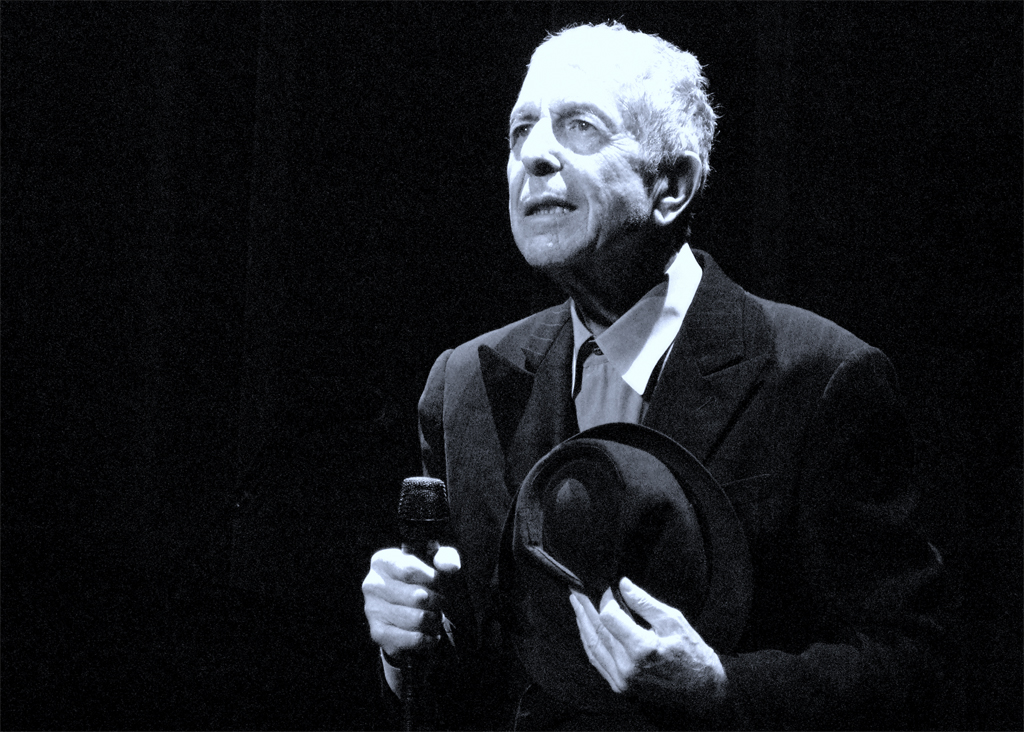
Canadian singer-songwriter Leonard Cohen has died, age 82

leonard-cohen On Monday 7 November, one of music’s most eloquent and able songwriters passed away. Leonard Cohen was 82 when he died peacefully at his home in southern California earlier this week. His son Adam said touchingly in an interview with Rolling Stone, “My father passed away peacefully at his home in Los Angeles with the knowledge that he had completed what he felt was one of his greatest records. He was writing up until his last moments with his unique brand of humour."

The record Adam is speaking about is You Want it Darker, which was recently released (21 Oct) and effused the sincere, gravelly tones and orchestral movements he was so well known for. 

Born in Westmount, Quebec on 21 September 1934, Cohen grew up in a middle-class Jewish family. Marsha Klonitsky, his mother, was the daughter of a rabbi, while his father, Nathan Cohen, had Polish heritage – his father Lyon Cohen having emigrated from Poland in 1871 and later founding the Canadian Jewish Congress.

While at high school Cohen picked up an appreciation of poetry and by age 20 had published his first poems in a magazine called CIV/n. It wasn’t until the 60s, however, that Cohen began life as a musician. In 1967 he moved to New York, befriended Andy Warhol and penned the song Suzanne, which was to be his first successful foray into the world of music.

Despite a prolific, 60-year career, Cohen never charted highly in the mainstream. His highest ranking song in Canada, Closing Time, reached Number Five, while in the UK it was only the reissue of Hallelujah that ever charted at position 36.

Originally released in 1984, Hallelujah has become the song Cohen is most renowned for. The singer never had much success with it himself, but it was remarkably covered over 300 times, most notably by the late US singer Jeff Buckley, who scored a Number One hit with it.

As well as music, Cohen was also known as an accomplished author. Over the years he published two novels – The Favourite Game (1963) and Beautiful Losers (1966) – and 13 anthologies of poetry. 

Eleven albums down the line, in 2005, Cohen was in the public eye for something other than his art after his close friend and manager Kelly Lynch was exposed for misappropriating over $5m from Cohen’s accounts. This hefty loss formed a big part of Cohen’s reasons for writing new music and touring again.

Earlier this year Cohen’s former lover Marianne Ihlen died. She was the Marianne of the song So Long, Marianne, which Cohen wrote about her when the pair dated and lived in Hydra, Greece for much of the 60s. Shortly before Marianne passed Cohen penned her a heartfelt letter saying: “Marianne it’s come to this time when we are really so old and our bodies are falling apart and I think I will follow you very soon. Know that I am so close behind you that if you stretch out your hand, I think you can reach mine.”

The world has lost a truly talented spirit that will live on in Leonard Cohen’s songs, poetry and legacy.

By Danielle Goldstein

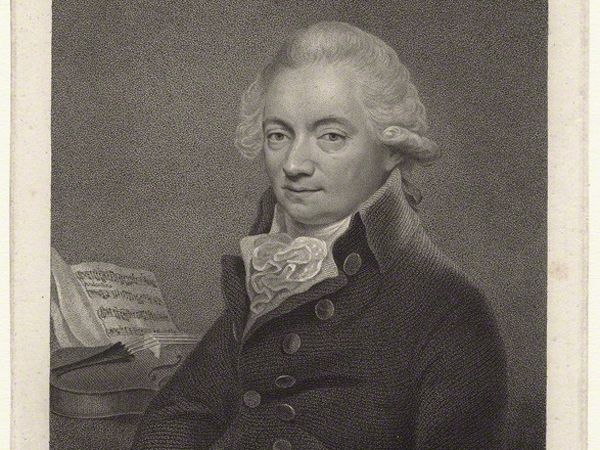
A look at the life of Johann Peter Salomon, the Jewish-born musician, impresario and creative force behind Haydn's Creation

by Georg Siegmund Facius, or by Johann Gottlieb Facius, after Thomas Hardy, stipple engraving, published 1792 Ballet Rambert’s new production – with 50 dancers and 70 musicians from the Rambert Orchestra onstage, soloists and chorus from the BBC Singers, and designs by Pablo Bronstein – marries dance to the soaring music of Haydn’s mighty oratorio and its beautiful libretto, taken from Genesis and the Book of Psalms, as well as Milton’s Paradise Lost. It comes to Sadler's Wells this month after a hugely successful premiere at Garsington Opera in July.

These November performances of The Creation are elegantly timed for Jewish lovers of music and dance, as in synagogues worldwide we have just recently begun reading the Torah from the beginning again, with Genesis and the story of the creation.

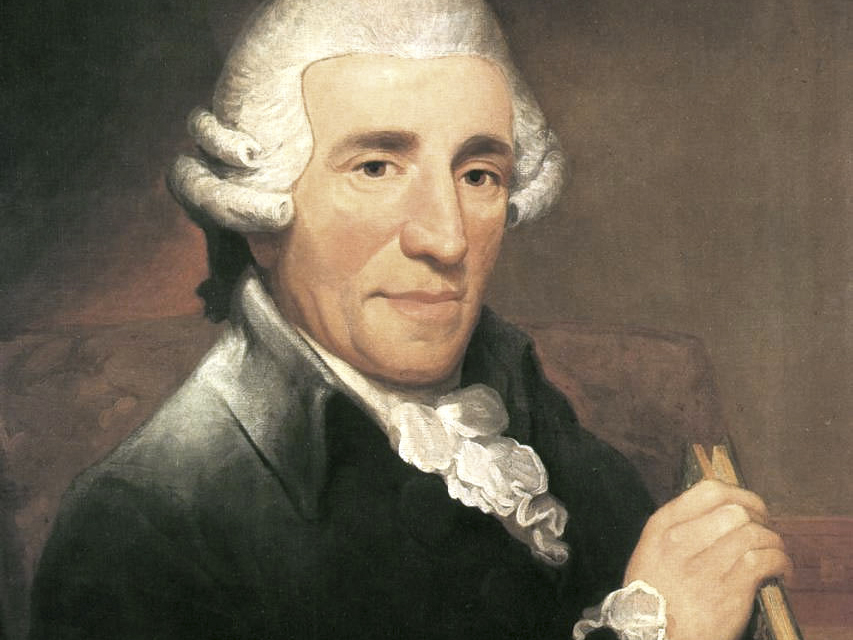
A fascinating and little-known part of the story of the oratorio's creation is the role played by Johann Peter Salomon, German-Jewish-born musician, composer, conductor and impresario, in inspiring Haydn to compose the work. It was Salomon who provided Haydn with a libretto to draw on and refashion, that included those texts from the Bible and Milton. The pair seemed to have had a wonderful creative partnership, for Salomon originally brought Haydn to London, for the first time in 1791 and again in 1794. The symphonies Haydn composed specially for these visits are sometimes called the Salomon symphonies and as a violinist, Salomon joined Haydn to lead the first performances of many of the works he was inspired to compose in England.

Johann Peter Salomon was born in Bonn in the early 1740s into a family of Jewish musicians who thought it prudent for their infants' futures to baptise them. His sister Anna became renowned for her rich contralto voice and in Berlin, under the patronage of Prince Henry of Prussia, young Salomon composed several French operas with roles and arias for her to perform in concert.

joseph-haydn

Salomon was invited to Paris in the early 1780s and then to London, where he really found his niche. So much so that in 1790 he decided to visit Vienna to invite both Haydn and Mozart to come to London. It seems that both accepted, but sadly Mozart died in 1791. Haydn earned several hundred pounds and huge public adulation for the music he composed and played in London - imagine how the late Leonard Bernstein or Stephen Sondheim, Leonard Cohen or Bob Dylan would be feted if they, came to London to premiere compositions especially composed for Britain.

It's said, however, that Haydn refused to pay his orchestra and Salomon had to pick up the bill, which he did with a good grace. Unsurprisingly, Salomon's Jewish origins meant he was regularly accused of being mercenary, even though many regularly took advantage of his good nature. When he was called a Jew, it was of course a derogatory term. Yet by all accounts he had a winning personality,  which made him popular with patrons and fellow musicians wherever he went. The gifted musician clearly had a good head for business too, a dream combination for an impresario.

Salomon went on to become one of the founder members of the Philharmonic Society and led the orchestra at its first concert on 8 March 1813. Salomon died in London in 1815, of injuries suffered when he was thrown from his horse, and is buried in Westminster Abbey. In 2011 the Royal Philharmonic Society instituted the Salomon Prize “to highlight talent and dedication within UK orchestras.” A fitting tribute indeed.

by Judi Herman

The Creation runs from Thursday 10 – Saturday 12 November, 7.30pm, £12-£45, at Sadler’s Wells Theatre, Rosebery Avenue, EC1R 4TN; 020 7863 8000. www.sadlerswells.com

Review: The Last Five Years ★★★★ - A poignant dissection, in a unique timeframe, of a relationship going nowhere

theatre-the-last-five-years-scott-rylander Jason Robert Brown's poignant, semi-autobiographical journey through a relationship, from heady first meeting to marriage and then downhill to disillusion and divorce, is an intimate chamber piece with just two protagonists: Cathy and Jamie. She is a struggling actress, he is a young Jewish writer on the cusp of  success.

The musical's remarkable USP is that Cathy and Jamie travel through time in opposite directions. She begins with the final break up and ends with the delicious moment of meeting – with all the excitement of possibility still ahead. He starts off full of the enticing novelty of his "Shiksa goddess" (shiksa being slang for non-Jewish girl) after all those nice, safe and suitable Jewish girls.

Jonathan Bailey and Samantha Barks seize the opportunities offered by this clever structure. Brown turns a fine lyric – “Jamie arrived at the end of the line / Jamie's convinced that the problems are mine / Jamie is probably feeling just fine and I'm still hurting” – and his music is both lush and nuanced. The show succeeds brilliantly in demonstrating the ultimate isolation of its protagonists, just because the structure dictates that they must spend most of its duration singing alone on stage to an imaginary partner.

theatre-the-last-five-years-1-scott-rylander

It's an extraordinary relief when, at what is really the show’s climax half way through, they do at last have a duet of transcendent joy as he proposes and she accepts. I was left longing for more shared stage time and song. True the show ends with both on stage singing, not together, but as far apart as is possible to be. The audience is all too aware that the youth and optimism with which Barks shimmers is destined to have its shine dulled by Jamie's unthinking neglect. He climbs the slippery pole to success and has his head turned by the adoration of other women, while she remains earthbound, her career never taking off.

It's heartbreaking to watch Barks' beautifully realised account of Cathy unfolding like a flower in sunlight as she goes back to the time when she was full of hope. And Bailey is not afraid to be unsympathetic as success turns his head and he leaves his young wife at home for yet another showbiz party.

Brown gets away with directing himself, though it would have been interesting to see what an outside director makes of the piece. Derek McLane's design of window frames above a bare stage lit with squares of lights suggests New York apartment buildings and is supplemented sometimes more/sometimes less effectively by truck stages wheeled on and off. It seems a large empty space for just two performers at times; though the space above and behind the window frames is wonderfully filled by the glorious band – the plangent strings of two cellos, violin, guitar and bass, with MD Torquil Munro's piano, but no percussion in Brown's own orchestrations. And costume designer Gabriella Slade provides Miss Barks with a fabulous succession of entirely appropriate outfits for every stage of this sad little dissection of a relationship. An affecting evening.

By Judi Herman

Photos by Scott Rylander

The Last Five Years runs until Saturday 3 December, Monday to Saturday 7.30pm, Thursday & Saturday 2.30pm, £10-£59.50, at St James Theatre,12 Palace St, SW1E 5JA; 0844 264 2140. www.stjamestheatre.co.uk


Review: Mr Predictable ★★★★ - Israeli romcom complete with canine and human stars to set your tail wagging

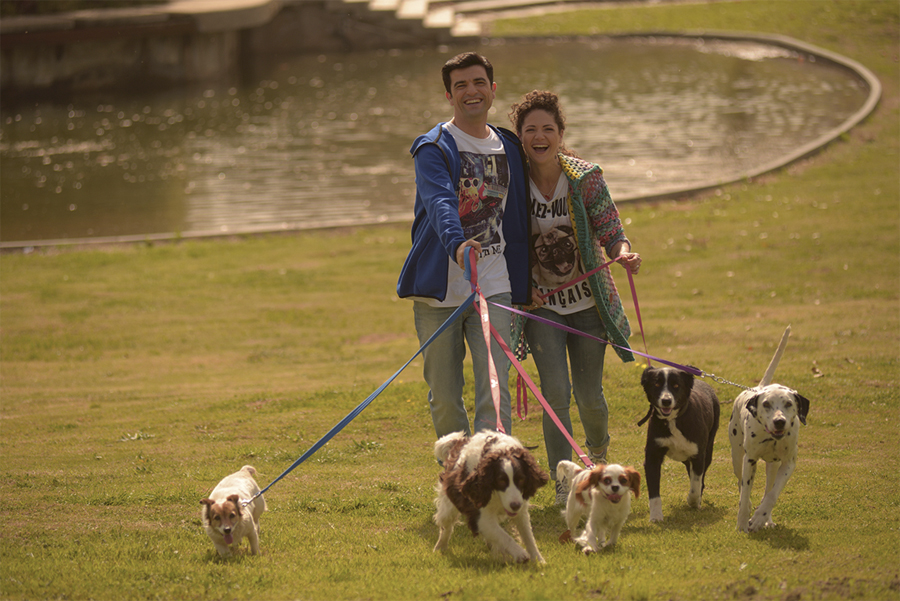
film-mr-predictable As the 20th UK International Jewish Film Festival gets underway (5-20 November), we take our first look at the selection of films on offer. Roee Florentin’s Mr Predictable will have you cheering as  its eponymous hero finally refuses to sit up and beg…

As a dog lover and owner myself, I was especially delighted to be asked to introduce the UKJFF screening of Roee Florentin’s real doggie treat of a romcom. Meet Adi Levi – a man who is simply too nice for his own good – until he literally bumps into Natalya , or one of the dogs she walks. Natalya is what you might call naughty but nice – just the girl to take our hero in hand and retrain him, while the dogs she walks give him a good licking too. It’s one of those marvellous Israeli films that give you insights into ordinary life in Israel, with the situation there in the background, informing it rather than being at the heart of the story.

Ever since Adi's soldier father left for Lebanon saying he’d be back soon, only to be killed in action, Adi has been careful and cautious to the point of timidity and so very aware of others that he has become a pushover, walked all over not just by his boss, his wife and his mother, but even his spoilt brat of a pre-teen son. A mix-up at a hospital appointment that leads him to believe he has mere weeks to live proves a life changer, but only because it’s compounded by the one careless act of his life – narrowly avoiding killing one of Natalya’s charges when he runs it over.

From this unpromising beginning, a new relationship and a new man are born. If you’re anything like me, you’ll find yourself cheering Adi on as he finds not just his mojo, but his inner hard man. Much of this is down to the winning performances of a beautifully matched pair of actors, Amos Tamam and Meytal Gal Suisa as Adi and Natalya (and not forgetting the canine supporting cast), directed with equal parts of sensitivity and panache by Roee Florentin against a great backdrop of Tel Aviv’s parks and suburbs. I guarantee Mr Predictable will make tails wag and I predict dog-friendly screenings very soon!

By Judi Herman

Mr Predictable has the following UKIJFF screenings:

Sunday 6 November, 3pm, at Odeon Swiss Cottage, NW3 5EL.

Sunday 20 November, 6pm, Phoenix Cinema, N2 9PJ.

http://ukjewishfilm.org

Review: Moos ★★★★ - A charming, contemporary comedy set in Amsterdam’s Jewish community

film-moos As the 20th UK International Jewish Film Festival gets underway (5-20 November), we take our first look at the selection of films on offer on offer. Job Gosschalk's  beguiling comedy Moos gives an insight into life in Jewish communities in Amsterdam.

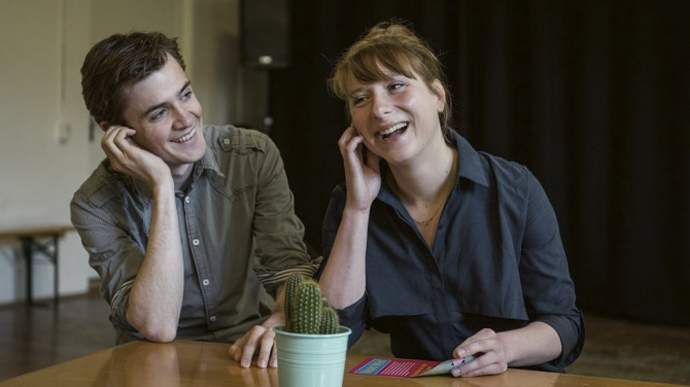
This entirely charming and absorbing comedy set in Amsterdam’s Jewish community wears its ‘kosher’ credentials lightly but convincingly from the opening frames. Twenty-something Moos and her widowed father are preparing for a Chanukah party with the relatives. She is his right-hand woman, both in his draper’s shop and as homemaker, though now he is dating a likely single mother whose son is coming up for bar mitzvah, Moos realises her life’s been on hold too long.

The main storyline revolves around Moos’ unsuccessful efforts to get into drama school and her settling for a job in the school’s canteen; and the visit of her long-time childhood friend Sam, now living in Israel and how that chimes with her attraction to sexy singing teacher Chris, who offers (very) private coaching. Meanwhile life in the community – which embraces Moos and her father, family and friends, including Sam – continues to be a vital part of the film’s fabric. The Chanukah latkes, the preparations for the bar mitzvah and the celebration of a ceremonial circumcision in the family all play their part in Moos’ story.

As played by Jip Smit, Moos is an engaging, kind-hearted young woman, unselfconscious and natural, attractive rather than beautiful, and you can’t help warming to her. Frederik Brom is touching as her father Maup; and from the moment he appears at the door, we can see, even if Moos can’t, that Daniel Cornelissen’s open, sincere Sam is made for her.

Writer/director Job Gosschalk and co-writer Judit Goudsmit take their audience to drama school and give us time out in the café with its quirky characters. And they are equally adept at creating an attractive and subtle picture of Moos’ network of family and other relationships. There are delightful flashbacks to Moos and Sam as children and touching glimpses of Moos caring for her father.

Then at the bar mitzvah in synagogue, in a scene reminiscent of Jack Rosenthal’s Bar Mitzvah Boy, it is Moos who is there for the bar mitzvah when he gets stage fright. Meanwhile the story of her efforts to face up to her own diffidence has its own delightful set-piece climax where she gets to duet with real-life Israeli singing star Asaf Hertz. There are some marvellously evocative settings too – the Amsterdam street with folk cycling past the draper’s shop, the lush bales of cloth piled inside and of course that grand synagogue, the men in prayer shawls gathered on the central bimah (platform) around the Torah scroll. Moos is a delight from start to finish.

By Judi Herman

Moos has the following UKIJFF screenings:

Sunday 6 November, 6pm, at Odeon South Woodford, E18 2QL.

Thursday 10 November, 7.30pm, at Odeon Swiss Cottage, NW3 5EL.

Sunday 13 November, 4pm, at HOME Manchester, M15 4FN.

http://ukjewishfilm.org

Review: The Midnight Orchestra ★★★★ - A poignant, magical story about regret and relationships set in Morocco

film-midnight-orchestra As the 20th UK International Jewish Film Festival gets underway (5-20 November), we take our first look at the selection of films on offer. Jérôme Cohen-Olivar's poignant The Midnight Orchestra gives an insight into life in Jewish communities in Morocco.

Wall Street whizz kid Michael Abitbol returns to his childhood home in Casablanca to be reunited with his elderly father: legendary band leader and local hero Marcel Botbol, from whom he is estranged. Botbol is returning there himself for the first time since leaving his native city and adoring fans for Israel in 1973, when the Yom Kippur War caused an antisemitic backlash in Morocco. But no sooner do they meet again than tragedy strikes and the son must engage with officials of the local Jewish community to bury his father. But first Michael must fulfil his father’s last wish – to reunite the band and this becomes an overwhelming desire to do so for one last, transcendent gig.

It's Michael's dogged pursuit of these eccentric and impossible, even dangerous old men that drives the narrative. A  pimp and gangster, complete with moll, an eccentric millionaire who prefers life as a beggar and the harmonica player confined in an asylum since he jumped into the nighttime harbour swearing he heard the midnight orchestra playing out at sea.

Perhaps just as important is what actually proves to be the film's central relationship, between Michael and an eccentric Arab taxi driver and ardent fan of Botbol. He becomes Sancho Panza to Michael’s Don Quixote, local guide and lifesaver. It's almost a bromance, but given the age gap it's perhaps more a consolation for the father and son relationship he has just lost. Their quest to find the band members is both comical and suspenseful and for Michael a bittersweet nostalgia trip too. His childhood around the band and its members is beautifully evoked by sepia tinted footage of the musicians in their prime. Michael sees the little ghost of his younger self too, haunting the places where he played as a boy.

For the audience the film is an insight into the past and present of a Jewish community little known outside Morocco and into the now cordial relationship it has with the country's Muslim majority. There are stand-out performances from Jewish Moroccan actor Avishay Benazra as Michael and Aziz Dadas as his taxi driver helpmeet. And there's another effective comic cameo double act from two actors, whose names I have searched for in vain, as a pair of officious and oleaginous representatives of the local Jewish burial society. This is a poignant, magical story set in Casablanca now, about regret and relationships, memory and getting old. My one regret is that we had only a brief, tantalising taste of how the fabled orchestra might have sounded. I would have loved to hear the whole of the tribute played at the graveside of their leader.

By Judi Herman

The Midnight Orchestra has the following UKIJFF screenings:

Sunday 6 November, 8.30pm, at Odeon Swiss Cottage, NW3 5EL.

Tuesday 15 November, 7.30pm, at Seven Arts Leeds, LS7 3PD.

Saturday 19 November, 7.30pm, at CCA Glasgow, G2 3JD.

http://ukjewishfilm.org

Two consecutive evenings, two talented young Israeli performing artists, both with so much to offer

knock-and-falling

knock-and-falling

I rounded off October by spending two consecutive evenings being excited and challenged by the work of two talented young Israeli performing artists, both with so much to offer. Niv Petel is heartbreaking in Knock Knock, his beautifully nuanced account of a devastating situation faced by too many Israeli families, and Hagit Yakira attracted full houses for her exciting new work Free Falling.

Petel is an extraordinary physical actor, wonderfully convincing as a devoted mother whose son is the centre of her life. An engaging and important contribution to our understanding of life in Israel. And at Sadler’s Wells last week, dancer/choreographer Yakira presented four talented performers falling and recovering again as they take what life throws at them. Supporting each other, their eyes and faces as important as the rest of their bodies as they look out for each other. In a beguiling add on, three more dance artists responded to Free Falling – including full audience participation on the studio floor, everyone linked in a joyful dance – a sort of Hora at Sadler’s Wells, which makes Israeli dance so welcome. Niv Petel and Hagit Yakira are certainly names to watch.

Continue through the blog to read our reviews of Knock Knock and Free Falling, as well as an interview with Niv Petel, or click the names to go straight to each one.

by Judi Herman

A Report on Free Falling, the new show from Israeli dancer/choreographer Hagit Yakira at Sadler’s Wells

free-falling1

free-falling1

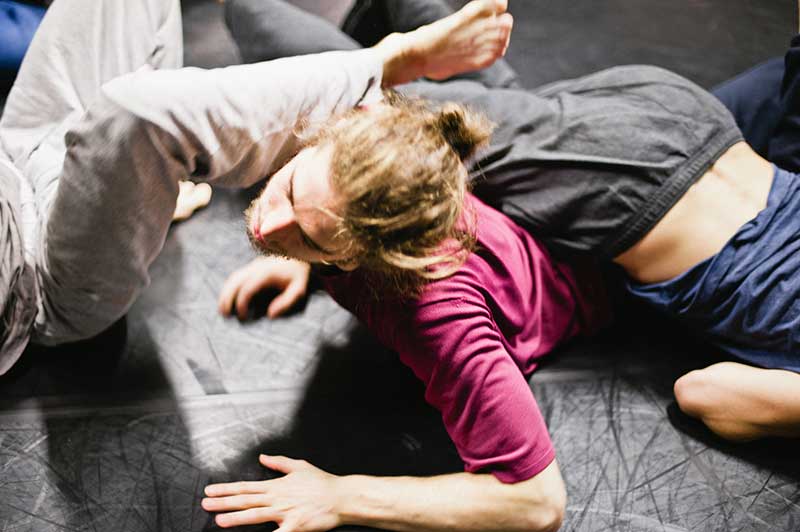
Hagit Yakira attracted full houses for her exciting new work, four talented performers falling, recovering and supporting each other, as they take what life throws at them. Their eyes and faces are as important as the rest of their bodies as they look out for each other. Yakira says she invites her audience “to experience the unravelling of real life experiences”. What I loved, though, was the synthesis – the building up of the elements that make up this seemingly simple but actually complex work performed on a vast bare stage.

One eloquent male dancer repeatedly falls and rights himself, while uttering the words "fall" and "recover". He’s joined by a second male dancer, full of solicitude for his partner, whom he repeatedly lifts and allows to slip away. A female dancer joins them and composer and multi-instrumentalist Sabio Janiak adds his serenely plangent music to the mix. A second female dancer makes a quartet and all four display the same solicitude for whichever of them is falling – clearly making recovery possible, not just by supporting them physically, but with the empathy in their expressions. I thought of the motto of the Three Musketeers (with D’Artagnan also four of course): “All for one and one for all”. The space is vast but they crisscross through it all. Janiak adds percussion too – and sometimes takes away his music leaving just the dancers in their loose, pastel clothes. It's moving, telling, soothing, startling and always engaging. The dancers are Sophie Arstall, Fernando Belsara, Stephen Moynihan and Verena Schneider.

free-falling2

free-falling2

In a beguiling addition, three dance artists respond to Free Falling – a different trio each night. The night I went there was a considered response from Dr Emma Dowling on video and an immediate response from Rosemary Lee, a choreographer and creator of extraordinary large-cast community pieces for dancers of all ages. It was fascinating to compare Dr Dowling’s conscientious onscreen response with Rosemary’s joyful movement through the space, retracing the footsteps of the dancers and throwing down pages from her notebook in response to what she had seen and experienced in each spot.

Between these two came the response from dancer Rachel Krische, drawing on the movement quality choreographed by Yakira for the quartet, but relating to members of the audience – using them as her dance partners, first touching, then asking for more – for support and the intertwining of limbs. And finally, gloriously climaxing in full audience participation on the studio floor – everyone linked in a joyful dance – a sort of Hora at Sadler’s Wells, which makes Israeli dance so welcome. Hagit Yakira is a name to watch – and JR will be watching out for more Israeli dance at Sadler’s Wells.

By Judi Herman

Photos by Loy Olsen and Kiraly Saint Claire

Free Falling was presented as part of Wild Card, a series of specially curated evenings at Sadler's Wells Theatre from a new generation of dance makers, bringing fresh perspectives to the stage. www.sadlerswells.com

To read more about Hagit Yakira and Free Falling, click here http://www.hagityakira.com