
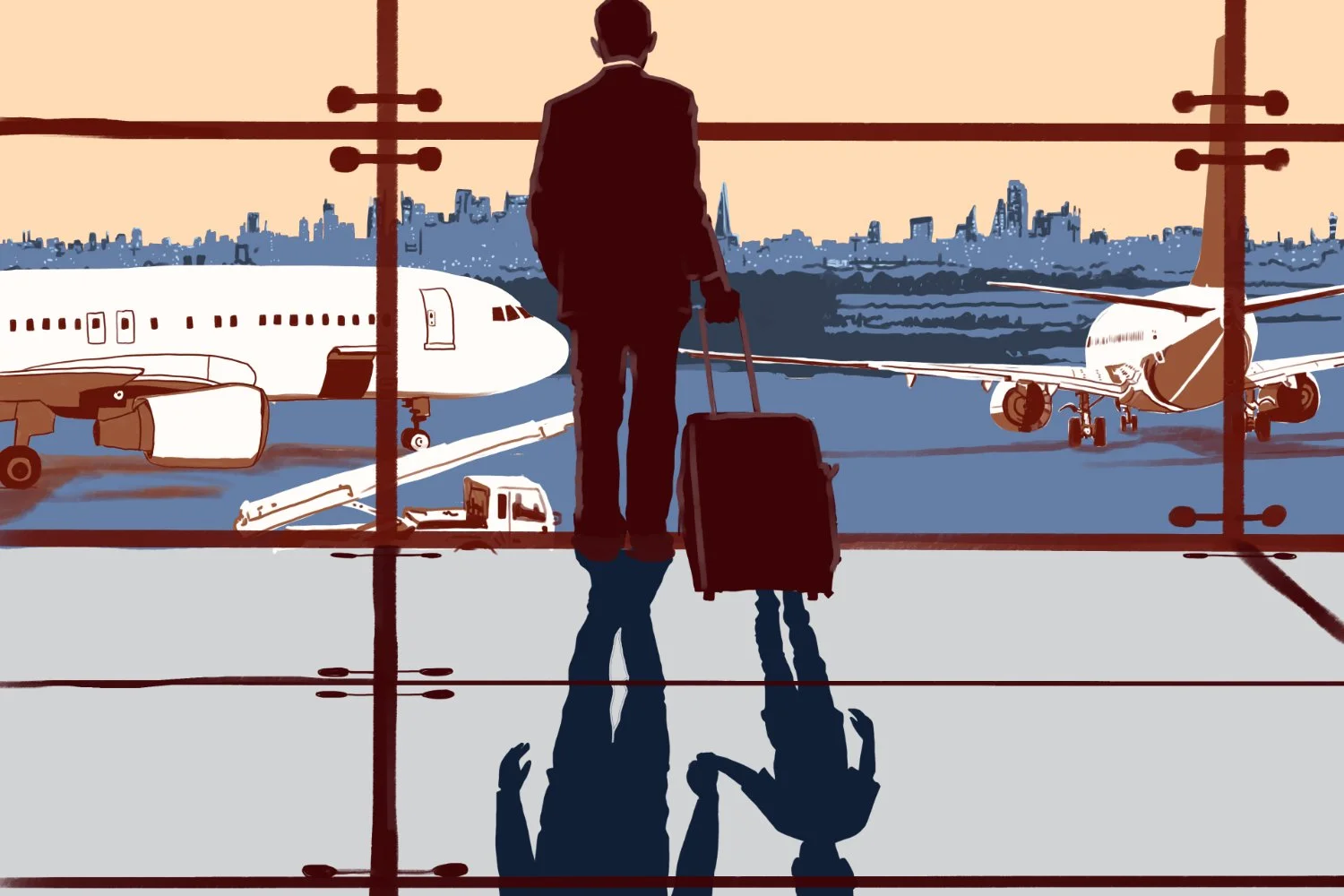
To mark our 25th anniversary celebrations, we asked the 2025 Booker-shortlisted writer Ben Markovits to explore the idea of identity in whatever way he wanted. The resulting short story touches on themes more widely developed in his latest novel, The Rest of Our Lives, and offers a powerfully elegiac reflection on family and belonging.
At his funeral, which was in Palo Alto, I told a story about my father which I don't think landed. It's a long flight from London, I wasn't at my best. Also, I was going through a rough time, in the early stages of what turned out to be an amicable divorce. It bugged me that I had to go to the funeral alone. David was in the middle of A levels, his exams were a month away, and Esther didn't want him to come. We had one of our first big fights about it, one of our first big unforgivable fights. I said, in that case, I don't know why Julie can't come. But Julie didn't want to and Esther didn't take my side. She said they hardly know their grandfather, which was true. I said this is their chance to learn something about him. But things were already lining up the way they eventually went.
The service was in Alta Vista funeral home, sixty acres of parkland, dotted with trees, all of the lawns expensively maintained, a cutting-edge crematorium, etc. One of those beautiful facilities which, after you've lived in England for too long, just looks like another example of the fact that rich Americans think they can spend their way out of everything, all of life's little unpleasantnesses. And of course, the weather was paradise-flavoured, northern California-style – heartbreaking blue skies and seventy degrees.
My sister had made the arrangements. She was living in San Francisco, working at MoMA, so when dad took the gig at the Hoover Institution – it was a kind of unretiring retirement, where he chaired several committees and continued to give talks around the world – they started spending real time together.
For those of you who don't know me, I began, I was his eldest child. Which means I was his first disappointment. He thought I had made conventional choices and opted for a conventional life, just to get on his nerves … I was trying to be self-deprecating but could tell I didn't have the room.
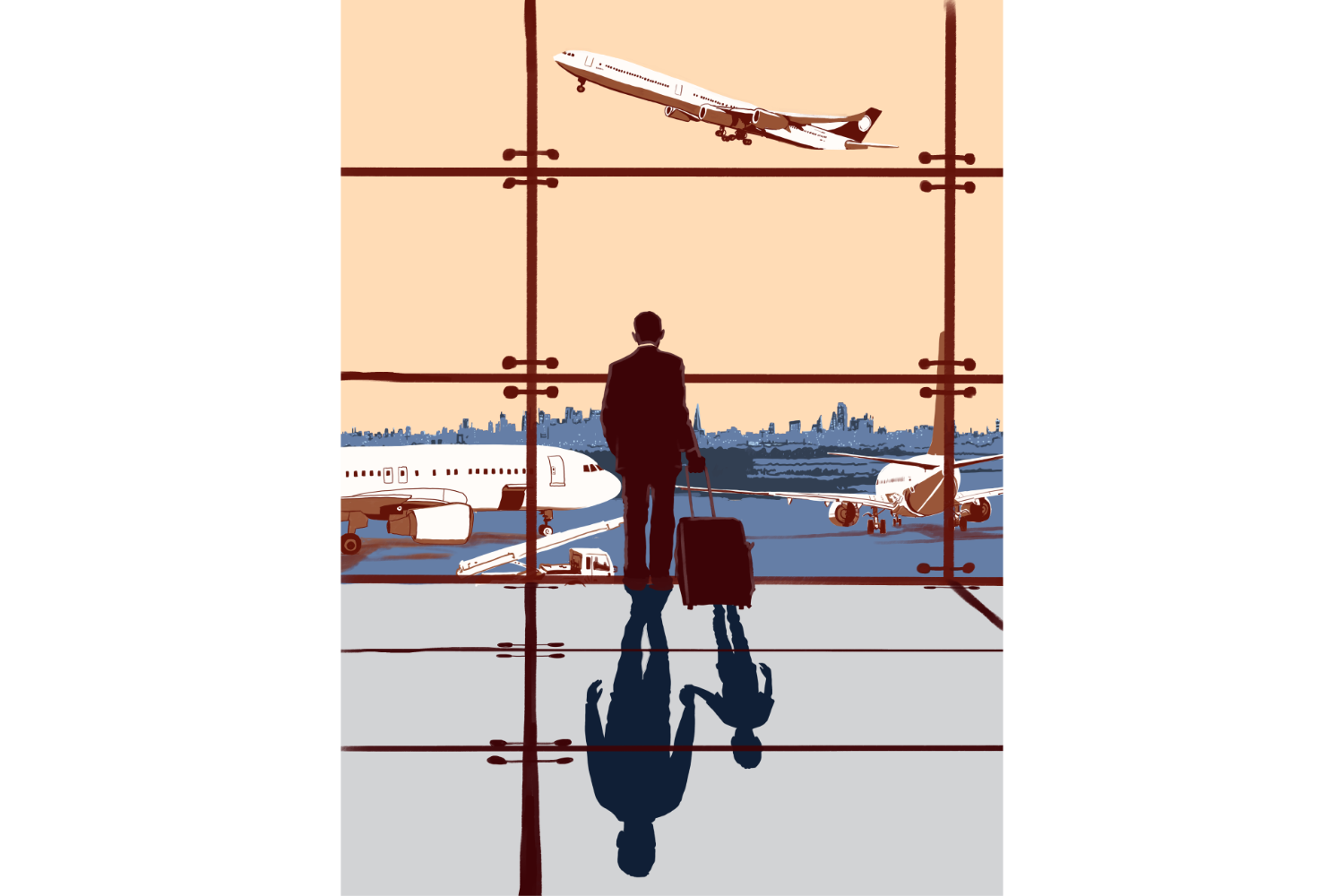
Anyway, this is the story I told. Once, when Dad was coming through London, he asked me to pick him up from Heathrow. Of course, he had a travel budget, he flew first class, he never had to pay for anything and could have requested a chauffeured limousine, which meant that when I had to get up early to drive through rush-hour traffic, find a spot in the short-term car park, and meet him coming through immigration, with a bag of drinks and Danishes in my hand from M&S, which I didn't touch because I was fasting … he was actually doing me a favour. But since he was in town for only thirty-six hours, the drive from the airport was the time he had to spend with me. Also, he still thought of himself as the kind of person who liked to slum it, who preferred family to flunkies, who didn't always need to be surrounded by adulation.
Well, he didn't get adulation from me.
So I pick him up on a Wednesday, it's eight a.m., he's just come off a ten-hour flight, and he says to me in the car, what do you want to do this morning? I'm free until lunch, when I have to be at the Athenaeum, but that's not until one o'clock. So I say, Dad, you probably just want to go to bed, right? You just got off a plane. And he says, come on, this is our time together, what do you want to do? He always travels light - he wears a suit for the plane and carries a change of clothes, toiletries, his medicines, in what he still calls his Gladstone bag, which he bought when he spent a couple of years at the LSE, which is also when my mother had me.
Okay, I say, since you ask … has it occurred to you why I'm not at work? This was in the early days of my marriage, when I still went along with Esther's view of our life together – when the kids were small. It's Yom Kippur. There's a family service at ten, I figured you'd probably be asleep anyway. The kids are off school, too, we're all going to go.
Let's do it, he says. I'm in. If that's what you want to do.
I remember that phrase because I reported it back to Esther at the time – if that's what you want to do. Dad was born into all this – much more than me, because it played no part in my childhood, and of course, my mother's family in LA … that was always one of her attractions … had been secular Jews for at least two generations. But this was the world I had chosen. And on some level he must have understood it as a rejection of his own life choices, which partly explained his relationship with Esther, but also with me, and what I understood to be his reading, not just of my marriage, but of, oh, hundreds of my decisions from high school on that I can't even begin to enumerate. That I had decided I couldn't compete in his world and so had opted for another kind of existence, which I had.
“The guy could pray, on top of everything else”
So we pull up in front of the house and he climbs out, in his Savile Row suit (actually, I shouldn't pretend to know where he bought his suits) with nothing for the kids … and ten minutes later, he barely has time to go to the bathroom, we all get back in the car. It's a short drive to the synagogue, and I watch my father looking out the window. We cross over the North Circular and pass a shopping mall and then enter a network of residential streets, the crescents and park roads, the lanes and avenues and courts, of suburban north London. Mock Tudor frontages and crumbling garden walls, pebble dash and purple bricks, old dormer windows and rows of garages…
My in-laws live on one of these streets, and Esther says, "The great thing is, you can park anywhere. It gets busy on the High Holidays of course, but even then, we can usually squeeze in at my parents' drive, which is a luxury – only round the corner." Of course, I hear him hearing her, too; thoughts like these are her way of loving the world she has chosen for herself … even if it's not far from the one he grew up in, and ran away from, in Cleveland Heights. And so, taking her side, I say, "We wanted to move out here but the schools are better where we are."
"Is that so," he says, and for a moment I hate him and love her.
At first there's some problem because we don't have a ticket for him, but he manages to talk his way in, which is one of the things he can do. And then the service begins – he has to borrow a yarmulke, and a clip, too, because as usual he's let his hair grow wild and white around the sides, around his bald scalp – and with his long arms, and unembarrassed voice, he's chanting the Avinu Malkeinu, he's swaying and praying, and I look at him and think, who is this man?
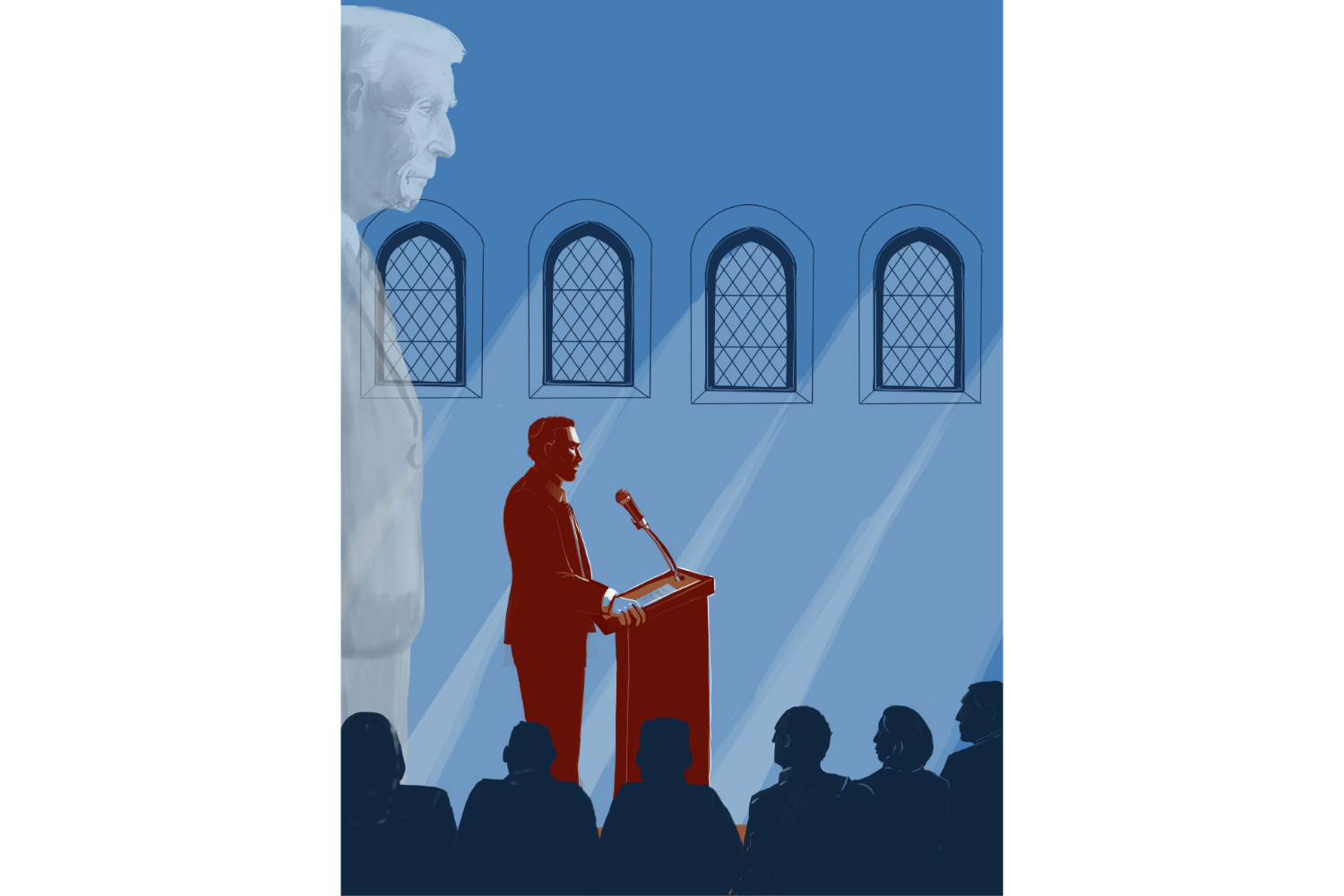
You could see in the bone structure of his face a kind of hungry eagerness, the history of a long line of scholars, though in fact, I think in Budapest our family were mostly peasants and labourers. But I did the math. According to his body clock, California time, it was three in the morning; he was seventy-four years old. But he knew all the songs, all the prayers, much better than I did, and oy oy oy hat der gedavent. That was the punchline of my story. That the guy could pray, on top of everything else.
So why was I telling it? To get back at my sister for something? Maybe. In the non-denominational chapel at Alta Vista … the song we played as they slid his body into the fire was 'Si tu Vois ma Mère', by Sidney Bechet … just that sad happy phrase over and over again, so you don't know which of those feelings is going to win, until somehow, by the end, you still don't know but it's okay. Susan's choice. When she made her own speech, she said, just substitute 'père' for 'mère', and got a laugh. Because this was her crowd as much as it was his. World-travelling academics, politicians, artists and curators … his students, still hoping that some contact with the famous man would rub off on their careers, even after his death.
But … I don't know. That wasn't the only reason. On the long flight home, I suddenly broke down … couldn't stop crying. Just for two minutes, that's all, under the white noise – I hadn't really slept in three days. Of course, no one noticed; it was the red eye, everyone around me was out cold. And what was I flying home to? A breaking marriage, a fatherless world … But still I kept thinking about that morning at the synagogue, that stupid story. What had he been trying to tell me? Quit this foolishness; you think you can beat me, even at this? Fat chance. Or maybe the opposite. You're doing okay, keep going. I'm with you, son, in this as well. In the end, I must have fallen asleep because they turned the lights on, and stewards were coming round with the breakfast service. But it was good to feel his power over me again … that it still worked.
By Ben Markovits
Illustrations by Thomas Fournier
Benjamin Markovits grew up mostly in Texas and England, and now lives in London. In 2013 Granta named him as one of their Best British Novelists Under 40. A new novel, Starting Out, will be published by Faber in April. faber.co.uk