

Serena Kutchinsky's search for her father's vanished £7m jewelled egg is a tale of obsession, scandal and chutzpah
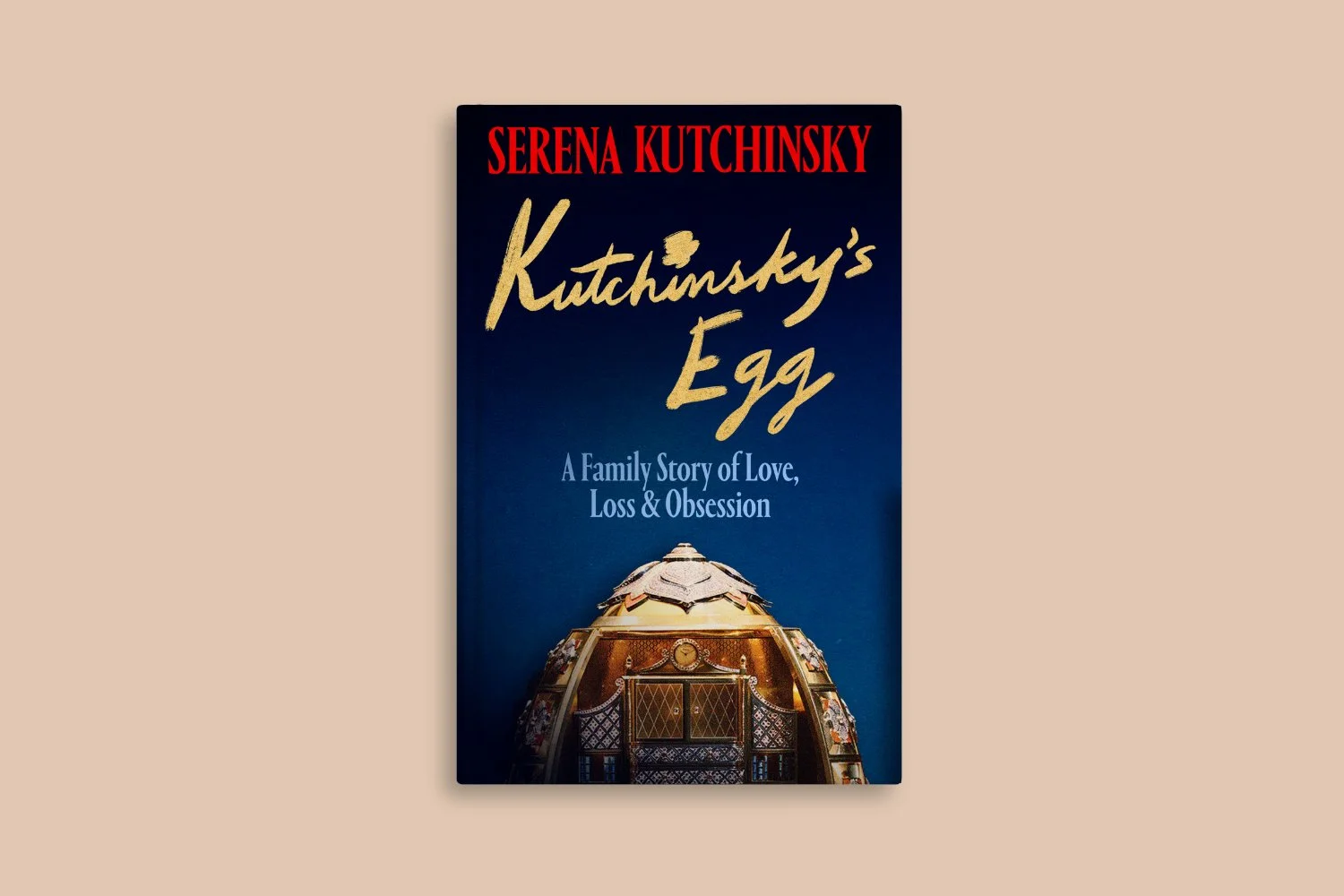
Serena Kutchinsky's dad had a singular obsession: he wanted to make the most valuable jewelled egg ever created. He almost pulled it off as well, designing and crafting a ludicrously ornate giant egg and then parading it around the world in search of a buyer - he even appeared on Wogan in 1990 and had a launch party at the V&A. But nobody was prepared to spend £7m on Paul Kutchinsky's egg - officially titled The Argyle Library Egg. The failure cost him his business and, amid the fall-out, his marriage. By the time Paul died in a car crash in 2000, the egg had disappeared.
Relocating this cursed object is the impetus for journalist Serena's first book. It is a story of two halves - the second half is about the egg, but before that is a fascinating exercise in family history. Serena takes the tale back to her greatgreat-grandfather Hersh Kuczynski, a watchmaker in Grabów, Poland, who joined the throngs of Jews escaping the pogroms. Hersh dreamed of the US but ended up in Whitechapel, where he began fixing clocks and watches. Hersh's son, Moshe, upped the ante, opening a jewellery store on Commercial Road. Serena pulls together their narrative from official records, using imagination to understand what her ancestors must have experienced.
The story really picks up with the arrival of Jo, Hersh's grandson and the author's grandfather. For want of a better word, Jo was a rogue. In 1939, he teamed up with Elias Lipschitz, a Jewish businessman who'd developed a thriving sideline offering false evidence of epilepsy so men could avoid conscription (for £300 a pop). Fingered by the police as "crafty and unscrupulous Jews", Jo and Elias ended up in Brixton Prison at the same time as Oswald Mosley.
Astonishingly, this may not have been the first time Jo crossed paths with the Fascist leader. Family lore stated that before the war, Jo paid Mosley to use his European connections to obtain visas for his brother's family to escape Belgium. There's no direct evidence of this, but Jo always swore it was the truth. Jo's wartime spell in prison, however, remained a secret even from his own children. He spent seven months in captivity, pleading that he was the victim of antisemitic conspiracy: "They need a Dreyfus - here I am," he is quoted saying in the transcripts of committee hearings, with impressive chutzpah. He later served in the medical corps but managed to get out early thanks to an unspecified medical issue.
Paul Kutchinsky with The Argyle Library Egg © Roger Taylor
Jo was sly, but ambitious, a good businessman and talented jeweller. After the war, he expanded the family business, but again with an element of subterfuge; his mother, Hannah Wetzler, came from a family of prestigious German Jewish jewellers. When their business was closed under Nazi laws, he claimed its royal heritage as their own. Jo moved House Of Kutchinsky from the East End to Knightsbridge as the firm prospered, developing a reputation for creating extravagant, joyful brooches, often modelled on animals and crammed with precious stones.
Into this world of peacocking and deception arrived Serena's father Paul, the younger of two sons but favoured over older brother Roger – a rivalry that continued when Roger refused to speak to the author, his estranged niece. Given this familial context, Paul's desire to make a Fabergé-sized statement was clearly an attempt to impress and even surpass his domineering father.

Serena Kutchinsky with Reiko and Takashi Mabuchi, who donated the egg to the National Museum of Nature and Science in Tokyo © courtesy of Serena Kutchinsky
The story of Paul's challenge getting the egg built is well told, with the author uncovering further scams and schemes and long-standing grudges. The two-foot egg - made of gold and covered in pink diamonds - opened to reveal a tiny rotating library and gallery featuring portraits cut from Serena's school textbooks. Unfortunately, the opening mechanism didn't always work as intended and the egg's problems intensified as buyers died prematurely or balked at the £7m price tag.
Serena traces the desperate spiral as things go wrong, with the story pieced together from her own memories, interviews with her family, Paul's colleagues and even the woman with whom he was having an affair. As teenage excitement gives way to confusion, sullen resentment and then grief-fuelled anger, Serena's determination to confront her own historic demons drives the narrative forward, finally leading her to Tokyo to crack the mystery of this Kutchinsky's dramatic treasure hunt.
By Peter Watts
Kutchinsky's Egg by Serena Kutchinsky is out now (Gallery Books, 2026, £20). simonandschuster.co.uk
This article appears in the Summer 2026 issue of JR.