

The creative mind behind the multimedia marvel Seder opens up about his rural childhood, intergenerational trauma and finding more light in the dark
What started almost a decade ago as a collection of poems entitled Seder, inspired by author Adam Kammerling’s family history, has transformed into an unstoppable train of compelling creative output. The project not only touches on the tentacles of grief that feel their way through generations, but also the ways we choose to hold that trauma and effectuate it every day. The current Seder tour played its final night in London last month, but we sat down with the artist to find out about the future of the show, as well its beginnings.
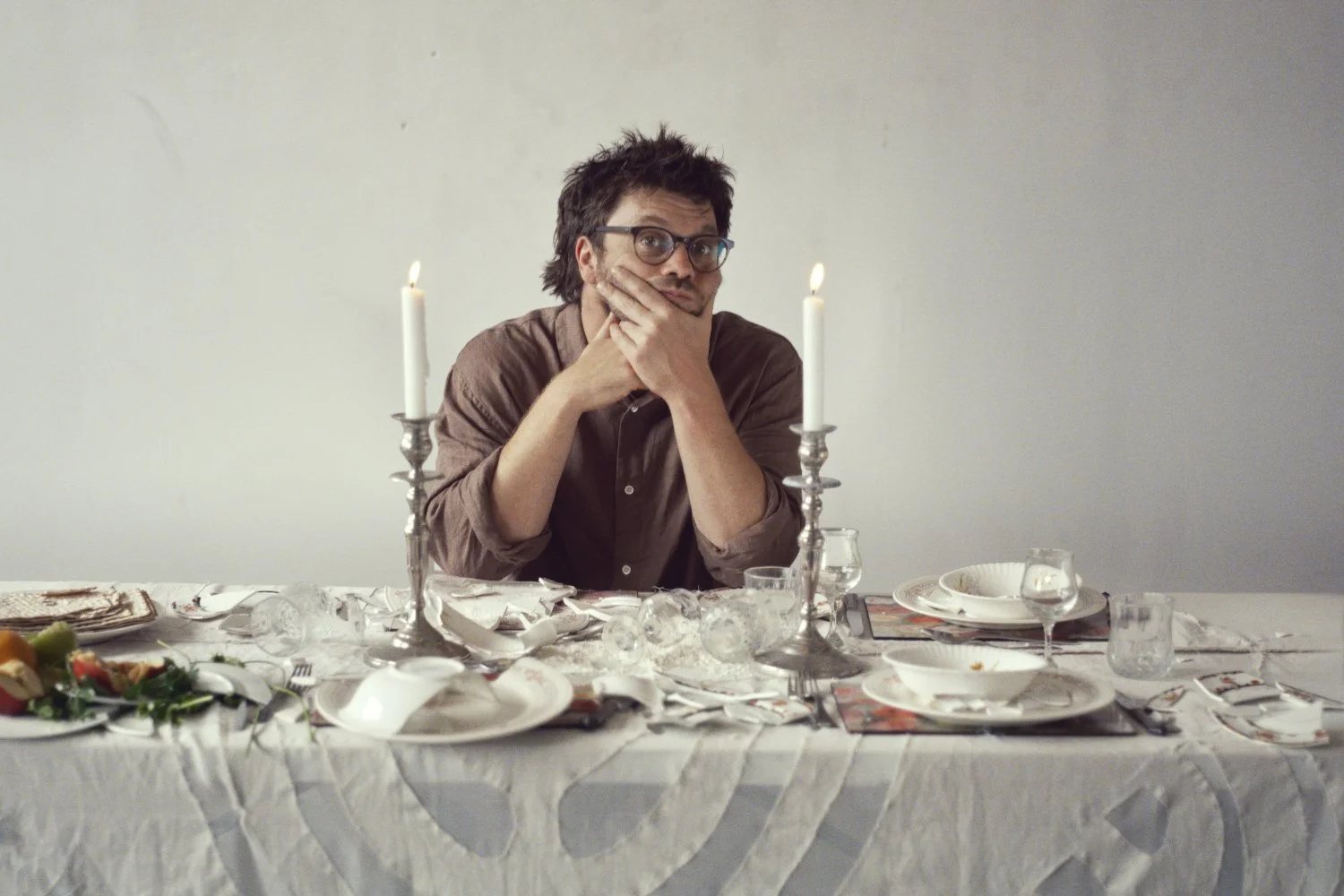
© Laura Pannack
You’ve been working on Seder for quite a while. When did it start?
The show started in the pandemic, in 2020, but the project started some years before that. In 2017, I met with the publisher of the book, because the piece began its life as a poetry collection, and asked if he'd be up for working with me if I explored the connection between Judaism and heavy metal. I was already doing collaborative work with dancers and musicians, so I thought why not explore the potential of this collection to be a collaborative piece as well – because that's what my [main] practice is. So, we all learnt to use Zoom and produced something. When we were going to tour it in 2023, it all kicked off [7 October]. The tour got cancelled [due to safety concerns], so we took that skeleton and redeveloped it over an entire year and a half to what you see today.
How different does Seder look now compared to pre-2023?
The previous piece was essentially the poetry collection, which worked to reposition Holocaust history in Jewish identity. My Jewish identity is very rooted in my grandparents’ house, their community practices – the way they did Judaism – and it's abundant, joyful and welcoming. Yet at the same time there's this inescapable Holocaust shadow. It's present in everything that you're doing, but it's not spoken about and that’s not healthy.
Initially the piece was about decompartmentalising those stories, but when 7 October happened, we went into rehearsals and made something in response to that. It was difficult, because I was doing a lot of personal work, which is [touched on] in the piece, with regards to shame and reckoning with my connection to Israel as a safe space. I had to think: what do I want this story to do in the world? What's going on is obviously horrific and somehow my story is tied up in it. So I went back to it, really tried to take agency of the story and consider what this dissonance is as a British Jew. The show has changed hugely, but the one thing it's managed to hold onto is this idea that the binary doesn't work. The myriad truths that we're holding have changed. [One of] the only things that has stayed the same is my grandfather's story.
Intergenerational trauma is quite a well-trodden path when it comes to themes Jewish culture – why was it important to you to tell your story?
That's a question I’ve wrestled with throughout. It was always about trying to locate this intergenerational trauma in a space of joy, which is where I held every other aspect of my Jewish identity. Obviously that's a massive challenge. I have these two huge orbs that make up my Jewish identity: one is incredibly dark and one is incredibly bright. How can we use some of the light to reduce the density of the dark one? That's why [I wanted to tell my story]. I hadn't found or experienced much in [the telling of] intergenerational trauma that located that darkness in a joyful space. When I brought in collaborators, no one was Jewish and, for me, there was something in the Seder that had been a really useful tool to position this darkness in the ritual, the joy – to combine the orbs.
You expanded the collaboration beyond artistic practices to cultural and religious…
Absolutely. Bring your community in. Call your community to something that might not be theirs, but you see the benefit in sharing. That was always the case for me. Growing up, I think was the only Jew in the school, beside my brothers. If my friends were round on a Friday, [my family] were lighting candles and speaking Hebrew and [my friends] didn't know what was going on.
Would you say you had a strict Jewish upbringing?
No, no, no. We were members of the Bristol and West Progressive Synagogue and I look back on that space as being one of the first inclusive spaces that I can think of. It was so open: Jews, non-Jews, Christians, Jewish-curious, animal rights activists… It was such an amazing, wonderful and liberal space. So no, it wasn't strict at all. We did Friday night dinners and High Holy Days and I did my bar mitzvah, but we didn't keep kosher.
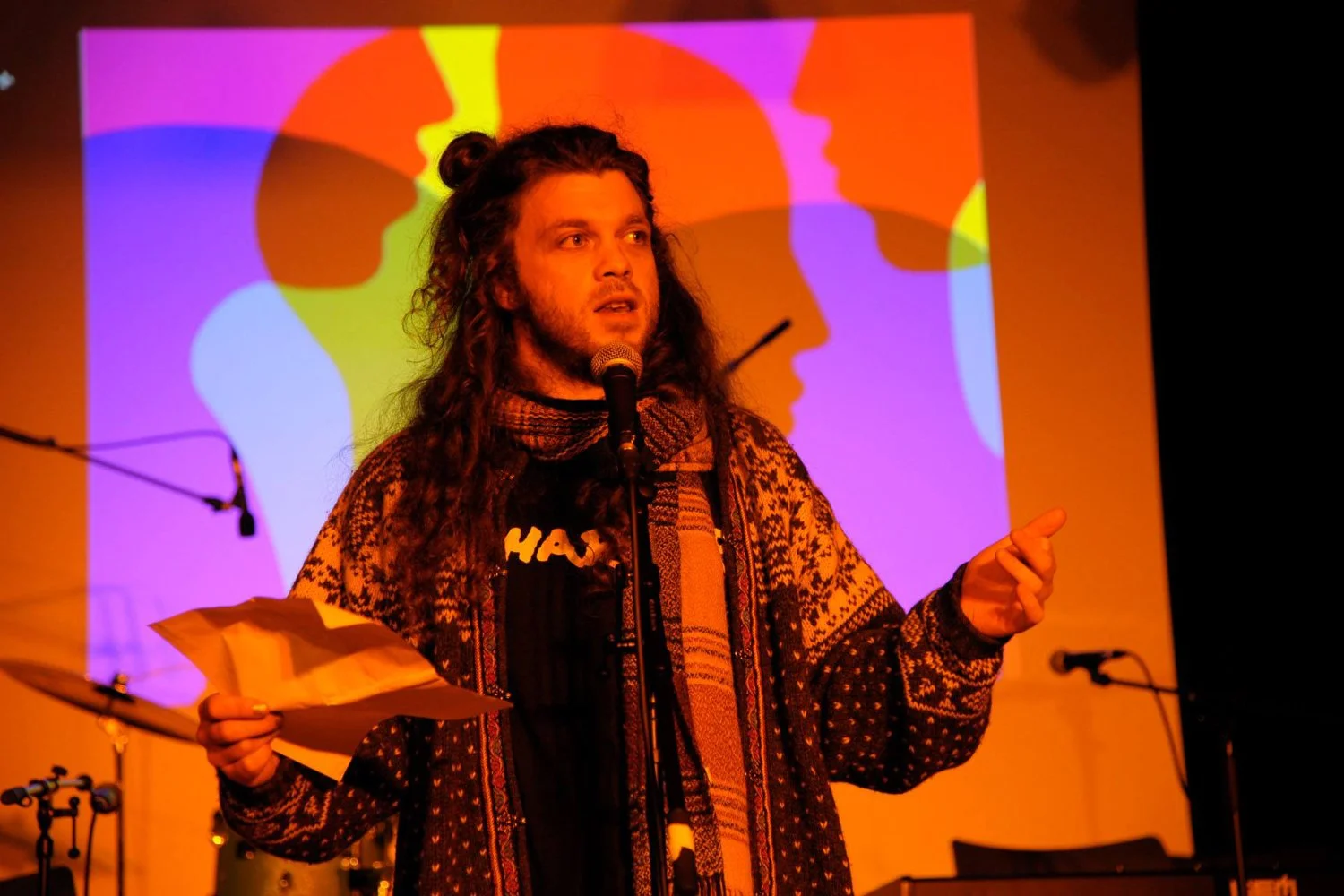
When it comes to creativity, you have many hats: poetry, storytelling, acting, rapping… How did you find them all?
It all goes back to Somerset, to a village called Lympsham, with nothing in it and nothing to do. I used to play guitar all the time – I don't know how my parents coped. I started a heavy metal band when I was 16 and tried to find other bands in the area to put on our own shows. We did one paid gig in Weston-super-Mare, they paid us £90 and I couldn't believe it. Obviously it was shambolic and terrible, but it was so engrossing and absorbing. I played in a band until after university [in Brighton]. I became frustrated in heavy metal, because the lyrics were always distorted. I loved it, but I also wanted to be able to tell stories. So I found myself in the hip hop scene in Brighton and I was doing poetry and gigging – not making a living, but I loved it.
The current Seder tour has finished, but do you have plans to reignite the show?
I'm actually about to have another baby, our second child, so we're going to pause on Seder for a while, but I hope I have the energy and support to bring it back. I think it's an essential offering to the Jewish community, and also the wider community, to really consider how we hold these stories – and hold them safely. How we look after ourselves when these [dark] stories are such an inescapable part of our identity.
By Danielle Goldstein
Header photo by Lou Morris Photography
Find out more about Adam Kammerling at adamkammerling.co.uk and read our review of Seder.