
Thirty years ago, a group of women artists brought Jewish identity to the Barbican. Now a conference at the Royal College of Art asks what has changed and what comes next
In the autumn of 1996, the feminist writer and campaigner Amanda Sebestyen headed to the Barbican's Concourse Gallery to review an unusual exhibition. Rubies and Rebels was the first show of its kind, exploring Jewish female identities in contemporary British art. Writing in the December issue of Make magazine, Sebestyen saw its potential as "an enquiry, a beginning a foot in the art world's door". She also noted how much of the work by the 20 artists focused on the past, as part of "a nowfamiliar search for foremothers".
Three decades on, Jewish Renaissance is marking the exhibition's legacy with a two-day conference in December, in partnership with the Oxford Centre for Life Writing at Wolfson College, University of Oxford, and the Royal College of Art. Rubies and Rebels: Past, Present and Future will feature several artists from 1996 - a muster of foremothers-alongside many who have emerged since.
JR's executive director, Aviva Dautch, sees this as the first of a series of recurring events. She hopes it will open up space for questions, as well as providing a home for complex identities and a place where creativity and craft are nurtured. "What do British Jewish artists need and where might we go to get it?" she asks. "How can we help each other? How can we build a community?"
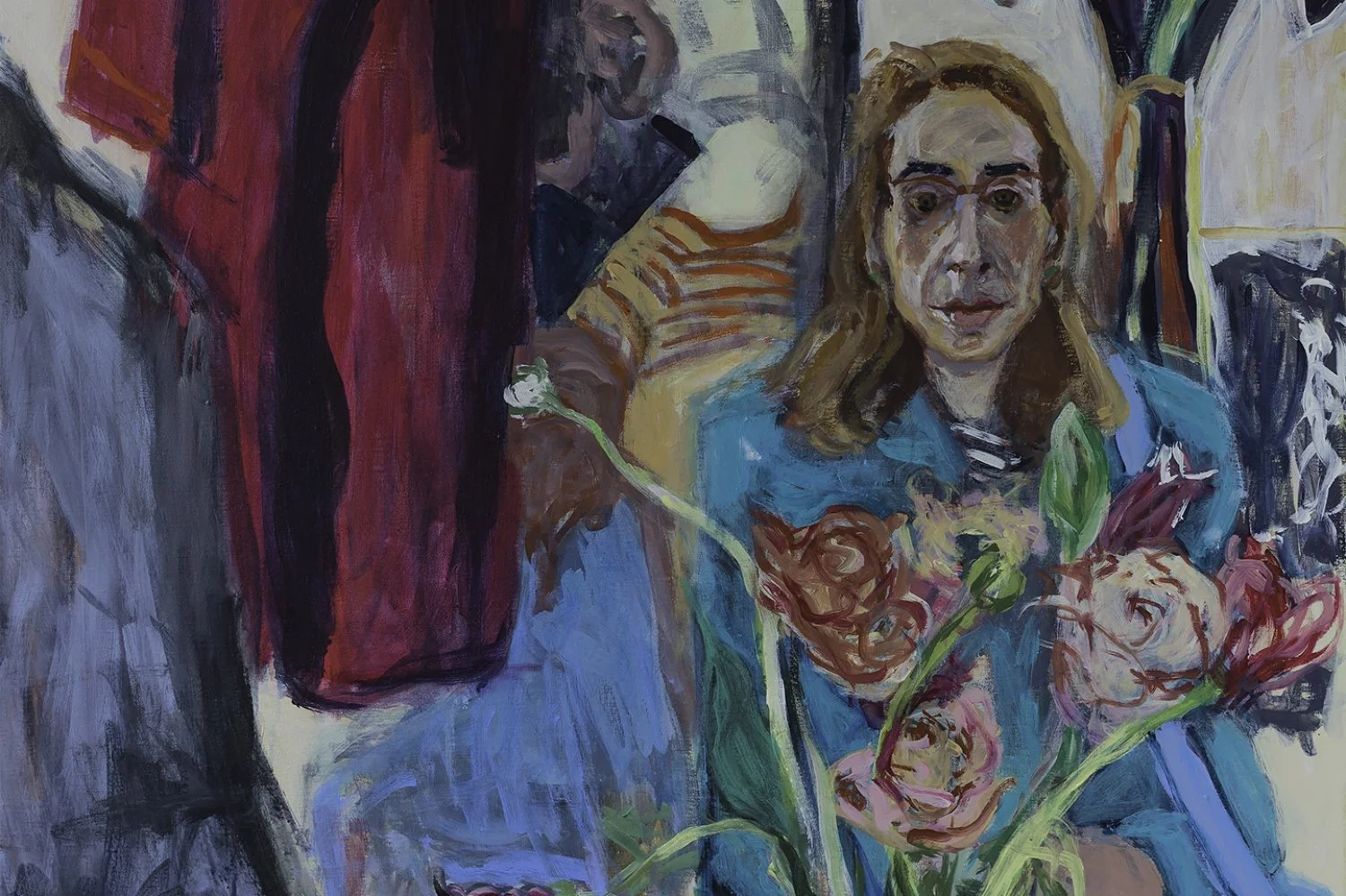
Reflections of City Life by Julie Held © Patrick Gorman
A GROUNDBREAKING SHOW
The 1996 exhibition was co-curated by the cultural historian and former gallerist Vera Grodzinski and the art historian Monica Bohm-Duchen. It came about at the suggestion of Rosalind Preston, a veteran organiser of Jewish and women's causes. In 1992 Jonathan Sacks, then chief rabbi, had asked Preston to review the critical issues affecting women's lives in the UK's Jewish community. To her mind, art was as significant an area of inquiry as domestic, professional and religious life. Rubies and Rebels was the result, and it took on a life and visibility all its own.
Grodzinski and Bohm-Duchen put out a call for artists, and 130 replied. "I was blown away," says Grodzinski, who was also struck by the diversity of practice and outlook that number represented. She and Bohm-Duchen eventually whittled the list down to 20, focusing on artists whose Jewish identity was most keenly reflected in their work.
One participant, the American artist Edori Fertig, who has lived in the UK since 1984, submitted two works on paper whose motifs referenced a chanukiah and a yahrzeit memorial candle. She says the exhibition was the first time she had confronted such themes on "such a public and large scale. I am secular but culturally identify strongly with my Ashkenazi heritage."
At the time, her work touched on identity, motherhood and loss. It later stretched to the notion of the portable monument, of identity as something you carry with you, like a bundle on your back. These days, Fertig says, it is about the shared human experience and "the need to build bridges beyond the confines of religion or place".
"My Jewish upbringing taught me to uphold core Jewish values of loving kindness (chesed), justice and charity (tzedakah), protecting the world (tikkun olam), and that every person has inherent worth," says Fertig. "These values need to be emphasised at the moment, as we live in a vengeful and divided world."

Edori Fertig with the piece Jacob and Bella, 2025 © Tod Jones, courtesy of Ikon Gallery
Rachel Garfield, research lead for the School of Arts & Humanities at the RCA and co-organiser of the conference, was also in the original show. She had been making large, semiabstract paintings that referenced Jewish ritual iconography, which she felt suited the exhibition's premise. Her work has since "gone through quite a lot of transmutations", including a PhD on contemporary Jewish identity in the visual arts at the turn of the millennium.
She notes that nothing like Rubies and Rebels has happened since, which she puts down to Jewish artists being caught in a double bind. "The wider art world is not very interested in Jewish identity. And the Jewish world is only interested in claiming Jewish artists if they're already very famous," she says. "It's been difficult for artists in the UK who are Jewish who want to talk about it because there's nowhere to show your work, nowhere to celebrate it."
Even in 1996, Bohm-Duchen had highlighted how this was the case for Jewish women. She and Grodzinski noted the complicated 'otherness' of the female Jewish artist: ill at ease within the gendered confines of traditional Judaism, and othered for being both Jewish and female in the non-Jewish world. This sense of unbelonging is precisely what the conference aims to tackle.
AN OPPORTUNITY TO RETHINK
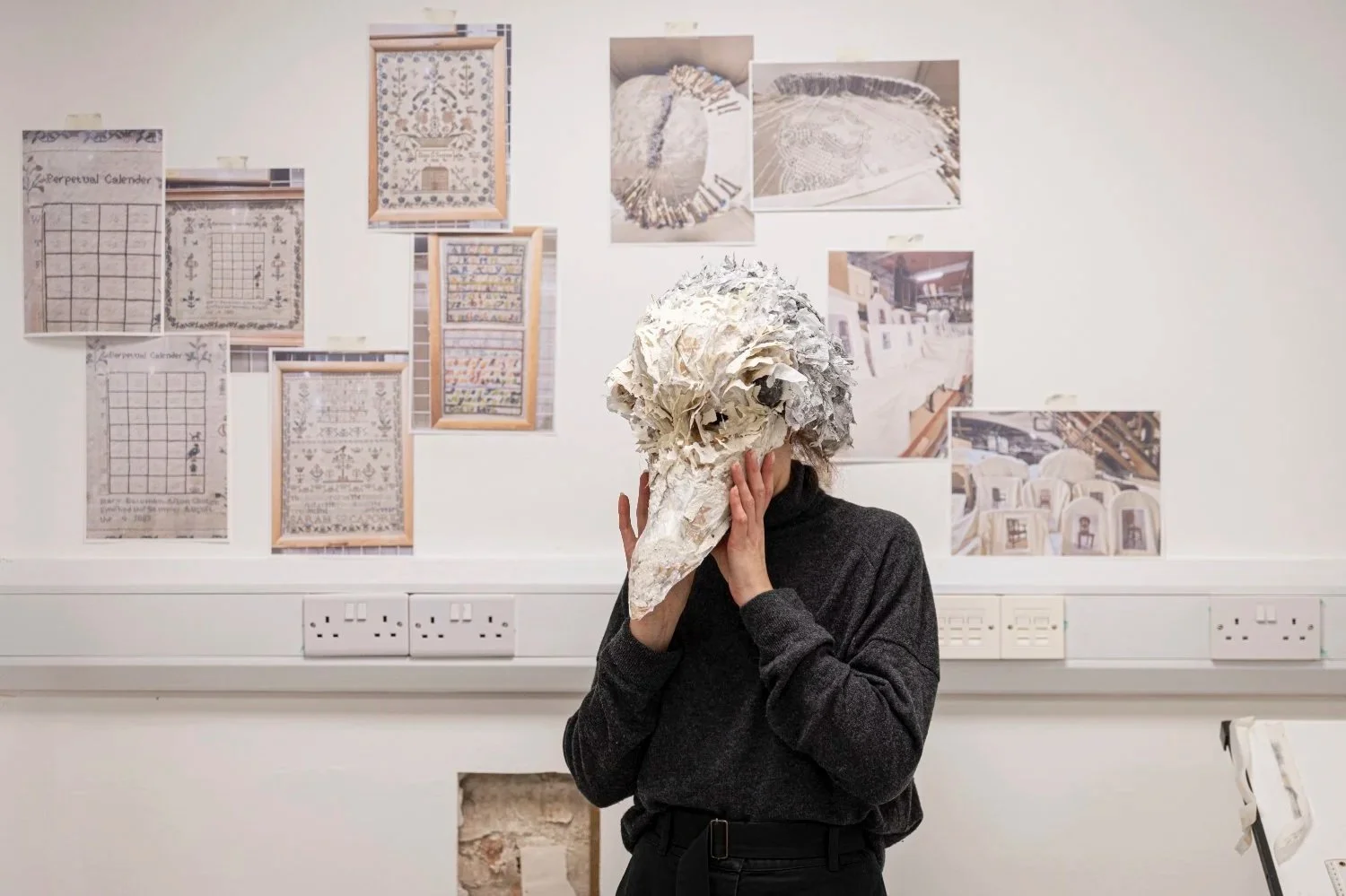
"At the conference art will be explored through a myriad of persepctives, from maternal lineage and hyphenated identities to individual relationships with We're saying, tradition and sexuality. Jessica Ostrowicz, an installation artist and one of the younger newcomers, is taking part in a session on gender, post-memory and inherited trauma. This, she says, is very close to the themes that run through her practice, in which she uses found objects, detritus and fragments to create installations that speak to a yearning for home and belonging. The photographer Sara Davidmann is interested to see how the conference will place the work of older generations in dialogue with her own and says it offers her the chance to explore "the issue of being from the 'generation after' the Holocaust."
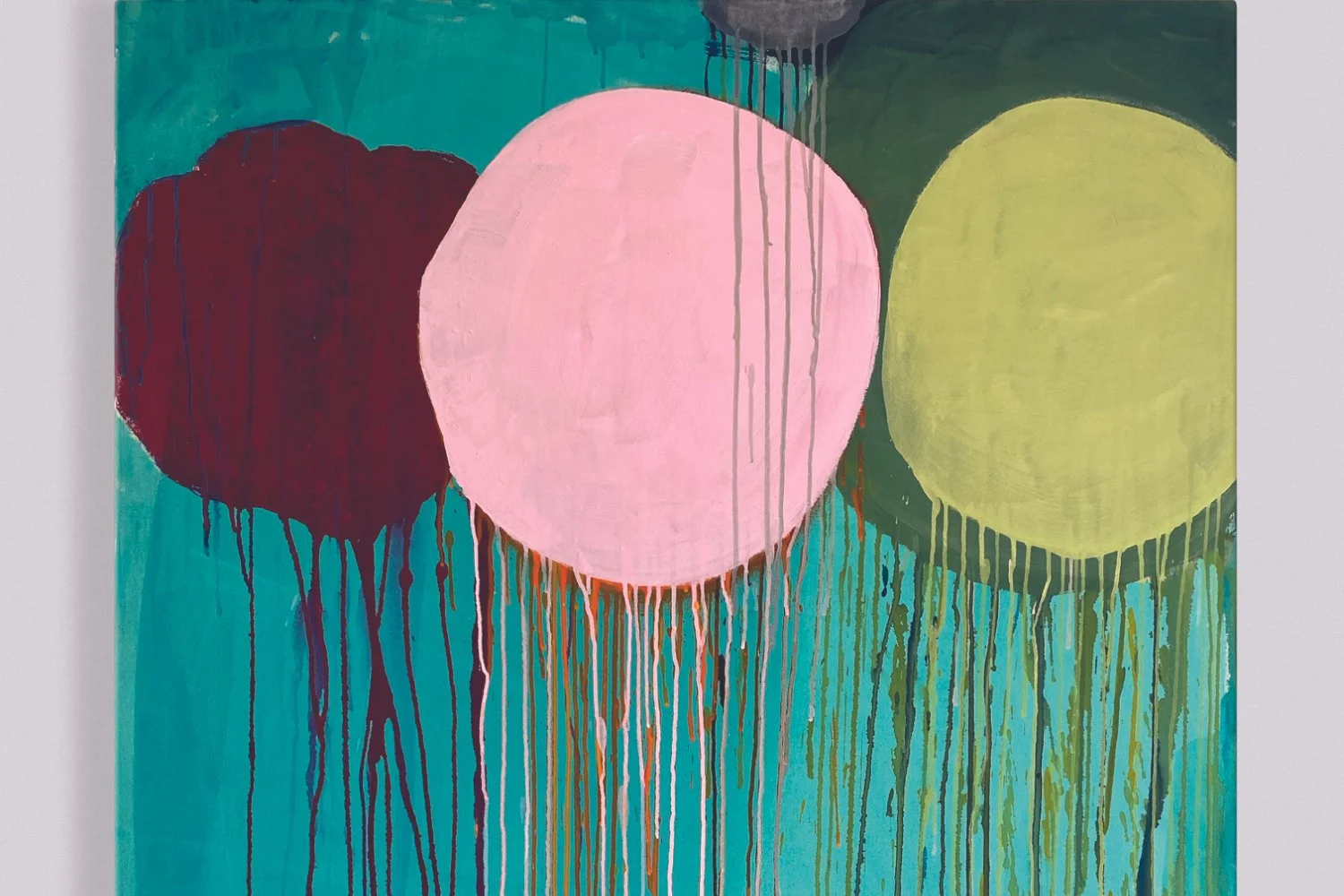
Extract of Balloons by Angela Baum © Angela Baum
Rubies and Rebels was "more about the identity of the artists than the art", says Dautch. The bigger questions, which the conference will open up for discussion, are: what makes art Jewish? And what do Jewish artists, women in particular, need in order to explore that? Apart from the artists, others sharing their thoughts and expertise include curators and organisers from the art world, including the curator and art critic Hettie Judah, Katrina Schwarz from the Whitechapel Gallery, Anna Mandlik from the Arts Council England and Maria Veits representing the Yiddishland Pavilion, at the Venice Biennale.
To Dautch, the key is facilitating conversations between people of different generations and walks of life. With a Chanukah candle-lighting at the end of both days of the conference, the event is also aimed at ushering in a sense of hope. "A lot that's happened in the past few years has felt very negative. There's been a big focus on fear of antisemitism. JR doesn't operate from that position," Dautch says. "Instead, we're saying, what can we do positively?"
Ultimately, Rubies and Rebels is about Jewish identity bringing richness to an artist's work. It is about Jewish culture in the making.
By Dale Berning Sawa
Header image: Masks made for the short film Moving Unrest by Jessica Ostrowicz © Tod Jones, courtesy of Ikon Gallery
Rubies and Rebels Past, Present and Future: Jewish Women Artists in the UK takes place Wednesday 9 – Thursday 10 December. 10am-7pm. Royal College of Art, Battersea Campus, London, SW11 4AY. jewishrenaissance.org.uk/ events/rubies-and-rebels
This article appears in the Autumn 2026 issue of JR.