
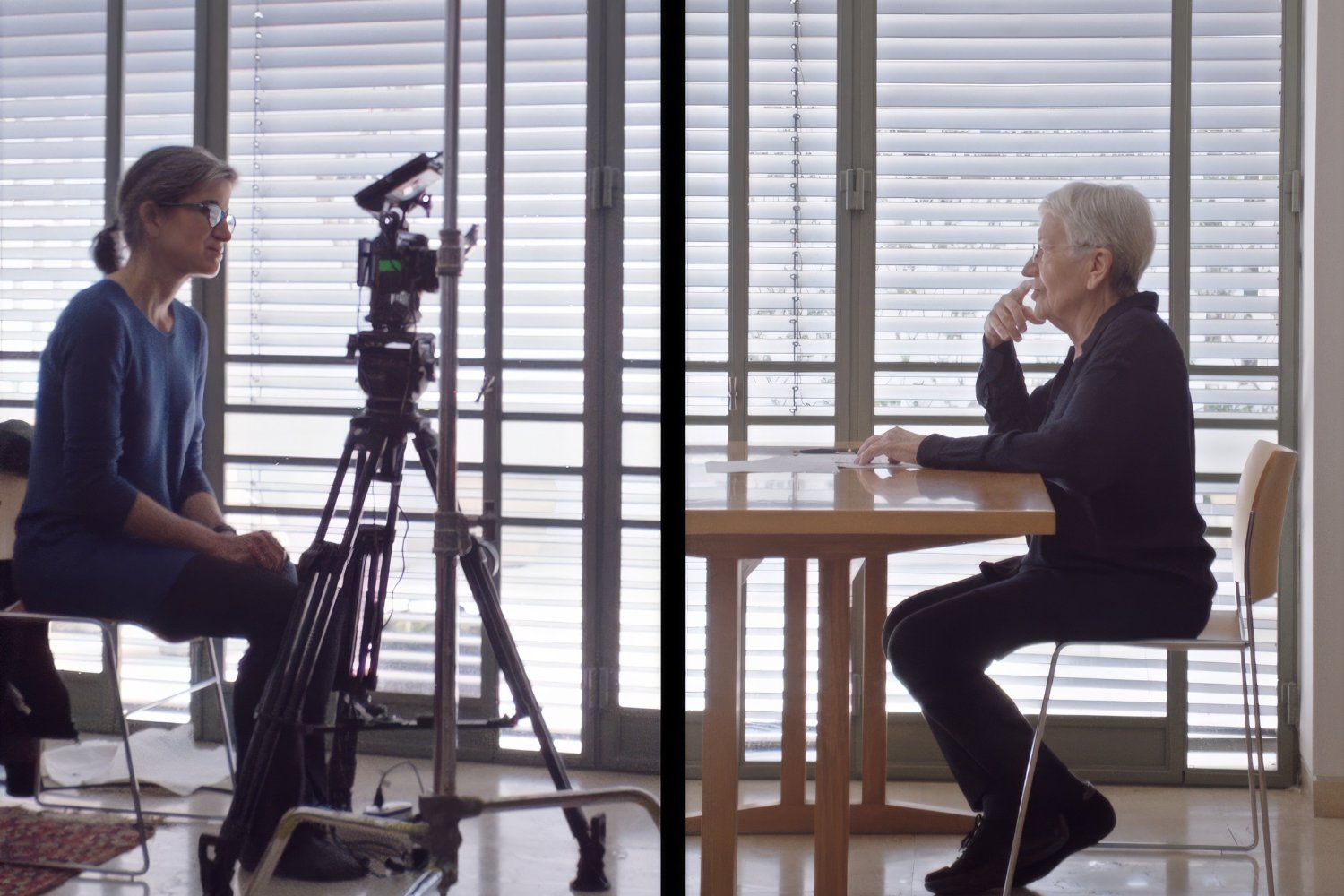
A new film turns the camera on Ada Karmi-Melamede, the matriarch of modern Israeli architecture. But behind the landmark buildings lies a riveting dialogue between an uncompromising mother and her director daughter
In her dazzling documentary, Ada: My Mother the Architect, filmmaker Yael Melamede explains that her mother, Ada Karmi Melamede, was "part of a family of architects" - including three winners of the prestigious Israel Prize- "which helped build Israel from the ground up".
Ada's father, Dov Karmi, was born in what is now Ukraine, but he moved to Mandatory Palestine in 1921 and played a crucial role in introducing modernist architecture to Tel Aviv, notably through a series of elegant apartment blocks. Her brother, Ram Karmi, adopted what Ada describes in the film as a New Brutalist style, which made him "the master of heroic, very concrete architecture".
Ada herself initially accompanied her businessman husband Amos Melamede to New York and taught at Columbia University for 14 years. But when sexism denied her tenure, she decided to return to Israel to join her brother's firm. They went on to beat many of the world's most famous architects in a competition to design Israel's Supreme Court.
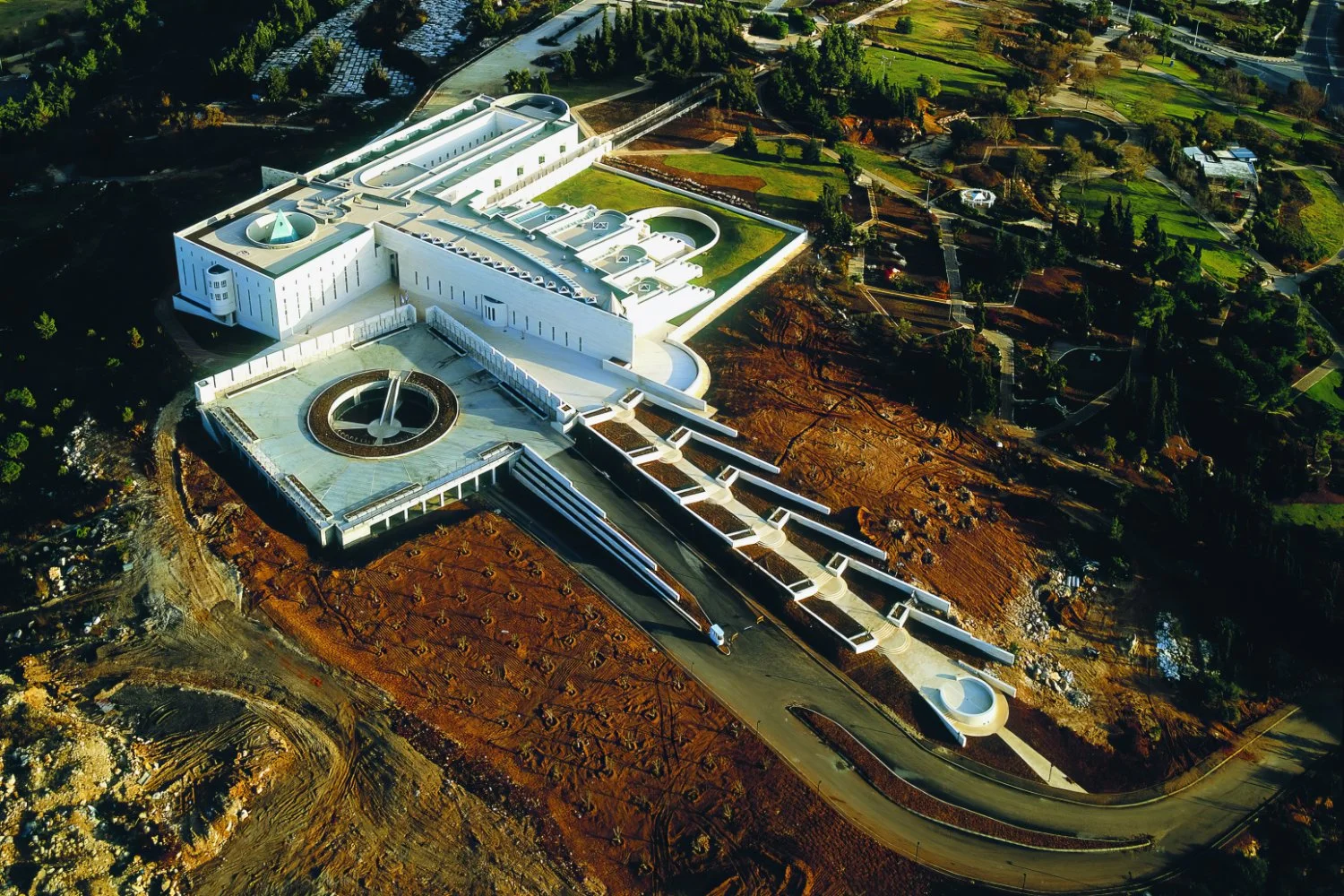
Aerial shot of the Supreme Court of Israel © Richard Bryant
But work on the project proved fractious: the siblings agreed on something, she worked up the plans and then he changed his mind. They had different conceptions of justice and how these could be translated into architectural terms. But once they finished the building, they agreed that the tension between them had proved productive, though Ada also decided she needed to strike out on her own.
Yael trained as an architect and worked in her mother's firm for about two years before quitting the profession to become a filmmaker. Her 2015 documentary, (Dis)Honesty: The Truth About Lies, draws on the work of the American-Israeli researcher Dan Ariely, while 2023's Floyd Abrams: Speaking Freely explores today's threats to free speech through the work of a pioneering attorney.
What all her films share, she explains, is an interest in "people who are completely obsessed by their work. Abrams sees the whole world through the law andthe importance of free speech. Ariely is obsessed with human behaviour and wants to improve it one bad behaviour at a time I can learn a different language from these people."
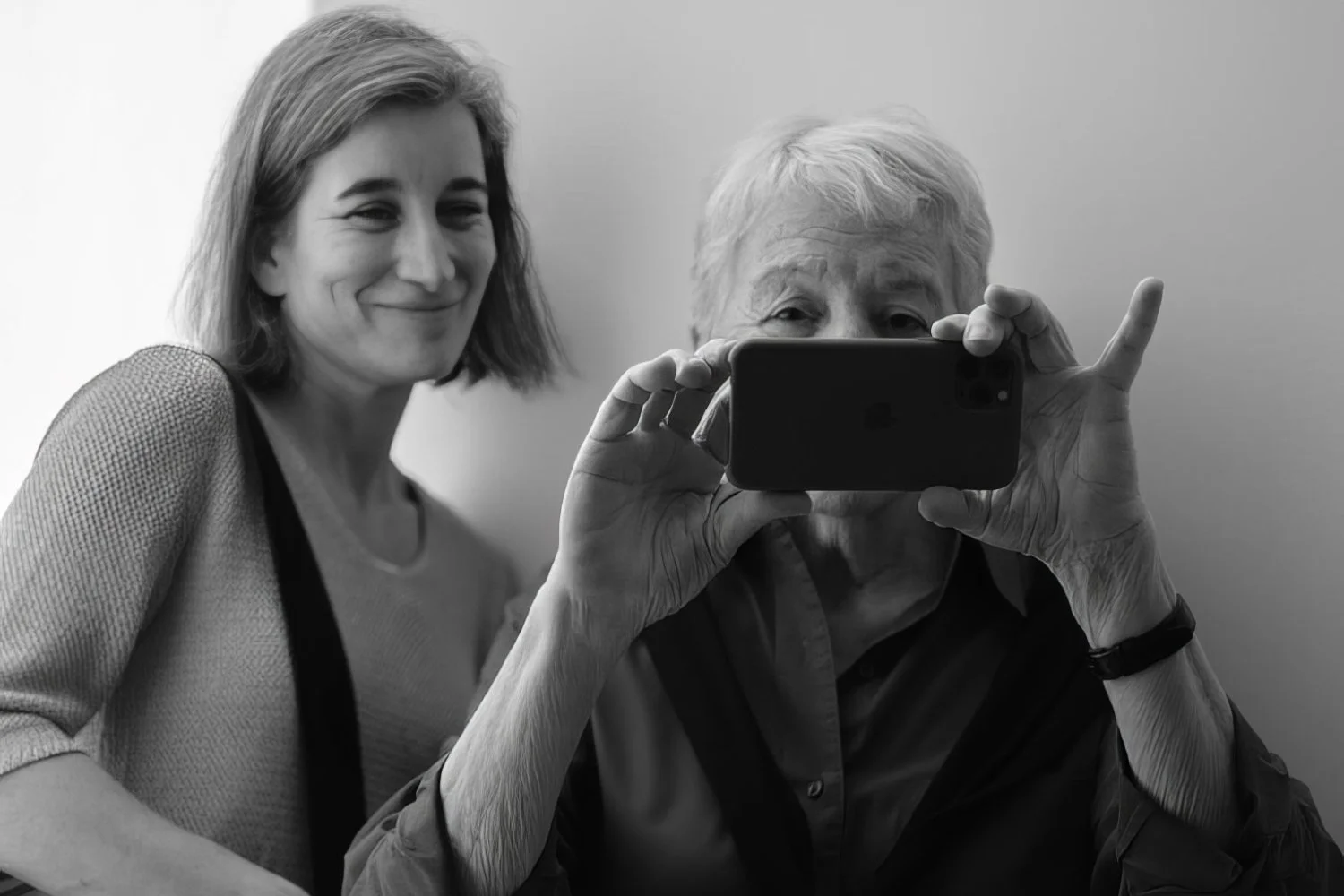
Yael and Ada © Tully Chen
Most of her film consists of Ada and Yael in dialogue, Ada talking and sketching, and giving her daughter guided tours of some of her major projects. Although evasive when asked direct personal questions, Ada is utterly compelling when discussing the details of buildings and her philosophy of architecture. A former employee remembers her wonderful dictum that "the cheapest building material is the light", while Ada explains why many of today's buildings "have no heart" and what is lost when an "open architectural plan" offers no clear route to direct people.
She also illuminates how architecture is entangled with the deepest human concerns. In one section, Ada reflects on what it means for a building to have roots, and why she gets bored with "all the glass towers that we are prisoners of", where visitors' connection to the sky and ground remains the same at every level. But she also explores why she feels rooted in the Israel of her childhood, when "idealism was the dress code" and "self" wasn't that important", since everybody's goal was to "fulfil the ideology that you were brought up with".
Elsewhere, Ada talks about what light and time mean for architecture we witness the emotional impact of changing patterns of light and shadow in one of her design projects, the Ramat Hanadiv Visitors' Centre, a nature reservation in northern Israel and this leads into a discussion about the process of aging.
At the heart of the film is the extraordinary Supreme Court. There is no attempt to overawe visitors and no sign of the kind of "bombastic lobby" one might expect, as one interviewee points out, but simply a "grand staircase" - and then Jerusalem opens out in front of you.
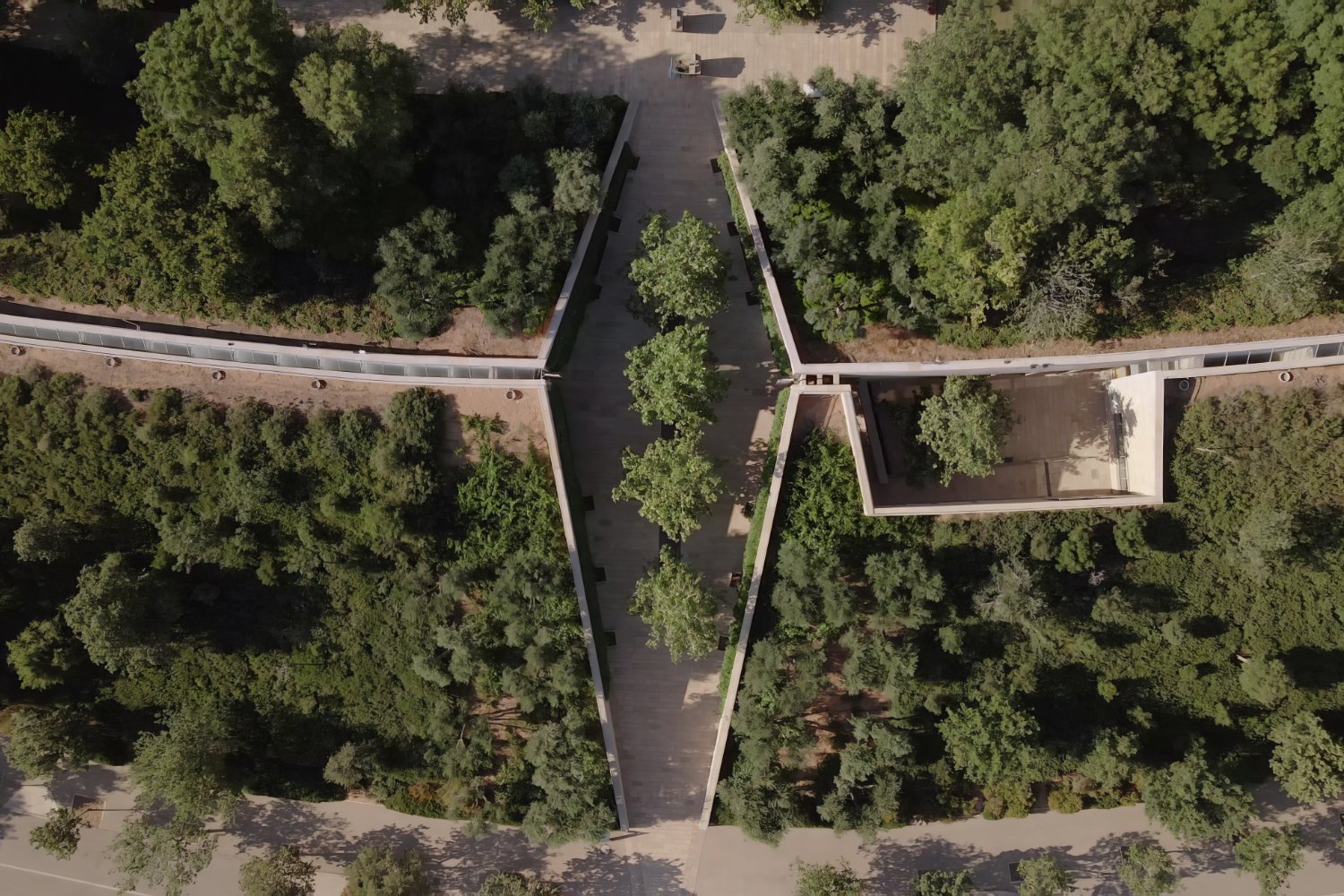
Aerial shot of Ramat Hanadiv © Daniel Kedem
At its inauguration, Yitzhak Rabin gave a speech saying that the Jews have flourished only when they have acted justly. Yet the April 2023 demonstrations, the largest in Israel's history, were precisely directed against the government's plan to weaken the power of the Court. So her own building is at the very heart of Israel's choice "between democracy and dictatorship of some kind", which Ada identifies in a melancholy epilogue.
For her grandmother's generation, Yael explains, the creation of the State of Israel "was simply a miracle, it was so unexpected. But my mother's generation already had opinions about what Israel should be. They saw it as a model, an incredibly idealistic place, and they were blind to certain things that were happening. They were incredibly disappointed as Israel became much more capitalistic."
There is another aspect of the film that attracts noticeably different responses. Ada returned to Israel when Yael, the youngest of her three children, was only 14. When her daughter asks her about this, she says that she felt her late husband was a more devoted parent and, strikingly, that "you are the child of your father. You are not my child." As for her own emotions at the time, she falls back on the vague architectural metaphor that she "had a framework that compensated for many of my losses".
To this viewer at least, Yael looks hurt when she hears such comments and the film, while certainly a warm tribute to an extraordinary woman, also touches movingly on the human costs of high achievement and the daughter's ambivalent feelings about her mother.
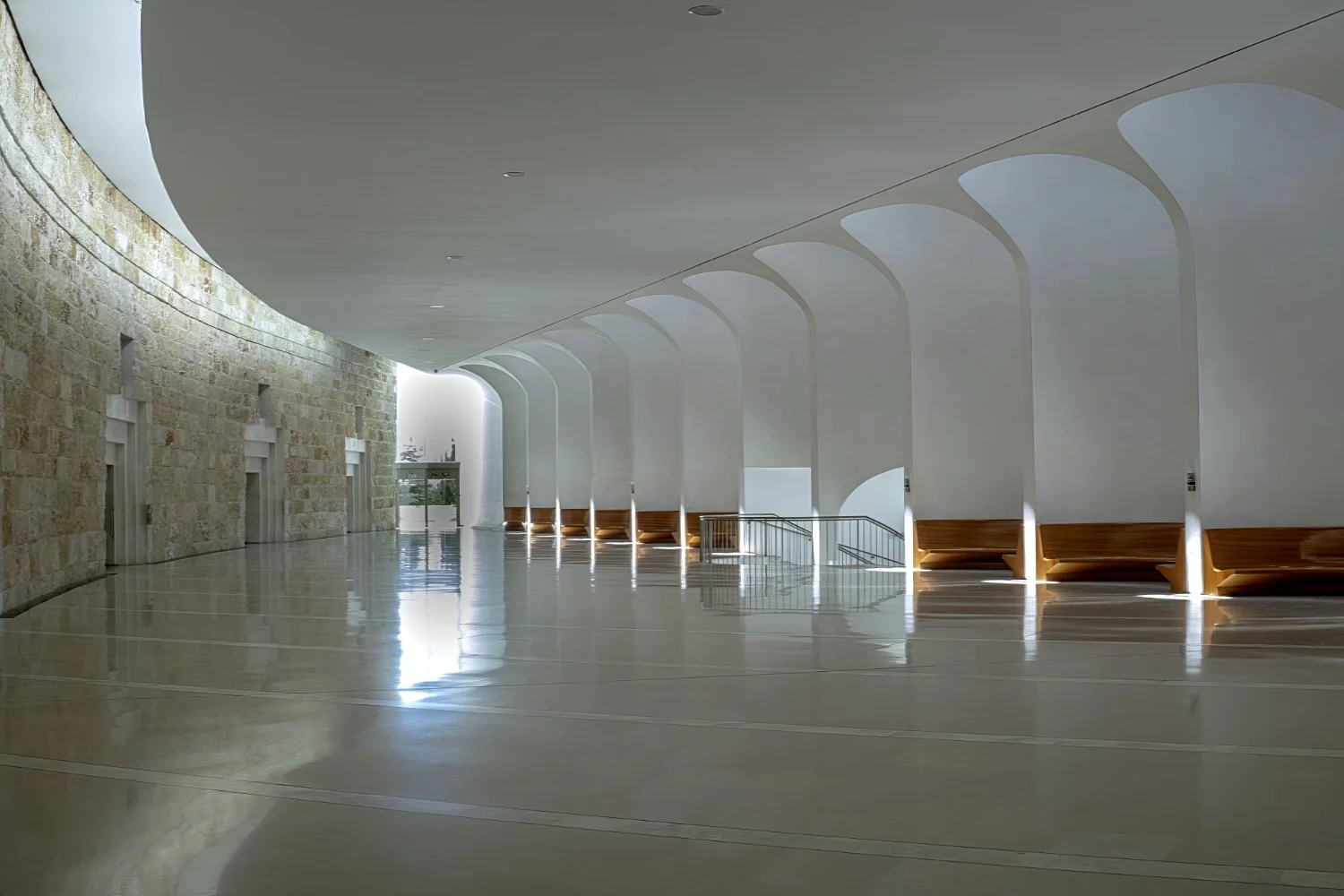
Foyer of the Supreme Court of Israel © Ada Karmi-Melamede Architects
Yet Yael strongly disputes this reading of her work. "I am not ambivalent about my mother," she says. "I had a fantastic relationship with my father and I feel like I have a fantastic relationship with my mother." Her father also travelled a lot for his work, but "I always had the feeling that if, at any time of the day or night, I had said, 'I need you here,' they would have dropped everything to help me." While conceding that she wishes her mother could see "the sacrifices that she made and we made as a result of her choices", she is adamant that she doesn't think her mother should have made any different decisions.
Reactions to this aspect of the film have been "very polarised". Some people have told Yael she was so lucky to have Ada as a mother; others expressed sympathy for her childhood. "That's why I love documentaries," she says. "My hope is that people will talk to one another afterwards and be surprised."
The film was originally released in 2024, at what Yael describes as "a terrible moment", since "independent films rely on festivals and word of mouth", and many festivals want to avoid the aggravation that now greets any film about Israel. Yet she has been overwhelmed by the positive response. Jewish audiences have been delighted to see a film about "an Israeli they can feel proud of, who is not in any way a propagandist - she feels authentic, critical and extraordinary". Perhaps even more cheering is the way the film can reach across the political divide. When a screening at a New York university was greeted by a peaceful protest, the director was thrilled when someone came up afterwards to tell her: "I am quite aligned with those protestors, but I just want you to know, I loved your film."
By Matthew Reisz
Header photo: Still from Ada: My Mother the Architect © Salty Features
Ada: My Mother the Architect is available to stream now on Apple TV, Amazon Prime, Google Play and more. adamymotherthearchitect.com
This article appears in the Summer 2026 issue of JR.