
In Carol Isaacs's new graphic novel, a magical abaya reveals a family history, bringing the world of Jewish Iraq vividly to life
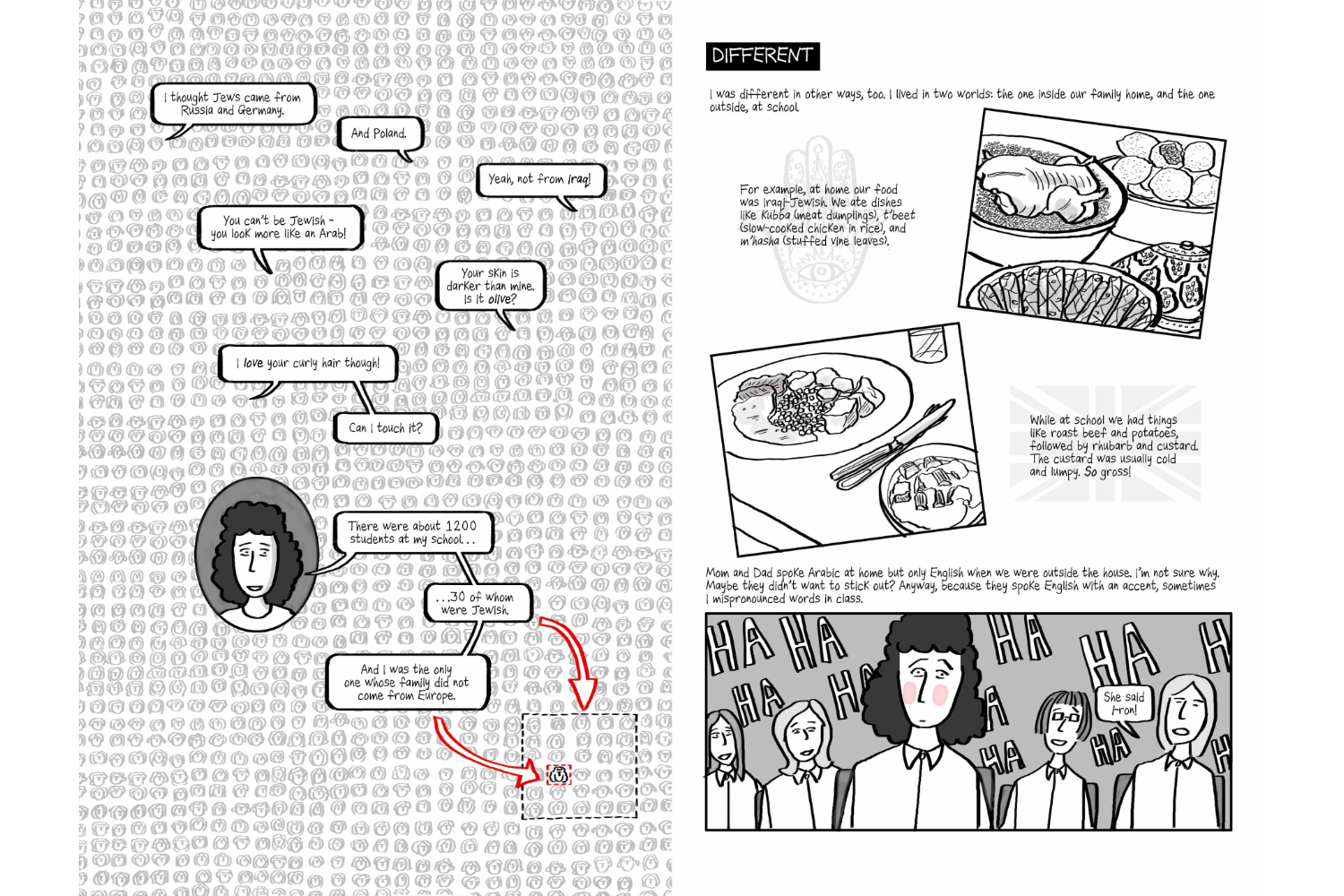
How do you write a family story your parents don't tell you? In her new children's graphic novel The Cloak From Baghdad, adapted from her award-winning graphic memoir The Wolf of Baghdad, Carol Isaacs explores memory, identity and belonging through Louise, the daughter of Iraqi Jewish immigrants growing up in 1970s England. Louise knows she is different long before she understands the history and silences that set her apart.
Louise is the only Middle Eastern Jew among the small minority of Jewish students in her large British school. Olive skin, dark curly hair. Jews come from Europe, don't they? This book is an answer to that assumption.
It is also the book I wish I'd had growing up as a Middle Eastern Jew in Australia. I recognised Louise's searching: why her parents never spoke about Iraq and why they silenced their past. I grew up not really knowing what it meant to be the daughter of Iraqi Jews. Like Louise, there were words I mispronounced, Arabic I didn't understand, stories I half-heard, things I translated without knowing what I was carrying. There was shame too: when your home, your food, your words, your grandmother's voice feel too much.
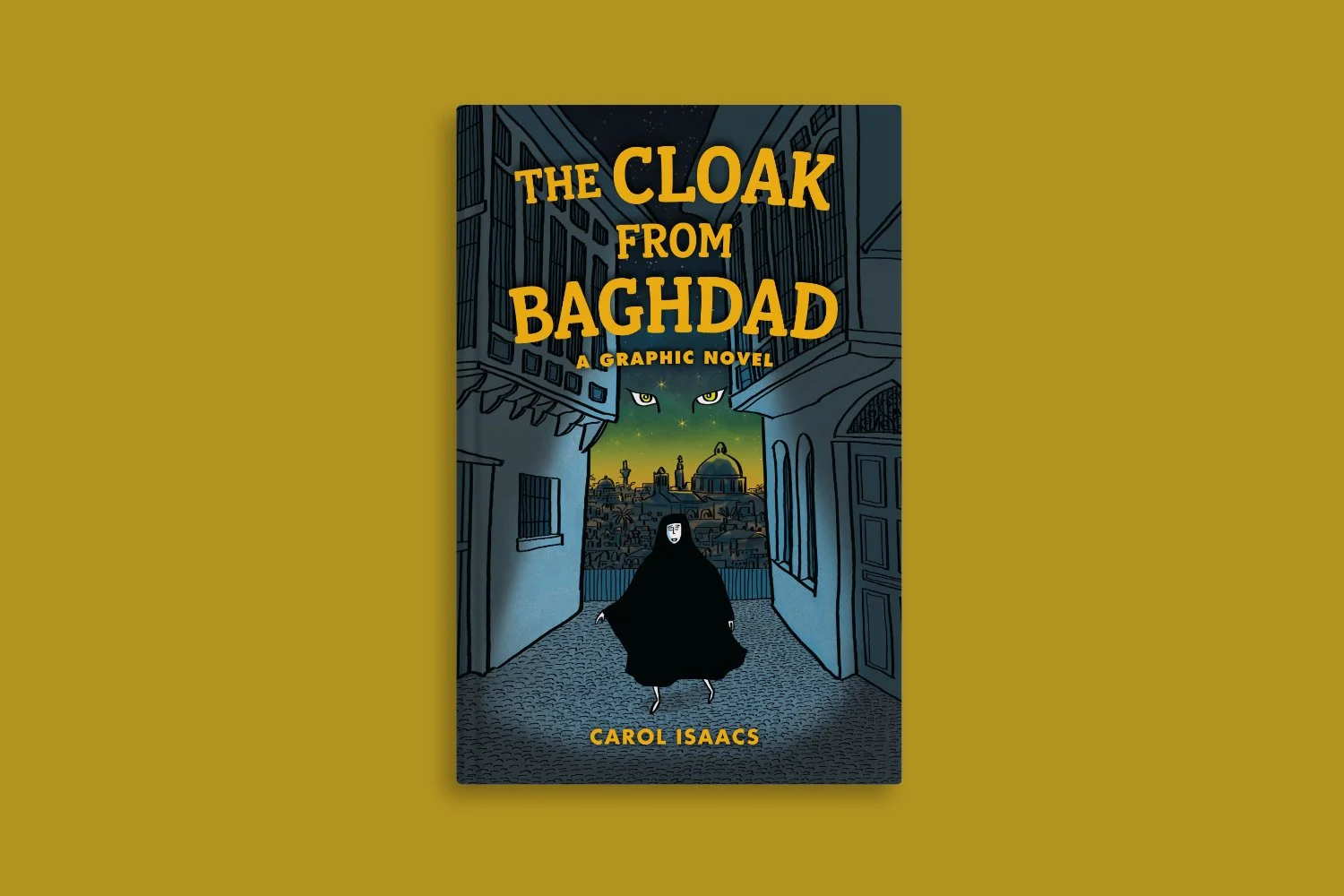
Louise turns to her grandmother, who calls her by her Arabic name, Lulu. Her grandmother gives her a magical black abaya, the cloak Jewish women once wore for protection on the streets of Baghdad. Through it, Louise is transported to 1930s Baghdad, when Jews were an inseparable part of the city's fabric.
What follows is not a history lesson but an act of return. Louise enters her mother Flora's childhood: the family home with its Arabic courtyard, meeting her mother's twin brother Eli and Papa, the grandfather she never knew. As she moves through Baghdad's streets and homes, the world her family left behind comes alive.
Isaacs lets the pictures tell what the family cannot say. The Persian carpet on the dining room wall, Arabic letters in the grandmother's speech, hints of Baghdad inside Louise's English life, and the picture of a wolf on Louise's bedroom wall all point to the story that is silent but still there.
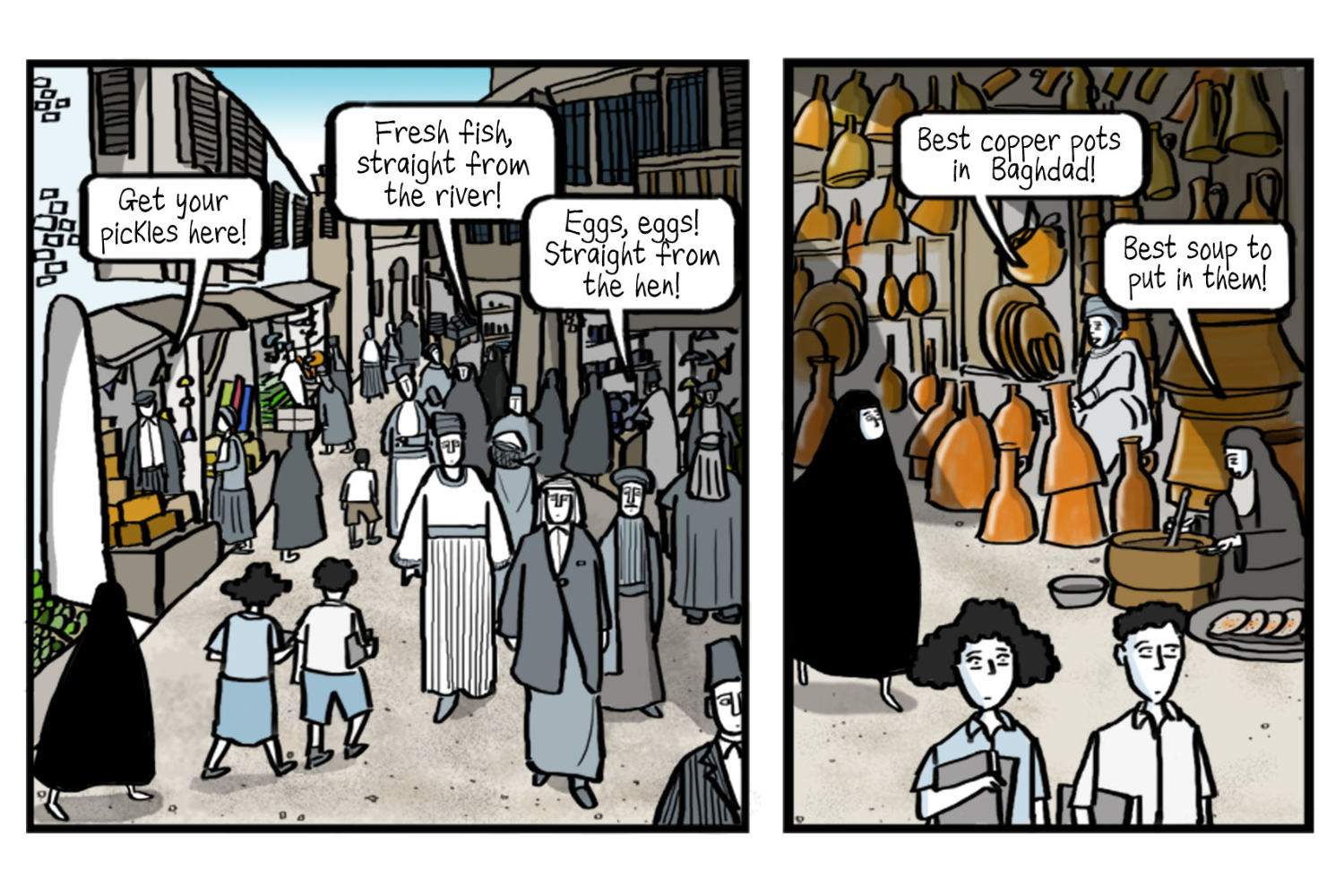
The thing about silence is that it quells the beauty as well as the pain. Isaacs portrays Iraqi Jewish life as deeply embedded in Iraqi life – a 2,600-year-old Babylonian community, with Muslim neighbours and friendships, such as Eli's friendship with Kamal, the boy next door. There are bustling souks, swims in the Tigris, women sorting rice for Pesach, cushions on the veranda, samoon (diamond-shaped bread) carried on heads, and the Great Synagogue of Baghdad.
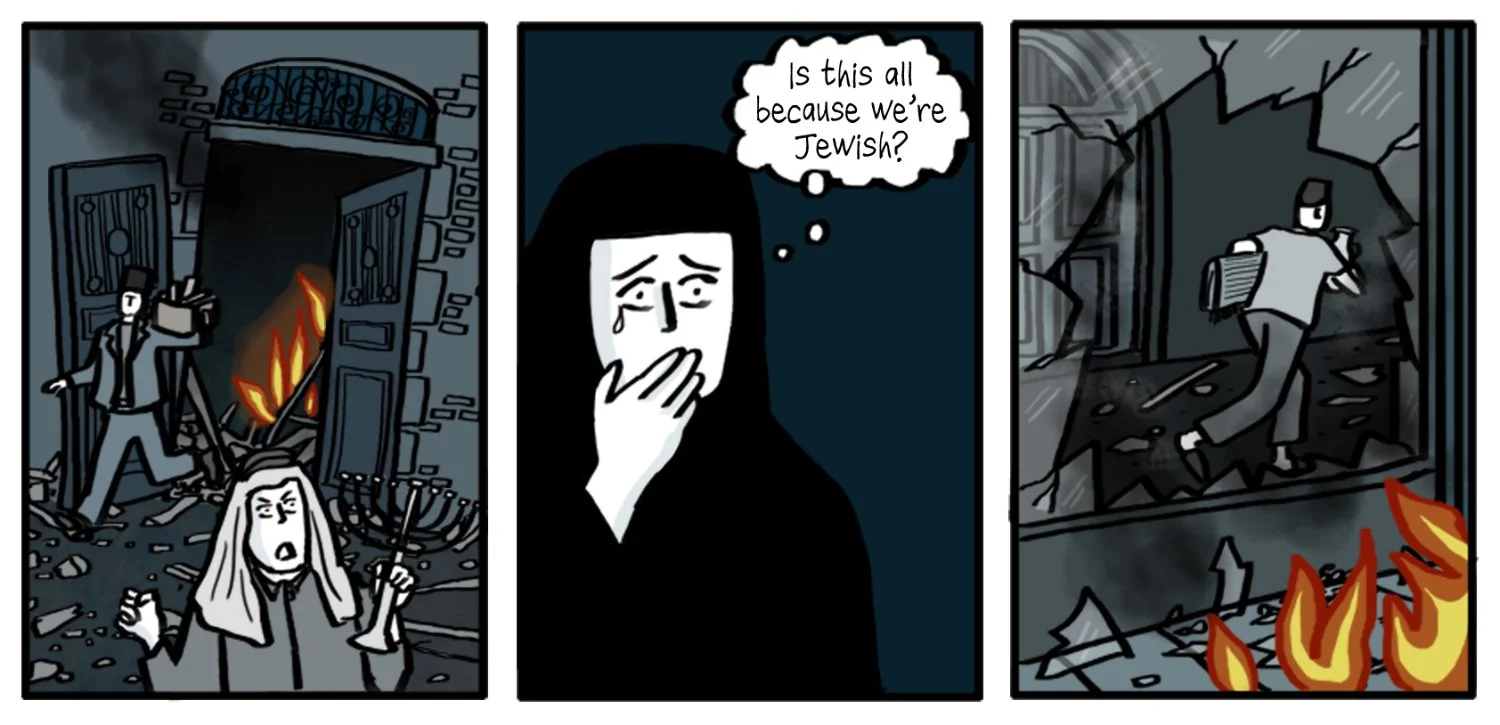
Gazing at these pictures with Louise, shadow-like inside the scenes, it feels as if we are looking at a world past, once alive - happy, until it wasn't. The build-up of tension is slow and frightening: Hebrew is not allowed, rumours spread, Jewish businesses are threatened and then comes the Farhud, the Nazi-inspired pogrom of 1-2 June 1941, the trauma at the heart of so much Iraqi Jewish silence.
That restraint is part of its strength. Aimed at ages 9-12, it makes painful history possible for children without making it small. A child may not understand politics or exile, but they understand fear gathering at the edge of the page. This is a book about growing up between worlds. It is alive and human, full of gentle humour, family warmth and the discomfort that comes from living between cultures. A very human immigrant story.
With The Cloak From Baghdad, Isaacs returns Middle Eastern Jewish experience to the map of children's literature. Through Louise's journey, she gives voice to a lost world where Jews once made up a third of Baghdad. What was strange becomes inheritance. What was silent becomes story. By the end, Louise is no longer only looking for Baghdad; she is searching for a way to carry its memory into her own Jewish future in England.
By Sarah Sassoon
Images © Carol Isaacs
The Cloak From Baghdad by Carol Isaacs is out 1 September (Kar-Ben, £14). karben.com
This article appears in the Summer 2026 issue of JR.