
Dorothea Magonet transforms humble, weathered materials into works of fragile beauty and intensity
Dorothea Magonet originally trained as a physiotherapist but since the 1970s has devoted much of her professional life to teaching the Alexander Technique. In the late 1990s she turned her attention to sculpture, and since then has also worked as a fine artist, quietly establishing herself as a significant practitioner in a range of different media. Initially she focused mainly on wood and stone (a result of having grown up in Germany in “a region of forests, ubiquitous stone and limestone quarries”) but went on to explore the expressive and symbolic potential of other, often humble and/or fragile materials, and she also works with drawing, painting, printing and collage.
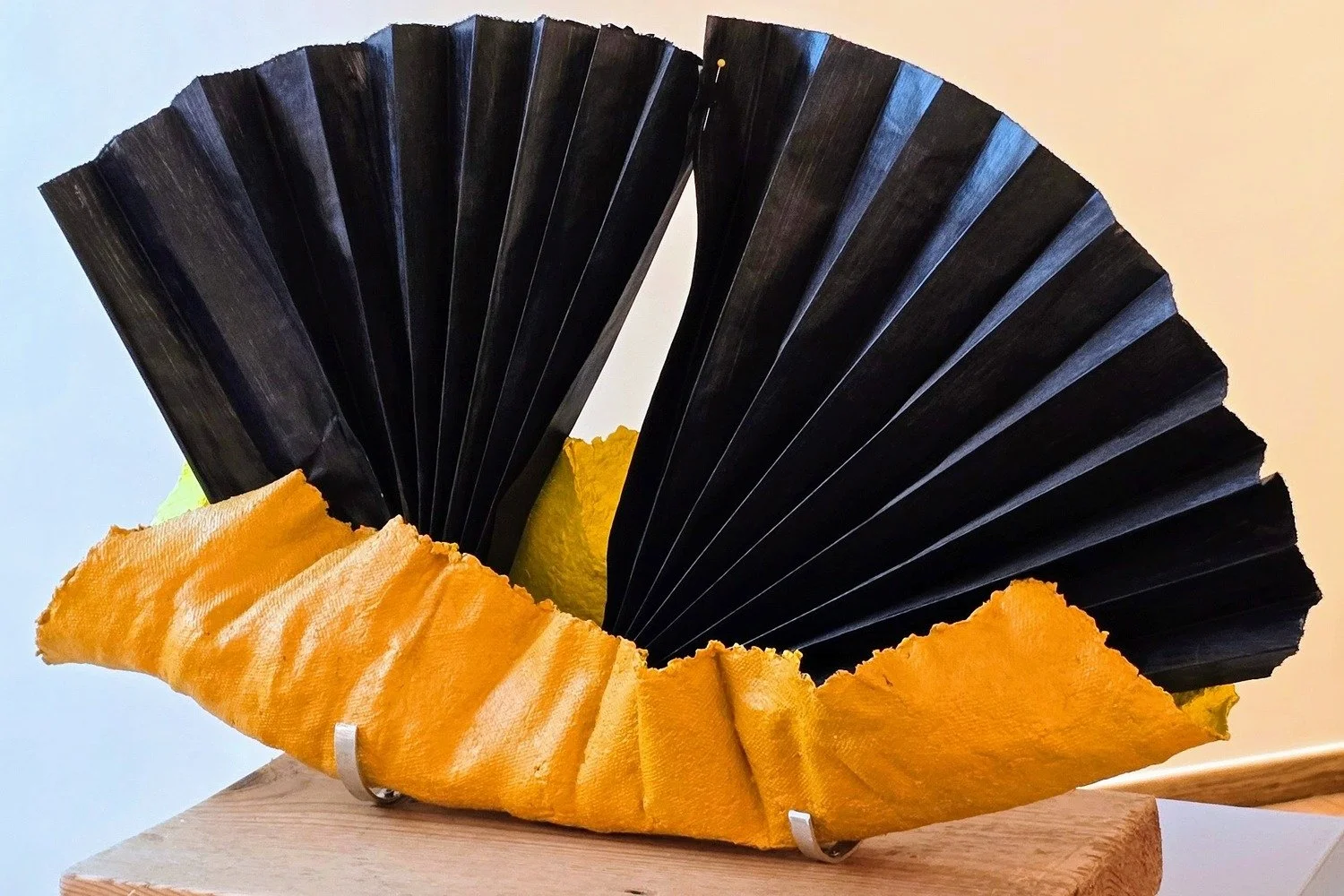
The exhibition at Burgh House consists primarily of collages and sculptural assemblages made from organic and inorganic materials found in fields and on beaches. The work is inspired by extended periods of time spent in Japan, including a recent four-week art residency there, and it is influenced by the Japanese philosophical aesthetic of ‘wabi sabi’. In her own eloquent words, this idea involves, “Finding beauty in imperfection and impermanence is the foundation of this concept, the development of the patina of decay, aging and the appreciation of something that is simple, has cracks, is fragmented, is repaired and mundane. It is about noticing and reacting to small details rather than grand gestures and valuing the small things. The object or work may be transient, be unfinished and have an incomplete quality, and is often quiet, minimal, calm and uncluttered.” These concerns are reinforced by the title of one of the works, Folds of the Soul – Pleats of Matter, and by her own comments from an interview about her work in 2022 in ItsLiquid magazine: “My indirect influences come from my long experience of hands-on work with individuals as a wholistic body-mind practitioner and educator”.
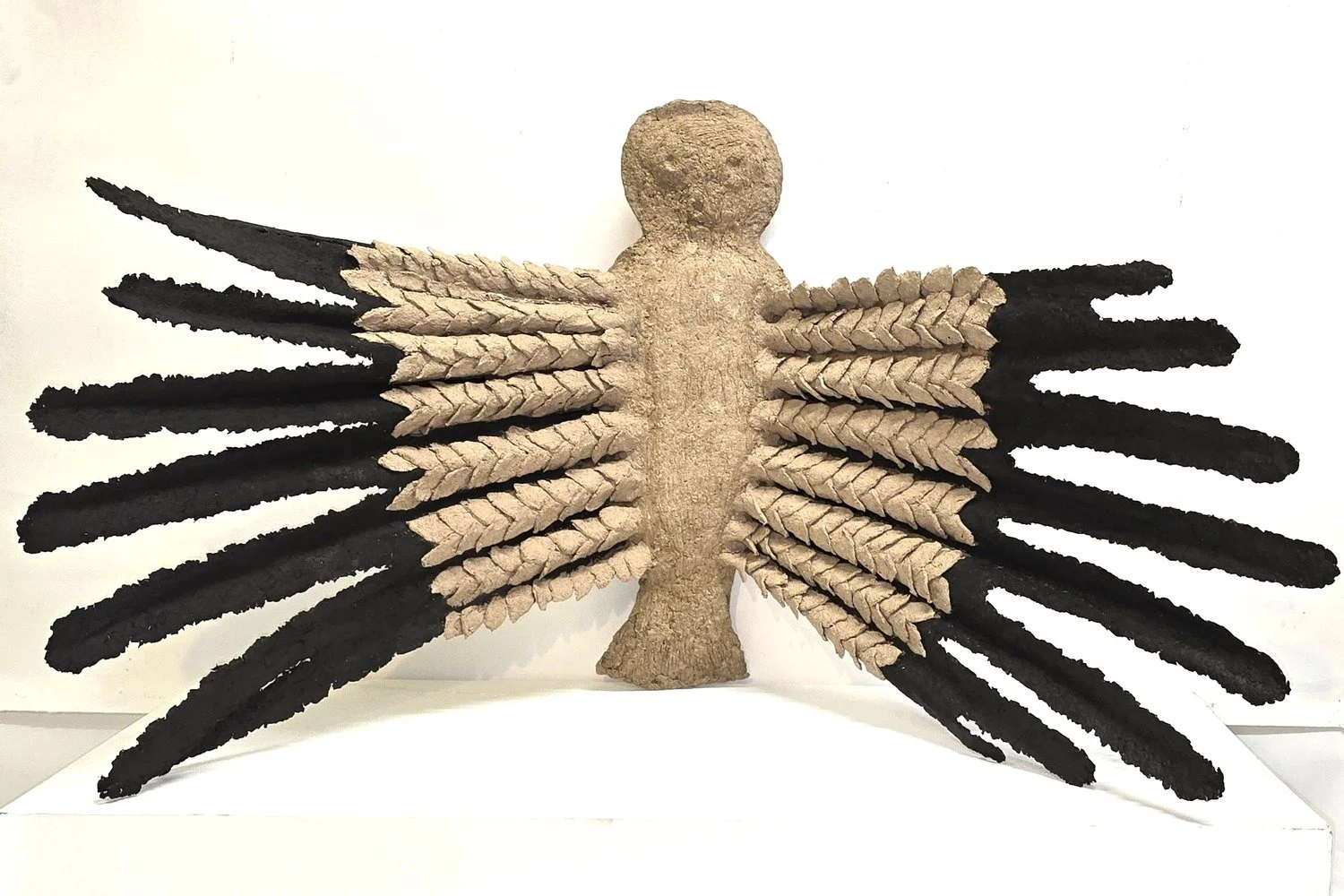
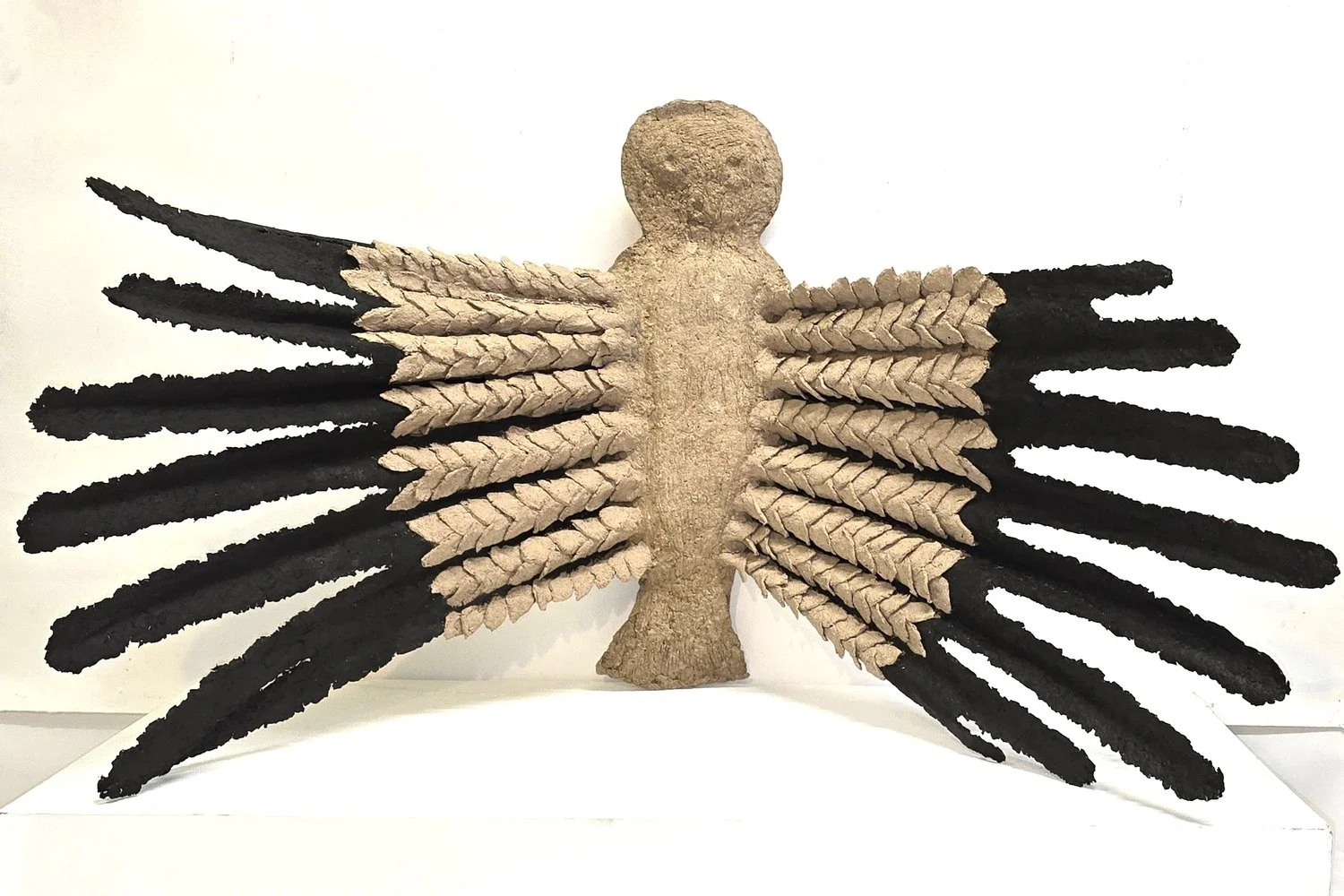
Dorothea is also the German-born wife of Rabbi Jonathan Magonet and it’s perhaps unsurprising then, that however tranquil and meditative most of these artworks seem, there is an undertow of unease in some of them. This is most obvious in one of the largest works on show, Open – Scorched Wings, which takes the form of an Icarus-like winged figure crafted out of packaging materials, marble dust and ink, but it can also be detected in other smaller works such as Burnt and Bound. She says she is preoccupied with “experiences of power, weakness, fragility, pain and tenderness” and in the light of the deeply troubling state of the world, her attempt to find “expression for aspects of my internal world and … to make some sense of external events” inevitably takes on a deeper, darker meaning.
Happily there is also a counterbalance to that darkness and much of her work also displays an affirmative playfulness and visual wit, most notably in the piece, Dancing in the Wind. This is a most enjoyable exhibition, both poetic and poignant, so do catch it if you can.
By Monica Bohm-Duchen
Photos courtesy of Dorothea Magonet
Dorothea Magonet: De-Composition – Beauty on the Edge of Nothingness runs until Sunday 8 February. Burgh House, London, NW3 1LT. burghhouse.org.uk