
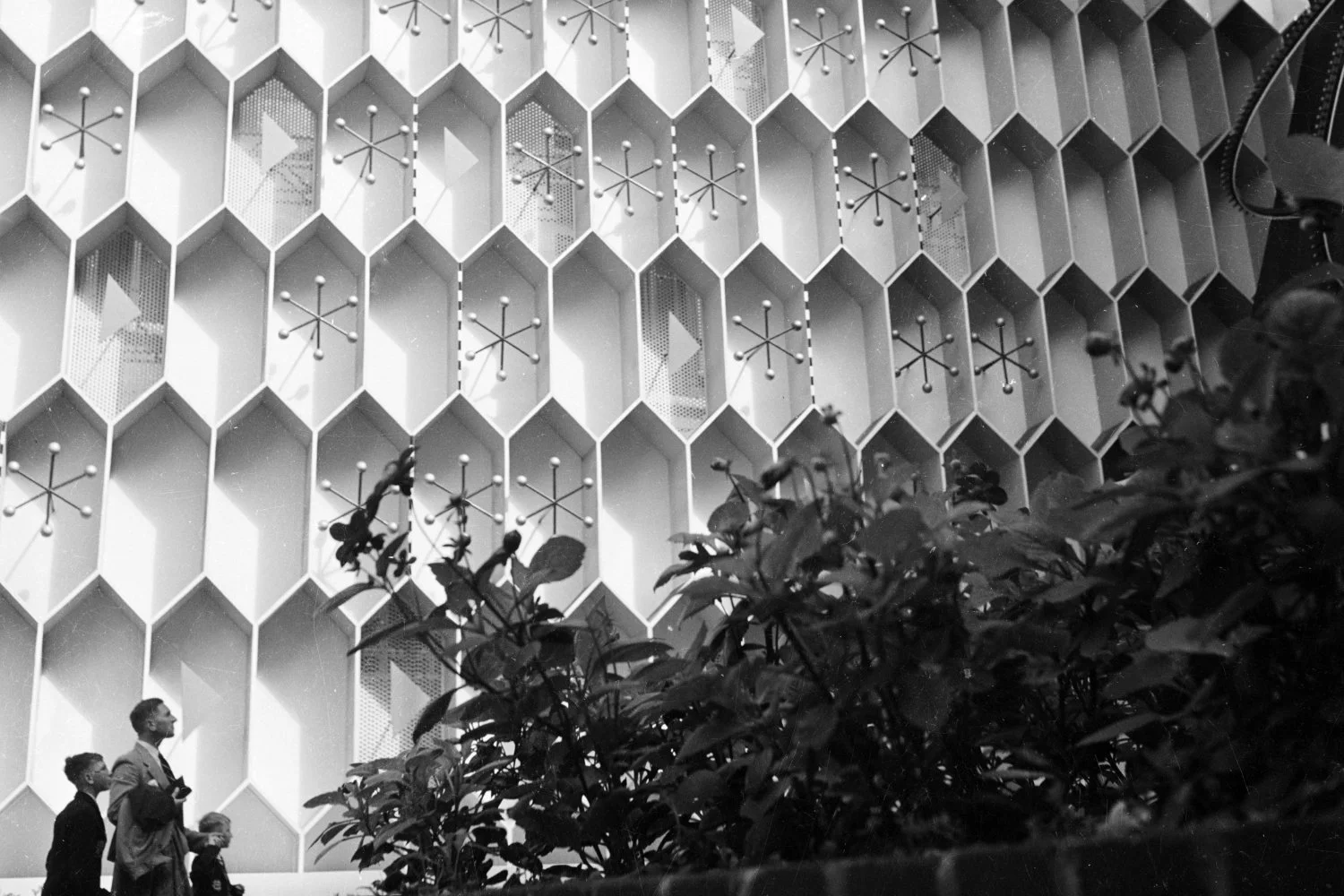
Readers share their memories of the Festival of Britain to mark the 75th anniversary of one of the most exciting events of the century
Over 8 million people attended the Festival of Britain’s main South Bank exhibition in London during the summer of 1951, with millions more participating in regional events across the UK – and some of those visitors were you! After we put a call out for your memories of the festival we were inundated with messages that talked about the excitement of seeing everything from futuristic buildings and space-age style technology to built-in kitchens and multi-coloured ice-cream
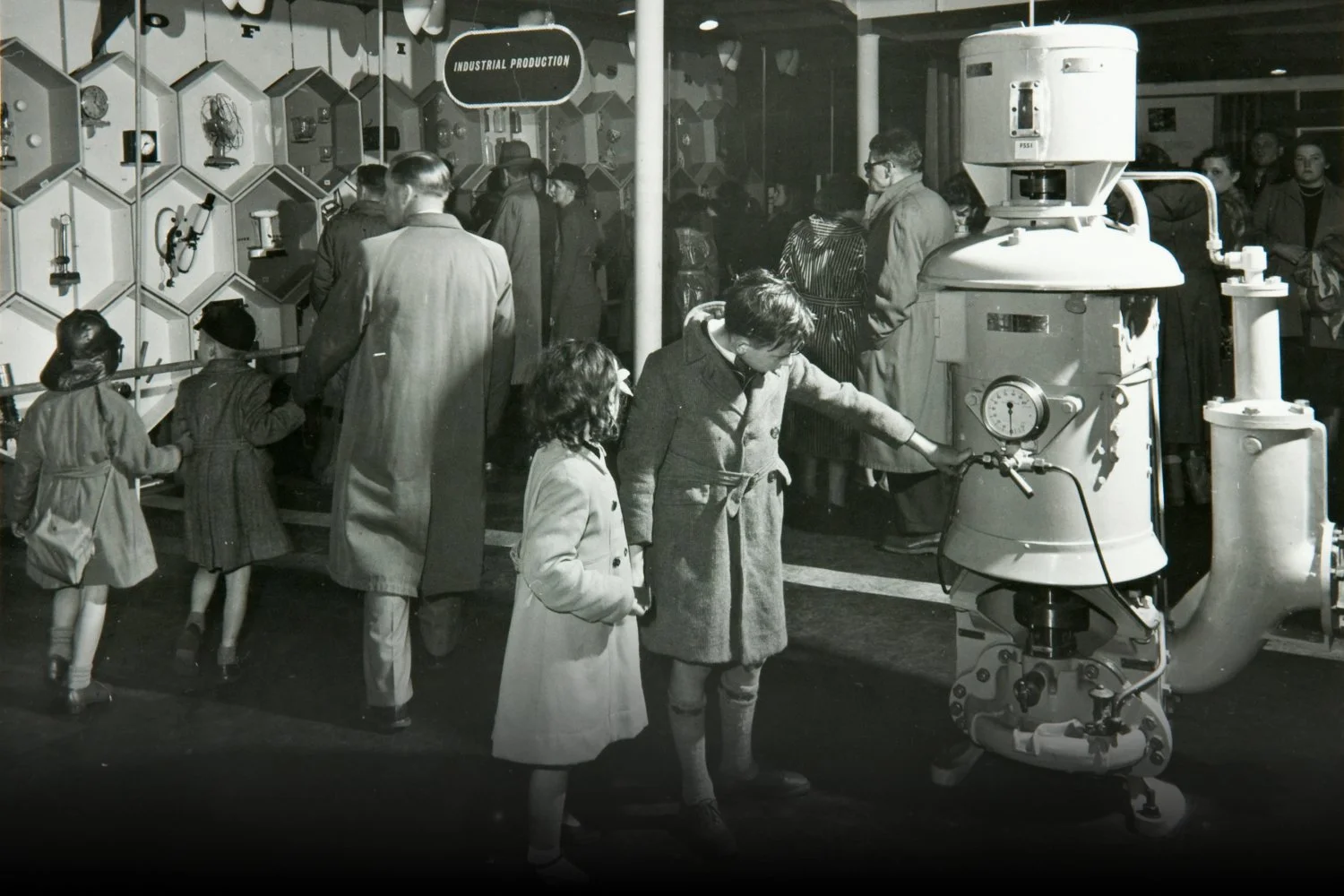
Self-priming centrifugal pump, Industrial Design Section © Getty Images
“I remember an automatic door that I could operate by walking through a ‘magic eye’ light beam, and a demonstration of how traffic lights could be changed by stepping on a rubber mat. I was six years old at the time. Thus began a lifelong interest in physics and engineering.”
“One memory is that we were able to get milk fresh from a cow which was drinkable! I was ten years old and my sister only four. It was a shame when the Conservative government pulled the whole exhibition down. It was wonderful to be there and participate in a festival that showed how Britain was recovering after the war.”
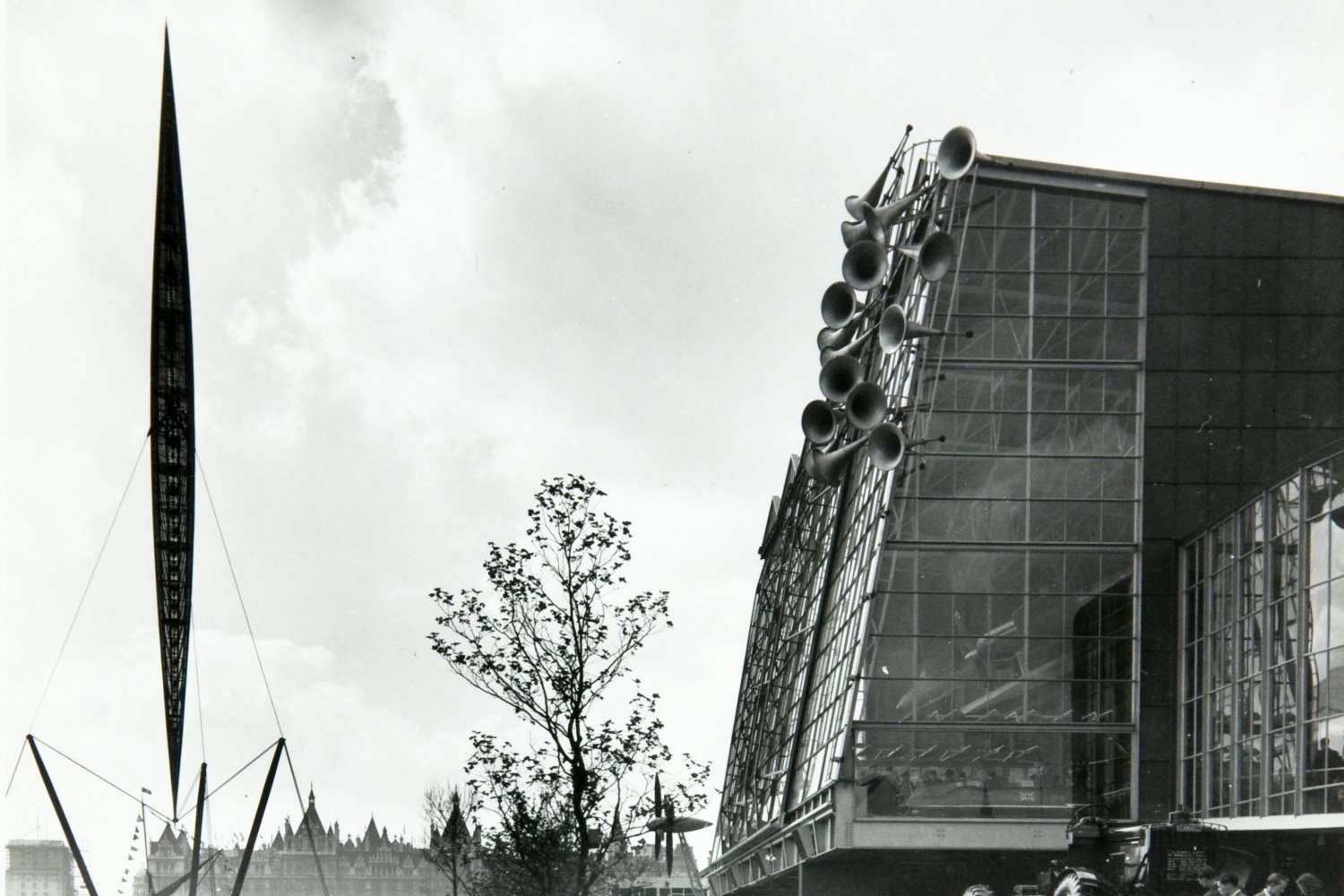
Skylon on the South Bank © Getty Images
“At that time there was very little to celebrate. The country was recovering from the war and we were used to seeing the damage and cultural poverty that existed. To me, as a 10-year-old, the festival was an exciting change. I had seen nothing like it before. My main memories are of the Skylon, the Shot Tower, the Dome of Discovery and the Festival Hall. My north London junior school took part in a mass folk dance festival as a more local event. I don’t think I enjoyed it much!”
“My parents had just moved the family from Belfast because my father, who was a doctor, had been offered a new job in London. My mother had escaped Vienna in 1938 when she was 13 and settled in Belfast, where she met my father. At the festival they bought me the most beautiful handmade wooden child’s bed. It has been used ever since by generations of our family. Currently, my sister’s three-year-old grandson is using it.”
“I remember feeling very excited. My main memory was seeing the Skylon. I thought: ‘What will the next festival, in 2051, be like? I can’t wait.’”

Crowds queue on the South Bank to enter the Dome of Discovery for the Festival of Britain’s opening ceremony © Getty Images
“My parents were Yiddish-speaking Galitzianer Polish Jews who had been living in Berlin and escaped to London in the nick of time. My mother arrived in June 1939 and my father, who had been hiding in Berlin since November ’38, arrived in August ’39.
We lived in the heart of the docklands and the Yiddish-speaking centre of Stepney. Our rented house had no bathroom, an outdoor loo, no central heating and no hot water. We didn’t know anyone in our area who owned their home. Our street and the area around my school were surrounded by uncleared bomb sites. Very little rebuilding was underway in 1951. My parents’ great hope was that our street, which was already apparently earmarked for demolition, would be pulled down and we would get rehoused into a council flat.
So the most interesting aspect of the festival for my family was its vision of the future of housing. There were blocks of newly designed council estates: the Lansbury Estate in Poplar transformed 30 war-torn acres into 478 new homes, Churchill Gardens Estate in Pimlico featured social housing with cutting-edge design, and beyond London, cities such as York had their own social housing projects. I now know these projects were generated by Le Corbusier’s vision of housing, but then I only knew that these were exciting new homes that we might get to live in one day.
The most exciting thing for my mother was seeing these utterly clean purpose-built model flats – especially the kitchens, with their unitary cupboards and coloured veneer in light pastel colours. Her favourite was Duck Egg Blue and her aspiration was to have a Duck Egg Blue kitchen in this style with all those built-in cupboards. I was fascinated by these kitchens and living spaces, the like of which I had never seen.
There were also displays of new TVs with bigger screens, as well as distance radio equipment. Many years later, when I visited Woodberry Down Primary School in Hackney, the hall featured a huge mural, Sgraffito by Augustus Lunn, which had been part of the festival and was salvaged and given to the school. The artwork featured radio and TV masts, broadcasting and receiving equipment, and large classroom loudspeaker equipment which many schools were being equipped with –– radio lessons were seen as part of the education of the future.
But what excited me most about the festival was the funfair and playground area, and particularly the Guinness clock, which was fascinating and alluring for children. This 10-foot-high clock had little creatures that emerged and whizzed up and down its face as the hours and quarters struck. It was a total fantasy of fun and colour, quite unlike anything else. The Millennium Dome effort of 2001 was a tawdry and unimaginative exercise in comparison.”

Child in the Home exhibition at the Homes and Gardens Pavilion on the South Bank © Getty Images
“I visited the festival with a school friend, travelling by train from Brighton. It was an amazing day for two 15-year-olds. I still have the original brochure in mint condition.”
“I was aged three or four and went with my family from our home in Wembley. I particularly enjoyed the funfair with its little railway with locomotives you could ride based on the eccentric cartoons drawn by Rowland Emett for Punch magazine.”
“I was nine years old and living in Bushey. My parents were East Enders and I remember trips to Shoreditch, Brick Lane and Columbia Road market. And the bomb sites. So the festival was a revelation. Some memories: ice cream in three colours, not just vanilla, a life-sized replica of the whaling ship, the Balaena, that you could walk through to see how whales were processed for oil and meat, and the Pleasure Gardens in Battersea Park.”
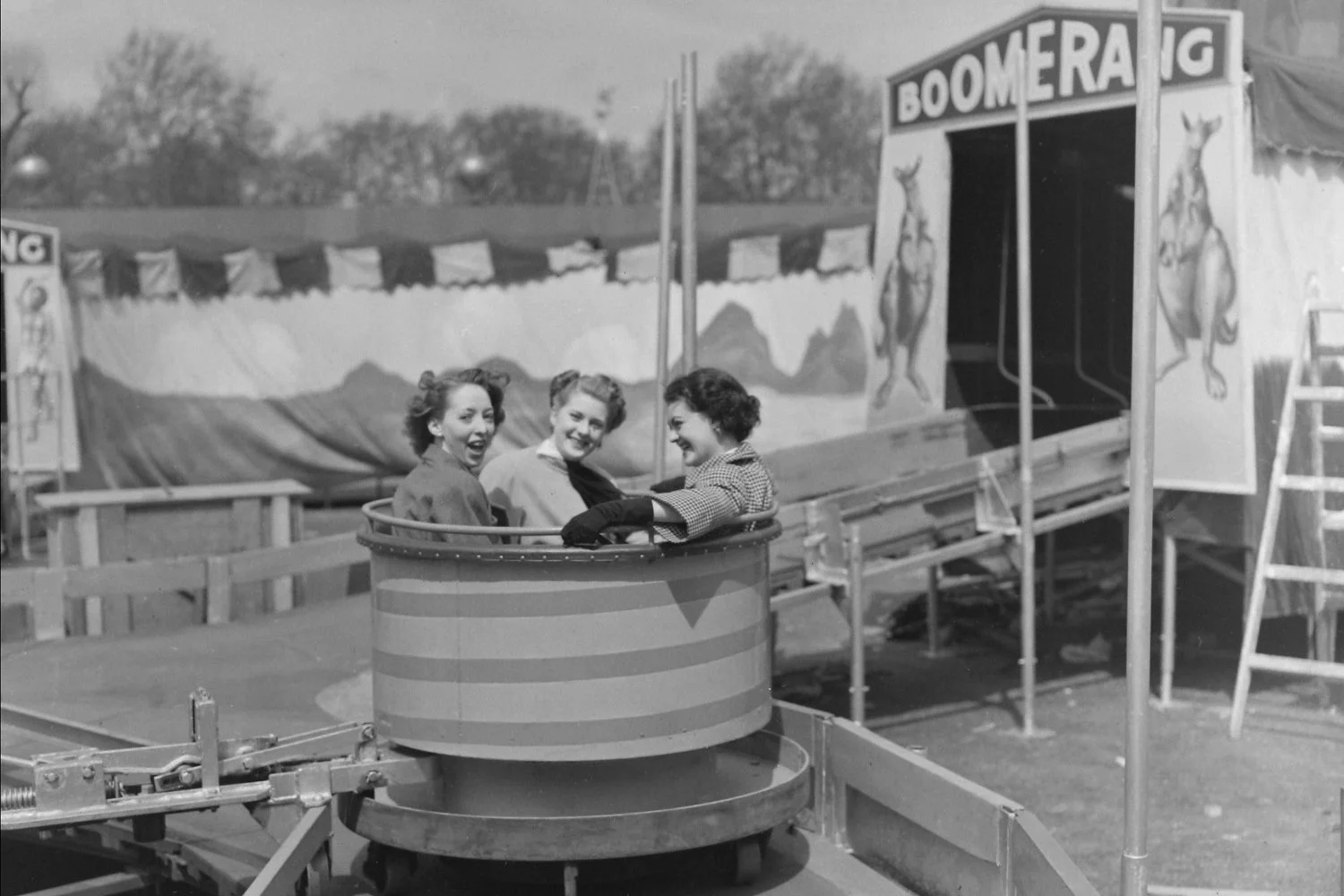
Battersea Pleasure Gardens © Getty Images
“I had just passed my 11+ when my mother took me, as a treat, to visit the festival by train up from Leigh-on-Sea. I was amazed at the size of the Skylon and the Festival Hall. Despite the large crowds, there was a feeling of space. But my overall impression was of greyness; perhaps it was just a dull day, but bright clothing was still hard to come by after the war.”
“The entry age to the festival was five and over but my parents took me there anyway. At the entrance I shouted, “I’m only four you know!” – a moment my mother repeated at various moments throughout my life.”
Compiled by Rebecca Taylor
Header photo: London’s Science Museum © Getty Images
To mark the Festival of Britain’s 75th anniversary, a series of events are taking place at the Southbank Centre. southbankcentre.co.uk
An abridged version of this article appears in the Summer 2026 issue of JR.