Inspired by the poet Avrom Stencl, Shloimy Alman documented the world of Yiddish culture and community in 1970s London. We explore his extraordinary archive in a new show at Massachusetts' Yiddish Book Center
In May 2019, a forest fire near a moshav in Kfar Daniel, Israel, forced British-born residents Shloimy Alman and his wife Linda to evacuate their home. As they fled, Shloimy grabbed a handful of cherished possessions, including seven boxes of slides he had taken in London's East End during the late 1970s. The images had remained in a cupboard unseen for more than 40 years until I visited Shloimy from London earlier that same week and scanned them.
First exhibited at London's historic Sandys Row Synagogue, these remarkable images are currently on display at the Yiddish Book Center in Amherst, Massachusetts, alongside other exhibits that share the story of Yiddish London, including poetry published by the Polishborn Yiddish poet Avrom Nokhem Stencl.
Shloimy first heard about Stencl from his parents, who were also Polish émigrés and huge admirers of this legendary poet, who became a leading figure in Yiddish literary life in London after arriving there in 1936 from Berlin. Soon after he arrived, Stencl founded the Yiddish literary magazine Loshn un lebn (Language and Life) and the Saturday afternoon Friends of Yiddish literary meetings.
Shloimy's father, Moishe Alman, a Yiddish teacher and journalist, Bund activist and Holocaust survivor, contributed regular articles to Loshn un lebn. His mother Sara often travelled from their home in Manchester to sing at Stencl's Saturday meetings in London. In 1977, many years after his parents had died, Shloimy wrote to the elderly poet and asked if they could meet. Stencl suggested they go for a walk through his beloved Whitechapel.
Stencl guided Shloimy around the run-down streets of what he called his "shtetl in Britain" pointing out landmarks, such as the place where the Yiddish writer Sholem Aleichem had once stayed. Unlike Cheetham Hill, the former Jewish area of Manchester where Shloimy had grown up, the East End was still buzzing with Jewish businesses and activity and many of the shop owners and market traders spoke Yiddish. After their walk, Shloimy attended Stencl's Friends of Yiddish gathering and soon became a regular, drawn by the atmosphere that had shaped his parents' lives.
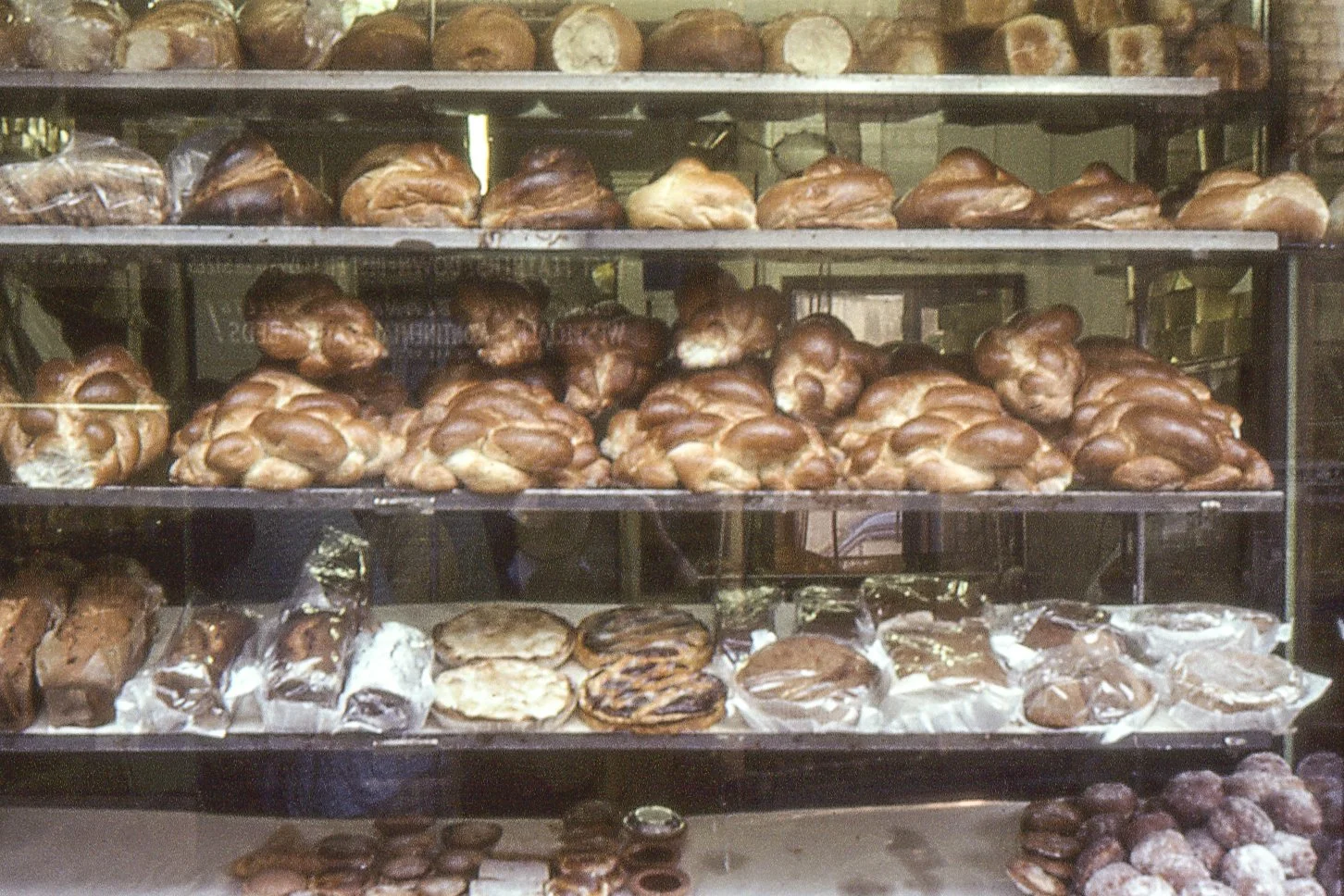
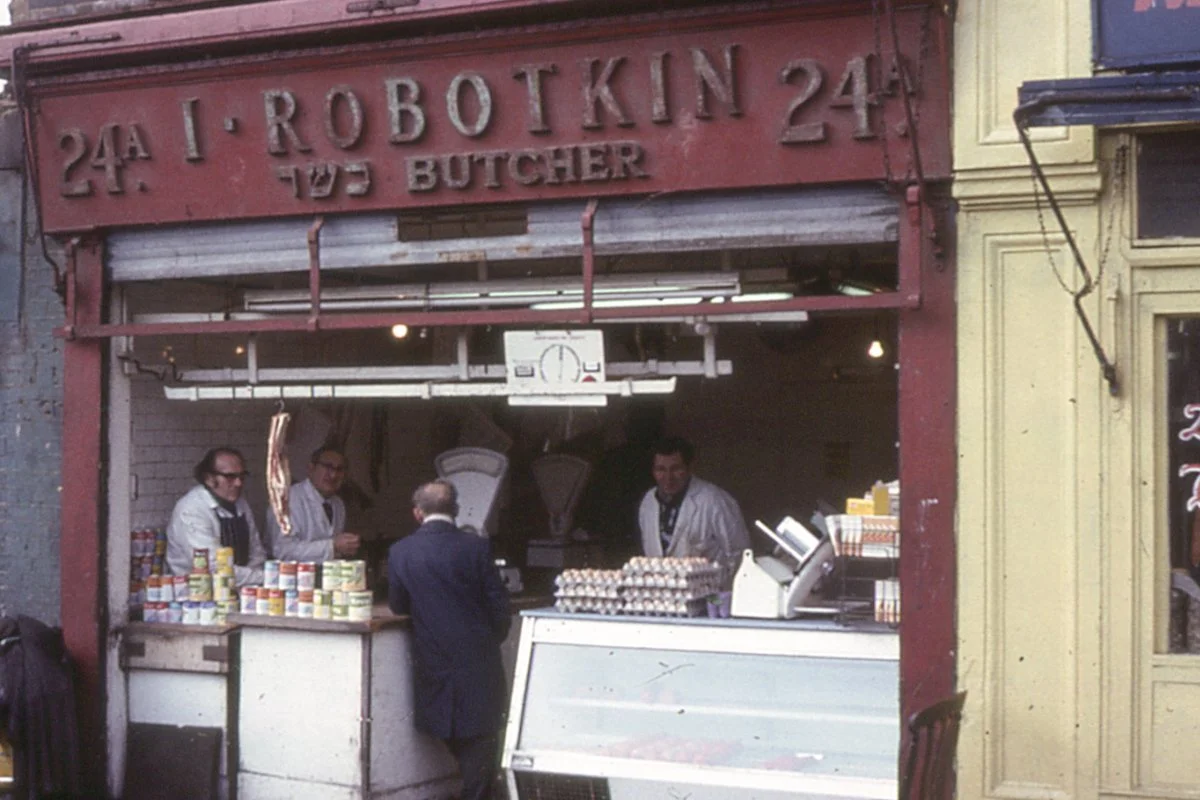
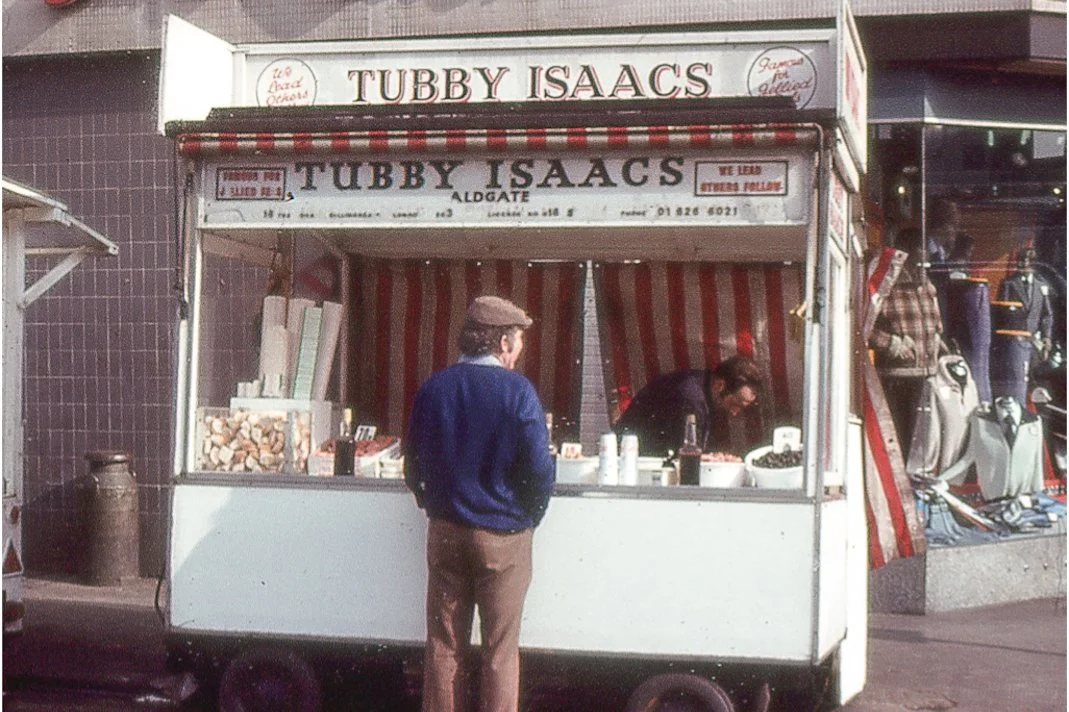
Inspired by these encounters, Shloimy started exploring the East End on his own every Saturday, wandering around the streets and documenting what he found. Although not a professional photographer, he recognised that he was witnessing the final years of a distinctive neighbourhood. His unique colour slides of that time capture the area's last functioning synagogues, delis, bakeries and bagel shops alongside the remaining kosher poulterers, wine merchants, market traders, textile businesses and Jewish institutions, such as the Grand Palais Yiddish Theatre, the Kosher Luncheon Club and the Soup Kitchen for the Jewish Poor, as well as local characters including Stencl.
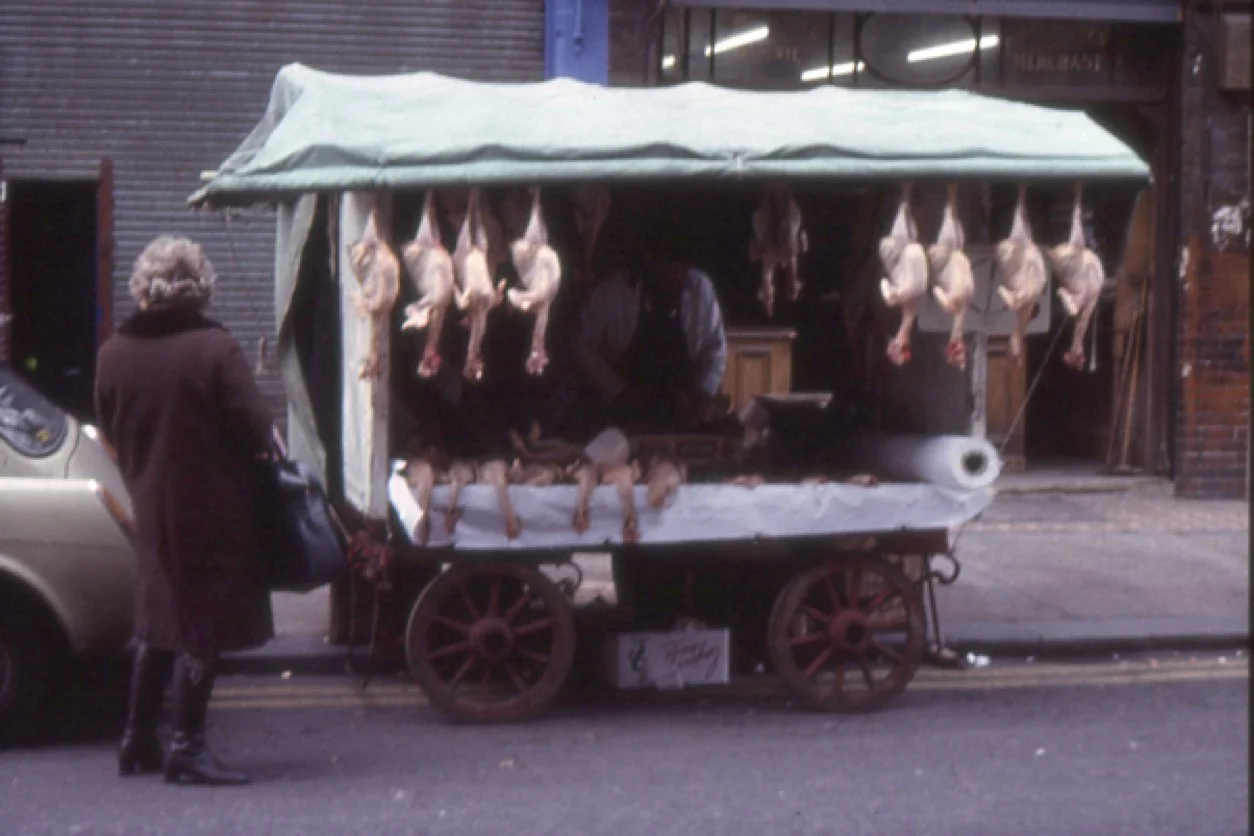
Stencl died in 1983 and Shloimy sadly passed away in 2020 at his home in Israel, just before his 70th birthday and after a long battle with cancer. His photographs survive as a unique record of a disappeared world. Shloimy was incredibly proud of his " Yiddish heritage and his friendship with Stencl. He would be delighted to know that his images are now being shown alongside some of Stencl's London-era poetry collections at the Yiddish Book Center, which is the largest single repository of Yiddish books, and whose mission aligns with both Shloimy and Stencl's: to keep Yiddish culture alive.
By Rachel Lichtenstein
Photos by Shloimy Alman
Vanished Streets: Unseen Photographs of Lost Jewish London runs until September. yiddishbookcenter.org
Learn more and see a selection of Shloimy Alman’s photos at our Vanished Streets online event on Sunday 2 August.
This article appears in the Summer 2026 issue of JR.