
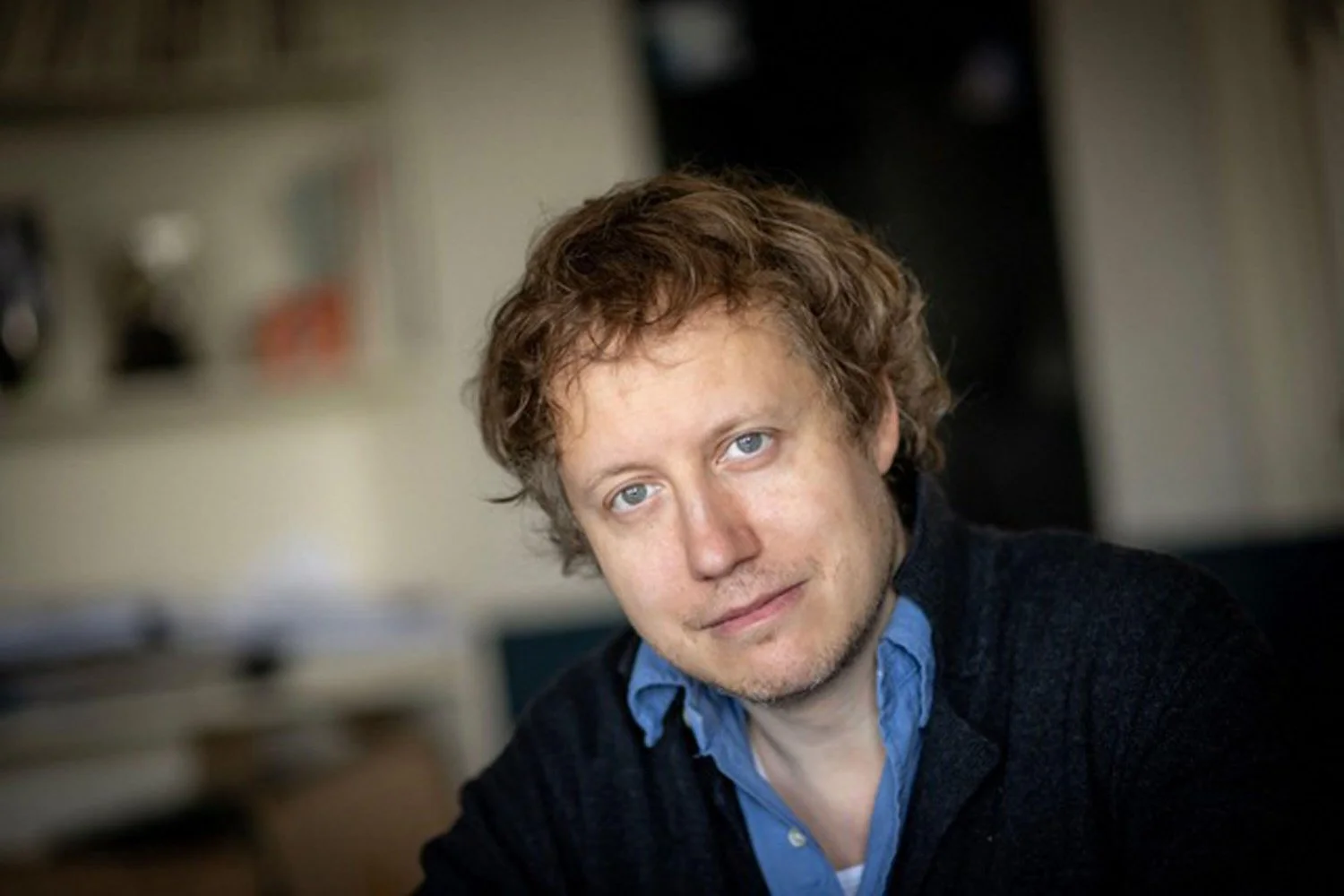
Orphan is the latest project from Hungarian director László Nemes. He tells us about the challenge of producing work with Jewish themes and his public clash with Jonathan Glazer
The Hungarian director László Nemes makes movies about ordinary people who have been kicked around by history. His Oscar-winning 2015 debut Son of Saul got inside the head of a Sonderkommando in Auschwitz. Sunset, three years later, followed a young Jewish woman through Budapest on the brink of World War I. His latest film, Orphan, uses a 12-year-old boy's crisis of patrimony as a metaphor for Hungary in the wake of the brutally suppressed revolution of 1956. All three, Nemes says, are about "the heart of Europe, the wounds of the 20th century and the wounds that we keep on carrying with us". The difference this time is that the story is based on his own family history.
As a child, Nemes's father, András Jeles, believed that his mother's husband, murdered in the Holocaust, was his father, until one day a stranger appeared claiming to be his real parent: a crude, abusive butcher who had both sheltered and exploited his mother during the war. It was a shattering revelation. His supposed father was a victim of the Holocaust but his real father was a beneficiary of it. "My father carries in his very flesh the victim and the perpetrator," says Nemes.
Ever since Nemes's grandmother told him this story more than 40 years ago, he has been "haunted" by it. Now, he has worked it into a movie about a boy named Andor, played with solemn fury by newcomer Bojtorján Barabás. "It seemed like a Hamlet story," he says. "The prince talking to the ghost of the father and trying to get rid of the usurper king. The coordinates of this archetypal story could be found in the story of my father's life."
András Jeles is also a director of film and theatre, so I wonder what he made of seeing his life fictionalised by his son. "I don't know," Nemes shrugs. "The production hired him as a consultant so we integrated a lot of his thoughts on it. But there's an underlying competition with his son and all this ego stuff. Because it's so traumatic, this story leaves very deep marks on one's life and personality."
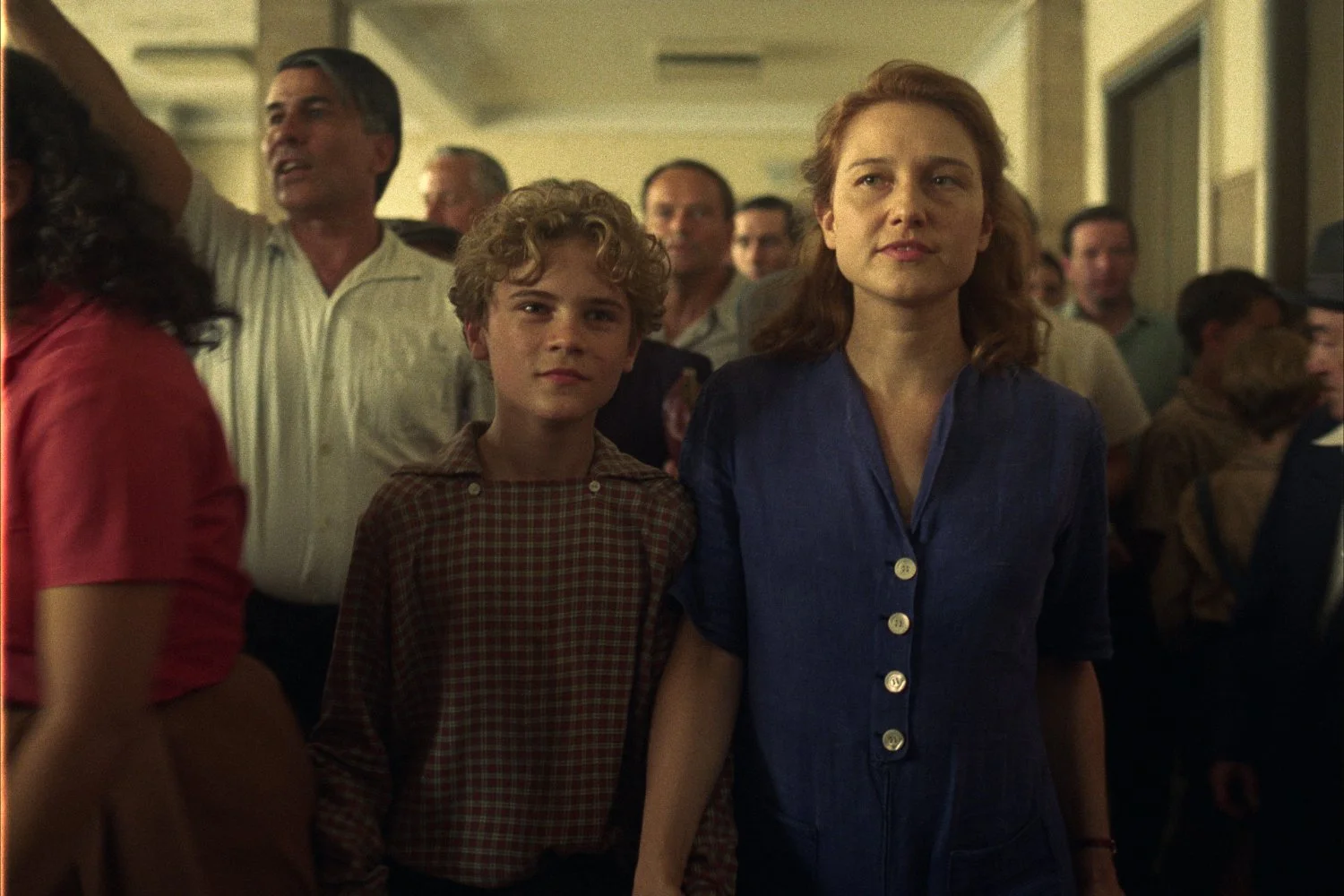
Orphan, still from the film © Mátyás Erdély
Like his films, Nemes doesn't varnish harsh truths. On a video call from Budapest, he comes across as sardonic and forbiddingly intelligent, with an intense moral seriousness. Born in 1977, he was the same age as Andor when Hungary's communist regime finally gave up the ghost. "I definitely put a lot of my memories into the movie," he says.
What was Hungary like during his childhood? "It was terrible!" he spits. "Absolutely horrible. I hated every minute of it. I know some people have nostalgia for this period. I don't have any. Lining up in school and chanting Soviet anthems for hours and hours. The lack of freedom was palpable. It corrupted the minds of many. Even at the age of eight I already wanted to get out." He has since lived in London, Paris and New York but returned home to shoot Orphan in 2024.
Nemes could easily have set Orphan in 1956, the year of hope and revolt, but he chose instead the immediate aftermath, when 200,000 Hungarians fled into exile and the remainder were brought to heel by the Soviet Union. He augmented location shoots with special effects to recreate the sorrowing streets of 1950s Budapest from contemporary photographs - a city liberated from one totalitarian empire only to be subsumed into another. "I was somehow more interested in the postrevolutionary times," he says. "There is the impression that the country is closing down again, that freedom goes away and that nobody cares. That's a situation in which a whole country becomes an orphan."
The legacy of antisemitism, before and during the war, infected cold war Hungary. "There were a lot of Jews among the communists," Nemes says. "Some of them became communists because of Nazism, or [were] escaping their Jewishness and going into ultra-assimilation. There was an underlying antisemitic layer but I would say that even the Jews were a little bit antiJewish at that time."
László Nemes © Alamy
Polls show that antisemitism has risen again under the authoritarian nationalist regime of Viktor Orbán, who promotes conspiracy theories about the influence of the financier George Soros. Nemes says he wouldn't make a film set in present-day Hungary: "It doesn't interest me." Has the government, in spoken or unspoken ways, restricted what he can say in his films? "Absolutely not," he says. "Zero per cent. It's funny because every time I try to make a film in English there's so much pushing me to do things differently. But in Hungary, nothing ever. Isn't it ironic?"
Nemes says his work faces more obstacles abroad. He implies that the mixed reception to Orphan (it currently has no US distributor) was not purely artistic. "The ignorance and contempt we had to face internationally is something I found absolutely poisonous. The fact that you can't touch a Jewish subject with a 10ft pole anymore should worry people." Yet Son of Saul was widely acclaimed and honoured, I say. "Yeah," he says with a grim smile. "But then talking about dead Jews is different. Those who survive are more problematic."
Nemes made this argument two years ago, after The Zone of Interest won the same Oscar that Son of Saul had won eight years earlier and its director, Jonathan Glazer, used his acceptance speech to reject his Jewishness and reject the memory of the Holocaust being "hijacked" by the regime of Israel's prime minister, Benjamin Netanyahu. Nemes published a furious response, saying Glazer "should have stayed silent". But surely Nemes is also a filmmaker expressing political opinions? Does Glazer not have the same right to speak out?
"People shouldn't talk about politics when they don't understand anything about philosophy, ethics, history or religion," he snaps. "I think it was coming from a place of self-righteousness. Jews are in great danger and nobody cares. There has been a taboo on Jew-hatred since World War II but that taboo has been lifted."
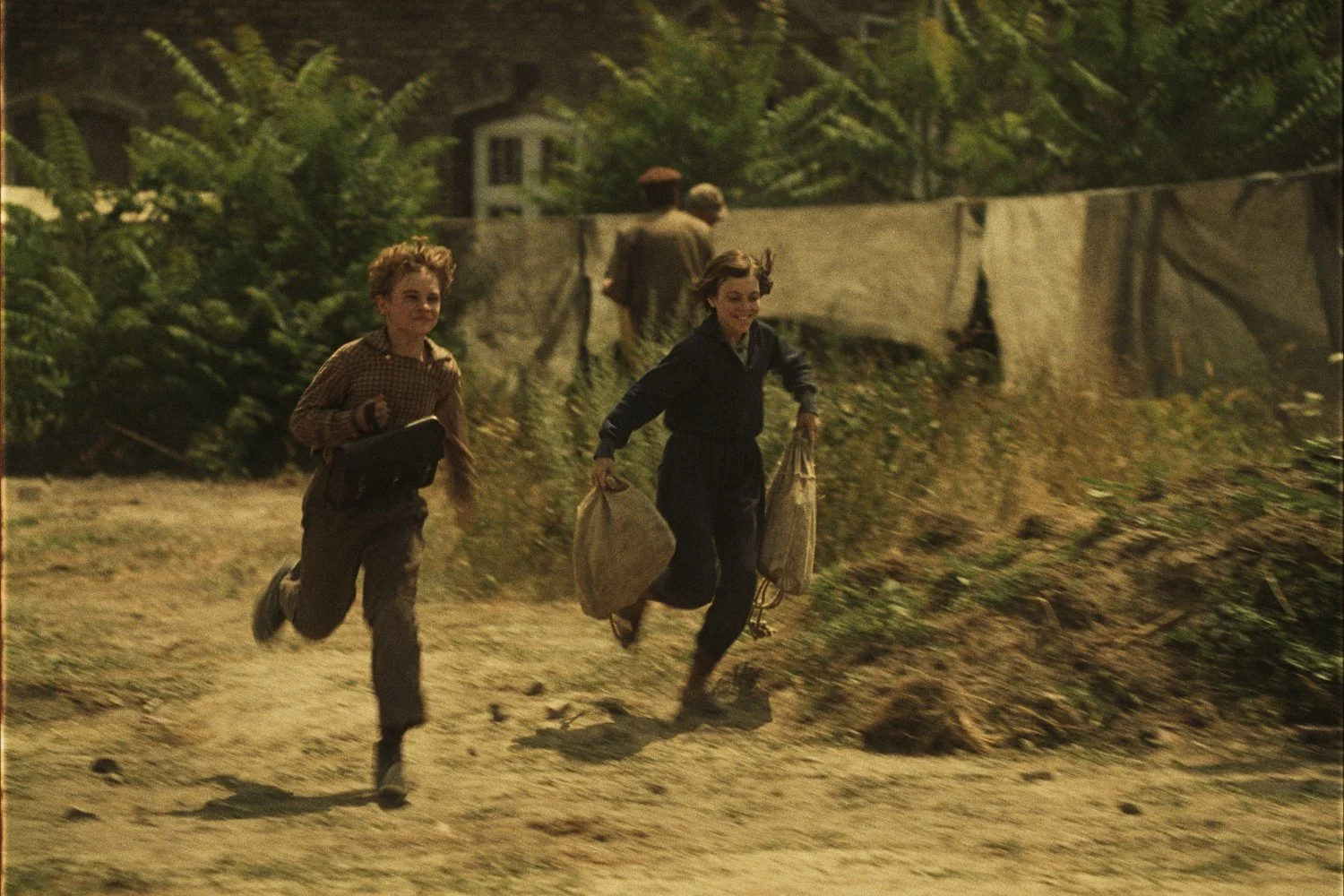
Orphan, still from the film © Mátyás Erdély
Given his disdain for filmmakers "preaching", I ask Nemes how he avoids the soapbox himself. "I just try to make my movies and be curious about the world and understand a little bit more than my Twitter history. I think there's a crisis of knowledge and culture. A terrible puritanism has taken over western culture. It's self-absorbed and poisonous and very dangerous for humanity. The first victims tend to be the Jews unfortunately."
For Nemes, the antidote to puritanism is the acceptance of life's insoluble contradictions. Orphan might seem to end with the spiritual defeat of both Andor and Hungary but he sees it instead as a willingness to "integrate the shadow". "You're stuck in a situation you cannot simply walk out of," he explains. "The idea that you actually have to coexist with something that's profoundly hateful to you is something that this new age cannot comprehend."
Following his informal trilogy about Hungary's past, Nemes is currently wrapping up Moulin, a film about the French Resistance hero Jean Moulin and his Nazi torturer Klaus Barbie, and plotting his adaptation of Cormac McCarthy's 1968 novel Outer Dark with Jacob Elordi and Lily-Rose Depp. The locations may change but Nemes remains interested in the extremes of human experience and the impossible choices they demand.
"This is how history's contradictions operate," he says. "People cannot tell you what to do. You have to find the voice within. If you start listening to the crowd, then you're going to be a destroyer of worlds.
"I try to inform my work with the basic questions of how a human being can survive and still yearn for a better world in a universe that's darker and darker."
By Dorian Lynskey
Header photo: László Nemes © Alamy
Orphan is released on Friday 15 May.
This article appears in the Spring 2026 issue of JR.