
The Met’s retrospective may sidestep Man Ray’s controversial past, but tells his artistic journey beautifully
Man Ray was born Emanuel Radnitzky in 1890 to Ukrainian Jewish immigrant parents in Philadelphia. When he was seven, the family moved to Williamsburg, Brooklyn. Though he had a bar mitzvah, his family was not recorded as being especially observant, and he distanced himself from his origins to the point where he is often perceived as a French artist, rather than an American one.
After turning down a scholarship to New York University, he took on a variety of jobs, from illustrator to cartographer, but was determined to leave employment at the daily grind, in whatever form it might take, to become a painter. While still in his 20s, he rented a studio in Grantwood, New Jersey, and took up with artists who were interested in experimentation. Whispers of Surrealism, Cubism and Dadaism were crossing the Atlantic. He made the acquaintance of Duchamp, who was living in New York at the time, and they became lifelong friends and collaborators.
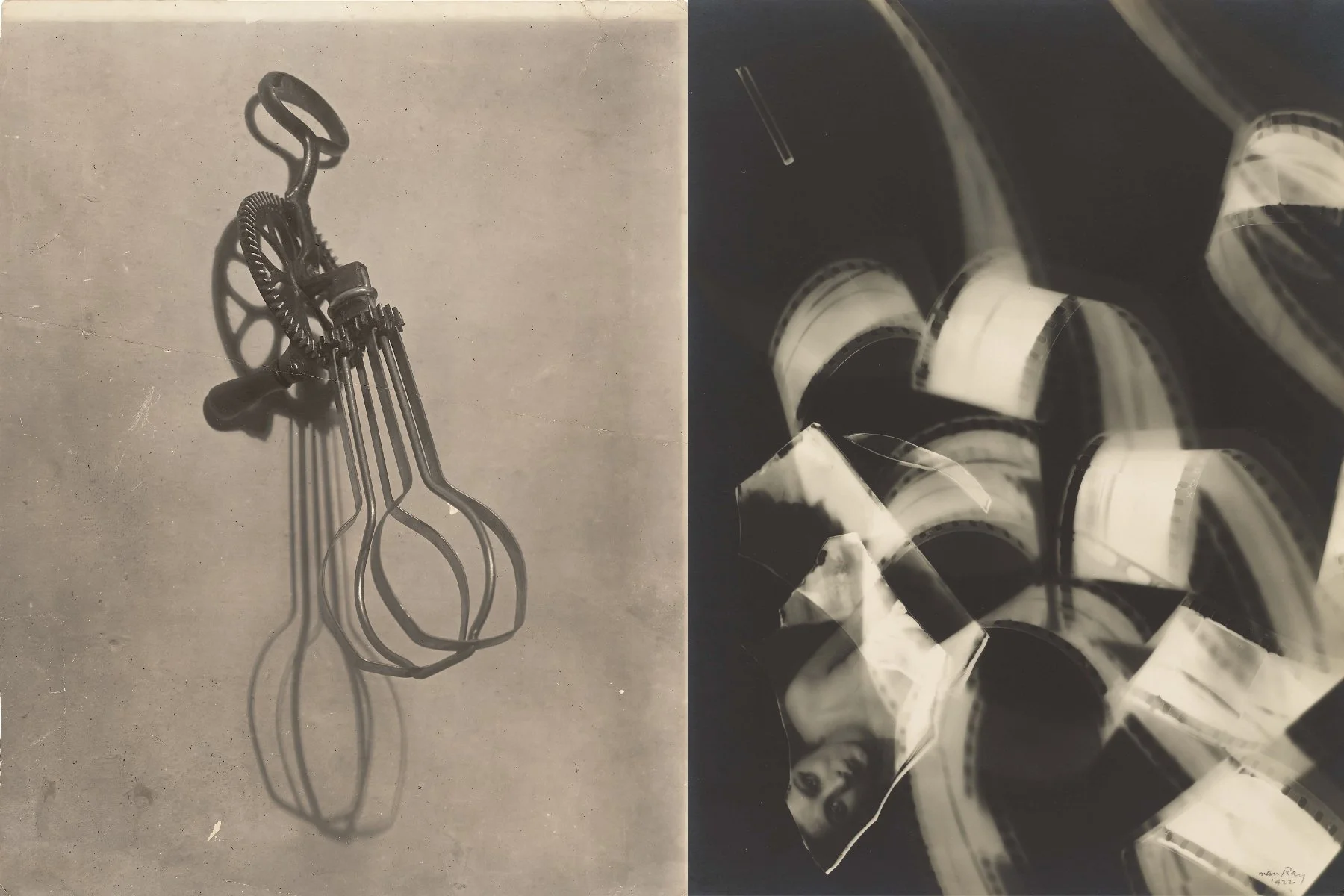
Left: L’homme (Man), 1918–20, gelatin silver print. Courtesy of The Bluff Collection, photo by Ben Blackwell © Man Ray 2015 Trust / Artists Rights Society (ARS), NY / ADAGP, Paris 2025
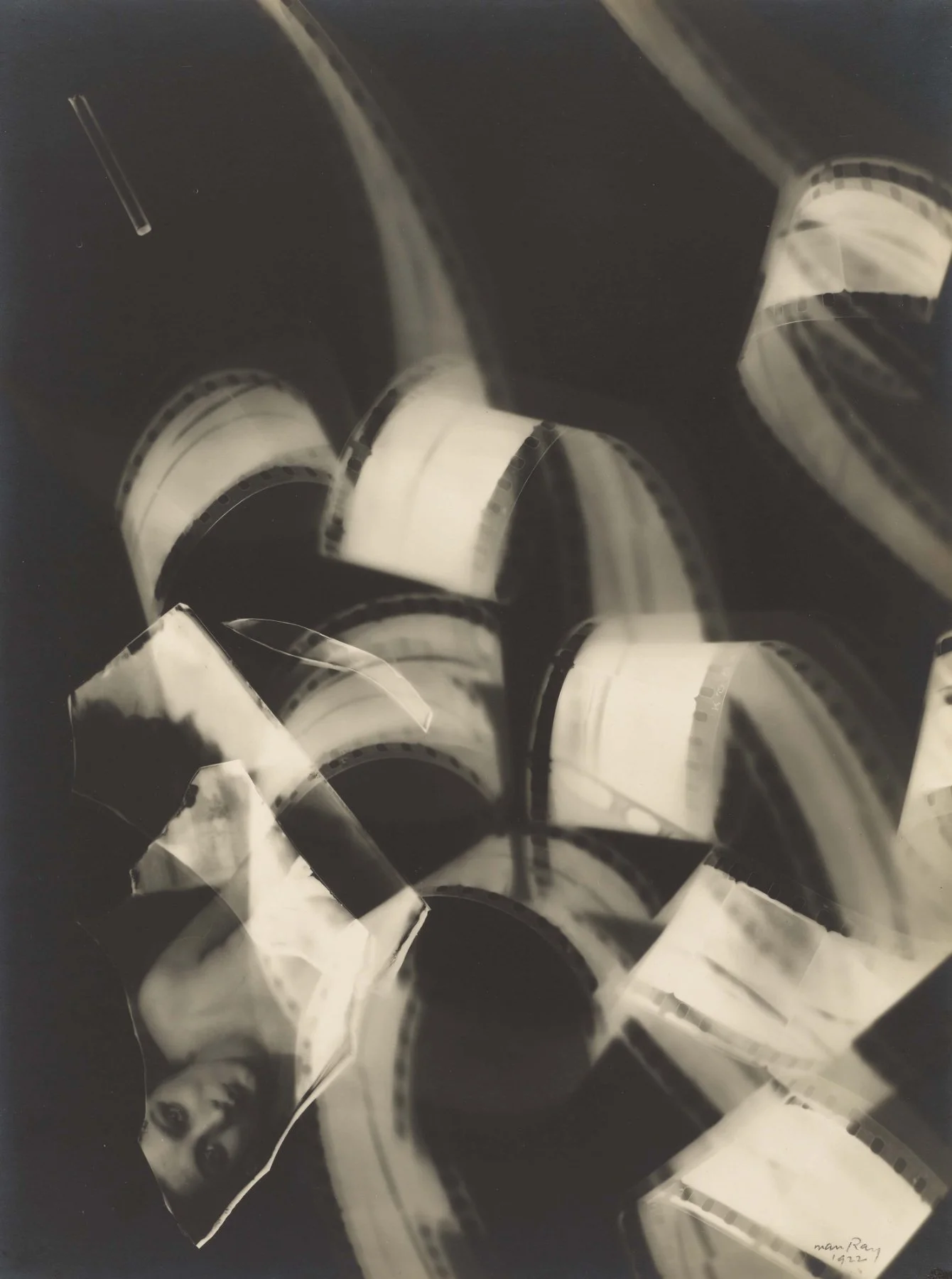
Right: Rayograph, 1922, gelatin silver print. Courtesy of The J Paul Getty Museum, Los Angeles © Man Ray 2015 Trust / Artists Rights Society (ARS), NY / ADAGP, Paris 2025
Following World War I, Man Ray was finally able to pay for passage to France and continued the process of reinventing himself. He had felt like a fish out of water in the United States in general and in New York City in particular. The hothouse that was Montparnasse between the wars felt like home.
In Paris, Man Ray supported himself by photographing celebrities such as Picasso, Dora Maar and Peggy Guggenheim, while still making his own art, balanced with the whirl of a new social life. He worked in many mediums: painting, photography, assemblages, film… One foot in Dadaism, one, at times, in Surrealism, taking in, like a sponge, everything the city offered.
The Metropolitan Museum’s retrospective, with the wonderful title When Objects Dream, is a show of Man Ray’s work from early paintings to an installation of wooden coat hangers, which clearly map the evolution of his work over the decades. The artist’s photographs and objects on view unite strange bedfellows: an iron studded with tacks, an eye perched on a metronome, the well-known photograph of Kiki de Montparnasse with violin sound holes painted on her back (1924’s Le Violon d’Ingres, which, nearly 100 years later, would become the most expensive photograph ever sold at auction, going for $12.4 million).
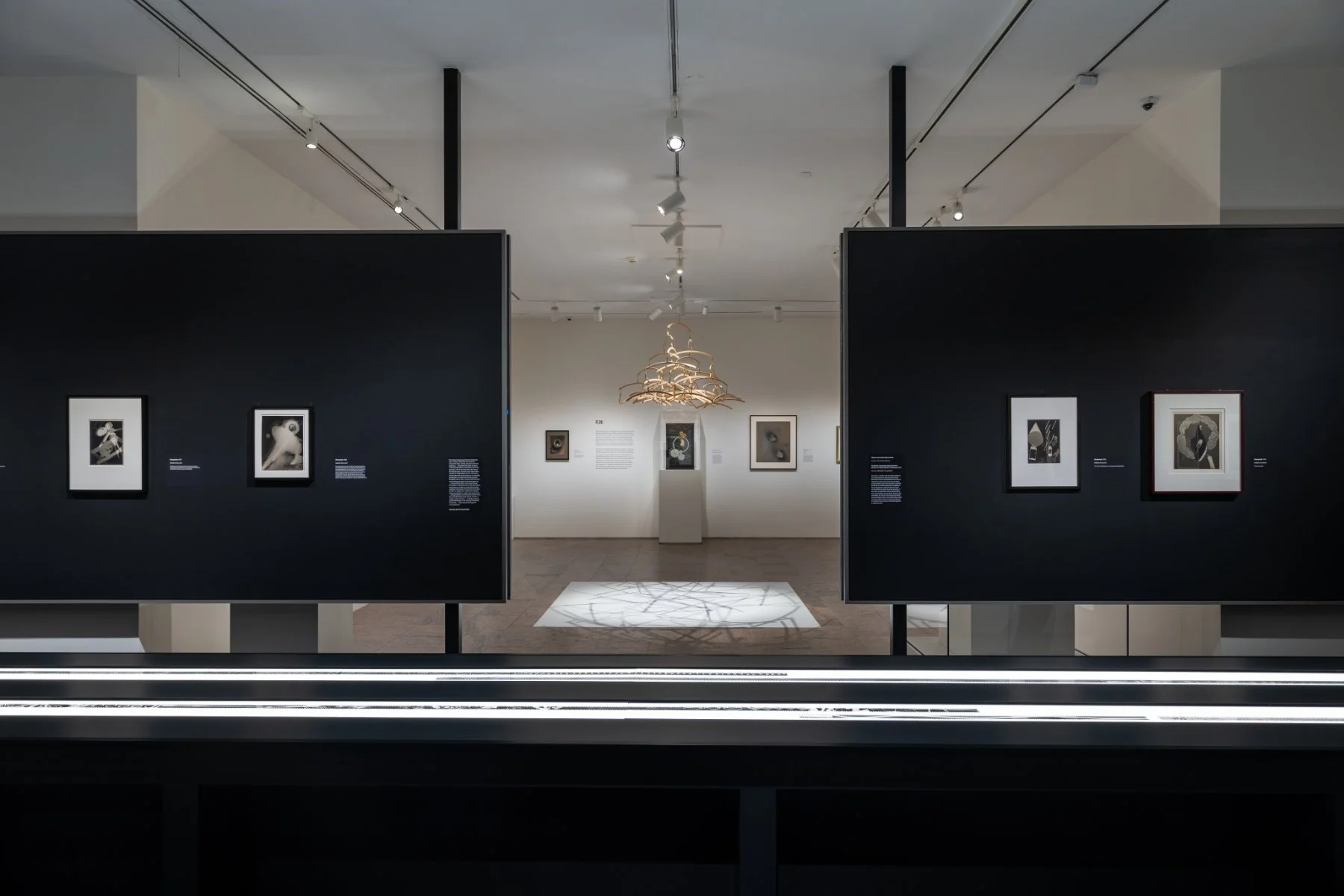
Installation view of Man Ray: When Objects Dream, on view 14 September 2025-1 February 2026 at The Metropolitan Museum of Art. Photo by Anna-Marie Kellen, courtesy of The Met
Man Ray was an artist who continually repurposed, making the ordinary astonishing. The utilitarian became an art object, as did the portraits he did of people like Lee Miller (who had also been his assistant), Maar, Paul Eluard, Tristan Tzara (née Samy Rosenstock) posing with Jean Cocteau, Marchesa Luisa Casati and Sinclair Lewis, to name a few of his friends and subjects. As Annie Leibowitz would a decade later, he posed his portraits with very particular props and what were, in his era, special effects.
At the same time, the objects and images he created weren’t without a sense of humor. Dressmaker patterns, needles, shirt collars, echoes of his Brooklyn childhood, made repeated appearances, and the juxtapositions of odd everyday articles, as if they have their own personalities and purposes independent of what one might have thought, took on comic undertones. How does a washboard look like a pseudoscientific instrument? How is a gyroscope like a person? Though still images, they can be read as if animated and dreaming an imaginary life that happened to be caught on paper.
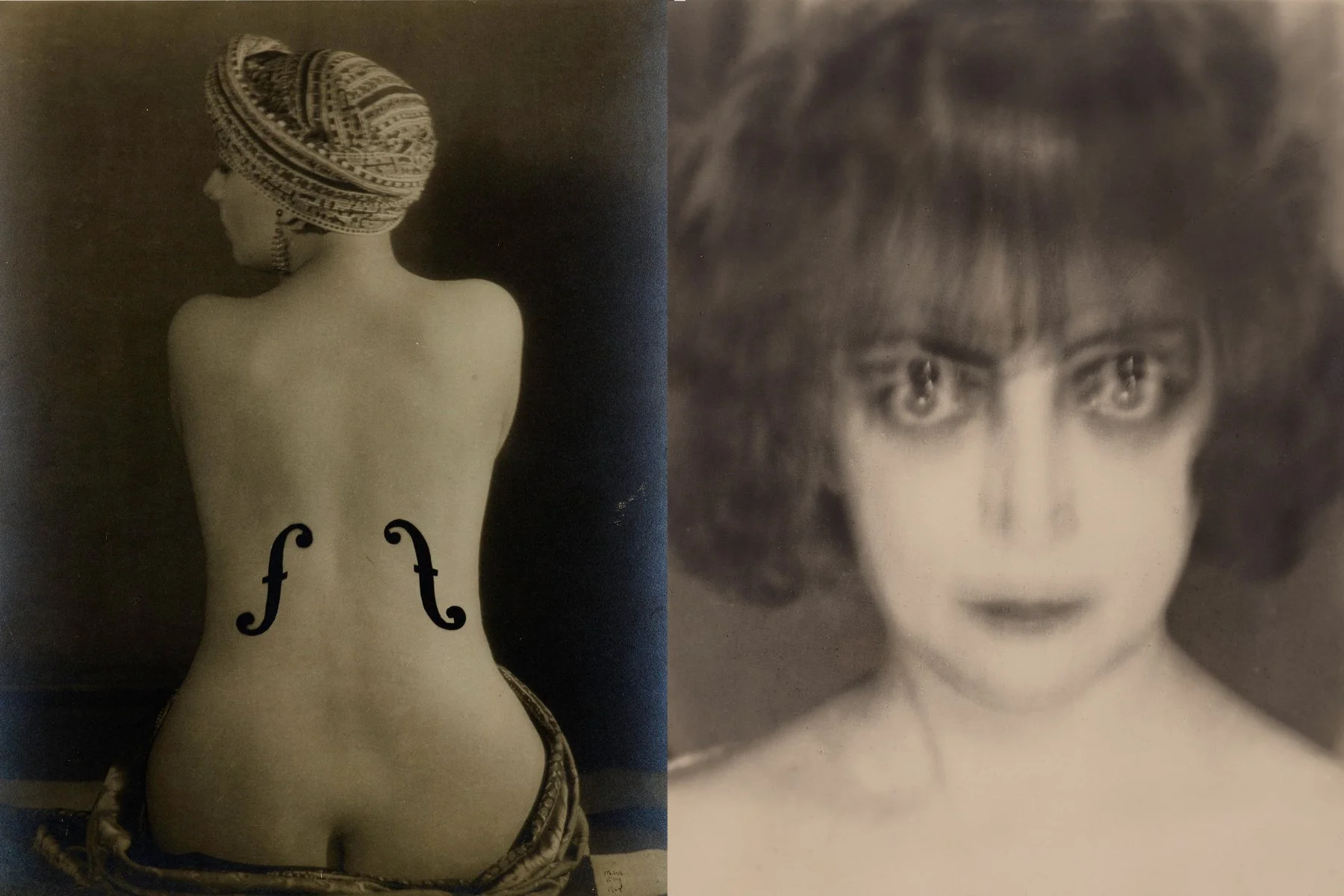
Left: Le violon d’Ingres, 1924, gelatin silver print. Courtesy of The Bluff Collection, promised gift of John A Pritzker, photo by Ian Reeves © Man Ray 2015 Trust / Artists Rights Society (ARS), NY / ADAGP, Paris 2025
Right: Marchesa Luisa Casati, 1922, gelatin silver print. Courtesy of the Philadelphia Museum of Art © Man Ray 2015 Trust / Artists Rights Society (ARS), NY / ADAGP, Paris 2025
When Objects Dream emphasizes his rayographs, a form Man Ray invented by accident. He put an object on a piece of light sensitive paper, exposed it to light, removed the article and the image remained. The ghostly traces or silhouettes left behind took on a life of their own. André Breton praised Man Ray for forcing photography to abandon its “pretentious claims” to veracity, to facts, and in the rayographs, the shadow portraits hinted at utilitarian identities of eggbeaters and combs, but they also took on meanings and identities that could be left to the viewer’s imagination.
Along with Duchamp, he became interested in the mechanical possibilities of objects, of 'thingness' rather than representation of existing people and portraiture. Both men were tinkerers and enjoyed building gizmos, some absurd, some practical. He described how they turned bin lids into trays for developing film in his autobiography, Self-Portrait. “First, we obtained a couple of shallow garbage-can covers for tanks,” he writes, “a round plywood board was cut to fit and waterproofed with paraffin. To wind the film on these, Duchamp drew radiating lines from the centres and hammered 400 nails along them. After taking 50 feet of film, we waited for nightfall and in the dark managed to wind the film onto the labyrinth of nails.” The contraption didn’t work, but functionality might not have been its main purpose. In an age where invention takes place most often on a screen, Man Ray’s steampunkish objects look like the futurism of the past, but they remain both compelling and prescient.
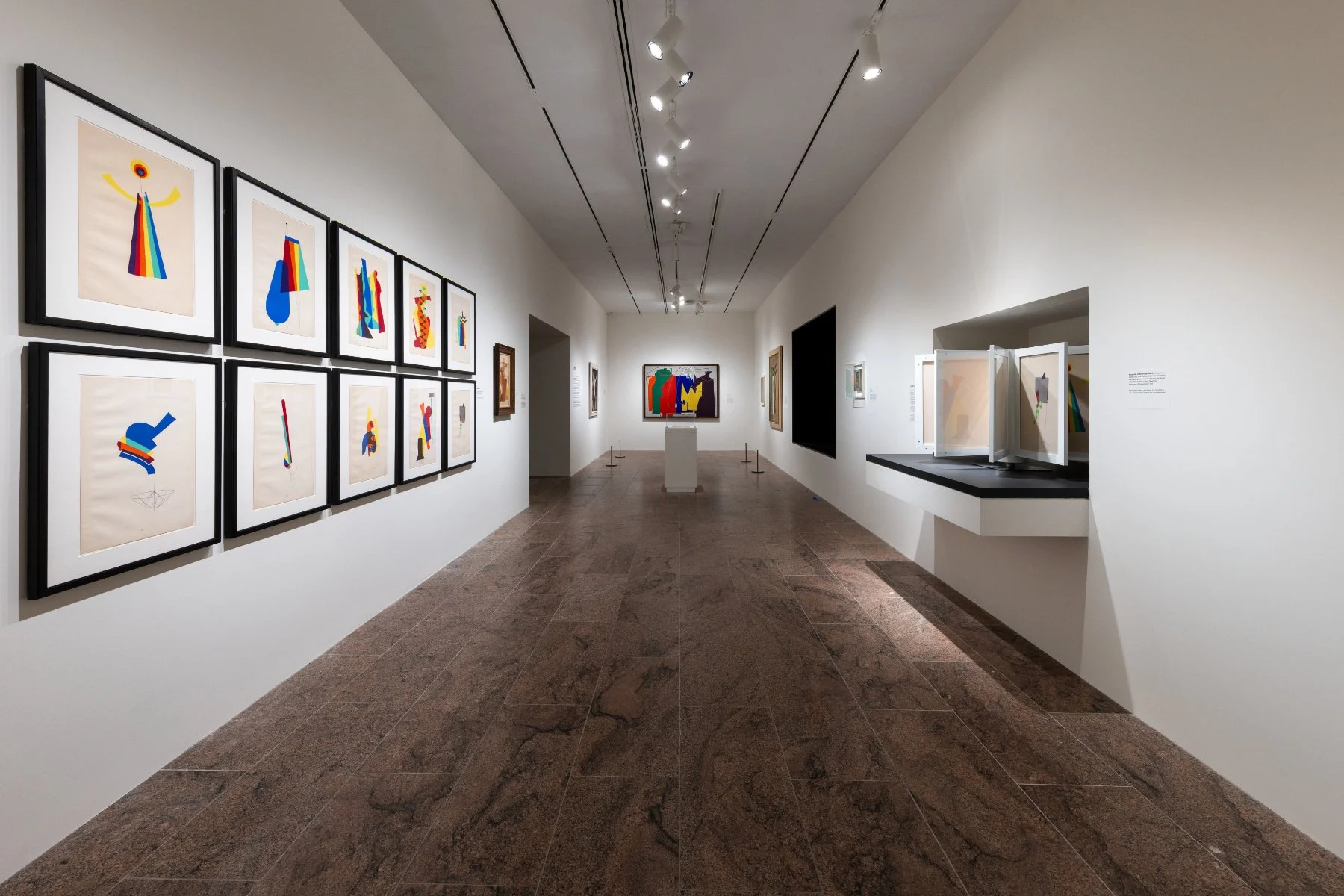
Installation view of Man Ray: When Objects Dream, on view 14 September 2025-1 February 2026 at The Metropolitan Museum of Art. Photo by Anna-Marie Kellen, courtesy of The Met
Self-Portrait, published in 1963, is remarkable for what it leaves out, and the show doesn’t address these controversies. In his memoir, Man Ray is open about the nature of his relationships with women, both mistresses and wives, and has no remorse or apology for the violence with which he treated them. He beat his first wife, Adon Lacroix, also known as Donna Lecoeur, terribly. He writes about her young daughter, Esther Wolff, in a very eroticised way, and it is not clear what, if anything, happened between them. He also writes of beating Kiki de Montparnasse, which makes for very difficult reading.
Though he was writing in the early 1960s, long after the first wave feminism, he describes beating women as if it’s a routine occurrence, subject to no questioning. Man Ray is the hero of his story. He died in 1976 in France, at the age of 86. The words Jew and Jewish do not appear anywhere in the book’s 417 pages, and when he returns to Paris after the war, he states that nothing has changed, only that some people have “disappeared”. Like his rayographs, in exploring Man Ray’s life, what’s left out is as vital as what remains.
By Susan Daitch
This review is of Man Ray: When Objects Dream, which took place Sunday 14 September 2025 – Sunday 1 February 1 2026 at the Metropolitan Museum of Art, New York.
Other places to see Man Ray’s work include the V&A Museum, Tate Modern and National Portrait Gallery. Plus Shifting Terrain: Perspectives on Land in North America at Montclair Museum of Art, New Jersey, which features his piece ‘Ridgefield Landscape’; and L’Immagine Ritrovata at Ca’ Giustinian, Venice, which revisits his photography exhibition held at the 1976 Venice Art Biennale.