
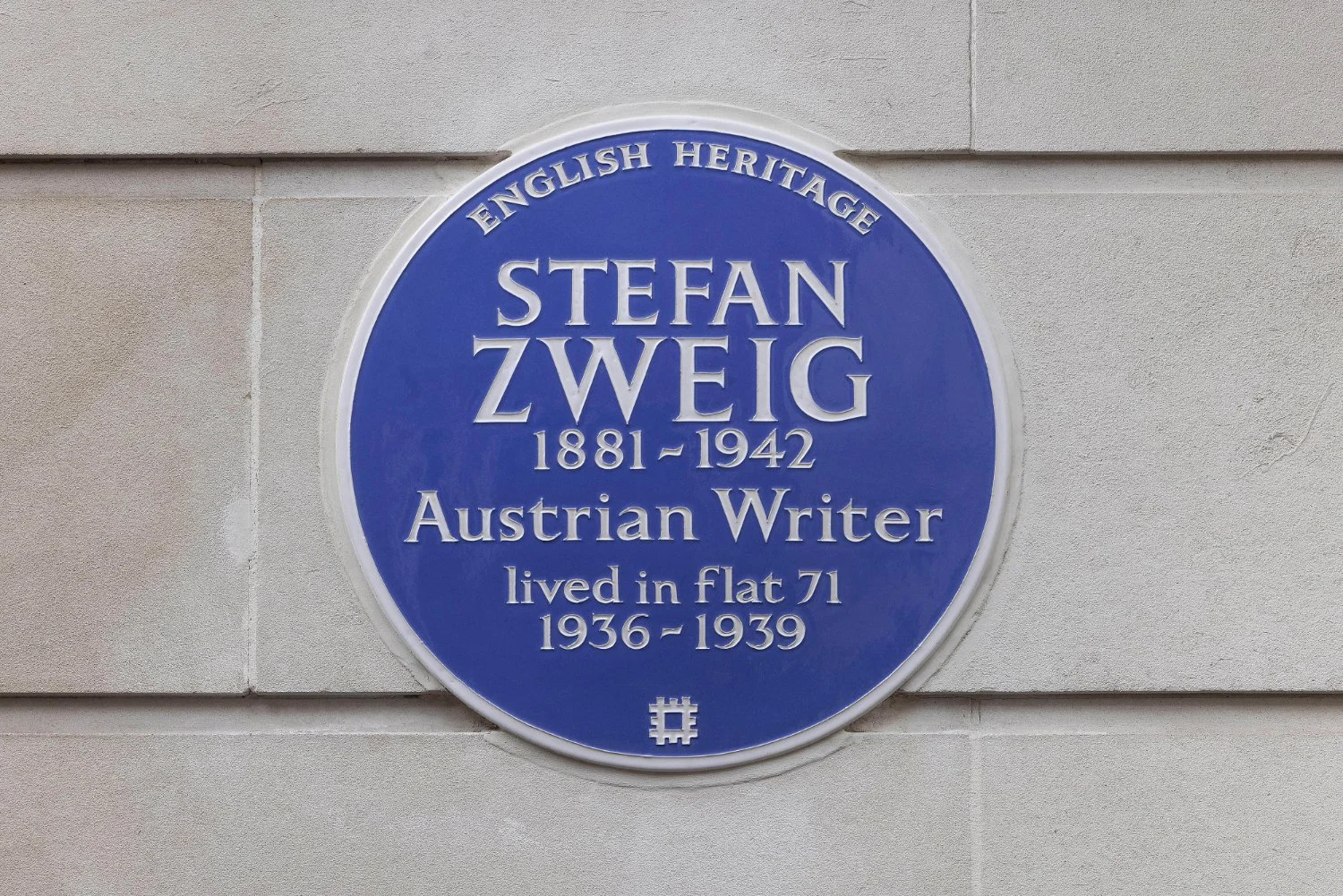
After an initial rejection, the former home of Austrian émigré author Stefan Zweig has finally been commemoratively marked
“In London I have discovered it is possible for an individual to fashion his life in his own way.” These words from Austrian Jewish writer Stefan Zweig to the BBC broadcaster Leslie Mitchell in 1937 show the close tie that the author of The World of Yesterday had to the city; a relationship now memorialised with a new English Heritage blue plaque.
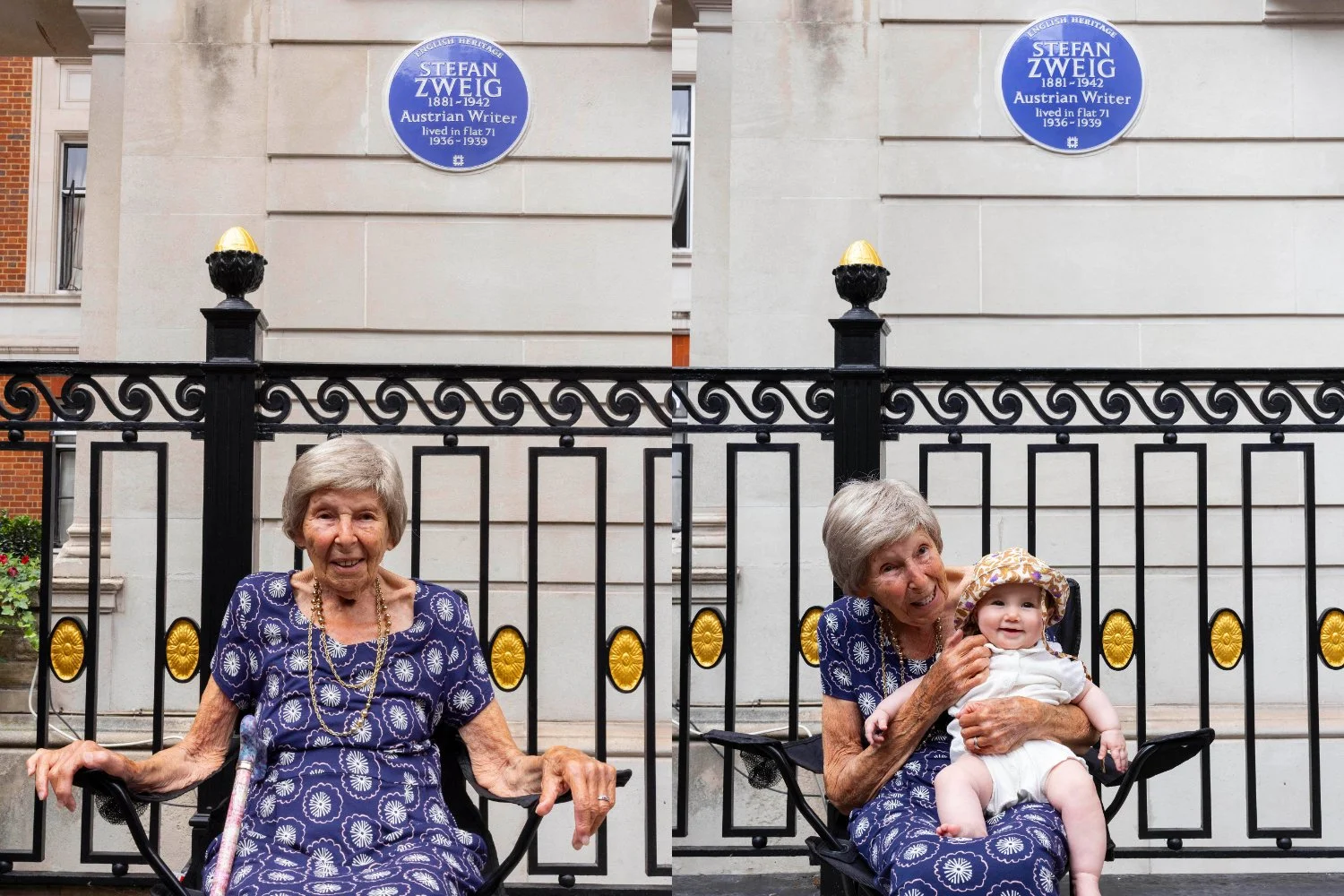
Zweig was born in 1881 and is one of the most widely read and translated German-speaking authors. He is commemorated at 49 Hallam Street in Marylebone, where he lived from 1936 to 1939. The plaque was unveiled in July, attended by Zweig’s niece Eva Alberman and Alberman’s great-granddaughter Rosa. It comes 14 years after the first application for a blue plaque memorialising Zweig’s time in London was rejected, a decision opposed in a 2021 open letter to English Heritage published in The London Magazine by writers including Julian Barnes and Tom Stoppard. The new plaque evidences the continued interest in Zweig’s works and his particular European worldview. It comes at a poignant time, unveiled in the wake of Refugee Week, given Zweig’s status as an asylum seeker fleeing the Nazis in Austria.
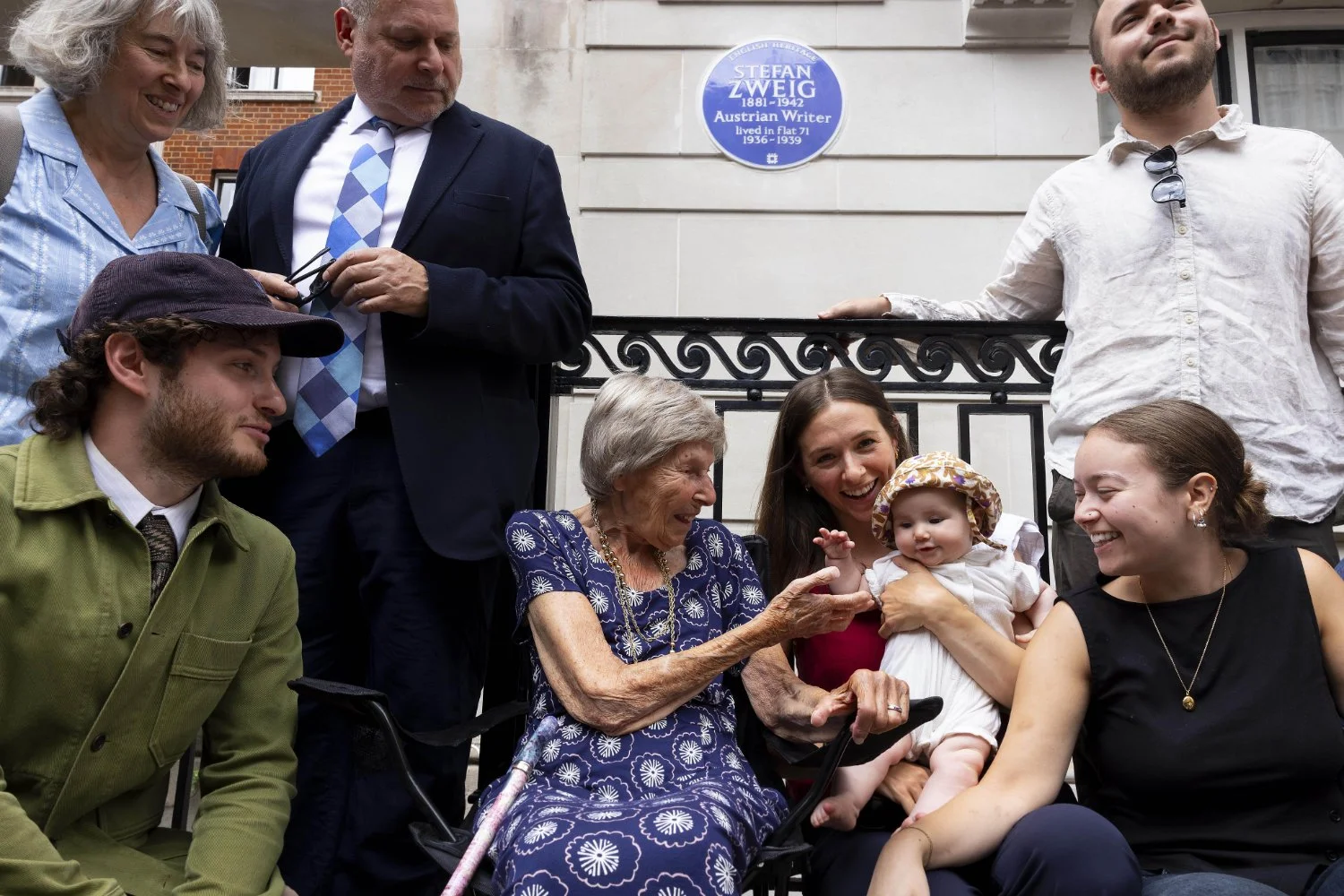
The unveiling was followed by a screening of Wes Anderson’s 2014 film The Grand Budapest Hotel, which took inspiration from Zweig’s novels Beware of Pity and The Post Office Girl. As the most widely translated author in the world in the 1920s and 30s, Zweig was an “international celebrity” in his heyday, says Susan Skedd, historian at English Heritage. He worked across a vast range of writing forms and subjects – opera, poetry, biography, fiction and short stories – from Mahler’s final weeks to 16th-century British politics. His writing has a “popular, multifaceted ease” and appeal, adds Skedd, and a facility to write about difference, qualities that in his time saw him praised for his humanism and critiqued for a mawkish sentimentality.
Much of his research was completed in the British Library and London Library, where he penned Beware of Pity and biographies of Mary, Queen of Scots, and Dutch theologian Desiderius Erasmus. Zweig praised London for “the best libraries”, where one could work “completely undisturbed”. The capital proved a place of prolific literary activity and inspiration, and he found “a kind of sanctuary” in the London Library, says Claire Berliner, the Library’s head of programmes, where he worked in a rich intellectual culture involving many other émigrés, such as writer Elias Canetti, philosopher Isaiah Berlin and novelist Lion Feuchtwanger. Zweig left much of his personal collection to the London Library, providing books that are now unavailable anywhere else, his oeuvre having largely been burnt by the Nazis.
Pushkin Press works extensively to support Zweig’s reputation in the English-speaking world, reissuing and newly translating his archive, and now holds the writer's estate. Pushkin publisher Adam Freudenheim relates the resurgence in interest in Zweig to his “nostalgic look at the multi-linguistic and multi-cultural world of pre-World War I Austria-Hungary” that holds a particular interest post-Brexit. However, Freudenheim argues, foremost Zweig was simply a “great storyteller”. Case in point: Shooting Stars, Zweig’s fictional recreation of significant historical moments, remained in print in Germany for over 100 years.
Writing to his secretary and later second wife Lotte Altmann in 1934, Zweig praises the “colours and shapes of this city”, even “London’s murky light”. Now Zweig has a permanent place under these blue and grey skies.
By Natalie Perman
Stefan Zweig’s blue plaque can be seen at 49 Hallam Street, London, W1W 6JW. english-heritage.org.uk